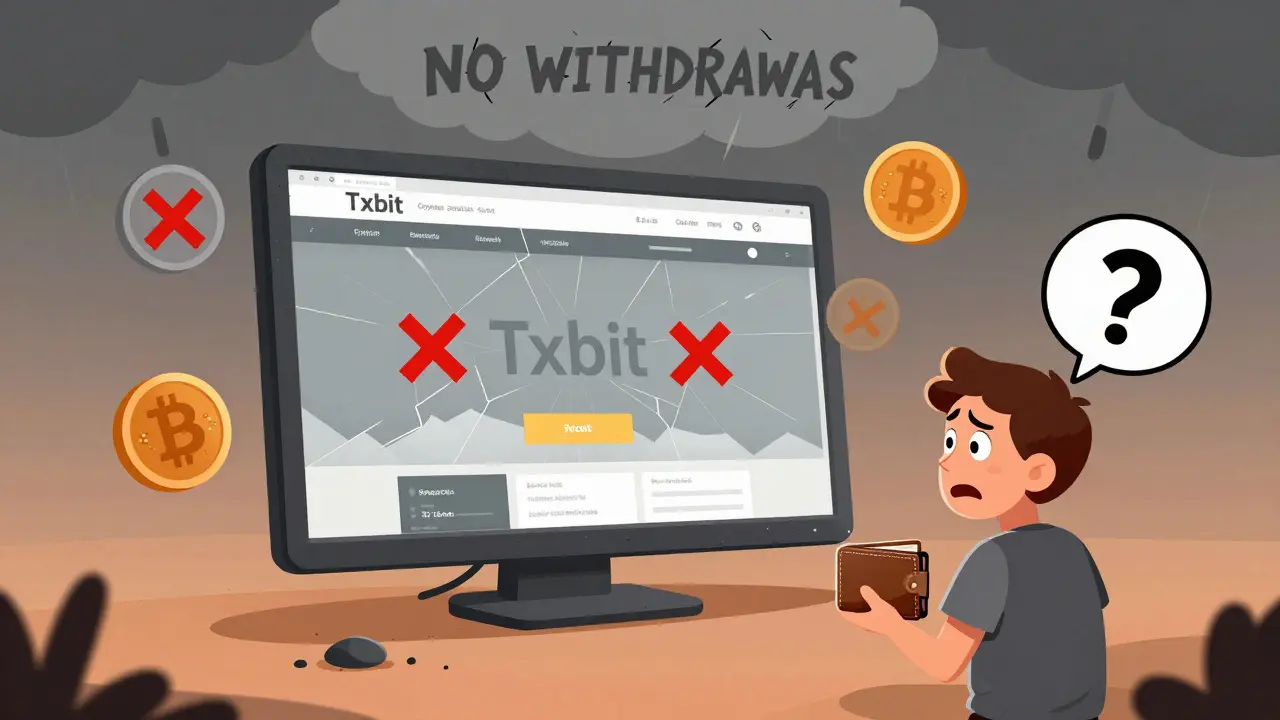
Txbit was once promoted as a privacy-focused crypto exchange with low fees and simple trading. But by September 2023, it vanished - no warning, no notice, just gone. Users couldn’t withdraw funds. Their account balances disappeared. And the platform that claimed to be secure and reliable left behind a trail of frustrated traders and lost assets.
What Txbit Actually Offered
Txbit launched in 2019 from Amsterdam, targeting traders who wanted a no-frills platform. It supported EUR, GBP, and USD bank transfers and allowed trading in Bitcoin, Ethereum, and a handful of other coins. The interface was clean - order books, charts, buy/sell buttons - nothing fancy, but familiar to anyone who’d used a crypto exchange before. It had a referral program. You got bonuses for bringing in friends. Customer support was available 24/7, which sounded good - until you realized most issues took days to resolve. And there was no mobile app. If you wanted to trade, you had to use a browser. That alone turned off a lot of people in 2023, when most traders expect to check prices on their phones while commuting or during lunch breaks. The real problem? The fees. Txbit charged a flat fee of 0.0014 BTC per trade. On December 2, 2021, that was about $80. For a small trade of $100, you’d pay 80% in fees. Even for a $1,000 trade, you’d still be paying 8%. Compare that to Binance or Kraken, where fees start at 0.1% and drop with volume. Txbit’s pricing made small trades pointless and discouraged frequent trading.The Illusion of Security
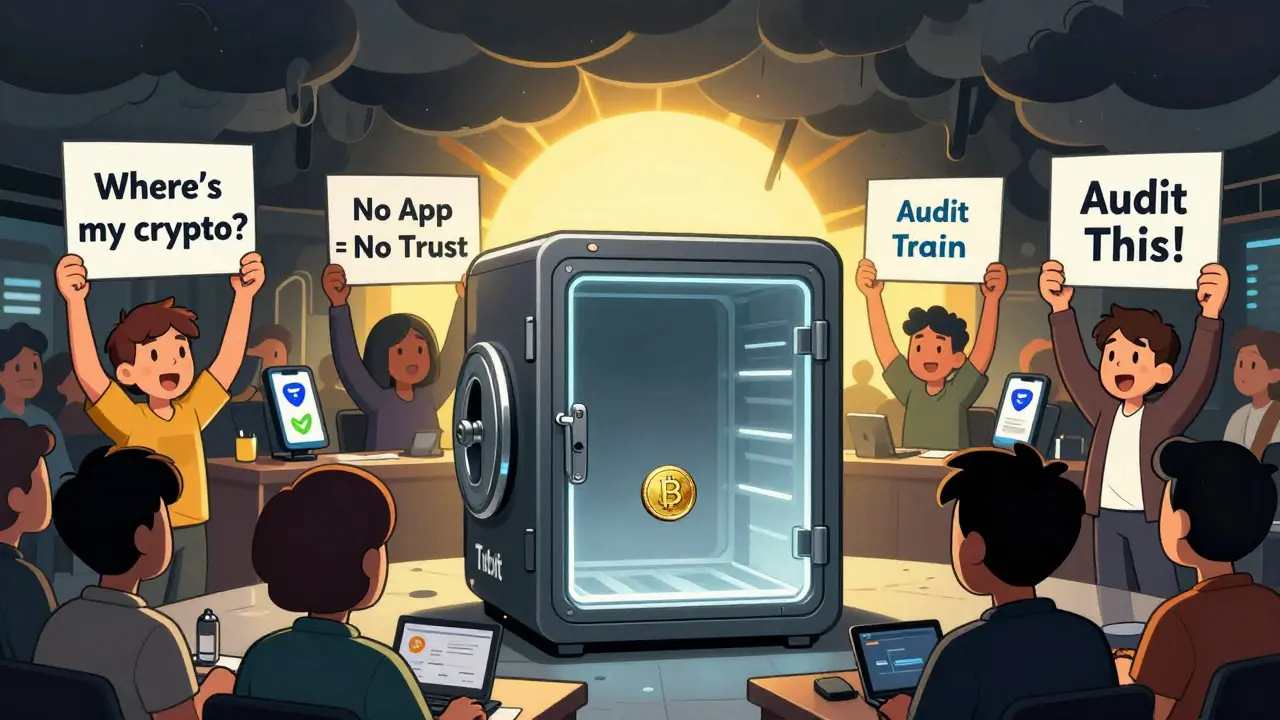
Txbit marketed itself as a secure, private exchange. But here’s the catch: they never showed proof. No independent audits. No details on cold storage. No transparency about who held the keys. That’s not security - that’s marketing. Reputable exchanges publish third-party security reports. Coinbase shares its SOC 2 certifications. Kraken releases proof-of-reserves. Txbit? Nothing. Just claims. And in crypto, claims without proof are red flags. Even worse, they didn’t clearly block U.S. users. They said American traders should "check their own legal situation." That’s not compliance - it’s evasion. U.S. regulators don’t tolerate that. Exchanges that ignore local laws don’t last long. And Txbit didn’t.Trading Volume and Liquidity - A False Growth Story
Txbit’s trading volume jumped from $12,110 in September 2019 to $2.1 million in December 2021. That’s a 17,000% increase. Sounds impressive, right? But here’s the context: Binance processes over $10 billion daily. Coinbase? $3 billion. Even smaller exchanges like Bybit or KuCoin do $500 million to $1 billion a day. Txbit’s peak volume was less than 0.1% of that. It was never a major player. Just a niche platform with a small user base. Liquidity was thin. Big orders would move the price. Slippage was common. And when the market turned in 2022, many users pulled out - not because they wanted to, but because they couldn’t trust the platform anymore.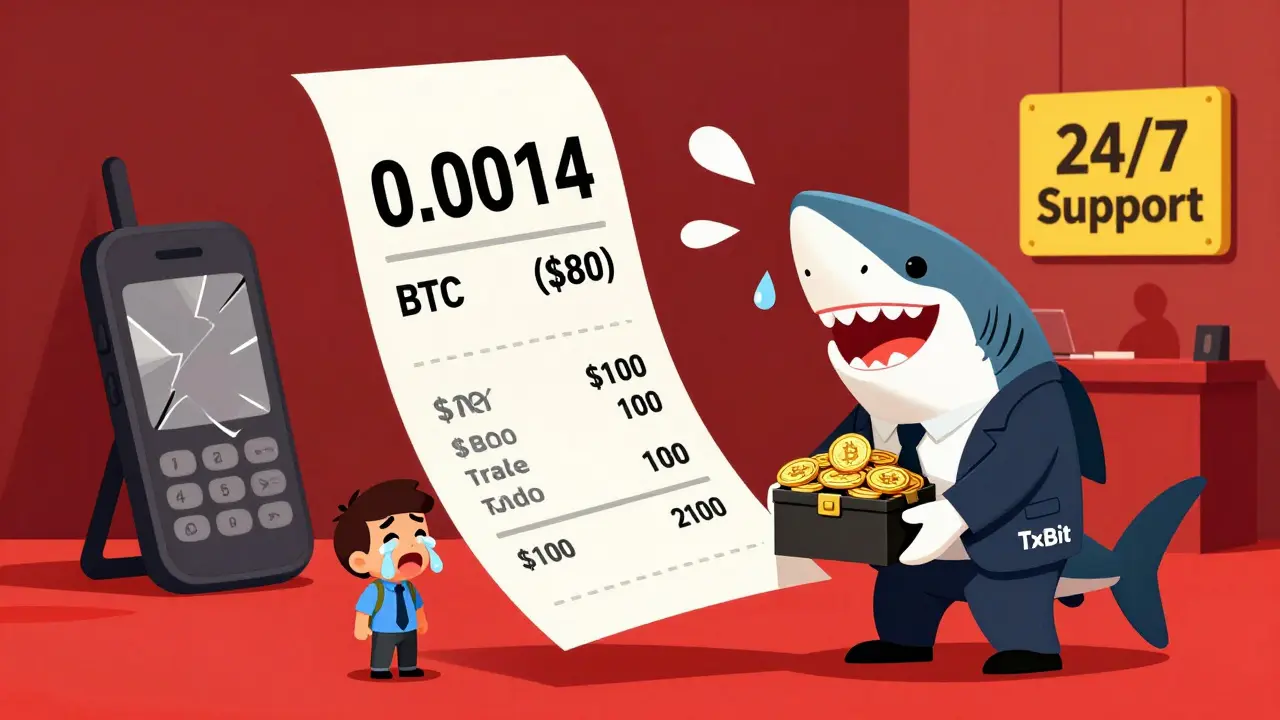
Why Users Left
User ratings on sites like Cryptogeek.info hovered around 3.3 out of 5. Only 11 reviews total. That’s not enough to judge, but the ones that existed told a clear story: high fees, slow support, no mobile app, and growing anxiety about withdrawals. People started asking: "Can I even get my money out?" The answer, eventually, was no. By mid-2023, withdrawals were delayed. Then suspended. Then, in September 2023, the website went dark. No email. No social media updates. No official statement. Just silence. Users who held Txbit’s native token - if they even had one - lost everything. Tokens tied to failed exchanges almost always become worthless. There’s no recovery. No refund. No lawsuit that brings back your crypto.What Txbit’s Shutdown Teaches You
Txbit didn’t fail because of bad luck. It failed because it ignored the basics:- Regulatory compliance - If you don’t follow the rules where you operate, regulators will shut you down.
- Transparency - If you won’t show your security practices, people assume the worst.
- Reasonable fees - Charging $80 per trade in 2023 was not a feature. It was a joke.
- Mobile access - In 2026, if you don’t have an app, you’re already behind.
How to Avoid Txbit’s Fate
If you’re choosing a crypto exchange today, ask these five questions:- Is it regulated? Look for licenses from authorities like the FCA (UK), FinCEN (U.S.), or AFM (Netherlands). If they don’t mention it, they probably don’t have it.
- Are fees clear and fair? Avoid flat fees. Look for percentage-based fees that drop with volume. Anything over 0.5% for spot trading is too high.
- Is there a mobile app? If not, move on. You need to trade on the go.
- Are security details public? Do they publish proof-of-reserves? Have they been audited by a reputable firm like CertiK or Hacken?
- How long have they been around? Exchanges that survived the 2018 bear market and the 2022 crash are more likely to survive the next one.
What Happened to Txbit’s Users?
No one knows for sure. Some users reported contacting lawyers. A few tried filing complaints with Dutch financial regulators. But without official records or assets to claim, recovery is nearly impossible. The lesson? Never keep large amounts of crypto on an exchange you don’t fully trust. Use a hardware wallet. Use cold storage. Treat exchanges like temporary parking spots - not your safe.Final Thoughts
Txbit’s story isn’t unusual. It’s becoming the norm. The crypto market is cleaning house. Platforms that rely on hype, secrecy, and outdated models are disappearing. The ones that survive are transparent, regulated, and user-focused. If you’re looking for a crypto exchange in 2026, don’t be seduced by promises of privacy or low fees. Look for proof. Look for history. Look for compliance. Because in crypto, the safest exchange isn’t the one with the fanciest website. It’s the one that’s still around after the storm passes.Was Txbit a legitimate crypto exchange?
Txbit was legally registered in the Netherlands as Txbit Exchange B.V. and operated from 2019 to 2023. But "legitimate" doesn’t mean safe or trustworthy. It had no proper regulatory licenses for major markets like the U.S. or EU, didn’t publish security audits, and charged extremely high fees. Its shutdown confirms it was not a reliable or compliant platform.
Can I recover my funds from Txbit after it shut down?
No. Once Txbit closed in September 2023, all trading and withdrawal functions stopped permanently. There was no official bankruptcy process, no asset liquidation, and no communication with users. Any funds held on the platform - including its native token - are considered lost. Recovery is highly unlikely.
Why did Txbit charge such high fees?
Txbit charged a flat fee of 0.0014 BTC per trade, which was around $80 in 2021. This was likely a flawed business model - perhaps meant to limit small traders or cover operational costs. But it made the exchange unusable for most people. Competitors charged 0.1% or less. Txbit’s fee structure was unsustainable and drove users away.
Did Txbit have a mobile app?
No. Txbit only offered a web-based platform. No iOS or Android app was ever released. In 2023, this was a major disadvantage. Most users expect to trade on mobile, and the lack of an app made Txbit inconvenient and outdated.
Is Txbit still operational in 2026?
No. Txbit permanently shut down in September 2023. Its website is offline, social media accounts are inactive, and customer support no longer responds. It is no longer a functioning exchange.
What should I look for in a safe crypto exchange today?
Look for exchanges that are regulated in major jurisdictions (like the U.S., EU, or UK), publish regular proof-of-reserves, offer transparent fee structures (under 0.5% for spot trading), have a mobile app, and have been operating for at least 5 years. Avoid platforms that don’t clearly state their compliance status or hide security details.
Dennis Mbuthia
January 6, 2026 AT 01:36Wow, another crypto scam that pretended to be legit? Honestly, this is why I don't trust any exchange that doesn't scream "I'm regulated" from the rooftops. Txbit? More like TxBITCH. Flat fees of 0.0014 BTC in 2023? That's not a business model-that's a middle finger to retail traders. And no mobile app? In 2023?! They were dead before they even launched. I'm surprised they lasted until September. Honestly, if you're still using an exchange without an app, you're not trading-you're begging to get robbed.
Danyelle Ostrye
January 6, 2026 AT 12:12Same. I used Txbit for like three months because I thought "privacy-focused" meant "not a honeypot." Turns out it just meant "we're hiding your money." I lost $2K. No refund. No email reply. Just silence. And now I see this article and realize I was the dumb one for not checking if they had any audits. Lesson learned: if they don't show proof, they don't have it.
Staci Armezzani
January 7, 2026 AT 11:58Hey, I get it-you're frustrated. But let’s not throw the whole crypto space under the bus because of one sketchy platform. Txbit failed because it ignored the basics: transparency, compliance, and user experience. But look at Coinbase, Kraken, Bitstamp-they’ve survived multiple bear markets because they play by the rules. Don’t let one bad experience make you distrust everything. Just be smarter next time. Ask for audits. Check licenses. Use cold wallets. You’ve got this.
Jennah Grant
January 8, 2026 AT 11:10Let’s be real-Txbit’s fee structure was a textbook example of how NOT to design a trading platform. A flat fee of 0.0014 BTC? That’s not a fee-it’s a tax on small traders. And the fact they didn’t even bother with a mobile app in 2023? That’s not laziness, that’s institutional arrogance. They were treating users like they were still in 2015. Meanwhile, DeFi protocols like Uniswap V3 let you trade with sub-0.1% fees and full custody. Txbit wasn’t just outdated-it was an anachronism wrapped in marketing fluff.
Tracey Grammer-Porter
January 9, 2026 AT 16:32I remember reading about Txbit back in 2020 and thinking it looked clean and simple. But now I realize simplicity can be a trap. No mobile app, no audits, no clear compliance-those aren’t features, they’re red flags waving in a hurricane. I wish I’d known then what I know now. If you’re new to crypto, just stick with the big names until you understand what to look for. And always, always keep your own keys. That’s the one rule that saves you when the platform vanishes.
sathish kumar
January 11, 2026 AT 06:38It is indeed regrettable that such an entity as Txbit Exchange B.V. operated under the pretense of legitimacy while failing to adhere to internationally recognized standards of financial transparency and user protection. The absence of third-party audits, coupled with non-compliance with jurisdictional regulatory frameworks, renders its operational model fundamentally unsound. In the context of global financial systems, such entities serve as cautionary exemplars of systemic negligence in the digital asset ecosystem.
Brittany Slick
January 11, 2026 AT 20:24It’s wild how fast these platforms rise and fall. One day you’re scrolling through their sleek UI, thinking "this is the one," and the next-poof-gone. Like a ghost town after the gold rush. But honestly? That’s crypto. It’s a wild west. The only thing that’s real is what’s in your wallet. I keep 95% of my stuff in a Ledger. The rest? Pocket change. Let the exchanges burn. I’m not crying over their ashes.
Andy Schichter
January 12, 2026 AT 10:21Oh wow, another "learn from my mistakes" post. Did you also learn that putting your money in a bank is safer than trusting a website with a .com domain? Congratulations-you’ve unlocked the 2026 crypto wisdom achievement: "Don’t be dumb." Maybe next time you’ll learn to read the terms before clicking "Deposit". Or maybe you’ll just blame the exchange again. Either way, I’m not surprised. Crypto’s just a giant Ponzi with extra steps.
Denise Paiva
January 14, 2026 AT 02:16Actually I think this article is overly dramatic. Txbit wasn’t a scam-it was just poorly managed. People who lost money were either too greedy or too lazy to do basic research. And let’s be honest-most people wouldn’t know a proof-of-reserves if it slapped them in the face. Maybe the real issue isn’t Txbit… it’s the users who treat crypto like a lottery ticket instead of an asset class.
Kelley Ramsey
January 15, 2026 AT 19:18Wait-so you’re saying if an exchange doesn’t have a mobile app, it’s automatically a scam? What about the people who only trade on desktop? What about privacy-focused traders who avoid apps for security reasons? Not everyone wants to be tracked by Google and Apple. Maybe Txbit was just ahead of its time… or maybe it was just dumb. But don’t act like your favorite exchange is holy just because it’s big.
Michael Richardson
January 15, 2026 AT 23:24Regulated? Please. The SEC is a joke. They shut down Txbit because it didn’t pay them off, not because it was unsafe. Meanwhile, Binance got fined $4B and kept operating. If you think regulation = safety, you’re the one who’s naive. Txbit was small. It didn’t have lobbyists. It got crushed. That’s capitalism.
Sabbra Ziro
January 16, 2026 AT 15:56Can we talk about how the real lesson here is that no exchange is safe? Not even Coinbase. Not even Kraken. They all have access to your keys. The only way to win is to not use exchanges at all. Buy your crypto, move it to a hardware wallet, and forget about it. The rest is just theater. Txbit didn’t fail because of fees or apps-it failed because people still think exchanges are banks. They’re not. They’re middlemen. And middlemen get cut out when the tech gets better.
Krista Hoefle
January 18, 2026 AT 02:37txbit was fine. u just bad at crypto. why u trade on a site with no app? u dumb. also 0.0014 btc was cheap back then. btc was 20k. now its 70k. u just got owned. grow up.
Becky Chenier
January 20, 2026 AT 00:25For anyone still thinking about using a new exchange: if you can’t find a single independent audit, or if their support takes more than 48 hours to respond, walk away. Txbit’s downfall wasn’t bad luck-it was a series of avoidable choices. The same choices that killed FTX, Celsius, and a dozen others. The market is punishing incompetence now. That’s not a bug-it’s a feature. We’re finally outgrowing the Wild West. The real winners? The ones who prioritize security over hype. And honestly? You’ll sleep better at night too.