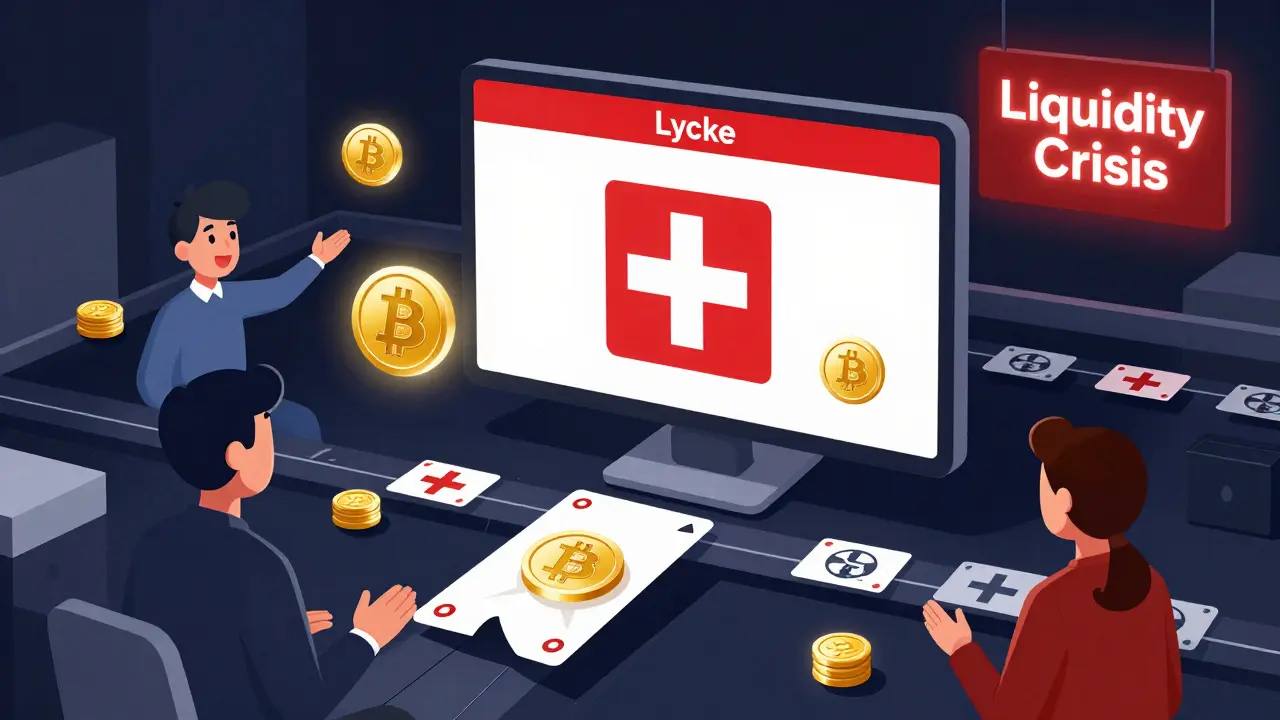
Lykke Exchange promised something no other crypto exchange dared to: zero trading fees. For years, it stood out as a bold experiment in financial innovation - a Swiss-based platform where you could trade Bitcoin, Ethereum, USD, EUR, even digital gold and silver, without paying a single cent per trade. It sounded too good to be true. And in the end, it was.
What Lykke Exchange Actually Offered
Founded in 2015 by Richard Olsen, a well-known name in foreign exchange, Lykke didn’t just want to be another crypto exchange. It aimed to be a full financial marketplace. You could trade crypto against fiat currencies like Swiss francs and British pounds. You could even trade digital versions of precious metals - a feature almost no other exchange had. Its mobile app was clean, intuitive, and worked smoothly for both beginners and experienced traders.
The platform used what it called "colored tokens" - digital representations of assets like Bitcoin or gold. These tokens weren’t actual coins on the blockchain. They were just records inside Lykke’s system. If something went wrong, Lykke claimed it could cancel the hacked tokens and issue new ones. It sounded clever. But it was also a huge red flag.
Lykke didn’t charge trading fees - ever. Not for makers, not for takers. Withdrawals? Free for fiat. Bitcoin withdrawals cost just 0.0005 BTC, which was cheaper than most competitors. Deposits via wire transfer or credit card? No fees from Lykke. At first glance, this looked like a gift to traders. But there was a catch: liquidity.
The Hidden Cost: Poor Liquidity
While Lykke didn’t charge fees, it made up for it with wide spreads. That means the difference between the buy and sell price was much larger than on bigger exchanges like Binance or Coinbase. If you tried to buy Bitcoin during a price spike, you’d pay significantly more than the market rate. Sell? You’d get less.
Active traders noticed this. Reddit threads from early 2024 were full of complaints: "My order took 12 seconds to fill on Lykke. On Kraken, it was instant." Another user wrote: "I lost $150 just because the spread was 3% wider than everywhere else. I didn’t even realize until it was too late."
Lykke had only about 150,000-200,000 active users before its collapse. Compare that to Binance’s 120 million. Small user base meant thin order books. Thin order books meant slippage. Slippage meant losses. Even with zero fees, you were still losing money on every trade.
The Security Promise That Never Held Up
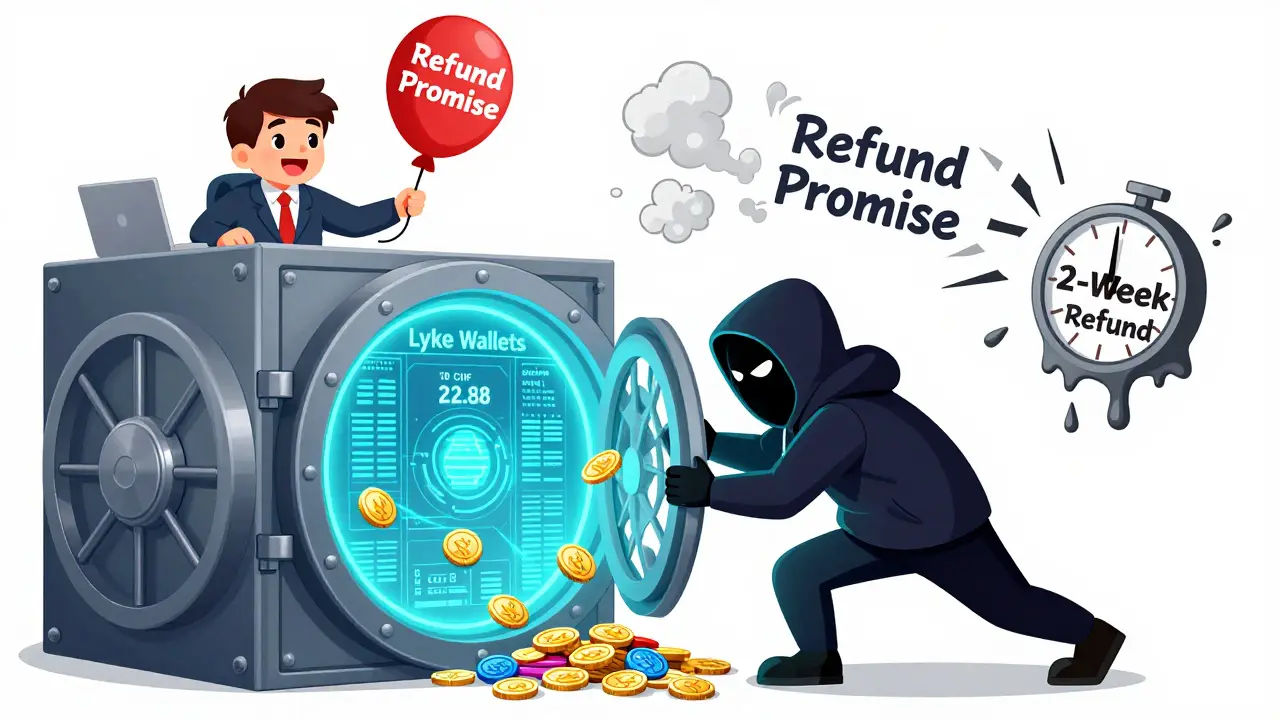
Lykke claimed it had a safety net. If hackers stole funds, they’d issue a signed refund within two weeks. Sounds reassuring? It wasn’t. There was no third-party audit. No insurance fund. No cold storage breakdown. Just a promise written in a blog post.
Then came June 4, 2024.
A hacker broke in. They drained about CHF 22.8 million - roughly $25 million USD - from Lykke’s wallets. That was a quarter of the entire company’s assets. The exchange immediately halted all withdrawals. The website went quiet. Customer support stopped answering. Emails bounced back as automated replies.
Lykke’s "colored tokens" system didn’t save anyone. The stolen tokens were canceled - yes. But new ones were never issued. Why? Because Lykke didn’t have the money to cover them. The refund policy? Gone. Vanished. No one got paid.
What Happened After the Hack?
By October 2024, Lykke posted a vague update: "The systems are ready for full operation. We are deciding whether all other conditions for continuation are met." It sounded hopeful. But it was a smoke screen.
By November 2025, multiple financial watchdogs confirmed Lykke had been declared insolvent. Its proprietary token, LKK, dropped to $0. Its website became a static page with no login option. Customer support channels were permanently offline. Trustpilot showed 87% of recent reviews were from users who lost everything.
One user, "CryptoLoser88," posted on October 12, 2024: "I had $3,200 in ETH and BTC. After the hack, they promised to refund me. Four months later, I got an auto-reply saying "We are reviewing your case." I’ve sent 17 emails. No one answers. I’m out $3,200 and counting."
There were no class-action lawsuits. No recovery fund. No official announcement of bankruptcy. Just silence.
Why Lykke Failed When Others Survived
Lykke wasn’t the first exchange to collapse. But it was one of the most dangerous because it looked legitimate.
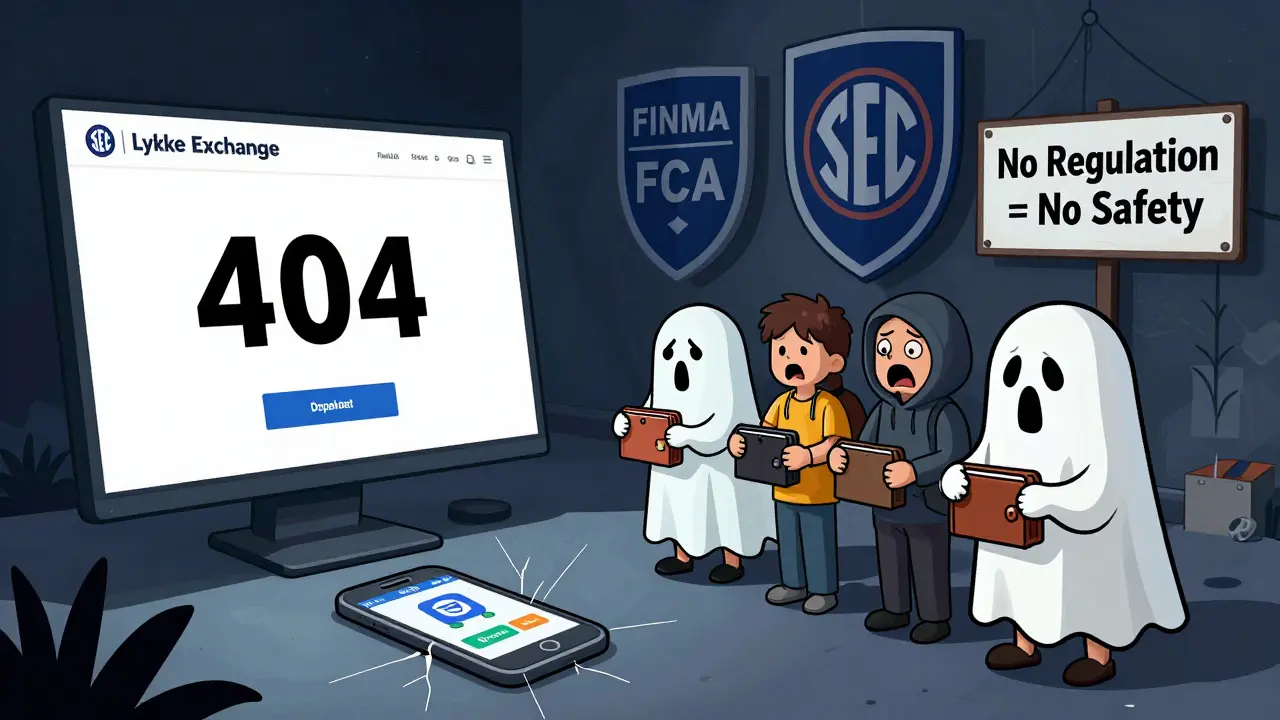
It was based in Switzerland - a country known for financial stability. It had a professional website. It offered 24/7 live chat (before the hack). It was listed on CoinMarketCap. But here’s the truth: Lykke was never regulated by any major financial authority. BrokerChooser called it out in 2023: "We wouldn’t trust LYKKE with our own money as it is not regulated by a financial authority with strict standards."
Most major exchanges - Binance, Kraken, Coinbase - are regulated. They hold user funds in segregated accounts. They carry insurance. They get audited quarterly. Lykke had none of that. It operated like a startup with big dreams and zero safeguards.
Its zero-fee model wasn’t sustainable. It couldn’t attract enough volume to offset the cost of running servers, compliance, and support. So it relied on user deposits to fund operations. That’s called a Ponzi structure - not illegal, but incredibly risky.
What You Should Learn from Lykke’s Collapse
If you’re looking for a crypto exchange today, ask yourself these questions:
- Is the exchange regulated by a recognized financial authority like FINMA, FCA, or SEC?
- Does it use cold storage for 95%+ of user funds?
- Is there a publicly available audit report from a reputable firm?
- Are withdrawal limits and fees clearly listed - not hidden behind "zero fees" marketing?
- Does it have a proven track record of surviving market crashes and hacks?
Lykke had none of these. It had a flashy interface, a catchy slogan, and a founder with a good reputation. But none of that protects your money.
Final Verdict: Don’t Even Consider Lykke
As of February 2026, Lykke Exchange is dead. No one is trading on it. No one is getting their money back. The website is a ghost. The mobile app won’t connect. The company is gone.
Its story is a warning. Not every exchange that looks professional is safe. Not every zero-fee offer is a gift. Sometimes, it’s a trap.
If you’re looking for a reliable exchange today, stick to the big names with clear regulation, transparent audits, and real insurance. Lykke was a gamble that lost. Don’t make the same mistake.
Is Lykke Exchange still operational in 2026?
No, Lykke Exchange is not operational as of February 2026. Following a major cyberattack in June 2024 that stole approximately CHF 22.8 million (around $25 million USD), the exchange halted all withdrawals and ceased customer support. By late 2024, it was declared insolvent. Its website is now static, its mobile app no longer connects, and all trading functions have been permanently disabled.
Did users get their money back after the Lykke hack?
No, users did not get their money back. Lykke claimed it would issue refunds within two weeks of a hack, but this policy was never fulfilled. After the June 2024 breach, thousands of users reported their funds were permanently locked. Over 87% of recent reviews on Trustpilot and Reviews.io confirm complete loss of access. No compensation was ever paid, and there is no active recovery process.
Why did Lykke Exchange have zero trading fees?
Lykke claimed zero fees to attract traders away from competitors like Binance and Coinbase, which charge 0.1% or more per trade. But this model wasn’t sustainable. Without fees, Lykke relied on user deposits and high trading volume to cover operational costs. With low liquidity and only 150,000-200,000 users, it couldn’t generate enough revenue. The zero-fee model was a marketing tool that masked deeper financial instability.
Was Lykke Exchange regulated?
No, Lykke was not regulated by any major financial authority. Although it was based in Switzerland, it did not hold a license from FINMA (Swiss Financial Market Supervisory Authority) or any other recognized regulator. BrokerChooser explicitly stated in 2023 that Lykke "is not regulated by a financial authority with strict standards." This lack of oversight meant there was no legal requirement to protect user funds or maintain reserves.
What made Lykke’s "colored tokens" system risky?
Colored tokens were digital representations of assets (like Bitcoin or gold) stored only within Lykke’s internal system - not on public blockchains. This meant users didn’t truly own their assets. If Lykke’s system was hacked or shut down, users had no recourse. The system assumed Lykke could always replace stolen tokens, but it had no backup funds or insurance. When the hack happened, there was nothing left to replace them with. It turned out to be a dangerous illusion of security.
Could Lykke have survived if it hadn’t been hacked?
Unlikely. Even before the hack, Lykke struggled with poor liquidity, high spreads, and low trading volume compared to major exchanges. Its zero-fee model couldn’t generate enough revenue to cover compliance, infrastructure, and support. Analysts from FXStreet and Crypto Bureau noted its business model was inherently fragile. Without massive funding or a merger with a larger player, it would have collapsed under financial pressure - the hack just accelerated the inevitable.
kieron reid
February 20, 2026 AT 14:42Zero fees? Yeah right. That's how you lure in the suckers. I traded on Lykke for three months before the hack. Every trade cost me more in slippage than I saved on fees. My BTC buy orders were always 5% higher than Binance. I didn't need a hack to lose money - Lykke did it for me, quietly, one trade at a time.
yogesh negi
February 20, 2026 AT 17:16Guys, I feel you. I lost my entire portfolio too. But let’s not forget - Lykke wasn’t the only one. Many small exchanges promise zero fees to gain traction. The real lesson? Never trust a platform that doesn’t have cold storage, audits, or regulation. I’ve switched to Kraken now - fees are small, but my funds are safe. You’re worth more than a gimmick.
Nikki Howard
February 22, 2026 AT 10:13Lykke was a textbook case of regulatory arbitrage. Swiss base? Cool. FINMA license? Nope. They operated in a gray zone, exploiting the perception of European legitimacy. The "colored tokens"? A legal loophole wrapped in marketing fluff. I'm not surprised they vanished. What shocks me is how many people still think "it looked professional" equals "safe."
Tarun Krishnakumar
February 24, 2026 AT 09:19Let’s be real - this wasn’t a hack. It was a coordinated exit. The "hacker"? Probably an inside job. Think about it: they drained CHF 22.8 million right after the Fed hinted at rate cuts. Coincidence? I think not. Lykke was running on user deposits like a Ponzi. When the money stopped flowing in, they pulled the plug. The "hack" was just the cover story. The real crime? They let thousands believe they had a safety net. They didn’t. They never did.
jennifer jean
February 24, 2026 AT 12:17rip lykke 😔 i had like $4k in there and now it's just a ghost site. i'm just glad i didn't go all-in. i learned the hard way: if it sounds too good to be true, it probably is. i'm sticking to coinbase now - fees suck, but at least i can sleep at night. 🙏
george chehwane
February 26, 2026 AT 06:42The real failure here wasn't liquidity or slippage - it was ontological. Lykke conflated *asset representation* with *asset ownership*. Their "colored tokens" were not tokens at all - they were liabilities disguised as assets. A blockchain-native system doesn't need a centralized custodian to validate value. Lykke didn't innovate - they regressed. They built a 2008-style bank with a crypto veneer. The collapse wasn't unexpected. It was inevitable.
Jeremy Fisher
February 26, 2026 AT 17:14I'm from the U.S., but I used Lykke because I thought Switzerland = trustworthy. Big mistake. I had my whole life savings in LKK tokens. I still check the website every week like a fool. I even emailed their "support" 12 times. Got auto-replies. One said "We are reviewing your case." I'm not mad - I'm just… disappointed. We all want to believe in something better. But trust without verification? That's not innovation. That's naivety.
Anandaraj Br
February 28, 2026 AT 03:56AJITH AERO
March 1, 2026 AT 08:39Geet Kulkarni
March 2, 2026 AT 22:51As a financial analyst, I find Lykke's collapse deeply instructive. Their zero-fee model was not sustainable - it was a liquidity trap. The absence of fees removed revenue, not risk. Their "colored tokens" system was a regulatory nightmare, and their lack of insurance was indefensible. Moreover, their decision to remain unregulated despite operating in a jurisdiction with strong financial oversight was a deliberate choice to evade accountability. This was not a failure of technology - it was a failure of governance. One must ask: if a platform refuses to be held to standards, why should we trust it with our capital?
Paul David Rillorta
March 3, 2026 AT 17:09andy donnachie
March 5, 2026 AT 08:14Lykke had potential. Clean UI, good asset selection. But they skipped the fundamentals: audits, insurance, cold storage. I used them for small trades - never more than I could afford to lose. The lesson? Don't go all-in on any exchange, especially one without regulation. Stick to the big three: Coinbase, Kraken, Binance. They’re not perfect, but they’ve survived multiple bear markets. That’s worth something.
Lauren Brookes
March 6, 2026 AT 22:30It’s weird how we romanticize innovation until it fails. Lykke wasn’t evil - they were just naive. They thought if they built something beautiful, people would believe in it. But money doesn’t care about aesthetics. It cares about security, transparency, and sustainability. I still think their idea - zero fees - was noble. But noble ideas need strong foundations. Without them, they crumble. And now, thousands are left picking up the pieces.
Chris Thomas
March 7, 2026 AT 19:57Their "colored tokens" were not tokens - they were promissory notes. A blockchain doesn’t need a central authority to verify ownership. Lykke’s entire architecture was a relic of pre-blockchain finance. They were a custodial exchange masquerading as a decentralized platform. Their collapse wasn’t a hack - it was the natural consequence of a flawed model. If you’re using a platform that holds your keys, you’re not trading crypto - you’re trusting a bank. And banks fail. Always have. Always will.
JJ White
March 9, 2026 AT 14:12Let me be clear: Lykke didn’t collapse because of a hack. They collapsed because they were never meant to last. The "zero fees" was a Trojan horse. The real business model? Attract users, collect deposits, use those deposits to cover operational costs, and then vanish when the money ran out. The hack? A convenient narrative. The truth? This was a deliberate, premeditated exit scam. And anyone who defended them after the fact is either delusional or complicit.
Nicole Stewart
March 10, 2026 AT 05:38Alan Enfield
March 10, 2026 AT 13:08I used Lykke because I liked the interface. I didn’t know about the colored tokens or the lack of audits. I trusted the Swiss branding. Now I know better. If you’re going to trade crypto, do your homework. Check if they’re regulated. Check if they have cold storage. Check if they’ve been audited. Don’t just look at the pretty app. The real safety is in the paperwork - not the pixels.
Jennifer Riddalls
March 11, 2026 AT 01:06i know i'm late to this but i still cry sometimes thinking about my 1.2 eth. i trusted lykke because they seemed so clean and professional. i didn't think about the risks. i thought they were different. they weren't. i'm learning now. i'm not mad. just sad. and more careful now. 🤍
kieron reid
March 11, 2026 AT 16:17Yeah, I saw your comment about Kraken. Good move. But don’t just switch - educate yourself. I went back and read every post from 2023 where people warned about Lykke. They were all right. The problem isn’t just bad platforms - it’s our willingness to ignore red flags because the UI looks nice. Next time, ask: "Who’s holding my keys?" Not "How fast can I trade?"