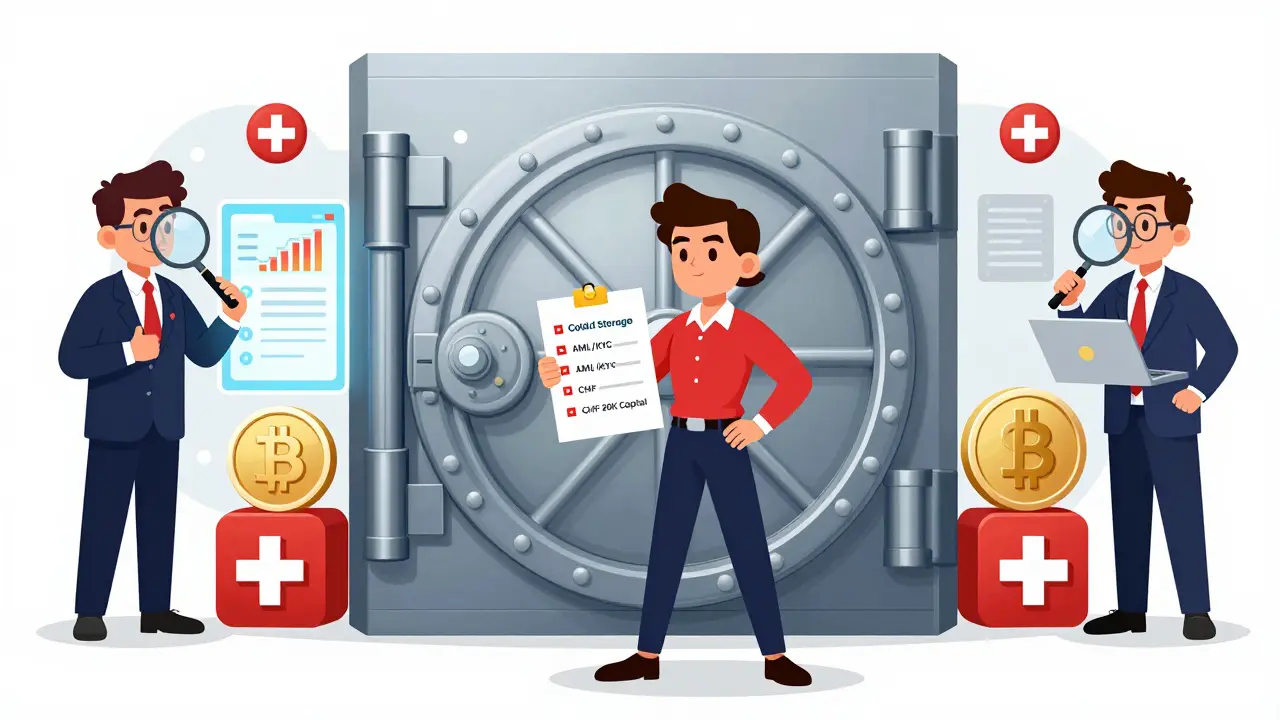
Getting a crypto exchange license from FINMA isn’t just paperwork-it’s a full-scale operation. If you’re thinking about launching a cryptocurrency exchange in Switzerland, you’re not just applying for a permit. You’re building a business that meets the strictest financial standards in Europe. And yes, it’s harder than most countries. But if you make it through, you earn something rare: institutional trust.
Why Switzerland? And Why FINMA?
Switzerland doesn’t treat crypto like a wild experiment. It treats it like finance. That’s why FINMA-the country’s independent financial regulator-has spent years crafting rules that keep innovation alive while shutting down shady operators. Since 2018, they’ve been refining their approach. By 2023, they had clear guidelines for every type of crypto business. And in 2025, those rules got even tighter.The goal? Legal clarity. Consumer protection. And global credibility. Unlike places that classify crypto as a currency or commodity, FINMA looks at what your business actually does. Are you trading? Custodying? Clearing? Each activity triggers a different license. This activity-based model is why Switzerland is called Crypto Valley-not because it’s trendy, but because it’s predictable.
What Licenses Do You Actually Need?
You don’t just get one “crypto license.” FINMA breaks it down by function:- Crypto Exchange License: For platforms that let users trade crypto for fiat or other crypto.
- Crypto Broker License: For intermediaries who match buyers and sellers but don’t hold funds.
- Crypto Trading License: For firms that buy and sell crypto directly with clients.
- VASP License: Required if you’re a Virtual Asset Service Provider-this covers most exchanges and custodians.
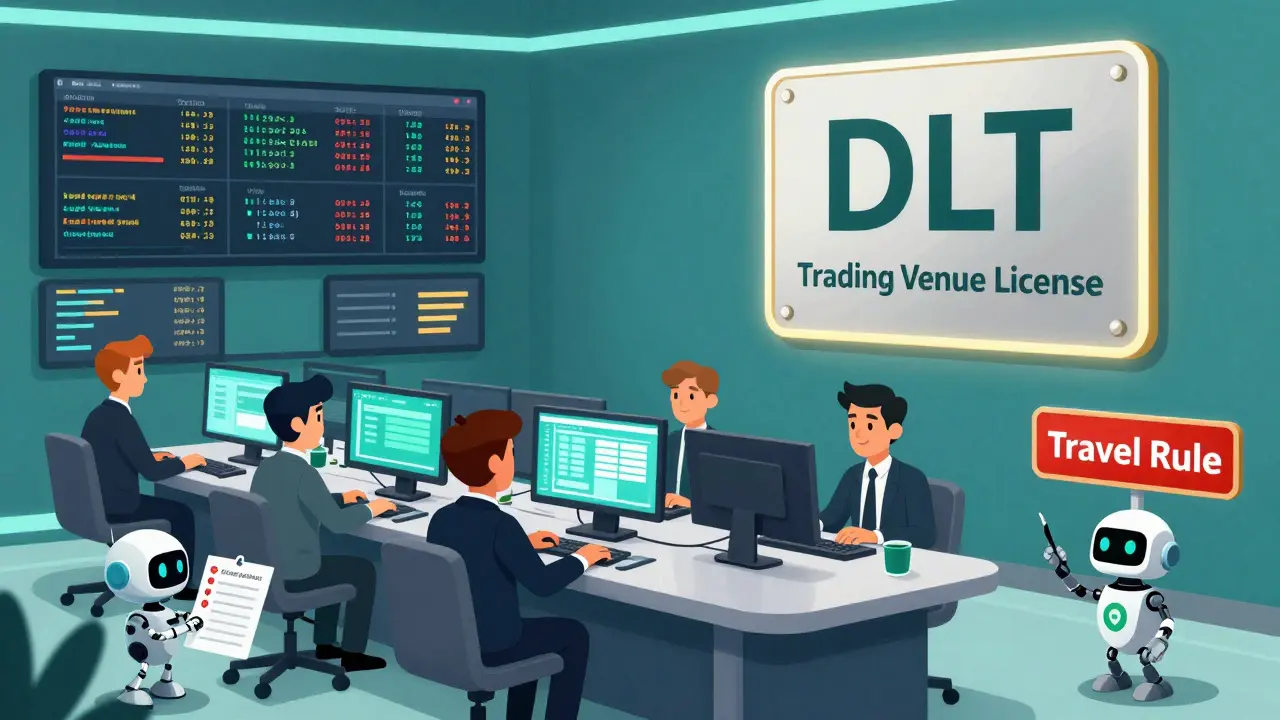
- DLT Trading Venue License: The gold standard. Lets you trade, clear, settle, and custody DLT-Securities (tokenized assets) under one roof. Only a handful have this, like SIX Digital Exchange.
Most new exchanges start with the VASP or Crypto Exchange license. But if you’re planning to tokenize stocks, bonds, or real estate, the DLT Trading Venue license is your endgame. It’s the only one that lets you serve institutional investors directly.
Company Structure and Capital Requirements
You can’t just register as a sole proprietor. FINMA requires you to incorporate as either an AG (Aktiengesellschaft) or a GmbH.- AG (Joint-Stock Company): Minimum share capital of CHF 100,000 (about $110,000).
- GmbH (Limited Liability Company): Minimum share capital of CHF 20,000 (about $22,000).
Most serious exchanges go with the AG. Why? Because banks won’t touch you with a GmbH unless you’re already profitable. And FINMA expects you to have enough capital to survive 12 months without revenue.
Don’t forget: this is just the starting point. You’ll need to prove you can cover ongoing compliance, cybersecurity, and staffing costs. The average licensed exchange spends CHF 500,000+ in the first year just on operations.
The Application Process: 4 to 8 Months of Scrutiny
There’s no shortcut. The timeline is brutal:- Company Incorporation: 3-4 months. You need Swiss legal counsel, notarized documents, and a local registered office.
- Documentation Package: 1-2 months. This includes your business plan, financial projections, AML/KYC policies, and IT security architecture.
- FINMA Review: 1-4 months. They’ll ask for revisions. Often multiple times.
They don’t just read your documents-they test them. If your AML policy says you’ll verify identities with government IDs, they’ll check if your system can actually do it. If your security plan says you’ll store 95% of assets offline, they’ll demand proof of cold wallet audits.
Technical Requirements You Can’t Ignore
FINMA doesn’t care how fancy your website looks. They care about what’s behind the scenes:- Cold Storage: At least 95% of client crypto must be stored offline in hardware wallets.
- Multi-Signature Wallets: Withdrawals require 3-of-5 authorized signatures. No single person can move funds.
- Penetration Testing: Done annually by a FINMA-approved auditor. No exceptions.
- System Resilience: You must recover from a cyberattack in under 4 hours (RTO) and lose no more than 15 minutes of data (RPO).
- Travel Rule Compliance: Since January 2025, all transactions over CHF 1,000 must share sender and recipient info with other regulated entities.
These aren’t suggestions. They’re non-negotiable. One exchange was rejected in 2024 because their cold storage was in a third-party data center without direct physical access logs.
Who Gets Approved? Who Gets Rejected?
Approval rates are around 68% for well-prepared applications. But “well-prepared” means more than having a good lawyer.Successful applicants usually have:
- A team with real financial compliance experience-not just blockchain devs.
- Banking relationships already in place (62% of applicants fail here).
- Clear documentation showing how they’ll handle client funds separately from company funds.
- Proof they’ve hired at least 3 full-time compliance staff.
Rejections happen for things you wouldn’t expect:
- Using a decentralized governance token that gives voting rights to token holders-FINMA sees this as a “professional basis” issue.
- Claiming your platform is “decentralized” but still holding private keys.
- Not having a Swiss-based compliance officer with FINMA-approved credentials.
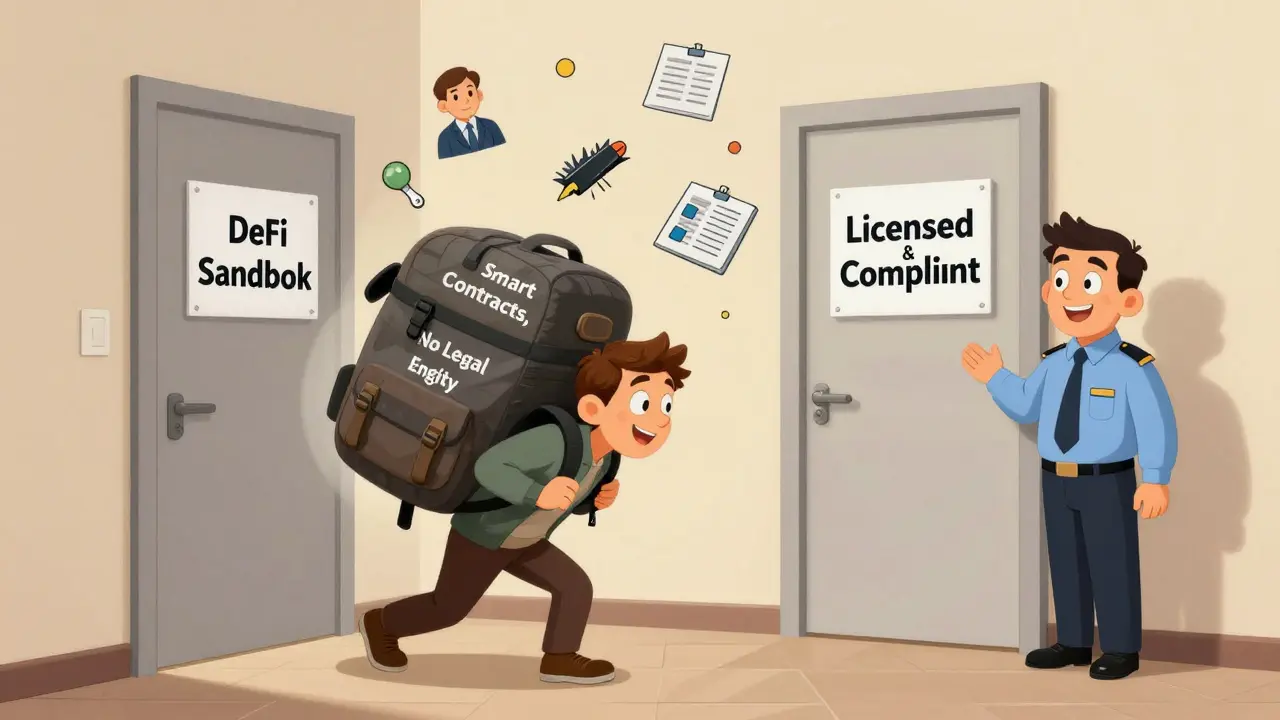
One founder on Reddit said FINMA rejected their DeFi protocol because their smart contracts didn’t have a “clear legal entity behind them.” Even though the code was open-source, FINMA said: “No person, no license.”
Costs: It’s Not Just the Application Fee
The government fee? Around CHF 5,000-15,000. That’s the tip of the iceberg.Here’s what it really costs to get licensed:
- Legal and incorporation: CHF 15,000-30,000
- Compliance consultants: CHF 8,000-15,000 per month (for 3-6 months)
- Security audits and penetration tests: CHF 10,000-25,000
- Banking setup fees and initial deposits: CHF 20,000+
- Staffing (compliance, tech, ops): CHF 200,000+ in the first year
Total? CHF 20,000-100,000+ depending on complexity. Most spend closer to CHF 70,000-80,000.
And once you’re licensed? Compliance costs don’t drop. The average exchange spends 25-40% more than projected on ongoing AML checks, reporting, and audits.
How Switzerland Compares to the Rest of the World
Switzerland isn’t the easiest place to get licensed-but it’s one of the most respected.| Jurisdiction | Typical Timeline | Minimum Capital | Key Advantage | Key Drawback |
|---|---|---|---|---|
| Switzerland (FINMA) | 4-8 months | CHF 20,000-100,000 | Institutional credibility, clear rules | Slow, expensive, strict on decentralization |
| EU (MiCA) | 3-6 months | EUR 125,000 | Passporting across 27 countries | Less flexibility for new models |
| Singapore (MAS) | 6-8 weeks | USD 100,000 | Fast approval, tech-friendly | Smaller market, less institutional trust |
| Wyoming, USA | 2-4 months | USD 100,000 | State-level support, crypto-friendly laws | Not recognized in EU or Switzerland |
| Liechtenstein | 4-6 months | CHF 50,000 | Blockchain-specific laws | Very small market, limited banking access |
Switzerland leads in institutional adoption. Eighty-three percent of European hedge funds use Swiss-licensed custodians. But the EU’s MiCA regulation is eating into new business. In 2024, 22% of startups that would’ve chosen Switzerland went to the EU instead.
What’s Changing in 2025 and Beyond?
FINMA isn’t standing still:- Streamlined DLT Licenses: Since September 2024, applications meeting predefined tech standards now get approved in 6-8 weeks-not 4 months.
- Revised AMLA: Effective January 1, 2025, the Travel Rule now applies to all transactions over CHF 1,000. No more loopholes.
- DeFi Sandbox: Launching Q2 2025. Non-custodial protocols can test in a controlled environment with lower capital requirements.
These changes show FINMA isn’t trying to kill innovation. They’re trying to bring it into the light. The sandbox is a big deal-it’s the first time they’ve acknowledged that true decentralization might not fit traditional financial rules.
Is It Worth It?
Ask the companies that made it through.According to a 2024 FINMA survey, 92% of licensed exchanges are profitable by year three. Clients trust them. Banks work with them. Institutions use them. Bitcoin Suisse, Sygnum, and SEBA Bank didn’t get where they are by luck. They built systems that passed FINMA’s toughest checks.
But if you’re a small team with a cool idea and no compliance budget? You’ll struggle. The system favors those who can afford lawyers, auditors, and full-time compliance officers. It’s not designed for solo founders.
Still-if you’re serious about serving institutional investors, tokenizing assets, or building a long-term crypto business in Europe-Switzerland is still the gold standard. No other country gives you the same level of legal certainty. And in finance, certainty is worth more than speed.
Do I need a Swiss bank account to get a FINMA crypto license?
Yes. You need a Swiss bank account to hold your company’s capital and process client funds. Most banks require proof of a completed business plan, AML policies, and a Swiss-based compliance officer before opening an account. This is one of the biggest bottlenecks-62% of applicants fail because they can’t secure banking.
Can I apply for a FINMA license if I’m not based in Switzerland?
You can’t apply from abroad. Your company must be legally incorporated in Switzerland with a registered office and a local compliance officer. You can hire foreign staff, but key roles-like the compliance officer and board members-must be physically present in Switzerland.
Does FINMA regulate decentralized exchanges (DeFi)?
Yes-if you’re interacting with users in Switzerland. FINMA doesn’t care if your code is decentralized. If users can deposit funds, trade, or withdraw through your platform, and you’re providing a service, you’re a VASP. Even if your smart contracts run on Ethereum, FINMA will require a license. Their rule: substance over form. The 2023 DeFi guidance made this crystal clear.
How long does a FINMA license last?
It doesn’t expire-but it can be revoked. Licenses are ongoing as long as you meet all regulatory requirements. You must submit annual reports, undergo audits, and update your AML policies. If you violate rules, FINMA can suspend or cancel your license immediately.
What happens if I operate without a FINMA license?
You’re breaking Swiss law. FINMA can freeze assets, shut down operations, and refer cases to criminal prosecution. Foreign exchanges targeting Swiss users have been blocked by Swiss banks and ISPs. Even if you’re based overseas, if Swiss residents use your platform, you’re subject to FINMA’s jurisdiction.
Next Steps If You’re Serious
Start by hiring a Swiss financial lawyer who’s worked with FINMA before. Don’t try to do this alone. Then, incorporate your company as an AG or GmbH. Secure your capital. Build your AML/KYC system with real-world testing. Get your security architecture reviewed by a FINMA-approved auditor. And prepare for a long, expensive, but ultimately valuable journey.If you make it through, you won’t just have a license. You’ll have a stamp of approval that opens doors across Europe. And in crypto, that’s rare.
Surendra Chopde
January 14, 2026 AT 02:27Tiffani Frey
January 14, 2026 AT 13:54Tre Smith
January 15, 2026 AT 17:40Ritu Singh
January 17, 2026 AT 01:20kris serafin
January 17, 2026 AT 12:29Jordan Leon
January 17, 2026 AT 14:01Rahul Sharma
January 17, 2026 AT 19:34Gideon Kavali
January 19, 2026 AT 01:45Allen Dometita
January 19, 2026 AT 18:53Brittany Slick
January 20, 2026 AT 21:51