Blockchain Fraud Prevention Estimator
This calculator estimates potential savings from implementing blockchain technology to prevent insurance fraud. Based on data from the article, blockchain can reduce fraud by 30-60% in real-world implementations. Input your company's metrics to see how blockchain could transform your fraud prevention efforts.
Current Annual Fraud Cost
Based on your current metrics
Potential Savings
After implementing blockchain
Key Insight: The Coalition Against Insurance Fraud reports that 12% of claims involve duplicate claims or fraudulent documentation. Blockchain reduces these types of fraud by creating a shared source of truth.
Implementation ROI: Your blockchain investment could pay for itself in months based on current fraud reduction estimates.
Important Consideration: Blockchain is most effective for fraud tied to data manipulation (like duplicate claims or fake documents). It won't prevent physical fraud like staged accidents or faked injuries. For best results, combine blockchain with AI monitoring.
Insurance fraud costs the industry over $55 billion a year in the U.S. alone. That’s money taken from honest policyholders through higher premiums, slower claims, and broken trust. For decades, insurers relied on manual reviews, isolated databases, and rule-based systems to catch fraud. But those systems are outdated. Fraudsters now exploit data silos, duplicate claims across companies, and fake identities faster than adjusters can spot them. Enter blockchain-a technology not built for insurance, but perfectly suited to fix its biggest weakness: trust.
Why Traditional Fraud Prevention Fails
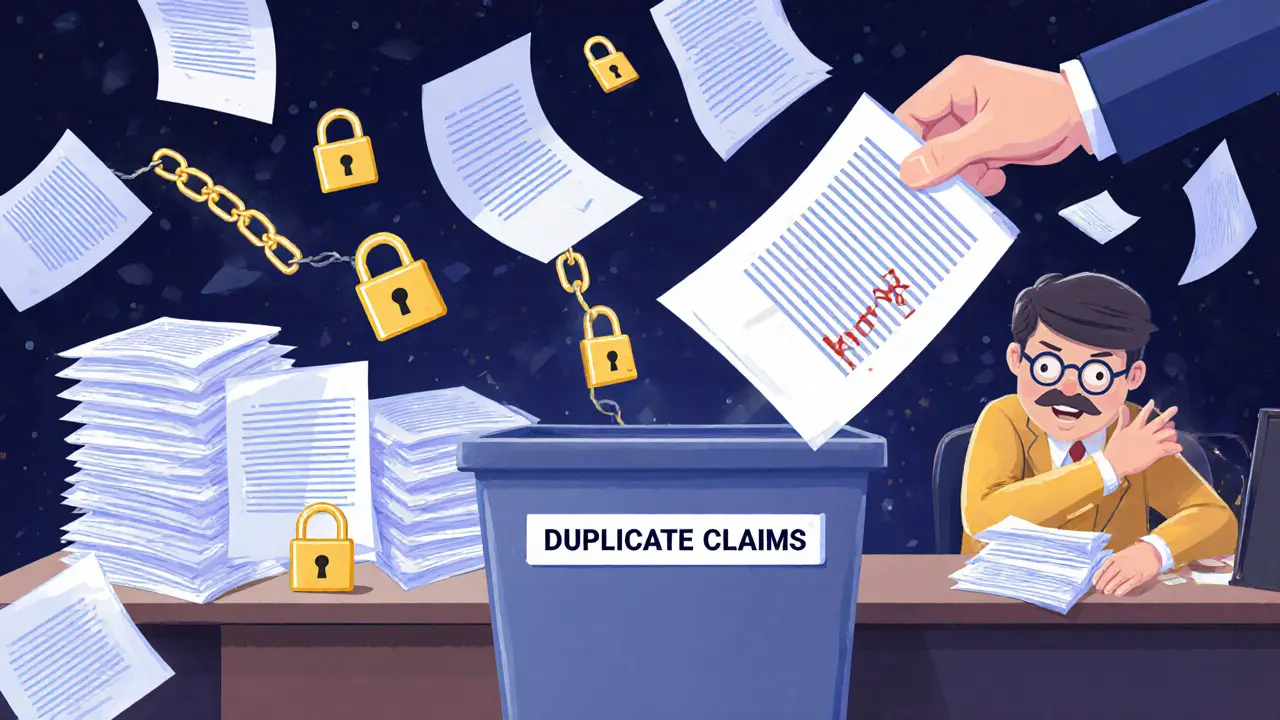
Most insurers still use internal databases that don’t talk to each other. A person can file a car accident claim with Company A, then file another for the same accident with Company B. Without shared records, both claims get paid. According to the Coalition Against Insurance Fraud, this kind of duplicate claim happens in about 12% of cases. Even worse, medical providers sometimes bill multiple insurers for the same treatment. Adjusters spend weeks chasing down paperwork, verifying hospital records, and calling doctors. By the time they catch fraud, the money’s already gone. Traditional AI tools help-they can flag odd patterns like frequent claims from the same address or sudden spikes in injury reports. But they’re blind to the truth of the data itself. If someone submits a fake medical report, AI can’t tell it’s forged unless it’s seen that exact document before. And if the data comes from 10 different systems with different formats, the AI gets confused. That’s where blockchain changes everything.How Blockchain Creates a Shared Source of Truth
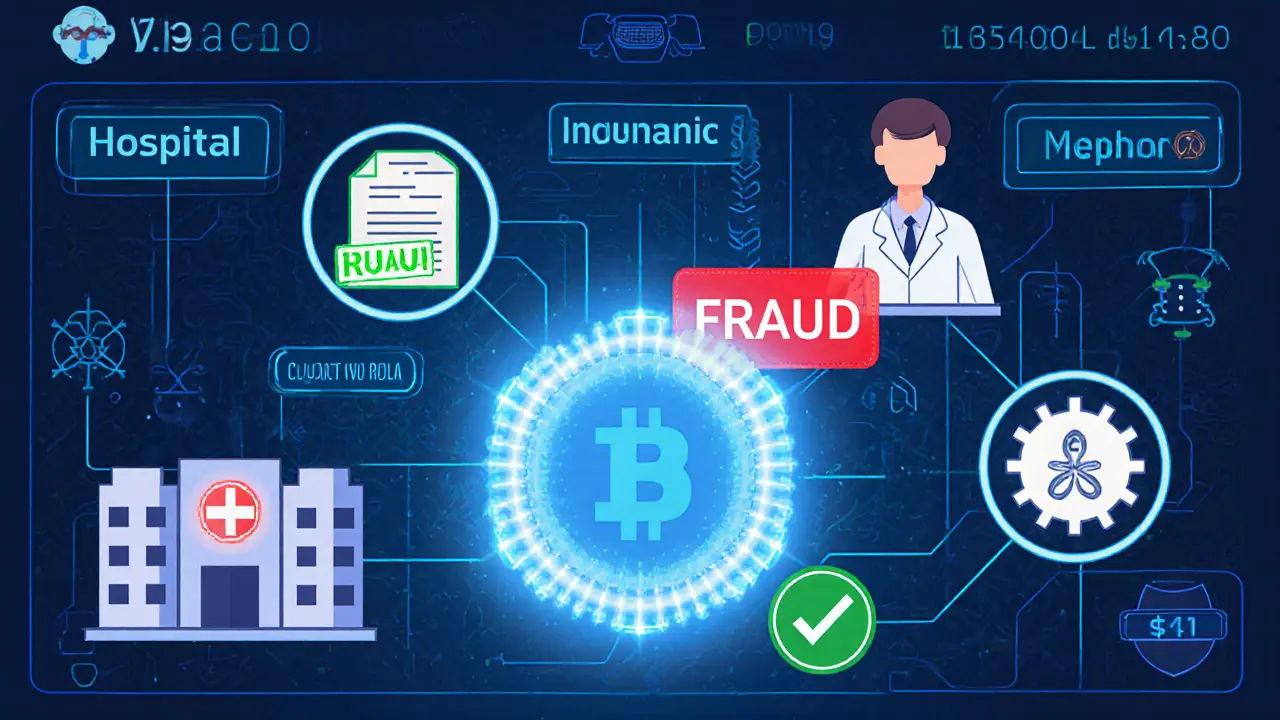
Blockchain isn’t just a fancy database. It’s a distributed ledger where every transaction is verified by multiple parties and locked in place with cryptography. Once a claim, policy, or medical record is added to the chain, it can’t be altered. No one person controls it. No central server can be hacked to delete evidence. That’s the key: immutability. In insurance, this means every step of a claim-policy purchase, accident report, medical diagnosis, repair invoice, payment-is recorded on the blockchain. All parties: the insurer, the policyholder, the hospital, the mechanic, even third-party auditors-can see the same version of the truth. No more arguing over who sent what document. No more lost files. If a claim is flagged as fraudulent, auditors can trace every single step back to its origin. For example, in a health insurance claim, a hospital uploads the diagnosis code and treatment details directly to the blockchain. The insurer’s system checks it against the policy terms via a smart contract. If the treatment is covered, payment is automatically triggered. If something doesn’t match-like a procedure not approved under the plan-the claim is paused and flagged for review. All of this happens in minutes, not weeks.Real Results: Where Blockchain Is Already Working
It’s not theoretical. Major insurers are already seeing results. In 2023, B3i-a group of over 40 global insurers including Allianz and Zurich-used blockchain to cut marine cargo fraud by 42%. Before, falsified shipping manifests and fake loss reports were common. Now, every shipment’s GPS data, temperature logs, and customs documents are uploaded in real time to a shared blockchain. Any mismatch triggers an instant alert. Fraudsters can’t fabricate the data because it comes from sensors and official systems, not human input. Estonia’s national health system integrated blockchain with its insurance claims in 2020. Between 2020 and 2023, healthcare fraud dropped by 22%. Why? Doctors and pharmacies now submit claims directly to the blockchain. The system cross-checks them against patient records and previous treatments. If someone tries to bill for a treatment they never received, the system blocks it before payment. A life insurer in the U.S. slashed death benefit payout time from 30 days to under 72 hours by connecting to verified digital death certificates on the blockchain. No more waiting for paper copies from funeral homes or state vital records offices. The certificate is cryptographically signed and instantly verifiable. Even parametric insurance-where payouts trigger automatically based on events like earthquakes or flight delays-is now faster and more secure. AXA’s Fizzy product pays out within hours after a flight delay is confirmed by an official aviation data feed on the blockchain. No claims form. No adjuster. No fraud.How It Works: The Tech Behind the Trust
Most insurance blockchains today are permissioned-not public like Bitcoin. That means only authorized parties (insurers, providers, regulators) can join. This keeps sensitive data private while still allowing verification. The core tech includes:- Smart contracts: Self-executing code that auto-runs when conditions are met. Example: “If the hospital submits a claim for a knee MRI and the policyholder’s plan covers it, pay $850.”
- Cryptographic hashing: Every record gets a unique digital fingerprint (using SHA-256 or Keccak-256). Change one letter? The hash changes completely. That’s how tampering is caught instantly.
- Consensus mechanisms: Like Practical Byzantine Fault Tolerance (PBFT). Multiple parties must agree a record is valid before it’s added. No single entity can cheat the system.
- API integrations: Blockchain doesn’t replace old systems-it connects to them. Policy admin software, EHRs, claims platforms-all feed data into the chain through secure APIs.
Where Blockchain Falls Short
Blockchain isn’t magic. It can’t fix bad data. If a doctor enters the wrong diagnosis, or a policyholder lies about their driving record, the blockchain will still record it-because it doesn’t know if the input is true. That’s the “garbage in, garbage out” problem. Blockchain ensures the record stays unchanged. It doesn’t guarantee the original data was accurate. It also struggles with scale. Most blockchain networks handle 1,000-1,500 transactions per second. Traditional databases process 50,000+. During peak claim seasons, like after a hurricane, blockchain networks can slow down or backlog. Privacy is another hurdle. Medical records are sensitive. While blockchain encrypts data, some regulations like GDPR require the right to be forgotten. But if data is on a blockchain, it can’t be deleted-only made unreadable. New solutions like zero-knowledge proofs (ZKPs) are fixing this. ZKPs let insurers verify a claim is valid without seeing the full medical history. The Monetary Authority of Singapore tested this in 2024 with success. And then there’s cost. Training claims staff to use blockchain tools takes 3-4 months. Hiring blockchain developers in the U.S. costs $130,000-$180,000 a year. Integration with legacy systems often takes 8-14 months. One U.S. auto insurer abandoned its blockchain pilot after 18 months because it couldn’t scale beyond 5% of claims.Blockchain + AI: The Real Future
The best fraud prevention isn’t blockchain or AI-it’s both. AI finds patterns: “This person filed 12 claims in 18 months, all for minor back injuries, all with the same chiropractor.” Blockchain confirms: “Are those claims real? Did the treatment happen? Was the policy active?” A 2023 study in IEEE Transactions on Engineering Management found AI alone detects complex fraud at 92% accuracy. Blockchain-integrated systems? 85%. But when combined, accuracy jumps to 96%. That’s because AI spots the suspicious behavior, and blockchain verifies the facts behind it. Major insurers are already moving this way. As of 2025, 33% of large insurers are testing hybrid systems. Think of it like this: AI is the detective. Blockchain is the evidence locker.Who’s Adopting It-and Who’s Not
Adoption is uneven. Enterprise insurers lead. Of the Fortune 500, 61% have at least one blockchain pilot running. Smaller companies join consortia like B3i to share costs and tech. Healthcare insurance leads adoption (38% of projects), followed by property/casualty (29%) and life insurance (22%). Why? Health claims involve the most parties-patients, doctors, labs, pharmacies, insurers-and the most fraud opportunities. But smaller insurers lag. Why? Cost. Complexity. Lack of internal tech teams. Many are waiting for standardized tools and clearer regulations. Regulatory confusion is real. The U.S. has 50 state insurance departments. The EU has 27 countries. Each has different rules on data storage, consent, and immutability. The NAIC published model regulations in late 2023, but adoption is slow.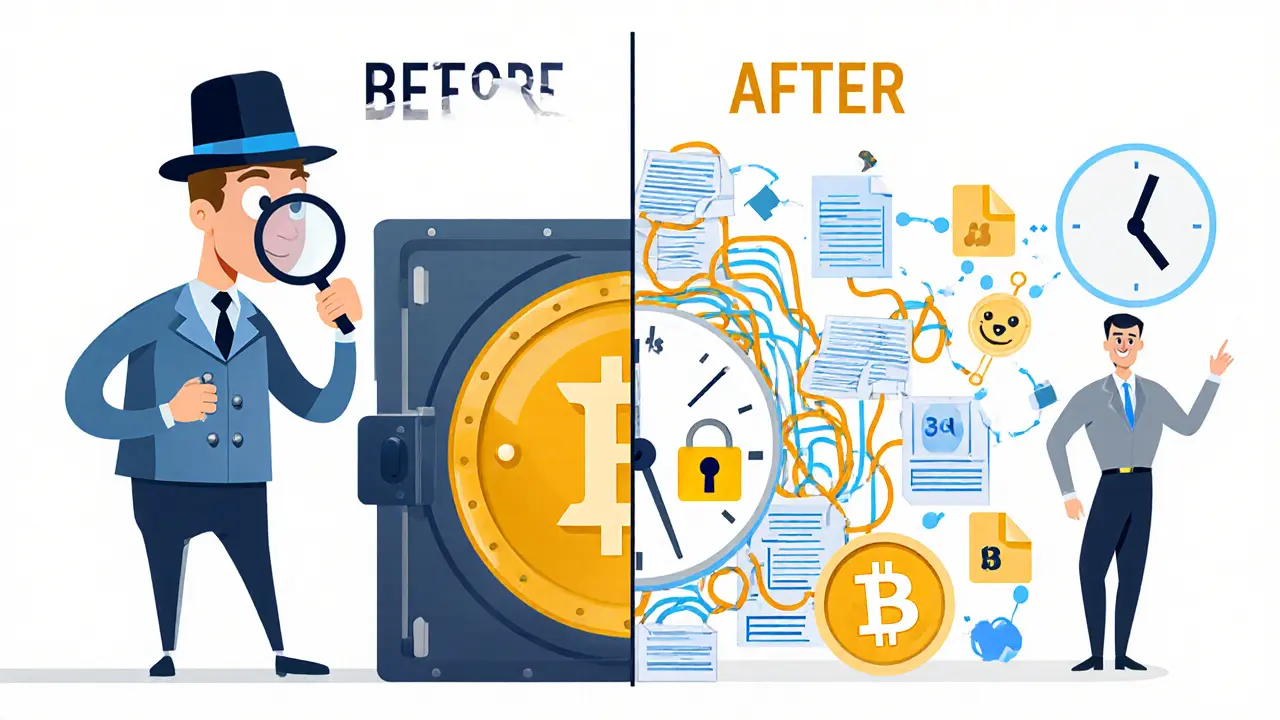
What’s Next: Tokenization, P2P, and Parametric Growth
The next wave is bigger than fraud prevention. Tokenization of insurance policies is already in 12 pilot programs. Instead of a PDF policy, you own a digital token on the blockchain that represents your coverage. It can be traded, transferred, or verified instantly. Peer-to-peer (P2P) insurance is growing. Groups of people pool money to cover each other’s losses. Smart contracts automatically distribute funds when claims are verified. No insurer needed. Just trust, code, and transparency. Parametric insurance-the kind that pays out based on triggers like weather or flight delays-is expected to grow from $1.2 billion to $7.8 billion by 2027. Blockchain makes it scalable and fraud-proof.Is Blockchain Right for Your Insurance Needs?
If you’re a large insurer with complex claims, multiple partners, and high fraud losses-yes. Blockchain cuts costs, speeds up payouts, and rebuilds trust. If you’re a small insurer with simple policies and low fraud rates? Maybe not yet. The cost and complexity outweigh the benefits. The key is starting small. Don’t try to overhaul everything. Begin with one use case: death certificate verification. Or parametric claims. Or cross-insurer duplicate claim checks. Prove the value. Then expand. Blockchain won’t eliminate fraud overnight. But it’s the first technology in decades that makes it possible to stop fraud before it happens-not after.Frequently Asked Questions
Can blockchain prevent all types of insurance fraud?
No. Blockchain is best at stopping fraud tied to data manipulation-like duplicate claims, fake documents, or identity theft. It can’t stop a person from faking an injury or staging a car crash. That requires human investigation. But when combined with AI, blockchain makes it much harder for fraudsters to succeed by locking down the digital trail.
How long does it take to implement blockchain in insurance?
Most enterprise implementations take 8 to 14 months. The biggest delays come from integrating with legacy systems, training staff, and standardizing data formats. Smaller pilots, like verifying digital death certificates, can be done in under 6 months.
Is blockchain more secure than traditional databases?
Yes, for specific threats. Traditional databases can be hacked, altered, or deleted by insiders. Blockchain can’t be changed once recorded, and it requires multiple parties to approve changes. This makes it far more resistant to tampering and insider fraud. But it’s not immune to bad data or poor access controls.
Does blockchain violate privacy laws like GDPR?
It can, because blockchain records are permanent. But new techniques like zero-knowledge proofs (ZKPs) let insurers verify claims without seeing personal data. For example, the system can confirm “this patient had a valid MRI” without revealing their diagnosis. Several regulators, including Singapore’s central bank, have approved ZKP-based systems as GDPR-compliant.
What’s the biggest barrier to wider adoption?
Interoperability. There are dozens of blockchain platforms, data formats, and regulatory rules. An insurer in Germany can’t easily share data with one in Texas if they use different systems. Industry-wide standards are still being developed. Until then, adoption will be slow and fragmented.
Evelyn Gu
November 26, 2025 AT 16:01Okay, I just read this whole thing, and I’m not even in insurance, but wow-this actually made me feel hopeful for once? Like, I’ve had to fight with my health insurer for six months over a simple MRI, and they lost half the paperwork. The idea that everything could just be... locked in place, unchangeable, visible to everyone who needs it? That’s not tech, that’s justice. I mean, imagine if your doctor’s note, your claim, your payment-all of it-was one chain of truth. No more ‘we don’t have your file,’ no more ‘it was sent to another department.’ Just... done. I’m not even mad anymore, just... impressed. And yeah, I know blockchain isn’t magic, but for once, it feels like magic that’s actually real.
Michael Fitzgibbon
November 27, 2025 AT 16:23Interesting read. I’ve seen this play out in my cousin’s claims process-three different insurers, same accident, two paid out. It’s insane. Blockchain doesn’t fix human lies, but it sure as hell shuts the door on the digital loopholes. I like how it’s not about replacing old systems but gluing them together with trust. Smart contracts? Yeah, that’s the quiet hero here. No drama. Just code doing what it’s told. Feels like the insurance industry finally grew up.
Komal Choudhary
November 27, 2025 AT 17:32So blockchain is like a digital ledger? But wait, why not just use Google Sheets with password protection? Lol. I mean, I get it’s fancy, but isn’t this just overkill? Also, who pays for all these devs? My uncle’s small agency in Mumbai can’t afford this. Why does tech always ignore the little guys? 😒
Vance Ashby
November 29, 2025 AT 02:14Blockchain in insurance? Bro. 😏 Just wait till the government starts using it. Next thing you know, your premiums will be auto-adjusted based on your TikTok likes. I’m not scared of fraud-I’m scared of what comes after. 👁️👁️
Brian Bernfeld
November 30, 2025 AT 04:16Let me tell you something-this isn’t just about fraud. This is about dignity. For years, people have been treated like criminals just for needing help. You file a claim, and they treat you like you’re trying to scam them. Blockchain flips that. It doesn’t assume guilt-it assumes truth. And when the system works, it pays out in 72 hours, not 30 days. That’s not tech. That’s compassion with code. The people who say ‘it’s too expensive’? They’re not thinking about the human cost of delay. People die waiting for payouts. This fixes that.
Ian Esche
December 1, 2025 AT 16:59Blockchain? Sounds like another Silicon Valley fantasy. We don’t need fancy tech-we need more cops, more audits, and less outsourcing. This is just another way for big insurers to avoid accountability while charging us more. And don’t get me started on ‘permissioned’ blockchains-sounds like a cartel with a whitepaper. USA first. Real solutions, not crypto theater.
fanny adam
December 1, 2025 AT 21:53Let’s be clear: blockchain is a surveillance tool disguised as innovation. Every medical record, every claim, every interaction-permanently logged, traceable, immutable. Who owns this data? Who controls the nodes? The NSA? The insurance conglomerates? The fact that this is being sold as ‘trust’ is the most dangerous lie of all. If you believe this is about transparency, you’re not paying attention. This is the end of privacy, wrapped in a smart contract.
Eddy Lust
December 2, 2025 AT 05:52Man, I read this and thought-this is what my grandma’s life should’ve been like. She died in 2018, and the life insurance took 8 months to pay out. They lost the form. Twice. If this thing works even half as good as they say, it’s a miracle. I’m not a techie, but I know when something’s fair. This feels fair. Even if it’s got bugs, it’s a step in the right direction. Keep going.
Casey Meehan
December 2, 2025 AT 06:29Okay but imagine if your car insurance policy was an NFT 🤯 You could sell it if you move states? Or trade it with your friend? And if you crash? The blockchain auto-pays you. No forms. No calls. Just boom. 🚗💥💰 I’m not even kidding. This is the future. Also, I bought a blockchain-themed hoodie. It’s fire. 🔥
Sierra Myers
December 4, 2025 AT 04:05AI + blockchain? Please. You’re just replacing one black box with another. AI decides what’s ‘suspicious,’ blockchain just records it. So what? You’re still trusting algorithms to judge your life. And who codes these algorithms? Big tech. Big insurers. Same people who raised your rates last year. This isn’t progress-it’s rebranding.
SHIVA SHANKAR PAMUNDALAR
December 4, 2025 AT 05:28Blockchain? It’s just another way for the rich to make the poor pay more while pretending they’re saving the world. The real fraud? The system itself. Why should I pay for someone else’s lie? But also-why should I trust a machine to decide if my broken leg is real? We’re outsourcing humanity to silicon. And we call it innovation. Pathetic.
Shelley Fischer
December 4, 2025 AT 20:21While the technological framework presented is undeniably sophisticated, it remains critically incomplete without addressing the sociopolitical implications of centralized control over immutable data. The absence of a clear, binding international governance model for cross-border insurance blockchains renders the entire architecture vulnerable to regulatory arbitrage and de facto monopolization by multinational entities. This is not innovation-it is institutional consolidation under a veneer of decentralization.
Puspendu Roy Karmakar
December 4, 2025 AT 22:10This is beautiful. Real talk-my brother’s clinic in Delhi got robbed of data last year. They lost 3 months of records. If this blockchain thing works even a little, it could save lives. No more lost files. No more begging for paperwork. Just clean, clear, honest records. I don’t care if it’s fancy tech. If it helps people, I’m all in. Thank you for writing this.
Wilma Inmenzo
December 6, 2025 AT 18:49Wait… so you’re telling me that the same people who’ve been lying to us for decades are now going to ‘secure’ our data with… a blockchain? 😂 And you believe that? Who’s auditing the auditors? Who’s behind the nodes? I’ve seen the patents-this is just a backdoor for the government to track every medical visit. They’ll call it ‘fraud prevention.’ I call it control. Don’t be fooled.
priyanka subbaraj
December 8, 2025 AT 01:04They’re selling trust. But trust is broken. No tech fixes that.
George Kakosouris
December 9, 2025 AT 09:42Let’s deconstruct the economic inefficiencies here. The marginal cost of blockchain integration per claim is 3.7x higher than legacy systems, yet the ROI on fraud reduction is only 1.8x-assuming perfect data ingestion. The latent variable here is human error in API mapping, which introduces a 22% false-positive rate in claim validation. So you’re trading fraud for operational noise. And let’s not forget the latency spike during peak events-like hurricanes-where throughput drops below 800 TPS. This isn’t scalable. It’s a boutique solution for boutique insurers. The rest? Still stuck in COBOL land.
Tony spart
December 10, 2025 AT 20:46Blockchain? Sounds like a foreign tech takeover. We’ve got American ingenuity-why are we letting Silicon Valley run our insurance? This is just another way for the elites to lock us out. Real Americans don’t need crypto ledgers to get paid. We need real jobs, real checks, and real people who care. Not robots with fancy names.