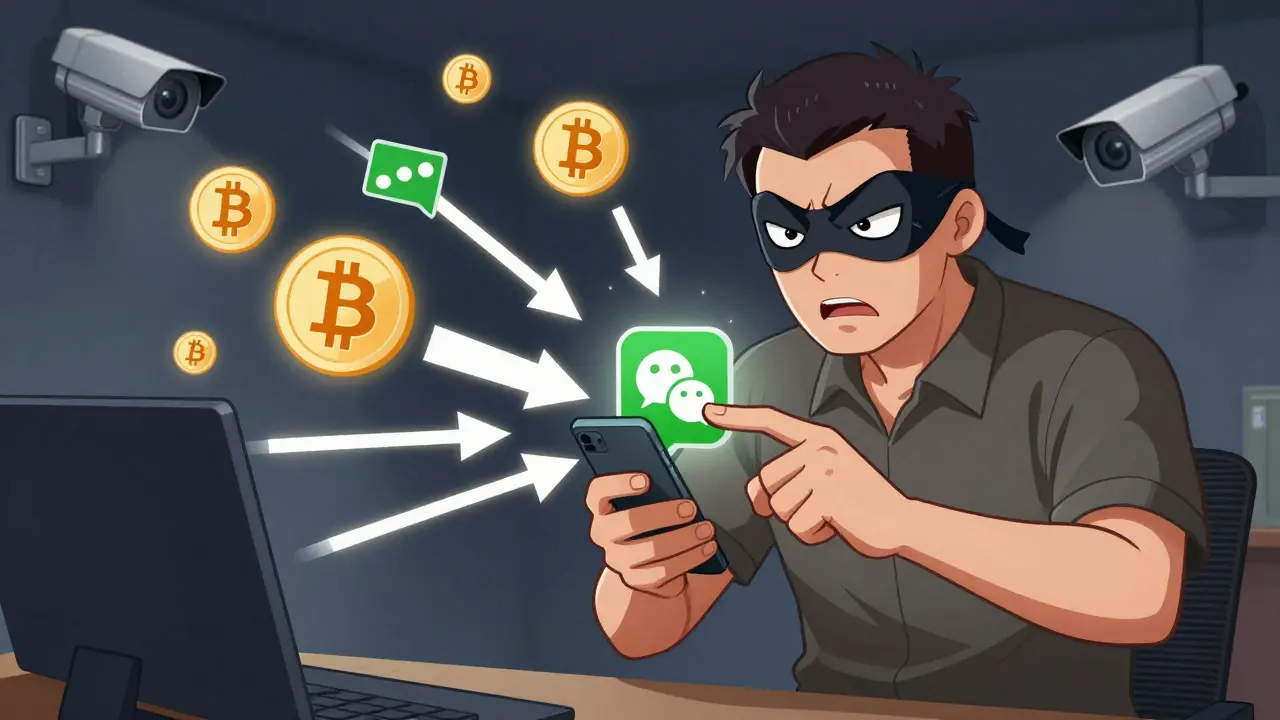
After China’s September 2021 ban on all cryptocurrency transactions, you’d think crypto trading vanished. But it didn’t. It just went quieter, smarter, and more hidden. Today, despite government crackdowns, peer-to-peer (P2P) crypto trading still happens - not in broad daylight, but through encrypted chats, burner phones, and small bank transfers that fly under the radar. This isn’t a dying market. It’s adapting. And it’s still moving billions.
How P2P Trading Survived the Ban
China didn’t just shut down exchanges like Huobi and OKX. It made it illegal for banks to process crypto-related payments. But here’s the catch: the ban targeted transactions, not ownership. Chinese courts since 2018 have consistently ruled that holding cryptocurrency is legal - it’s classified as virtual property. That loophole is everything. You can own Bitcoin. You just can’t buy it on a local app or use a Chinese bank to pay for it. So people adapted. Instead of using centralized platforms, they turned to international P2P marketplaces like LocalBitcoins, Paxful, and Bisq. These sites let users trade directly with each other. To access them, traders use VPNs to bypass the Great Firewall. Once connected, they find buyers and sellers through Telegram groups or WeChat communities, often using code names like "Dragon Trade" or "Sky Bridge" to avoid detection. The most common asset traded? USDT (Tether). Why? Because it’s stable. One USDT = one US dollar. Unlike Bitcoin, which swings wildly in price, USDT lets traders move value across borders without worrying about daily price drops. It’s the digital equivalent of cash in an envelope - easy to hide, hard to trace.How It Actually Works
A typical P2P trade in China looks nothing like buying Bitcoin on Coinbase. Here’s how it goes:- You find a seller on a Telegram group. They offer 50,000 RMB worth of USDT for cash via Alipay.
- You send them a screenshot of your Alipay transfer - but you don’t actually send the money yet.
- They release the USDT to your wallet.
- You confirm receipt. The trade completes.
The Hidden Costs
P2P trading in China isn’t free. It’s expensive. Pre-ban, fees were around 0.5% to 1%. Now? They’re 3% to 5%. Why? Because every trade carries risk - the risk of getting caught, the risk of being scammed, the risk of your bank account frozen. And the fees aren’t just financial. They’re psychological. Traders live in constant fear. One wrong move - a large transfer, a suspicious message, a flagged IP address - and your account gets locked. In a 2022 survey by ForkLog, nearly 39% of users reported their bank accounts were frozen after a crypto transaction. Some lost access for months. Others were forced to close accounts entirely. The cost of staying anonymous is high too. You need a VPN. You need a non-Chinese email. You need a crypto wallet that doesn’t show Chinese language options (to avoid suspicion). You need to learn how blockchain addresses work. You need to verify someone’s history across multiple platforms. It takes 100 to 150 hours of practice to become reliable. Most beginners lose money before they learn.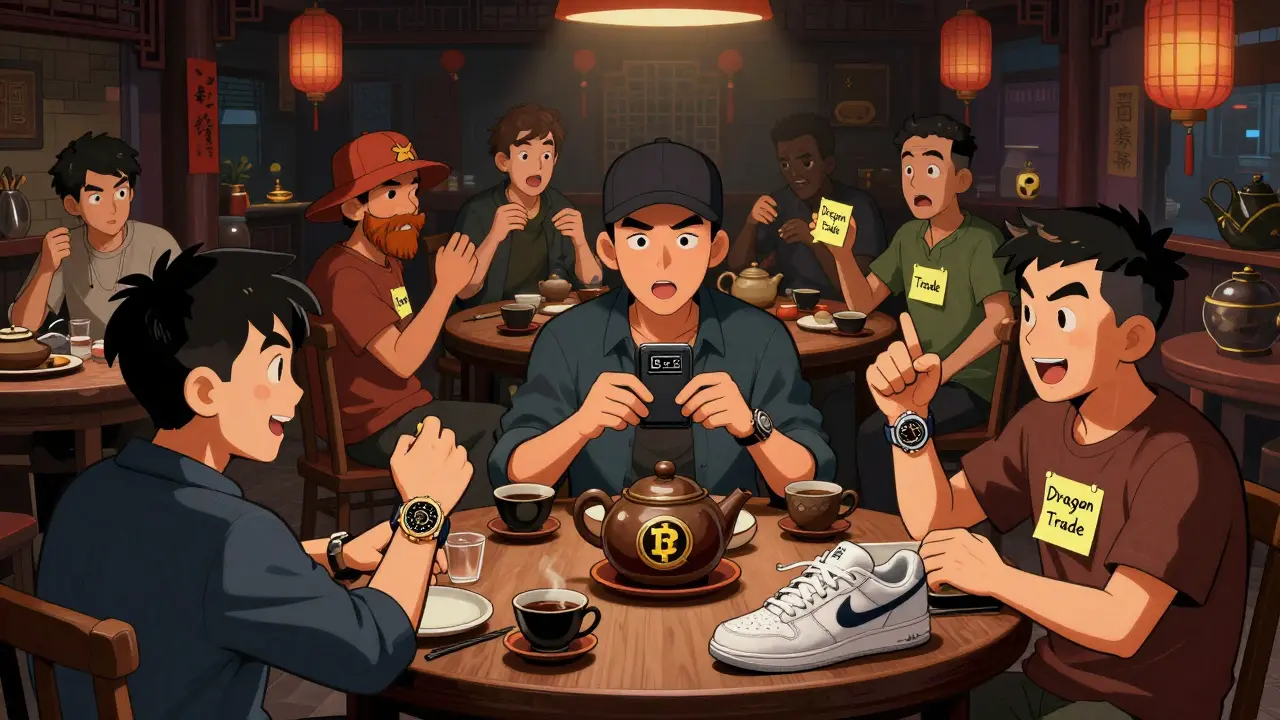
Who’s Still Trading?
It’s not students or gig workers. It’s professionals. According to a 2022 Peking University study of 1,200 crypto users in China, the majority are urban, aged 25-45, with university degrees. Many have family overseas. Some run small businesses that need to pay suppliers abroad. Others want to protect savings from inflation or capital controls. China’s strict foreign exchange rules limit how much money you can move out of the country - $50,000 per year. For people with more to move, crypto is the only real workaround. That’s why P2P volume didn’t collapse after the ban. It just shifted. Chainalysis estimated China still accounted for 4.2% of global crypto transactions in 2022. That’s down from 23% in 2020, but it’s still billions.How the Government Is Fighting Back
The Chinese government didn’t stop at the 2021 ban. In January 2023, they issued new rules targeting “any form of decentralized transaction.” Banks now use AI to scan for keywords like "USDT," "BTC," or "crypto" in transaction notes. Mobile payment apps like Alipay and WeChat Pay flag users who send money to known P2P traders. In 2022 alone, China’s State Administration of Foreign Exchange (SAFE) investigated 1,247 crypto cases. 895 people were convicted. Fines totaled over $150 million. But here’s the irony: these crackdowns aren’t stopping the trade. They’re just making it harder - and more expensive. Traders have responded with new tricks. Some use NFTs as value carriers - buying a cheap NFT from a seller, then reselling it overseas. Others trade crypto for physical goods: a Bitcoin for a luxury watch, a USDT for designer sneakers. These barter systems are harder to track. No bank transfer. No digital trail.
Is It Worth It?
For some, yes. For others, no. If you need to move money out of China, there’s no better tool. But if you’re looking for safety, convenience, or legal protection - you won’t find it here. The system is built on trust. And trust is fragile. One bad trade can wipe out savings. One flagged transfer can lock your bank account. One mistake can land you in court. Still, demand hasn’t faded. Chainalysis found P2P transaction volume through Chinese IP addresses jumped 300% in early 2022. Even with surveillance, people keep trading. Why? Because the need is real. And decentralized networks don’t die when governments say they should.What’s Next?
Experts disagree on what happens next. Binance Research says P2P volume will stay between 3% and 5% of global activity through 2025. HSBC believes China can’t fully eliminate it without harming legitimate business. The Chinese Academy of Social Sciences, however, is pushing for more surveillance tech - to "finally extinguish the remnants." But the data tells a different story. Even after bans, arrests, and frozen accounts, P2P trading in China keeps going. It’s not thriving. It’s surviving. And that’s more than most thought possible.Is it legal to own Bitcoin in China after the 2021 ban?
Yes. While trading and exchanging crypto is banned, Chinese courts have consistently ruled since 2018 that owning cryptocurrency is legal. It’s classified as "virtual property." You can hold Bitcoin, Ethereum, or USDT in your wallet. The ban targets transactions - not possession.
Can I use WeChat Pay or Alipay to buy crypto in China?
No. Both platforms actively block transactions tied to cryptocurrency. If you try to send money to a known crypto seller, your payment will be rejected. Some users try to disguise payments as "friend transfers" or "gifts," but banks now flag these patterns. It’s risky and often leads to account freezes.
Why do traders use USDT instead of Bitcoin?
USDT is stable - it’s pegged 1:1 to the US dollar. Bitcoin’s price swings too much for safe peer-to-peer trades. If you’re selling $10,000 worth of crypto, you don’t want to risk losing $2,000 because Bitcoin dropped overnight. USDT removes that volatility, making it the preferred tool for value transfer.
What happens if my bank account gets frozen for crypto activity?
You’ll likely need to prove the funds weren’t used for illegal crypto trading. This can take weeks or months. In many cases, the bank closes the account permanently. Some users report being asked to sign statements saying they won’t trade crypto again. There’s no appeal process, and fines can be issued even if no crime was committed.
Are VPNs enough to stay safe when trading crypto in China?
No. While VPNs help you access international P2P platforms, they don’t protect you from bank monitoring or payment app flags. Many traders get caught because they use the same email, phone number, or payment method across multiple trades. True safety requires operational security: burner phones, separate bank accounts, no personal info, and strict limits on transaction size.
Dianna Bethea
March 2, 2026 AT 19:18What's wild is how this whole system evolved out of pure necessity. People aren't trading crypto because it's trendy-they're doing it because they need to move money when the system won't let them. The fact that traders are splitting transfers under 50k RMB, using fake IDs, and even trading Bitcoin for sneakers shows how creative humans get when cornered. This isn't rebellion-it's adaptation. And honestly? It's more resilient than any government regulation ever expected.
Tracy Peterson
March 3, 2026 AT 23:49The real tragedy isn't the ban-it's that the government doesn't realize they're not stopping innovation. They're just forcing it into the shadows where scams thrive and trust becomes currency. People aren't stupid. They're resourceful. And if you make something illegal but still necessary, you don't kill it-you turn it into a survival game. And right now, China's P2P traders are winning.
Don B.
March 4, 2026 AT 02:05lol so you're telling me people are risking their bank accounts to buy USDT like it's a crypto lottery? i mean sure, if you want to live in constant fear of your alipay getting nuked go for it. but honestly? this is just rich people playing with fire while the rest of us just use paypal.
Arya Dev
March 6, 2026 AT 01:24Wait, wait, wait-so you're saying someone traded a Bitcoin for a pair of designer sneakers?!!? And no one got arrested?!!? And the banks didn't flag it?!!? This is insane. I mean, come on. This is like a heist movie but with less action and more anxiety.
Felicia Eriksson
March 6, 2026 AT 12:16It’s kind of beautiful, really. People built a whole underground economy out of trust, not technology. No central authority. No customer service. Just two strangers, a Telegram message, and a screenshot that might be fake. It’s raw. It’s risky. And somehow-it works.
aaron marp
March 6, 2026 AT 19:36One thing that keeps getting overlooked is how much emotional labor this takes. You’re not just trading crypto-you’re managing fear, suspicion, and the constant dread of being caught. I’ve talked to traders who say they check their bank apps three times a day. They avoid using their real names on any platform. They change phones like socks. It’s not a hobby. It’s a full-time psychological adjustment. And yet they keep doing it. That’s not greed. That’s desperation with a plan.
KingDesigners &Co
March 7, 2026 AT 21:25lol the government is using AI to scan for 'USDT'?? 😂 bro, they're fighting a ghost. You can't ban money. You can only make it harder. And when you make it harder, you just make the fees higher and the scams more creative. I mean, NFTs as value carriers? That's next-level. I'm impressed. And also, slightly terrified. 👍
Paul Reinhart
March 9, 2026 AT 13:21What’s interesting isn’t that people are still trading-it’s that they’re doing it with more discipline than before the ban. Pre-2021, it was chaotic. Now, traders have rules: no transfers over 50k, no personal info, no repeated patterns, no emotional decisions. They treat it like a covert operation. And honestly? That’s why it’s still alive. It’s not about crypto anymore. It’s about operational security. The system didn’t break. It evolved into something far more sophisticated-and far harder to kill.
Vishakha Singh
March 10, 2026 AT 15:09This is a powerful example of how human needs outlast rigid policies. When institutions fail to adapt, people build their own systems-with ingenuity, resilience, and quiet courage. It’s not about defying authority. It’s about preserving freedom in small, everyday acts. We should honor that-not fear it.