Crypto Exchange Safety Checker
Is This Exchange Legitimate?
Check key criteria from the article to assess if an exchange meets basic trust requirements.
Security Score
0%
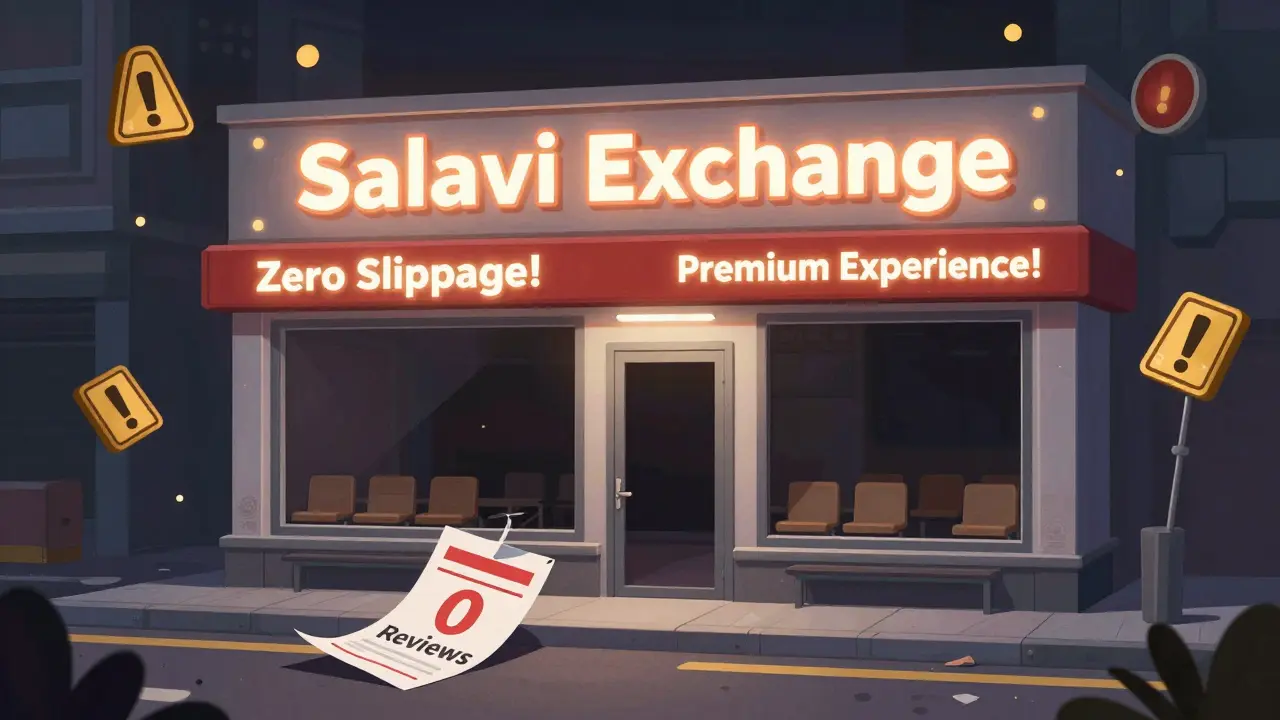
There are hundreds of crypto exchanges out there. Some are giants like Binance and OKX. Others are quiet, barely noticed, and then suddenly they show up with flashy ads promising zero slippage, no downtime, and a premium experience. That’s Salavi Exchange. But here’s the problem: Salavi Exchange doesn’t seem to exist in the real world - not the way a legitimate exchange should.
What Does Salavi Exchange Actually Offer?
Salavi claims to be your gateway to the crypto universe. They say they support spot trading, futures, and portfolio tools. They mention mobile apps for iOS and Android. They talk about fiat on-ramps and low fees. Sounds good on paper. But when you dig deeper, none of it checks out.There are no published fee schedules. No minimum deposit amounts listed. No details on which fiat currencies you can deposit - USD, EUR, NZD? Who knows. No clear steps for signing up. No KYC requirements explained. If you’re new to crypto, you’d be stuck before you even start. If you’re experienced, you’d walk away because nothing is transparent.
Where Are the Users?
This is the biggest red flag. On CashbackForex.com, Salavi Exchange has a 0 out of 5 star rating. And not because people hate it. Because there are zero reviews. Zero. Not one user has left feedback. Not on Trustpilot. Not on Reddit. Not on Twitter. Not on CoinMarketCap or CoinGecko.Compare that to Bybit, which has thousands of verified reviews across multiple platforms. Or OKX, where users regularly post about withdrawal speeds, customer service response times, and even small glitches. These platforms have communities. Salavi has silence.
That silence isn’t neutral. It’s a warning. If a platform claims to be prominent but can’t attract even one honest user review, it’s either brand new and inactive - or it’s designed to disappear.
Security? No Proof, No Trust
Security isn’t something you take on faith in crypto. You demand proof. OKX stores 95% of funds in multi-signature cold wallets. Binance publishes proof-of-reserves every quarter. Bitfinex has never been hacked in over a decade.Salavi Exchange? Nothing. No mention of cold storage. No insurance policy details. No third-party audit reports. No info on whether they use RAM-based key storage or encrypted backups. Just vague claims about "prioritizing safety."
That’s not security. That’s marketing fluff. In crypto, if you can’t show your locks, you don’t get to keep the keys.
Regulation? Where’s the Paperwork?
Legitimate exchanges don’t just say they’re compliant - they show it. Bybit holds licenses in Canada, Kazakhstan, and Cyprus. Bitstamp is regulated in Luxembourg. Kraken is licensed in multiple U.S. states.Salavi Exchange says it follows legal requirements. But which ones? In which country? What license number? What regulatory body oversees them? No answer. No link. No document. Just silence.
Without regulatory proof, you’re trading on an unlicensed platform. That means if funds go missing, there’s no government agency to file a complaint with. No legal recourse. No protection.
How Do You Even Get Started?
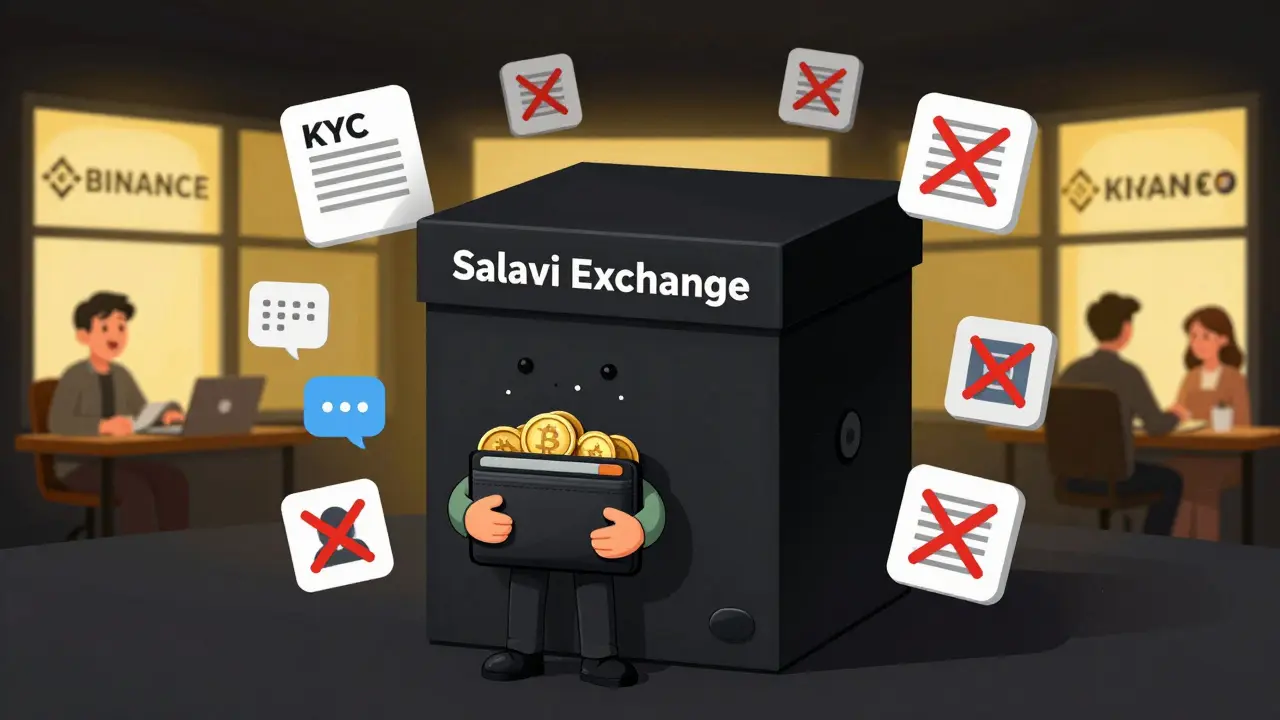
Try signing up for Salavi. Go to their website. Click "Sign Up." What happens? You don’t know. Is there an email check? Phone verification? ID upload? How long does it take? What payment methods do they accept? Credit card? Bank transfer? Crypto deposit? Apple Pay? SEPA?None of this is listed. You’d have to guess. Or worse - you’d have to contact support. But who knows if support even works? No phone number. No live chat link. No email address published anywhere.
This isn’t a platform. It’s a black box. You send money in. You don’t know what happens next.
Why Does This Even Exist?
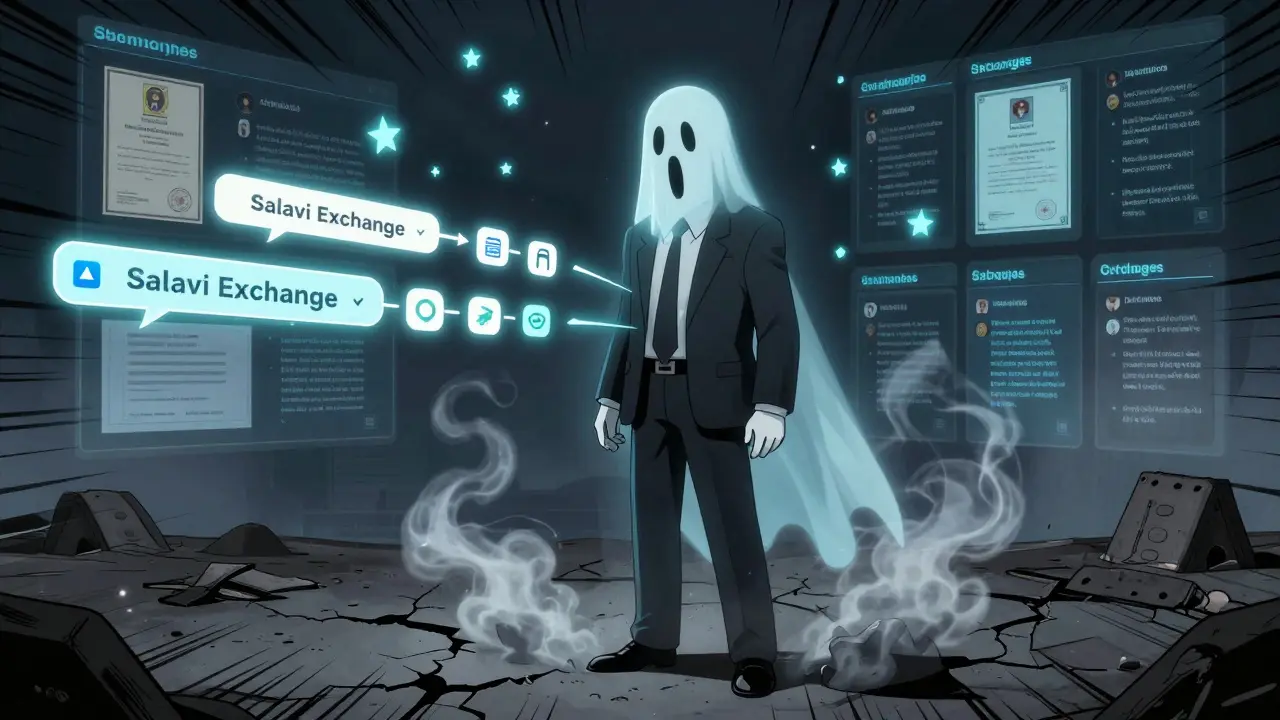
The crypto space has seen dozens of fake exchanges vanish overnight. They appear with slick websites, fake testimonials, and promises of high returns. They lure in early adopters. Then, when enough funds are deposited, they shut down. The domain expires. The apps disappear. The social media accounts go dark.That’s not speculation. That’s history. From QuadrigaCX to FTX, the pattern is always the same: no transparency, no users, no audits - then boom, gone.
Salavi Exchange fits that pattern perfectly. It looks like a real exchange. But it has none of the real signs of one.
What Should You Do Instead?
If you want to trade crypto safely, stick with platforms that have:- Thousands of verified user reviews
- Published security reports and proof-of-reserves
- Clear regulatory licenses in multiple jurisdictions
- Transparent fee structures
- Real customer support with response times you can test
For beginners: Kraken or Coinbase. For advanced traders: Bybit or OKX. For low fees and deep liquidity: Binance. All of these have been around for years. All of them answer hard questions. All of them have a trail you can follow.
Salavi Exchange? There’s no trail. Just a website with empty promises.
Final Verdict: Avoid Until Proven Otherwise
Salavi Exchange doesn’t fail because it’s bad. It fails because it doesn’t exist in any meaningful way. No users. No proof. No transparency. No track record. No future.Trading crypto is risky enough without adding fake platforms to the mix. Don’t risk your money on a name that doesn’t have a real community behind it. Don’t trust marketing slogans over facts.
If Salavi Exchange ever releases real data - audits, licenses, user numbers, support logs - come back and check again. Until then, treat it like a ghost town: beautiful pictures, but no one lives there.
George Cheetham
December 15, 2025 AT 20:52It's wild how many of these ghost platforms pop up lately. They look polished, sound legit, and then you realize there's zero footprint anywhere-no reviews, no audits, no trace of real users. It's like buying a car with no engine and hoping the salesman's smile is enough to get you to the destination.
Transparency isn't optional in crypto. It's the bare minimum. If you can't show your wallet address, your license, or even a customer service email-you're not a platform. You're a trap waiting to be sprung.
Sue Bumgarner
December 16, 2025 AT 05:16Ugh, another one of these scams pretending to be an exchange? We're in 2025 and people still fall for this? You don't need a PhD to check if a site has reviews on Trustpilot or a license number. If it's not on CoinMarketCap, it's not real. Period. Stop wasting your time and stick to Binance or Kraken. This Salavi thing is just a phishing page with better UI design.
Kayla Murphy
December 17, 2025 AT 05:59I get why people get drawn in-these sites look so clean and professional. But you're right, the silence is louder than any ad. I checked Salavi myself last week and just stared at the homepage for ten minutes wondering where the hell the sign-up button even was. No contact info. No FAQ. No nothing. It felt like walking into a store with all the lights on but no staff inside.
Don't let the design fool you. Real platforms don't hide. They welcome questions.
Dionne Wilkinson
December 18, 2025 AT 04:54I think a lot of us forget how scary crypto can be when you're new. You see a pretty website with nice graphics and think, 'Oh, this must be safe.' But safety isn't about looks. It's about proof. And Salavi doesn't give any. Not even a little bit.
It's not that I hate the idea of new exchanges. I just wish people would slow down and ask: 'Where's the paper?' before sending any money. One review, one audit, one email address-anything. Just something real.
Emma Sherwood
December 20, 2025 AT 04:33Let’s be real-this isn’t just about Salavi. This is about the entire culture of crypto where hype replaces due diligence. People chase ‘the next big thing’ without checking if it even exists.
I’m from the Philippines, and I’ve seen this exact pattern with local ‘crypto brokers’ that vanish after collecting deposits. Same script: sleek site, no regulation, zero reviews. Then poof-gone with your cash.
Don’t be the next statistic. Use platforms that have been tested by millions, not just marketed to you on TikTok.
Florence Maail
December 20, 2025 AT 18:28They're all connected, you know. Salavi, FTX, Quadriga-all the same playbook. The government lets them fly under the radar until it's too late. And then they blame the victims. I bet Salavi’s domain is registered through a shell company in the Caymans. And the 'team' is just a bunch of freelancers from Upwork who made the site in a weekend.
They’re not even trying to hide it anymore. It’s like they’re daring us to fall for it. 😏
PS: I saw a Telegram group with 50k members promoting this thing. No wonder people get scammed.
Chevy Guy
December 21, 2025 AT 03:46Wow Salavi Exchange wow
zero reviews wow
no license wow
no contact info wow
so many red flags wow
still not a scam wow
maybe its just a really quiet exchange wow
or maybe the devs are all monks meditating on blockchain purity wow
or maybe they're just waiting for the moon to align before revealing their secret sauce wow
ill just send 5 btc and wait for the miracle wow
Kelsey Stephens
December 21, 2025 AT 11:14I remember when I first started trading and fell for a fake exchange too. Thought it was legit because the logo looked professional. Lost a few hundred bucks before I learned to check for reviews, licenses, and community chatter.
If you're reading this and thinking 'maybe it's just new'-I get it. But new doesn't mean safe. New means untested. And in crypto, untested is the same as dangerous.
Stick with the big names. They're not sexy, but they're real. And your money will thank you.
Tom Joyner
December 22, 2025 AT 20:06Salavi Exchange? Honestly, I didn’t even bother checking their site. If it isn’t listed on CoinGecko with a market cap over $100M and a whitepaper written in LaTeX, it’s not worth the bandwidth. Most of these platforms are just frontends for rug pulls disguised as DeFi protocols.
Anyone using this is either profoundly naive or already planning to exit with their funds before the collapse. I’d rather not waste time on something that doesn’t even qualify as a meme.
Amy Copeland
December 22, 2025 AT 21:25Oh please. You think Salavi is the first fake exchange? Please. The entire crypto space is a Ponzi theater with better graphics. You think Binance is clean? They’ve been fined in 12 countries. Kraken? Got sued for not KYC-ing enough. And you’re acting like Salavi is the villain?
Wake up. Every exchange is a gamble. The only difference is that Salavi is honest about being a gamble. The others just lie better.
But hey, if you want to feel safe, keep feeding your money to the giants. They’ll take your fees, your data, and your soul-but at least they’ll have a nice customer service bot to cry to.