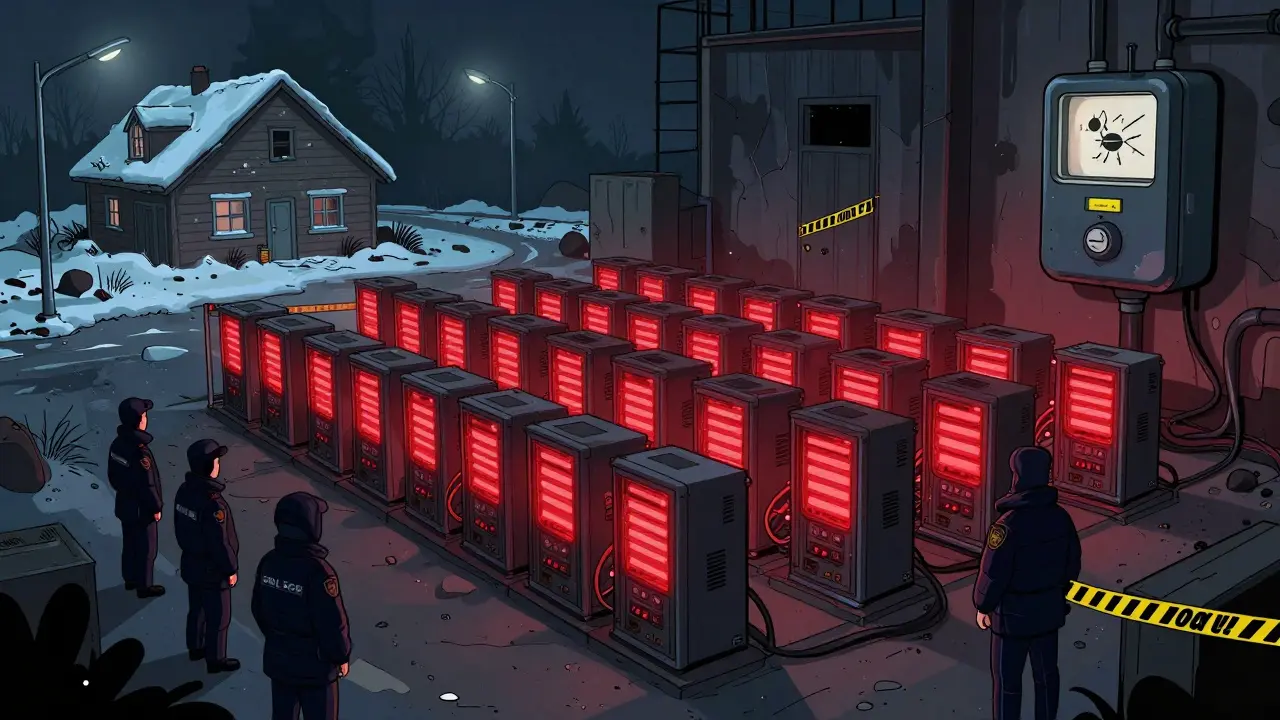
By early 2022, Kosovo was running out of electricity. Homes were going cold in winter. Factories shut down. And somewhere in the shadows, hundreds of bitcoin miners were quietly sucking up power-power that ordinary people needed to heat their homes and run their businesses. On January 4, 2022, the government didn’t just tighten rules. It shut it all down. Crypto mining became illegal overnight.
Why Kosovo Banned Crypto Mining
Kosovo’s energy grid was already stretched thin. The country relied heavily on coal-fired plants, many of which were outdated. When cold weather hit in late 2021, demand spiked. Supplies didn’t. The government declared a state of emergency. Then came the shock: a single mining farm in the north was using as much electricity as a small town-without paying a cent. That wasn’t an accident. In northern Kosovo, where many residents didn’t pay for electricity due to political tensions and weak enforcement, miners set up shop. They didn’t care about the law. They cared about profit. And they were using public power to mine cryptocurrency-power that was supposed to go to schools, hospitals, and families. The Minister of Economy, Artane Rizvanolli, made it clear: this wasn’t about banning technology. It was about stopping theft. “We can’t let private profit come at the cost of public survival,” he said. Within days, police and customs teams started raids. By March, they had seized over 300 mining rigs. Some were hidden in basements. Others were disguised as server rooms in abandoned factories.How the Ban Was Enforced
The ban wasn’t just a statement. It came with real teeth. Authorities started monitoring electricity usage patterns across the country. If a building’s power draw suddenly jumped by 50% or more-especially overnight-they flagged it. That’s how they found the rigs. One mine in Prizren was running 24/7 on a grid that couldn’t even keep streetlights on. The government didn’t just rely on luck. They trained inspectors to spot the heat signatures of mining hardware. They worked with utility companies to install smart meters that could detect abnormal consumption. And they gave police the legal power to enter properties without a warrant if they suspected mining activity. The crackdown was brutal but effective. Within three months, the number of active mining operations dropped by 95%. The country’s electricity consumption fell by nearly 12%-a massive win for a nation that had been on the brink of blackouts.Who Was Really Affected
The ban didn’t just hit miners. It hit everyone. In northern Kosovo, where electricity was already underpaid or unpaid, the ban exposed deep inequalities. Some families had been using cheap or free power for years. Now, even their basic needs were under scrutiny. Meanwhile, legitimate businesses that had nothing to do with crypto were caught in the crossfire. A small tech startup using servers for web hosting got shut down because their power draw looked “suspicious.” And then there’s the diaspora. Kosovo has one of the largest emigrant populations in Europe. Many families rely on remittances from relatives abroad. Before the ban, some had started using Bitcoin to send money home-faster, cheaper, and without banks. Now, that’s illegal too. No crypto transactions. No wallets. No exchanges. Even holding Bitcoin became risky.
What Changed After the Ban
The original ban was meant to last just a few months. But the energy crisis didn’t go away. In August 2022, the government extended it-for another 60 days. Then again. And again. By the end of the year, the restrictions were made indefinite, with a legal clause allowing extensions of 30 to 180 days based on energy supply levels. Today, in 2025, the ban is still in place. Kosovo remains one of only eight countries in the world that outright ban cryptocurrency mining. But there’s a twist: the government quietly added an exception. If you can power your mining rig with solar panels, wind turbines, or any renewable source that doesn’t connect to the national grid-you’re technically allowed to mine. That sounds like a loophole. And it is. But no one’s doing it. Why? Because setting up off-grid renewable systems for mining is expensive. And the legal risk is still huge. Even if you’re using solar, you could be accused of hiding equipment or falsifying energy sources. The government hasn’t issued permits. No licenses exist. So, while the law says “alternative energy is okay,” no one knows how to make it legal.What This Means for Kosovo Today
The ban saved the grid. But it also froze innovation. Kosovo’s tech scene, which was starting to grow, took a hit. Developers who wanted to build crypto-based apps for remittances or microloans had to leave the country. Investors stayed away. Even blockchain startups that had nothing to do with mining couldn’t get funding-banks refused to touch anything related to crypto. Meanwhile, neighboring countries like Serbia and North Macedonia quietly became hubs for crypto activity. Miners moved across the border. Traders set up shop in Belgrade. Kosovo lost its chance to be part of the digital economy. The government says it’s working on new crypto laws-rules for trading, taxation, and digital assets. But two years later, nothing’s been passed. The focus remains on energy, not innovation.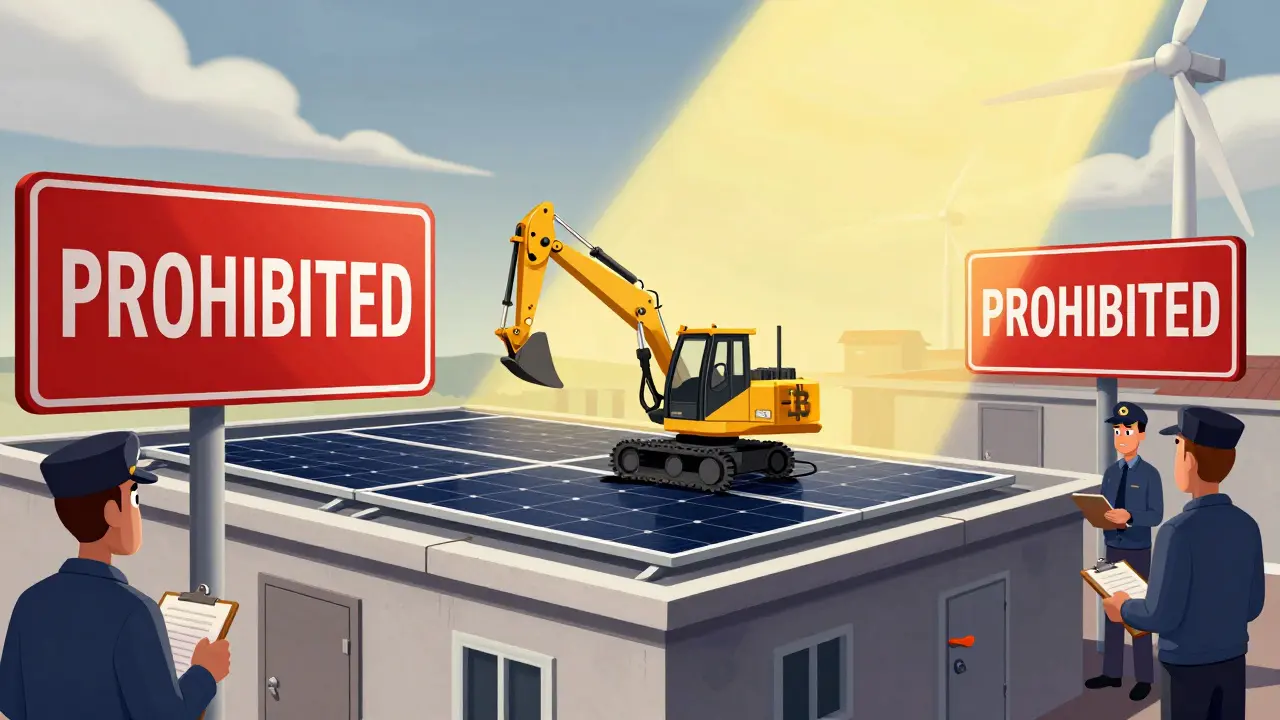
Is There Any Hope for Change?
Maybe. Kosovo’s energy situation has improved since 2022. New wind farms have come online. Solar installations are growing. The country now exports a little electricity to the EU. But the political will to lift the ban? Still missing. The government fears a return to the chaos of 2021. And with global pressure mounting to curb energy-hungry crypto mining, Kosovo doesn’t want to look like the outlier that gave in. For now, the ban stands. Mining is illegal. Trading is risky. And the people who wanted to use crypto to connect with their families abroad? They’re stuck.Where Does Kosovo Stand Globally?
Kosovo’s move wasn’t random. It followed China’s 2021 ban, which kicked out 75% of the world’s Bitcoin miners. Countries like Egypt, Algeria, and Morocco also cracked down. But Kosovo was one of the first to tie the ban directly to energy survival-not moral panic or fear of crypto. Greenpeace USA called it a “model response.” Other nations with fragile grids-like Sri Lanka and Lebanon-watched closely. Kosovo proved you could shut down mining without banning crypto entirely. You just had to protect your power. But that’s the catch. Kosovo didn’t ban crypto. It banned its most destructive use. And in doing so, it made the whole thing too dangerous to touch.Is crypto mining still illegal in Kosovo in 2025?
Yes. As of 2025, cryptocurrency mining remains illegal in Kosovo under the emergency restrictions put in place in January 2022. While the law allows an exception for mining powered entirely by off-grid renewable energy, no formal licensing system exists, making it practically impossible to operate legally. Authorities continue to enforce the ban, and possession of mining equipment without approved energy sources can lead to confiscation and fines.
Why did Kosovo ban crypto mining but not crypto itself?
Kosovo targeted mining because it was draining the national power grid during a severe energy crisis. Mining rigs consume massive amounts of electricity, and many were running on unpaid or subsidized power, especially in northern regions. The government didn’t ban owning or trading Bitcoin-it banned the energy theft. Trading and holding crypto are still technically possible, but banks and payment processors avoid them due to legal uncertainty, making it nearly impossible to use crypto in daily life.
What happened to the miners after the ban?
Over 300 mining rigs were seized in the first few months. Most miners either shut down operations or moved equipment across the border to Serbia, North Macedonia, or Albania. Some sold their hardware at steep losses. A few tried to hide rigs in remote homes or businesses, but smart meter monitoring and police raids made that risky. Today, there are virtually no active mining operations inside Kosovo’s national grid.
Can I use Bitcoin to send money to family in Kosovo?
Technically, yes-but it’s risky and impractical. While holding Bitcoin isn’t explicitly illegal, banks and payment services in Kosovo avoid any crypto-related transactions. There are no licensed exchanges, and no ATMs. Sending crypto to someone in Kosovo means they’d have to find a private buyer, which is slow, unsafe, and could attract legal attention. For most people, traditional remittance services like Western Union are still the only reliable option.
Are there any plans to legalize crypto mining in Kosovo?
The government has talked about drafting new crypto legislation, including rules for trading and taxation, but no bill has been introduced as of 2025. Any future legalization would likely require strict controls, such as mandatory renewable energy use and energy consumption caps. For now, the priority remains grid stability, not crypto innovation. Until then, mining stays banned.