The Hard Truth About IQFinex
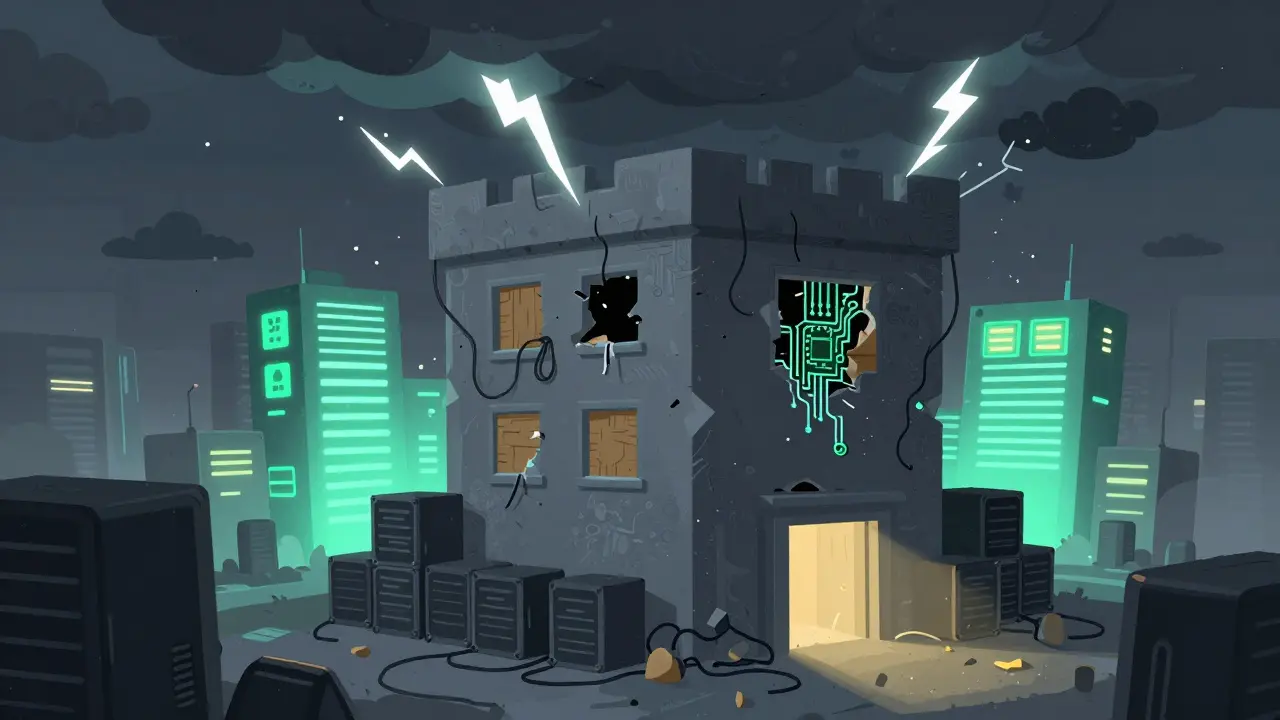
If you are reading this, you might have stumbled upon an old link or heard a name drop about IQFinex. Here is the direct answer before we go further: IQFinexa cryptocurrency exchange that ceased operations permanently on October 1, 2020. There are no plans to relaunch. There is no way to recover funds. It belongs to a category of online platforms known as "exit scams," where operators promise services and then disappear. While it might be tempting to check the website URL to see if it loads, do not waste your time trying to deposit anything. The infrastructure is gone, the domain is likely parked, and the company has no legal presence in any financial regulator database anymore.
In the world of digital assets, timing matters. Most legitimate platforms have been operating long enough to prove stability. When a project launches with big promises but vanishes within months, it raises serious alarms. For anyone holding funds in an account today, the reality is stark: these accounts were wiped out years ago. Understanding exactly what went wrong helps you recognize similar patterns in new projects popping up in 2025 and 2026.
What Was the Original Promise?
Back when IQFinex was an active trading service claiming Swiss origin., the marketing was surprisingly polished. They positioned themselves as a modern gateway to trading digital coins. Their pitch focused on user-friendly design and high-quality charts-things that attract beginner traders who just want to see their portfolio grow. Many exchanges fail because their software is clunky, so IQFinex leaned hard into being "easy to use."
They claimed to be based in Switzerland. Why does this matter? Switzerland is a major hub for crypto finance due to its flexible laws, like the one allowing Zug to be called "Crypto Valley." By associating with that region, they hoped to borrow credibility. Legitimate companies list their registration numbers openly. You can check them with the Financial Market Supervisory Authority, known locally as FINMA. IQFinex claimed these ties existed. In reality, searching official Swiss government records yields zero matches for their corporate registration.
This gap between marketing claims and regulatory reality is the first crack in the foundation. Legitimate exchanges, even smaller ones, maintain a compliance footprint. They register with tax authorities to handle fiat currency deposits. Without a local bank partner, a crypto platform cannot legally move money in and out. The absence of a banking partnership usually signals trouble before the platform even shuts down.
The Timeline of the Collapse
To understand why investors lost everything, we need to look at the sequence of events. In late 2019 and early 2020, forums like Bitcoin Talk began buzzing with excitement. Posts praised the interface and speed. Some users mentioned seeing profit. These accounts were likely fabricated to create hype, a common tactic used to flood discussions before the exit.
| Date | Event | Impact on Users |
|---|---|---|
| Early 2019 | Platform Launch | Initial registrations begin |
| November 2025 | Retroactive Forum Analysis | Discussion threads flagged as suspicious |
| October 1, 2020 | Shutdown Date | Sites went offline instantly |
| Post-2020 | Permanent Closure | No support, no login access |
The critical date is October 1, 2020. On that day, the website stopped responding. Users tried logging in, but their credentials would not work. Customer support channels, which might have been WhatsApp numbers or email addresses, went silent immediately. Unlike regulated exchanges that offer withdrawal windows during outages, IQFinex left absolutely no path to contact anyone. This instant blackout suggests pre-planning. The servers weren't just crashed; they were turned off remotely.
A few years later, independent trackers like Cryptowisser updated their databases to reflect this shutdown. By including it in their list of reported scam companies alongside other fraudulent schemes, they cemented its status as a bad investment vehicle. The UK Financial Conduct Authority also added similar entities to their warning list around the same period, highlighting that regulators knew these risks were emerging.
Why It Looks Different From Real Exchanges
You might wonder how IQFinex compared to giants like Kraken or Coinbase. The differences aren't just about size; they are about structural integrity. Real platforms publish code, undergo audits, and keep reserves separate from operational funds.
Take Kraken as a benchmark example. Founded in 2011, Kraken has survived multiple market crashes. They require strict identity verification (KYC) to prevent money laundering. Their fee structure is transparent: typically starting around 0.1% to 0.26% depending on your volume. You can calculate exactly how much tax you owe on every trade. With IQFinex, there were no public docs detailing transaction costs. Hidden fees are a classic sign of predatory business models-they take a bite of your money without you noticing until it's too late.
Security is another massive differentiator. Top-tier exchanges store 90% of customer funds in cold storage-offline wallets that hackers cannot reach via the internet. They also hold insurance policies covering theft or operational failure. IQFinex provided zero evidence of third-party audits. A Proof-of-Reserves audit is standard for ethical businesses now. It proves mathematically that the coins they claim to hold actually exist. Without this cryptographic proof, they could have been selling "shares" that didn't connect to real coins.
The Mechanics of a Crypto Exit Scam
When a platform runs an exit scam, the pattern usually follows a specific script. First, the team builds trust through free trial periods or small withdrawals. This gets users comfortable enough to send larger amounts. Once the deposits cross a threshold, the admins close the doors. They know the psychological pressure involved; users won't sue over small losses, but they panic over large ones. By keeping losses spread across thousands of small individual accounts, they reduce the risk of legal intervention.
We call this a "pig butchering" technique when combined with social engineering, though IQFinex mostly relied on the classic fly-by-night method. They utilized anonymous developers. Legitimate exchanges have named founders you can find on LinkedIn. IQFinex hid behind generic contact forms. If you look at their archived pages, you won't find board members, legal counsel, or headquarters address details.
The technical setup is revealing too. Professional exchanges have API endpoints for automated trading bots. These APIs allow developers to build scripts that trade on behalf of users. IQFinex had no documentation for developers. If you can't write code to interact with the exchange programmatically, it suggests the platform wasn't built for actual trading but merely for collecting deposits.

How to Verify a New Exchange Today
Since IQFinex is dead, the value here is ensuring you don't fall for the next one. The industry moves fast. New platforms appear weekly. Before you transfer funds anywhere, perform these checks:
- Check Regulatory Status: Search the jurisdiction's financial authority. If they say US-based, search the SEC or FinCEN registry. If Swiss, check FINMA. If British, look at the FCA warning list.
- Demand Proof of Reserves: Ask for a cryptographic hash of all user balances. Legit firms publish these monthly or quarterly. Refusal to share this data is a red flag.
- Review Community Feedback: Go to Reddit or independent forums. Ignore comments on the exchange's own site. Look for patterns in complaints. Are people suddenly unable to withdraw?
- Verify Bank Partners: Every exchange needs a bank account for deposits. Ask which bank processes transactions. If the answer is vague or mentions obscure offshore banks, walk away.
Furthermore, pay attention to age. A new site launched yesterday claiming millions in liquidity is likely lying. Trust requires track record. Stick to platforms that have weathered the bear markets of 2018, 2022, and beyond. Old money and new tech make a safer combination than unknown startups promising guaranteed returns.
Recovering Lost Assets: The Reality
If you are asking because you lost money years ago, I must be honest. There is no recovery fund for IQFinex victims. Since it lacked insurance, there was never a payout mechanism in place. Criminal investigations in 2021 identified several groups involved in similar schemes, but asset seizure in crypto is notoriously difficult. Coins are often moved through tumblers or privacy networks to obfuscate trails.
Your best defense is prevention, not cure. Treat any unsolicited offer to join a new platform with extreme skepticism. Scammers often reuse old branding or slightly modified names to trick people who remember a previous loss. If a site looks familiar, triple-check the URL.
Is IQFinex still active in 2026?
No. The platform officially shut down on October 1, 2020, and remains inactive. There are no revival plans or functioning websites associated with the brand.
Can I withdraw my funds from IQFinex?
Unfortunately, no. The servers were taken offline permanently. Customer support channels were disabled at the time of shutdown, leaving no recourse for withdrawals.
Was IQFinex a registered company?
Claims of Swiss registration could not be verified through FINMA records. Independent reviews classify it as an unregulated scam operation.
Who owned IQFinex?
The ownership remains anonymous. No public executives or board members were ever linked to the platform in verifiable records.
What replaced IQFinex?
There is no replacement. Investors are advised to move to regulated competitors like Kraken or Coinbase Prime instead of seeking legacy versions of defunct brands.
Susan Payne
April 1, 2026 AT 13:57The situation described here is truly terrifying for anyone who holds digital assets. We must remain vigilant against these predatory operations that masquerade as legitimate businesses. It is absolutely unacceptable that people can lose their life savings due to such negligence. The marketing claims were polished enough to fool even the most cautious individual. Switzerland represents a beacon of financial stability which was unfairly exploited by criminals. These entities do not respect international law or basic consumer rights. We see the same pattern repeating itself across different jurisdictions every single year. Investors need to understand that trust is the currency that matters most in this space. Once that bond is broken through malicious intent, recovery becomes nearly impossible. Regulatory bodies often act too slowly after the damage has already been done completely. The lack of proof of reserves was a glaring omission that should have raised immediate alarms. Without transparency, any platform is merely holding your funds until the owners decide otherwise. We cannot allow these scammers to continue operating under new identities without consequences. Education remains our only true defense against the sophisticated tactics employed by fraudsters today. Everyone needs to verify banking partners before transferring a single cent to an unknown exchange. The community must band together to report suspicious activity before losses mount further. Ignoring red flags like anonymous leadership is simply asking for financial ruin eventually.
david head
April 3, 2026 AT 07:58scam central bro really watch out for fake sites 🙄 always check the URL first and dont trust pretty pictures 😬
Earnest Mudzengi
April 3, 2026 AT 08:50they pull the rug right when the liquidity is maxed it is part of the larger grid reset protocol designed to harvest fiat energy
vijendra pal
April 5, 2026 AT 04:51yeah i seen alot of these scams pop up evry where 💸 dont trust any one saying swiss its just a cover
Diana Martín Prieto
April 5, 2026 AT 13:32It is great that we are learning from these past mistakes collectively as a community. I believe sharing resources like this prevents future victims from suffering similar losses. Transparency is key when dealing with any financial instrument online. We should support exchanges that publish regular audit reports for everyone to review.
Patty Levino
April 5, 2026 AT 21:50I hope this guide helps you stay safe moving forward 🌟
Lauren Gilbert
April 7, 2026 AT 01:25When we examine the philosophy behind these exits we realize they exploit human greed rather than technical failure
The illusion of growth is the bait used to lure individuals into a trap that requires no physical presence
We often forget that digital money is purely information flow manipulated by those who control the servers
If the backend code is opaque then the front end promises are merely theater designed to extract value
This cycle of launch and vanish mirrors historical bubbles that appeared centuries ago in tulip markets
Our collective anxiety drives us toward easy solutions that promise security without demanding verification
I find myself contemplating whether the regulatory lag is intentional or simply bureaucratic incompetence
Either way the responsibility falls upon the user to demand cryptographic proof before entering the arena
The silence of the regulators speaks volumes about the current state of global coordination regarding digital assets
Trust must be earned through sustained action over years rather than flashy marketing campaigns on social media
Every platform claiming Swiss backing should be subjected to forensic audit before accepting any capital whatsoever
Without this step we remain vulnerable actors in a play written entirely by bad actors seeking profit
The psychological toll on victims extends far beyond the financial loss incurred during the shutdown event
Recovery efforts are often futile because the infrastructure disappears along with the entity itself
Ultimately we must accept that some systems are designed only to take never to give anything back
Siddharth Bhandari
April 9, 2026 AT 01:08Cold storage audits are non-negotiable for institutional grade security standards in any reputable exchange environment
Sonya Bowen
April 10, 2026 AT 18:13Verification steps listed above are essential for anyone entering the market now
Alexandra Lance
April 12, 2026 AT 07:12Sure lets pretend normal people can actually verify FINMA records lol 🙃 most just click deposit anyway without thinking twice 🤡
Taylor Meadows
April 13, 2026 AT 01:50You really shouldnt be surprised when platforms disappear after taking funds blindly and ignoring basic safety warnings
akash temgire
April 14, 2026 AT 17:21The timeline presented indicates clear premeditation regarding the server shutdown date
Carol Prates
April 15, 2026 AT 02:53It is nice to see someone finally analyzing the toxic patterns in detail while keeping it light and informative for the masses
Hugo Lopez
April 15, 2026 AT 23:01Thank you for sharing this comprehensive overview on what went wrong with the platform and why it matters