Iran Crypto Mining Profitability Calculator
Iran allows cryptocurrency mining-but only if you jump through a dozen hoops, survive power blackouts, and avoid drawing the attention of the Islamic Revolutionary Guard Corps. As of 2025, it’s legal to mine crypto in Iran, but the rules change faster than the electricity bill. One month you’re licensed and running rigs in a warehouse; the next, the government shuts down your entire operation because the grid is overloaded. This isn’t a free market. It’s a high-stakes game where the rules are written by bureaucrats, enforced by the military, and often ignored by those with political connections.
Legal Mining: You Need a License, and It’s Not Easy
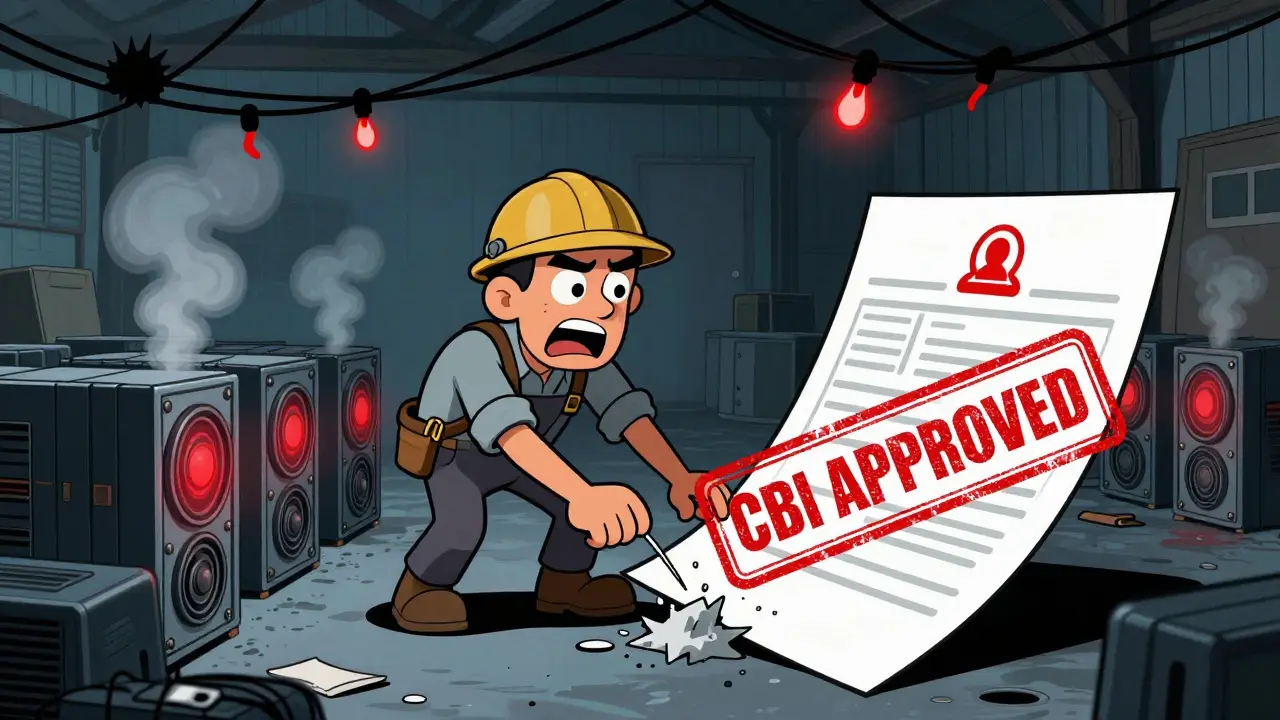
To mine crypto legally in Iran today, you need two licenses: one from the Ministry of Industry, Mine and Trade for hardware and operations, and another from the Central Bank of Iran (CBI). The CBI, which took full control of crypto regulation in January 2025, demands complete transparency. Every transaction must go through a government-approved rial account. No anonymous wallets. No offshore payments. No hiding your hash rate.Hardware matters too. You can’t just buy any ASIC miner off Alibaba and plug it in. Only government-approved models are allowed, and you must prove your equipment meets energy efficiency standards. The licensing process includes submitting detailed projections of your power usage, financial statements, and proof of ownership. It’s not a form you fill out online-it’s a months-long bureaucratic marathon. And even if you get approved, your license can be revoked overnight.
Electricity: The Real Cost of Mining
Iran’s biggest selling point for miners has always been cheap electricity. Industrial users pay around $0.004 per kWh-among the lowest in the world. That’s why Iran once accounted for nearly 5% of global Bitcoin mining in 2021. But here’s the catch: legal miners now pay the highest electricity rate of any industry in the country. Tavanir, Iran’s state power provider, raised mining tariffs to discourage energy use. The goal? Cut consumption by 40%.That didn’t work. Illegal miners kept running. In late 2024, Iran suffered massive blackouts. Tavanir blamed them on unlicensed mining rigs siphoning off 2,000 megawatts of power-enough to light up a city the size of Tehran. The government responded with a four-month nationwide mining ban. When it lifted, the rules got tighter. Legal miners now get power only during off-peak hours. During heatwaves or winter surges, residential and hospital needs come first. Mining? You wait.
The Hidden Players: Who’s Really Mining?
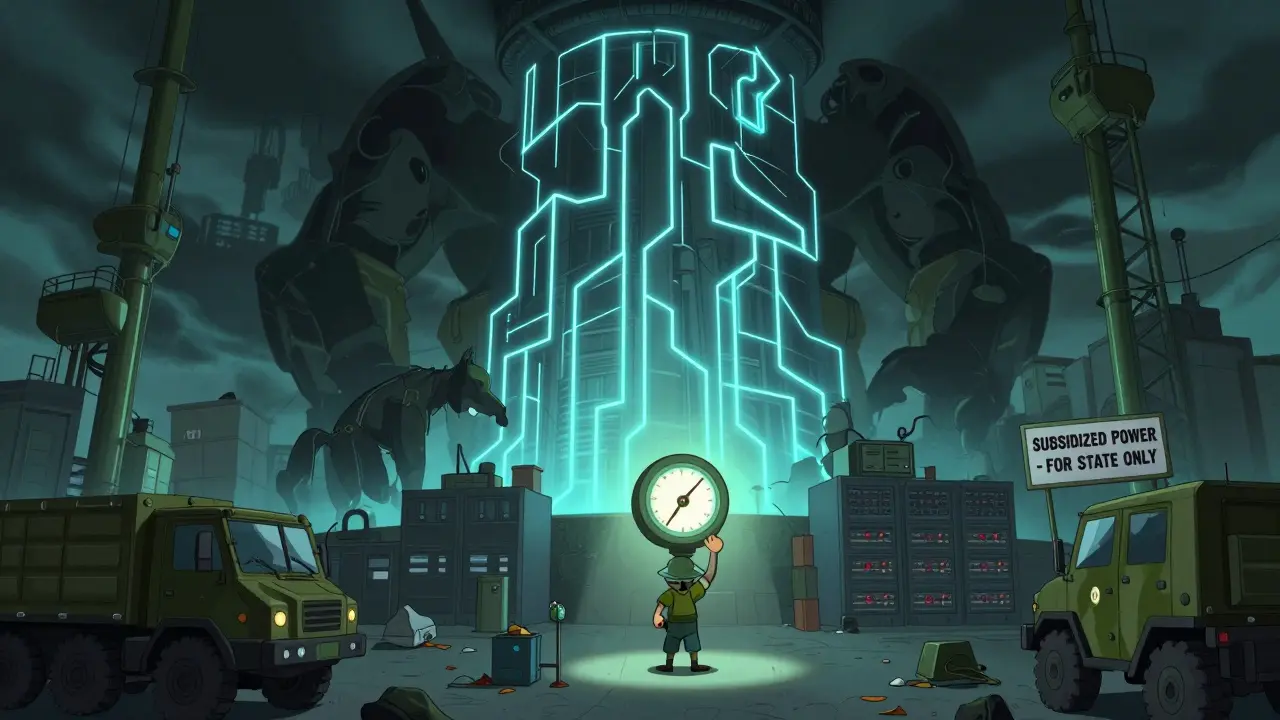
While private miners struggle with paperwork and power cuts, powerful groups operate with zero oversight. The Islamic Revolutionary Guard Corps (IRGC) runs massive mining farms-like the 175-megawatt facility in Rafsanjan, Kerman province. These aren’t small setups. They’re industrial-scale operations, often built in partnership with Chinese firms, and they don’t pay for electricity. They use subsidized power meant for mosques, religious schools, and government buildings.According to NCR-Iran’s 2025 investigation, the IRGC and other state-linked entities control about 65% of Iran’s total mining capacity. That means most of the hash power in the country isn’t legal-it’s just protected. Legal miners pay for power, submit reports, and risk losing their licenses. The IRGC doesn’t. This creates a two-tier system: one for ordinary citizens, another for those with ties to the regime.
Why the Government Lets Mining Continue
Iran’s government doesn’t love crypto. It hates the idea of decentralized money. But it loves the dollars. Crypto mining brings in foreign currency-something Iran desperately needs under U.S. sanctions. In 2022, Bitcoin mining alone generated an estimated $1 billion in revenue. That’s not pocket change. Even with a 11% drop in crypto inflows during the first half of 2025, the government still sees mining as a lifeline.That’s why they didn’t ban it outright. Instead, they took control. By forcing all transactions through the CBI, they can track every dollar. By limiting hardware, they can control output. By banning advertising, they reduce public interest. It’s not about stopping crypto-it’s about making sure the state gets the money, not the people.
The Human Cost: When You Can’t Buy Crypto to Pay for Groceries
For everyday Iranians, crypto isn’t just about mining. It’s about survival. With inflation hitting 50% and the rial collapsing, many turned to Bitcoin and stablecoins to protect their savings. But in December 2024, the CBI blocked all crypto-to-rial exchanges on domestic platforms. For 23 days, an estimated one million Iranians couldn’t convert their crypto into cash to buy food, medicine, or fuel. People reported going without essentials because their digital wallets were frozen.Even after partial restoration in January 2025, the damage was done. Trustpilot ratings for Iranian crypto exchanges plunged from 4.1 to 2.4 stars in two months. The February 2025 ban on all crypto advertising-online or in public-made it nearly impossible for new users to learn how to use crypto safely. The result? Peer-to-peer trading on LocalBitcoins surged 78%. People are still using crypto-but now, they’re doing it in the shadows, risking fines or arrest.

How It Compares to Neighboring Countries
Kazakhstan embraced crypto mining with open arms after Russia cracked down in 2022. They offered stable laws, low taxes, and reliable power. Iran? They offer chaos. One day you’re allowed to mine; the next, your machines are seized. Kazakhstan’s mining sector grew steadily. Iran’s has been in freefall since 2022, dropping from 4.67% to 3.1% of global Bitcoin hash rate.Even Turkey, which also struggles with inflation, lets citizens mine without a license. Iran doesn’t. The difference isn’t just policy-it’s trust. Foreign investors who came to Iran hoping to profit from cheap power are now leaving. Why risk everything when the government can shut you down at any moment?
The Future: A State-Run Digital Currency
Iran isn’t trying to build a crypto economy. It’s trying to replace it. The Central Bank is developing its own digital currency: the Rial Currency. Unlike Bitcoin, this isn’t mined. It’s issued and controlled entirely by the state. No decentralization. No transparency. Just another tool for surveillance and control.Experts agree: Iran’s real goal isn’t to support crypto-it’s to kill it and replace it with something the government can track, tax, and shut off at will. The licensing system, the power limits, the advertising bans-they’re not just restrictions. They’re steps toward total digital control.
What This Means for Miners
If you’re thinking about mining crypto in Iran in 2025, here’s the truth: it’s not worth the risk. The legal path is slow, expensive, and unpredictable. The illegal path is dangerous-and still not safe. The IRGC owns the biggest rigs. The government owns the grid. And you? You’re just a number in their system.Even if you get a license, you’re one blackout away from losing everything. Your hardware could be confiscated. Your bank account frozen. Your family targeted. The only ones who profit are those already in power.
Iran’s crypto mining story isn’t about technology. It’s about control. And right now, the state is winning.
Is it legal to mine Bitcoin in Iran in 2025?
Yes, but only with licenses from both the Ministry of Industry, Mine and Trade and the Central Bank of Iran. All operations must use government-approved hardware, pay the highest electricity rates, and conduct all transactions through state-monitored rial accounts. Unlicensed mining is illegal and subject to seizure and fines.
Why does Iran allow crypto mining if it causes power shortages?
Iran allows mining because it generates foreign currency, which helps the country bypass U.S. sanctions. Mining brings in billions in revenue annually, mostly from international buyers. The government doesn’t want to stop it entirely-it wants to control it. That’s why they impose strict rules, limit power access, and push for a state digital currency to replace decentralized crypto.
Can foreigners mine crypto legally in Iran?
Yes, foreign investors can apply for mining licenses, and the government has publicly invited international participation. However, the process is opaque, politically risky, and heavily biased toward state-linked entities. Foreigners face the same power restrictions, licensing delays, and sudden policy changes as locals-with even less protection under Iranian law.
What happened to crypto trading in Iran in 2025?
In December 2024, the Central Bank blocked all crypto-to-rial exchanges on domestic platforms, cutting off access for about one million Iranians for 23 days. In February 2025, the government banned all crypto advertising. These moves were meant to reduce public use and increase state control. While limited trading was restored in January 2025, it now requires government API access, meaning every transaction is monitored.
Who controls most of Iran’s mining capacity?
The Islamic Revolutionary Guard Corps (IRGC) and other state-affiliated groups control an estimated 65% of Iran’s total mining capacity. These operations often run on subsidized power from mosques and government buildings, bypassing electricity bills and regulatory oversight. Legal private miners, in contrast, face strict limits, high tariffs, and constant surveillance.
Is Iran’s crypto mining industry growing or shrinking?
It’s shrinking. After peaking at 4.67% of global Bitcoin mining in 2021, Iran’s share dropped to 3.1% in 2022 and has continued declining. Crypto inflows fell 11% in the first half of 2025. User adoption is down, advertising is banned, and the government is pushing its own digital currency. The industry is being squeezed out-not by technology, but by policy.
Elizabeth Miranda
December 5, 2025 AT 11:47Iran's crypto mining situation is a textbook example of how state control masquerades as regulation. The government doesn't want to eliminate crypto-it wants to extract value from it while denying ordinary people the freedom to use it. It's not about energy conservation; it's about monopoly. The IRGC runs massive rigs on subsidized power while regular miners get throttled during heatwaves. That’s not policy-it’s theft dressed in bureaucracy.
Renelle Wilson
December 7, 2025 AT 06:48What strikes me most is how this mirrors global patterns of authoritarian tech governance-only here, it’s amplified by economic desperation. People are using crypto not for speculation but survival, and the state responds by freezing their wallets. Imagine being blocked from converting your Bitcoin into food because your government fears losing control over your financial identity. This isn’t just about mining-it’s about who gets to decide what constitutes value in a collapsing economy.
Doreen Ochodo
December 7, 2025 AT 19:53They’re not banning crypto-they’re making it a state utility. Like electricity. Only the connected get power.
Tara Marshall
December 8, 2025 AT 10:15Legal mining requires more paperwork than starting a small bank. And the power rates? They might as well be charging you in dignity.
Jerry Perisho
December 10, 2025 AT 08:14The 65% IRGC control stat is the real headline. If you’re not part of the regime, you’re just a tax-paying resource. The government didn’t crack down on mining-they just reclassified it as a national security asset. That’s why the crackdowns are so selective. They don’t care if you mine-they care if you keep the profits.
Chloe Hayslett
December 12, 2025 AT 07:35So let me get this straight-America complains about China’s surveillance state, but Iran’s doing the same thing and calling it ‘economic policy’? Give me a break. If you can’t handle state control, don’t move to a theocracy and expect free markets.
Jonathan Sundqvist
December 13, 2025 AT 19:42Bro just said they're not banning it-they're just making it impossible for normal people. Classic. You wanna mine? Pay triple, wait a year, and pray the guard corps doesn't decide your rig is a threat to the revolution. Meanwhile their boys are running 175MW farms on mosque power. Yeah real fair.
Manish Yadav
December 14, 2025 AT 00:00This is why God gave us sanctions. Iran deserves this. They support terrorists and now they think they can steal our crypto? Let them freeze. Let them starve. Let their government rot.
Krista Hewes
December 15, 2025 AT 10:39so like… people are literally going without food because they cant turn their btc into rials? and the gov just says ‘oh well’? that’s so messed up. i just… i dont even know what to say. i feel sick.
Glenn Jones
December 15, 2025 AT 13:42THIS IS THE FUTURE. THE STATE IS WINNING. THEY’RE NOT JUST CONTROLLING CRYPTO-THEY’RE REWRITING THE CONCEPT OF VALUE ITSELF. EVERY TRANSACTION IS MONITORED. EVERY HASH RATE TRACKED. EVERY MINER IS A POTENTIAL ENEMY. AND THE IRGC? THEY’RE NOT MINING-THEY’RE HARVESTING HUMAN DESPERATION. THIS ISN’T A BLACKOUT. IT’S A BLACKOUT OF FREEDOM.
Adam Bosworth
December 17, 2025 AT 13:00the irgc is literally running a crypto empire on religious subsidies while normal people get fined for having a rig in their garage. this isnt capitalism. this isnt socialism. this is just… gangster feudalism. and the worst part? the world just watches. no one cares until their own crypto gets frozen.
ronald dayrit
December 19, 2025 AT 10:34What’s happening in Iran isn’t just about mining or currency-it’s about the philosophical collapse of the individual under the weight of the centralized apparatus. The state doesn’t see citizens as people with rights; it sees them as nodes in a network to be managed, taxed, and controlled. The Rial Currency isn’t a replacement for Bitcoin-it’s the final act in the death of decentralization as a moral ideal. When value becomes entirely subject to state decree, then trust ceases to exist between people. And without trust, society doesn’t just fracture-it evaporates.
Uzoma Jenfrancis
December 21, 2025 AT 06:14Let me be clear: if your country is under sanctions, you don’t get to play by Western rules. Iran is doing what any sovereign nation would do under pressure-use what tools it has to survive. Crypto mining is one of them. The real problem? The West still thinks it owns the moral high ground. But when your own grid is unstable and your currency is worthless, you don’t ask for permission-you take control.