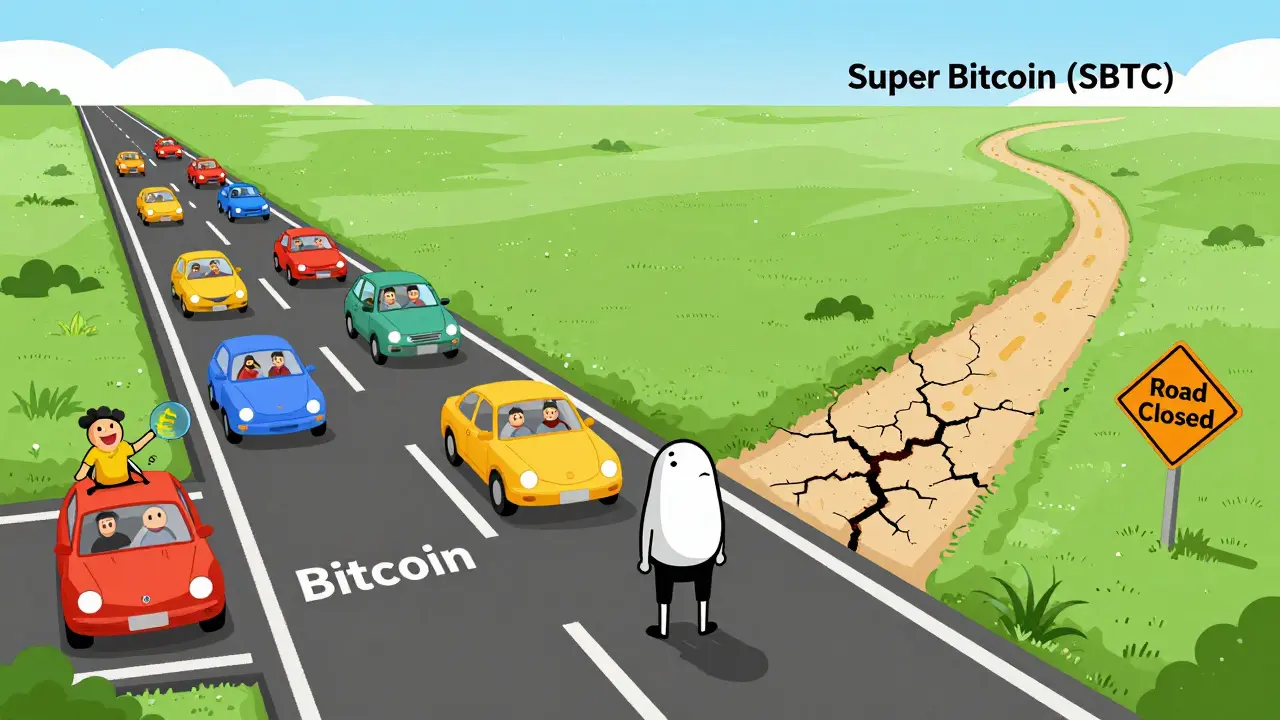
You’ve probably heard the name Super Bitcoin, also known as SBTC. It sounds like the ultimate upgrade to Bitcoin-the original cryptocurrency that started it all. The promise was simple: take Bitcoin’s security but add features like smart contracts, bigger blocks, and better privacy. But here is the hard truth you need to know right now. As of May 2026, Super Bitcoin is a ghost town. Its price has collapsed by nearly 99.96% from its peak, trading volume is virtually zero, and major exchanges have largely abandoned it. If you are looking at SBTC today, you aren't looking at an investment opportunity; you are looking at a cautionary tale about what happens when a crypto project fails to gain community trust.
This isn't just another coin review. This is a breakdown of why Super Bitcoin failed where others succeeded, how it differs from the confusingly named sBTC, and what this means for anyone holding or considering this asset in 2026.
The Promise: What Was Super Bitcoin Supposed to Be?
To understand why SBTC struggled, you first have to understand what it tried to do. Super Bitcoin launched as a hard fork of the original Bitcoin blockchain. In crypto terms, a fork is like splitting a road. One path continues with the old rules (Bitcoin), and the other path tries new rules (Super Bitcoin). The goal wasn’t to replace Bitcoin entirely but to enhance it by adding features that the main Bitcoin network rejected or implemented differently.
The developers behind SBTC wanted to solve three specific problems with Bitcoin:
- Lack of Smart Contracts: Bitcoin is great for sending money, but terrible for complex applications. SBTC added support for smart contracts, similar to those on Ethereum, allowing developers to build decentralized apps directly on the chain.
- Block Size Limits: Bitcoin’s blocks are capped at 1MB, which limits how many transactions can happen per second. SBTC increased block sizes significantly to allow for higher throughput and faster processing.
- Privacy Features: While Bitcoin offers pseudonymity, SBTC integrated additional privacy tools to make transactions harder to trace, appealing to users who wanted more confidentiality than standard BTC provided.
On paper, this sounded like a winning combination. You get the security of Bitcoin’s proof-of-work consensus mechanism with the flexibility of a modern smart contract platform. However, technical features alone don’t build a successful cryptocurrency. You need users, miners, and developers. SBTC never got them.
The Reality Check: Price Crash and Market Death
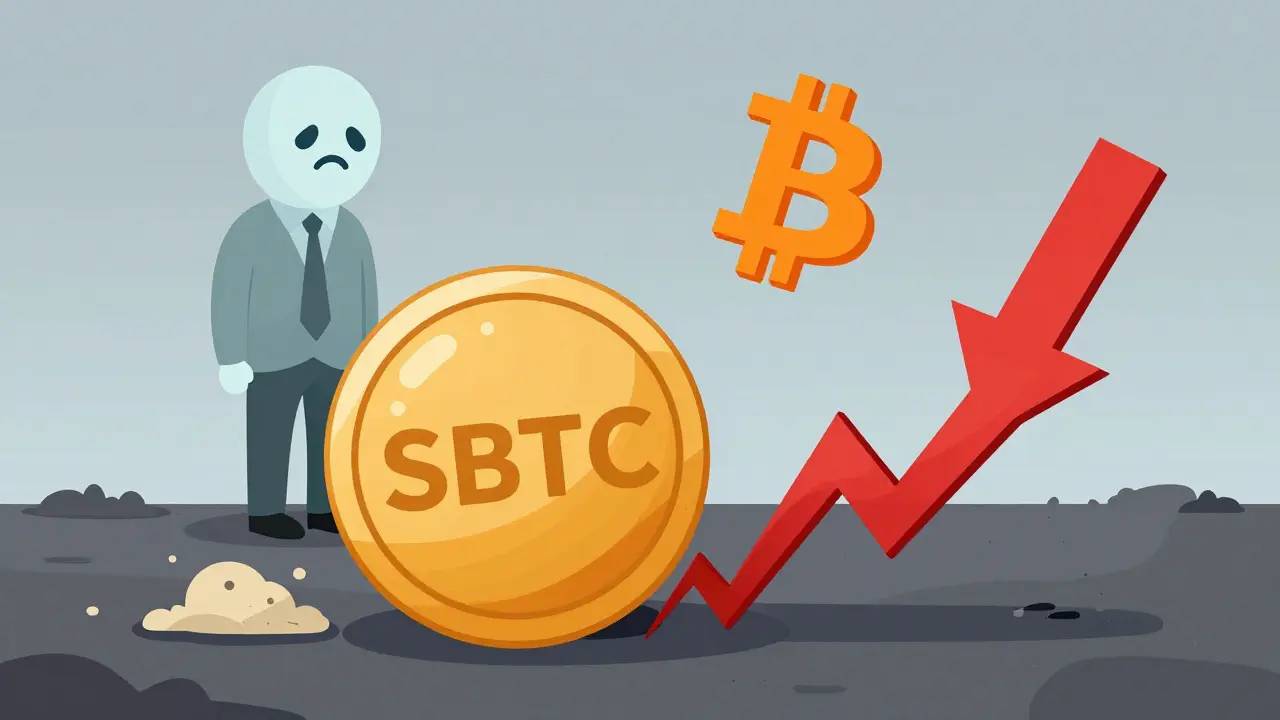
If you look at the charts for Super Bitcoin in May 2026, the picture is grim. The asset hit an all-time high of $436.13 shortly after its launch. That number is staggering-higher than Bitcoin itself at various points in history. How did a fork achieve such a valuation? Likely through speculative hype and low initial liquidity, where small amounts of buying pressure could push prices up dramatically.
Since then, the value has evaporated. Current data shows SBTC trading between $0.19 and $0.26. Let’s put that in perspective:
| Metric | Value | Context |
|---|---|---|
| All-Time High | $436.13 | Promotional peak during early hype cycle |
| Current Price | ~$0.20 - $0.26 | Near-zero liquidity environment |
| Decline from ATH | ~99.96% | Extreme depreciation indicating loss of confidence |
| 24h Volume | $16,469 | Extremely low for any active cryptocurrency |
| Market Rank | #5714 | Outside the top 5,000 cryptocurrencies by cap |
The trading volume tells the real story. On CoinMarketCap, the daily volume is around $16,000. On Coinbase, one of the world’s largest exchanges, the volume is effectively zero. This means if you try to sell your SBTC, you might not find a buyer. Or worse, you’ll have to accept a massive discount just to offload the coins. This lack of liquidity is a major red flag for any investor.
Don't Confuse SBTC with sBTC
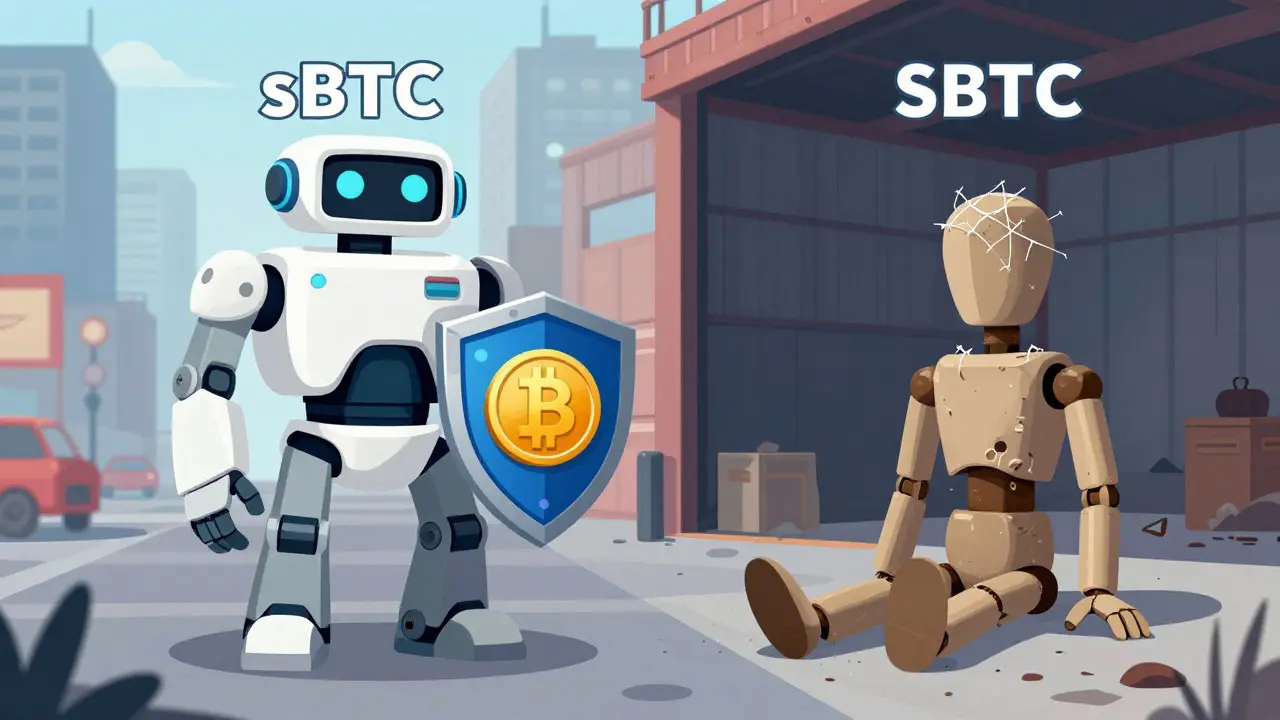
Here is where things get tricky. There is another token called sBTC, which stands for Stacks Bitcoin. Do not mix these two up. They are completely different projects with different technologies, teams, and purposes.
Super Bitcoin (SBTC) is a standalone blockchain fork of Bitcoin. It runs its own nodes, its own miners, and its own ledger. It tried to be "Bitcoin Plus" but failed to attract the ecosystem needed to sustain it.
sBTC (Stacks Bitcoin) is a synthetic asset built on the Stacks network. It represents actual Bitcoin locked in a custodial vault. When you hold sBTC, you’re holding a claim on real BTC that allows you to use Bitcoin within the Stacks smart contract ecosystem. sBTC operates using a Proof of Transfer (PoX) consensus mechanism and is part of a broader effort to bring programmability to Bitcoin without forking the main chain.
Why does this matter? Because sBTC has seen significant adoption and development activity, while SBTC has stagnated. If you see news about "Bitcoin-backed tokens" gaining traction, it’s likely referring to sBTC or similar wrapped assets, not the dead-end SBTC fork. Always check the ticker symbol carefully.
Why Did Super Bitcoin Fail?
Crypto forks often fail, but SBTC’s collapse was particularly steep. Several factors contributed to this outcome:
- No Network Effect: Bitcoin’s value comes from its widespread adoption. Merchants, institutions, and millions of users trust BTC. SBTC had none of this. Developers didn’t build apps on it because there were no users. Users didn’t join because there were no apps. It’s a chicken-and-egg problem that SBTC never solved.
- Competition from Layer 2 Solutions: Instead of forking Bitcoin, the industry chose to build on top of it. The Lightning Network solved scalability issues. Sidechains like Liquid offered privacy and faster settlements. These solutions kept the security of Bitcoin while adding the features SBTC promised, making SBTC redundant.
- Lack of Transparency: Unlike major projects, SBTC lacks clear documentation about its development team, governance structure, or future roadmap. Investors hate uncertainty. When questions arise and no one answers, capital flees.
- Data Anomalies: Major tracking platforms report a circulating supply of 0 SBTC. This isn’t physically possible if people are mining it. It suggests either broken data feeds or that the project has become so irrelevant that trackers haven’t updated their models. Either way, it signals neglect.
Is Mining SBTC Worth It?
Technically, yes. You can still mine Super Bitcoin using standard Bitcoin mining hardware (ASICs). Since it uses the same SHA-256 algorithm as Bitcoin, miners can switch their machines to mine SBTC if they want to. However, should you?
Probably not. The reward for mining SBTC is negligible. With a market cap near zero and tiny block rewards, the electricity cost of running your miner will far exceed the value of the coins you produce. Most serious miners focus on Bitcoin, Litecoin, or Kaspa-coins with healthy ecosystems and reliable payouts. Mining SBTC is essentially burning electricity for pennies.
What Should You Do With Your SBTC?
If you bought SBTC back when it was hyped, you’re likely sitting on a heavy loss. Here’s the realistic advice:
- Accept the Loss: If you have a small amount, consider writing it off. The chance of SBTC recovering to even $10 is astronomically low given the current market dynamics.
- Check Exchange Listings: Find out which exchanges still list SBTC. If it’s delisted from major platforms, you may need to trade peer-to-peer, which carries high risk of scams.
- Learn From It: Use this experience to vet future investments. Look for projects with active GitHub repositories, transparent teams, and real user growth-not just flashy promises of "enhanced features."
Super Bitcoin serves as a reminder that in crypto, technology matters less than community. A better codebase doesn’t guarantee success if no one wants to use it.
Is Super Bitcoin (SBTC) the same as Bitcoin?
No. Super Bitcoin is a fork of Bitcoin, meaning it copied Bitcoin's code and made changes to it. It is a separate blockchain with its own coins, miners, and rules. It is not interchangeable with regular Bitcoin (BTC).
Can I buy Super Bitcoin on Coinbase?
As of May 2026, Coinbase reports $0 trading volume for SBTC, and it is not actively listed for trading on most major regulated exchanges. You may only find it on smaller, less secure altcoin exchanges, which poses significant safety risks.
What is the difference between SBTC and sBTC?
SBTC (Super Bitcoin) is a standalone blockchain fork that failed to gain adoption. sBTC (Stacks Bitcoin) is a tokenized version of Bitcoin on the Stacks network, used for smart contracts. They are completely different projects. sBTC is backed by real Bitcoin; SBTC is an independent coin with near-zero value.
Why did Super Bitcoin's price drop so much?
The price dropped due to a lack of user adoption, competition from better Layer 2 solutions like the Lightning Network, and loss of investor confidence. Without developers building apps or merchants accepting payments, the demand for SBTC vanished.
Is it safe to mine Super Bitcoin?
It is technically safe to mine, but financially unwise. The rewards are extremely low compared to the cost of electricity. Miners are better off focusing on established networks like Bitcoin or Litecoin where payouts are consistent and valuable.