Unregulated Crypto Platform: Risks, Scams, and How to Stay Safe
When you use an unregulated crypto platform, a cryptocurrency service that operates without oversight from financial authorities. Also known as unlicensed exchange, it lets you trade, stake, or lend crypto without KYC, audits, or legal accountability—perfect for privacy, dangerous for your money. These platforms aren’t illegal everywhere, but they’re risky by design. No regulator checks their books, no insurance protects your funds, and if the team vanishes, you have zero recourse.
Many decentralized exchange, a peer-to-peer crypto trading platform that doesn’t hold your assets. Also known as DEX, it’s built on smart contracts and runs without a central company fall into this category. Take MakiSwap or AfroDex—both had zero trading volume, no updates, and tokens worth nothing. They looked like real platforms but were dead on arrival. Then there’s RAI Finance or DODO (BSC), which are real DeFi tools but still unregulated. They offer real features like social trading or low slippage, but if the code has a flaw or the team abandons it, your money is gone. That’s the trade-off: freedom without safety nets.
Scammers know this. They launch fake airdrops like HAI Token or DSG Token, pretending to give away free crypto while stealing your funds. They use the same tools as legitimate platforms—wallets, smart contracts, token listings—but with no intent to deliver value. A non-custodial wallet, a wallet where only you control the private keys. Also known as self-custody wallet, it’s your last line of defense. If you’re using one, you’re not trusting a platform with your keys. That’s the difference between losing $500 to a scam and losing $500 because you gave your password to a fake site.
Some platforms, like Bxlend or GalaxyOne, try to walk the line—offering services in regulated regions but lacking public audits or user reviews. Others, like those tied to North Korean hacking rings or banned in Colombia, operate entirely in the shadows. The unregulated crypto platform isn’t one thing. It’s a spectrum: from under-the-radar DeFi tools used by pros to outright scams targeting beginners. The common thread? No one is watching. No one is accountable. You’re on your own.
What you’ll find below are real cases—platforms that collapsed, airdrops that were lies, and wallets that saved people from disaster. These aren’t hypotheticals. They’re lessons written in lost funds and broken promises. If you’re using crypto outside banks and big exchanges, you need to know what to avoid. This collection shows you exactly that.
22
Nov
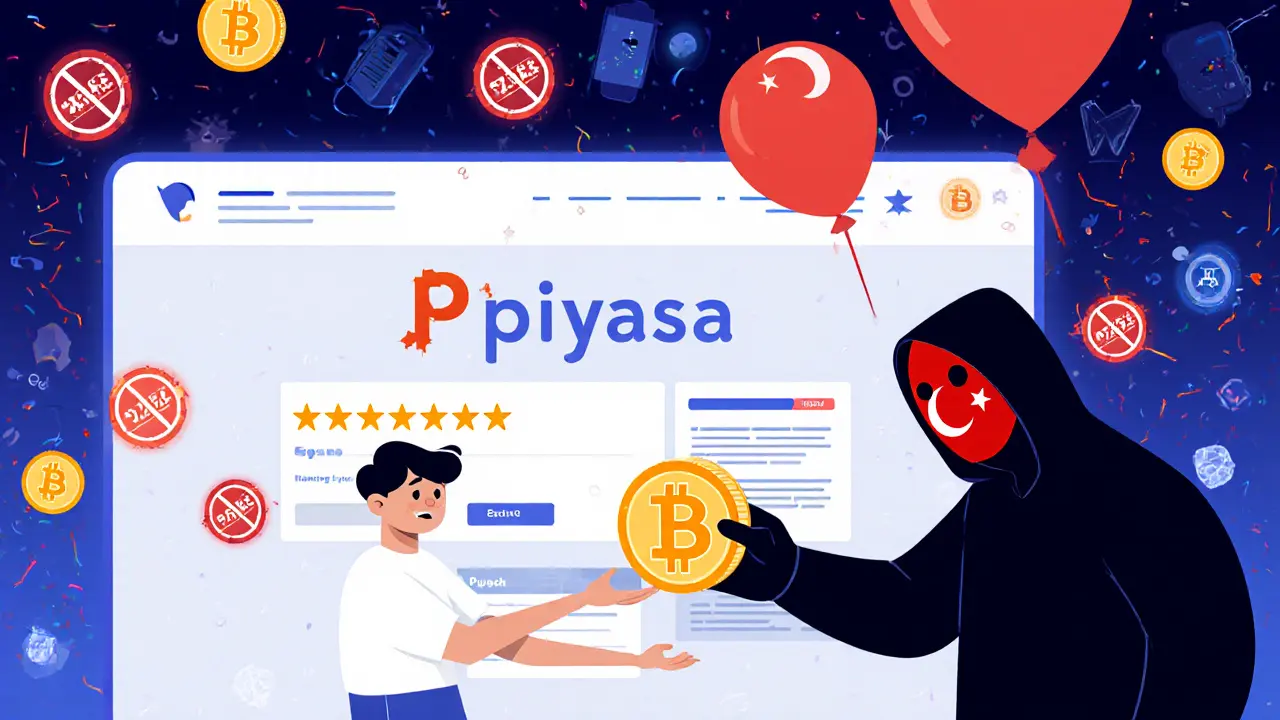
Piyasa Crypto Exchange is not real. It's a scam using a Turkish word for 'market' to trick users. No regulatory licenses, no proof of reserves, no legitimate reviews. Avoid it and use trusted exchanges like Binance or Kraken instead.
Read More