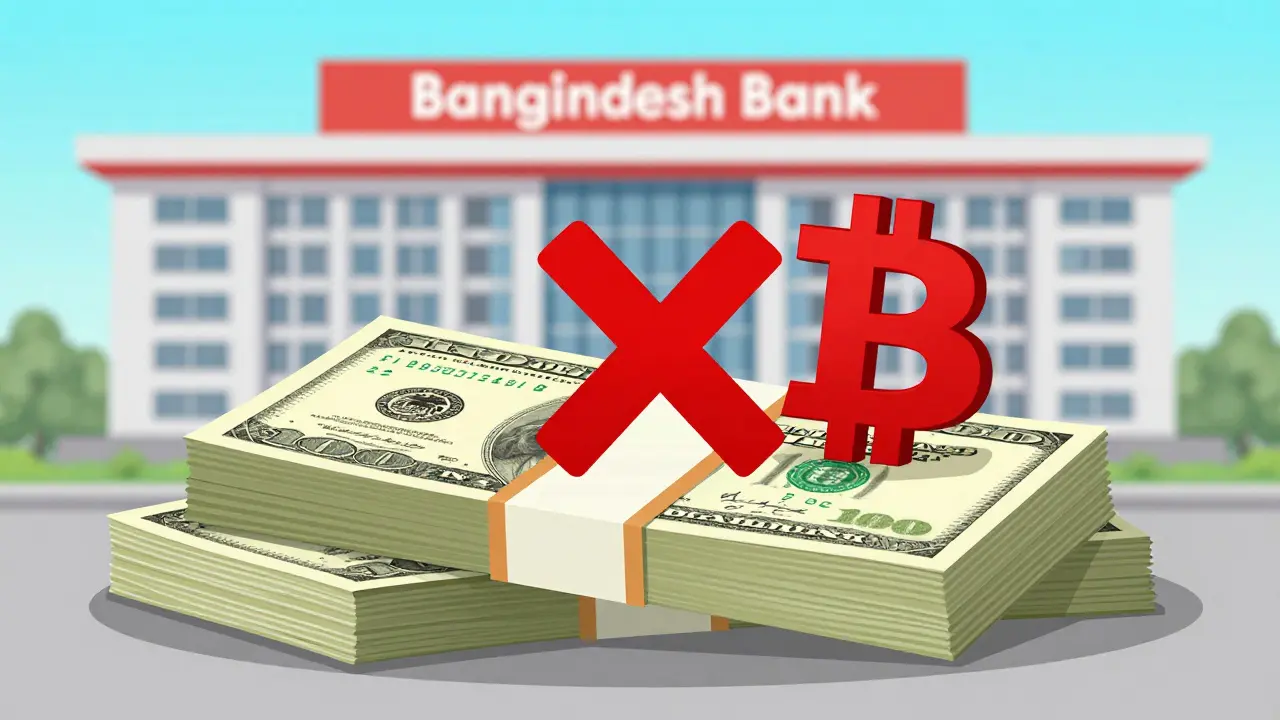
Record Remittances, But Crypto Remains Illegal
Bangladesh's remittances Bangladesh inflows hit a record $30 billion in fiscal year 2024-25. That's a 27% jump from last year. But here's the catch: using cryptocurrency for sending money home is strictly forbidden. Why? Let's break it down.
How Remittances Work in Bangladesh Today
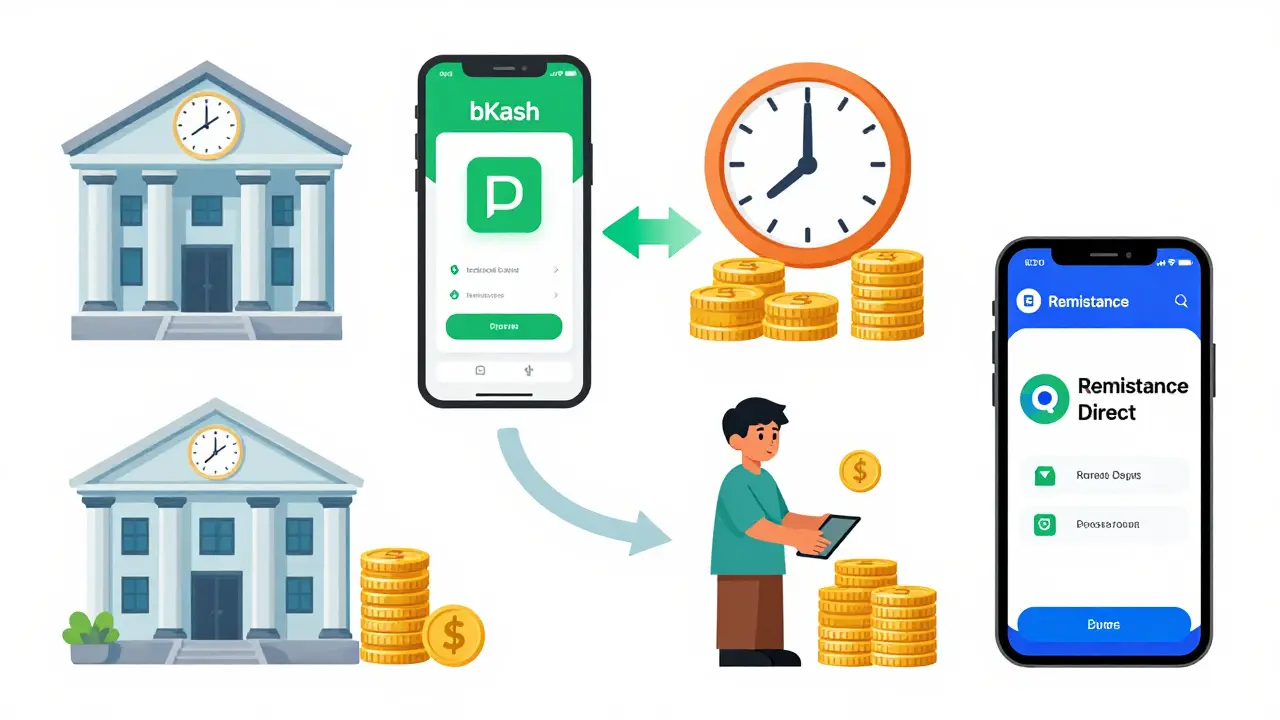
Bangladesh's remittance system uses multiple channels. The main ones are traditional banks, mobile financial services like bKasha mobile financial service provider in Bangladesh and Nagadanother popular mobile financial service in Bangladesh, agent banking, and the newer Remittance Direct app. For instance, bKasha mobile financial service provider in Bangladesh processes remittances in under 12 hours for many users, with fees around 3-4%. Meanwhile, traditional banks take 2-5 days and charge higher fees. Agent banking helps reach rural areas where banks aren't present. The Remittance Direct app, launched in August 2025, has processed $1.2 billion with an average fee of 3.8%, lower than the market average of 5.2%.
| Channel | Average Fee | Processing Time | Accessibility |
|---|---|---|---|
| Traditional Banks | 5-7% | 2-5 days | Urban areas |
| bKash and Nagad | 3-4% | Under 12 hours | Widespread mobile access |
| Agent Banking | 4-6% | 1-3 days | Rural areas |
| Remittance Direct App | 3.8% | Under 4 hours | Smartphone users |
Why Crypto Is Banned for Remittances
Bangladesh Bank has banned cryptocurrency for remittances since 2017 under Section 33 of the Foreign Exchange Regulation Act 1947the law regulating foreign exchange transactions in Bangladesh. Deputy Governor Ahmed Munas explained in September 2025 that crypto poses "unacceptable risks to monetary sovereignty and financial stability." Unlike India or Pakistan, which have explored regulated crypto frameworks, Bangladesh's central bank says there's no safe way to integrate digital currencies into the financial system yet. They worry about money laundering, fraud, and losing control over the country's currency.
The Bangladesh Bank the central bank of Bangladesh responsible for monetary policy and financial regulation issued Warning Notice No. BB/CC/2025/17 on September 15, 2025, making it clear: any entity facilitating crypto remittances faces license revocation and criminal prosecution. This ban remains firm despite global trends toward digital currencies. Even central bank digital currencies (CBDCs) are still under study, but private cryptocurrencies like Bitcoin are off-limits.

Challenges in the Current System
Despite record remittance inflows, the system has real problems. The World Bank reports average transaction costs at 6.5%-way above the global target of 3%. Users often face inconsistent exchange rates between banks, with discrepancies averaging 1.2% according to Bangladesh Bank's mystery shopping exercise in July 2025. Processing delays happen too: 7.3% of transactions face delays, and some users report losing money. For example, a user on Prothom Alo's forum complained about losing $300 in fees and 10 days of processing for a $500 remittance from Malaysia.
Mobile financial services like bKash and Nagad have improved things. bKash maintains a 4.2/5 rating on Google Play based on 1.2 million reviews. But rural recipients still struggle. A UNDP study found 18% of rural recipients can't access remittances due to strict documentation requirements like National ID cards and bank account linking. This creates barriers for people who need the money most.
Future Developments and Digital Improvements
Bangladesh Bank is pushing for digital solutions. The Real-Time Gross Settlement system expansion, launched September 1, 2025, cut processing time from 24-72 hours to under 4 hours for 85% of transactions. The Remittance Direct app has already processed $1.2 billion with lower fees. Future plans include integrating with India's Unified Payments Interface (UPI) system by Q2 2026. This could streamline remittances from India's 1.2 million Bangladeshi workers. Bangladesh Bank aims for 95% digital remittance processing by FY2026-27, but crypto remains excluded from this roadmap.
However, experts warn growth might stall without fixing deeper issues. Dr. Birupaksha Paul of Jadavpur University says, "Without addressing high transaction costs and limited financial inclusion, growth may plateau at $33-35 billion." The central bank projects remittances could hit $40 billion by FY2028, but only if they tackle structural bottlenecks like rural access and fee transparency.
Why is cryptocurrency banned for remittances in Bangladesh?
Bangladesh Bank prohibits cryptocurrency use under Section 33 of the Foreign Exchange Regulation Act 1947. Deputy Governor Ahmed Munas stated in September 2025 that crypto poses "unacceptable risks to monetary sovereignty and financial stability." The central bank has no regulatory framework for digital currencies, and allowing them could lead to money laundering or financial system instability.
What are the legal alternatives to crypto for sending remittances?
You can use traditional banks, mobile financial services like bKash or Nagad, agent banking, or the Remittance Direct app. These channels are fully legal and regulated. For example, bKash processes remittances in under 12 hours with fees around 3-4%, while the Remittance Direct app charges 3.8% average fees. All these options avoid the legal risks of crypto.
How much do remittance fees cost in Bangladesh?
The World Bank reports average transaction costs at 6.5%, but this varies by channel. Traditional banks charge 5-7%, while mobile services like bKash and Nagad charge 3-4%. The Remittance Direct app has the lowest average fee at 3.8%, making it the most cost-effective option for many users. Always compare fees before sending money.
Can I use crypto for remittances in Bangladesh?
No, it's illegal. Bangladesh Bank's Warning Notice No. BB/CC/2025/17 explicitly prohibits "any entity from facilitating cryptocurrency transactions for remittance purposes." Violations can lead to license revocation and criminal prosecution. Stick to legal channels to avoid serious consequences.
What's the future of remittances in Bangladesh?
The central bank targets 95% digital remittance processing by FY2026-27. Recent improvements include the Real-Time Gross Settlement system (processing in under 4 hours) and UPI integration with India by 2026. However, growth depends on fixing high fees and expanding rural access. Without these changes, remittance growth might plateau at $33-35 billion instead of reaching projected $40 billion.
Brittany Novak
February 6, 2026 AT 00:39The government is banning crypto to maintain control. Period.
Brittany Coleman
February 7, 2026 AT 12:02Crypto could help remittances but risks are real maybe middle ground more to story than told
laura mundy
February 7, 2026 AT 20:53This is ridiculous why ban crypto when it's the future they're clinging to outdated systems real problem is corruption in banks always same story
Mendy H
February 7, 2026 AT 23:22Current system inefficient central bank stance justified crypto volatility risky need stability not speculation
sabeer ibrahim
February 9, 2026 AT 18:27Remittance system flawed crypto could solve it but central bank too rigid national sovereignty at stake govt approach short-sighted should look at India's model but scared to change why we stuck
Deeksha Sharma
February 10, 2026 AT 17:55Amazing record remittances new apps like Remittance Direct step forward time better solutions emerge stay positive support innovation
Taybah Jacobs
February 12, 2026 AT 15:52Current remittance channels improving Remittance Direct app lower fees commendable continued innovation will help reach more people balance security and accessibility
Mrs. Miller
February 12, 2026 AT 18:09Oh sure ban crypto because it's 'risky' banks charge 7% fees take days classic case 'if you can't beat them ban them' real innovation scary huh
Robin Ødis
February 12, 2026 AT 20:29Central bank right to ban crypto dangerous game people don't understand think future just bubble read all reports need regulations otherwise chaos remember 2008 crisis same thing
Jacque Istok
February 13, 2026 AT 04:54Crypto risks real but current system fees too high why not regulate properly India's approach shows possible central bank fear unfounded
Jordan Axtell
February 14, 2026 AT 16:55Whoa this is deep government fear crypto control they don't want people financial freedom all about power question authority system flaws talk real change
Oliver James Scarth
February 16, 2026 AT 01:33Bangladesh stance correct crypto undermines monetary sovereignty central bank must protect economy current system works well shouldn't jump into unproven tech national security govt doing right thing
Kyle Pearce-O'Brien
February 16, 2026 AT 20:34OMG complex issue central bank decision deep systemic risks crypto just speculative asset need stability over hype 🤔 future finance CBDCs not Bitcoin be rational here
Nathaniel Okubule
February 18, 2026 AT 18:55Remittances vital for Bangladesh current system challenges new apps helpful focus improving channels not risky alternatives safety first
David Bain
February 18, 2026 AT 21:23Interesting analysis regulatory framework balance innovation stability crypto volatility systemic risks current fee structure unsustainable phased regulation beneficial
Matt Smith
February 20, 2026 AT 09:13Seriously crypto banned ridiculous central bank clueless protecting banks profits crypto lowers fees speeds things up all about control 🤦♂️