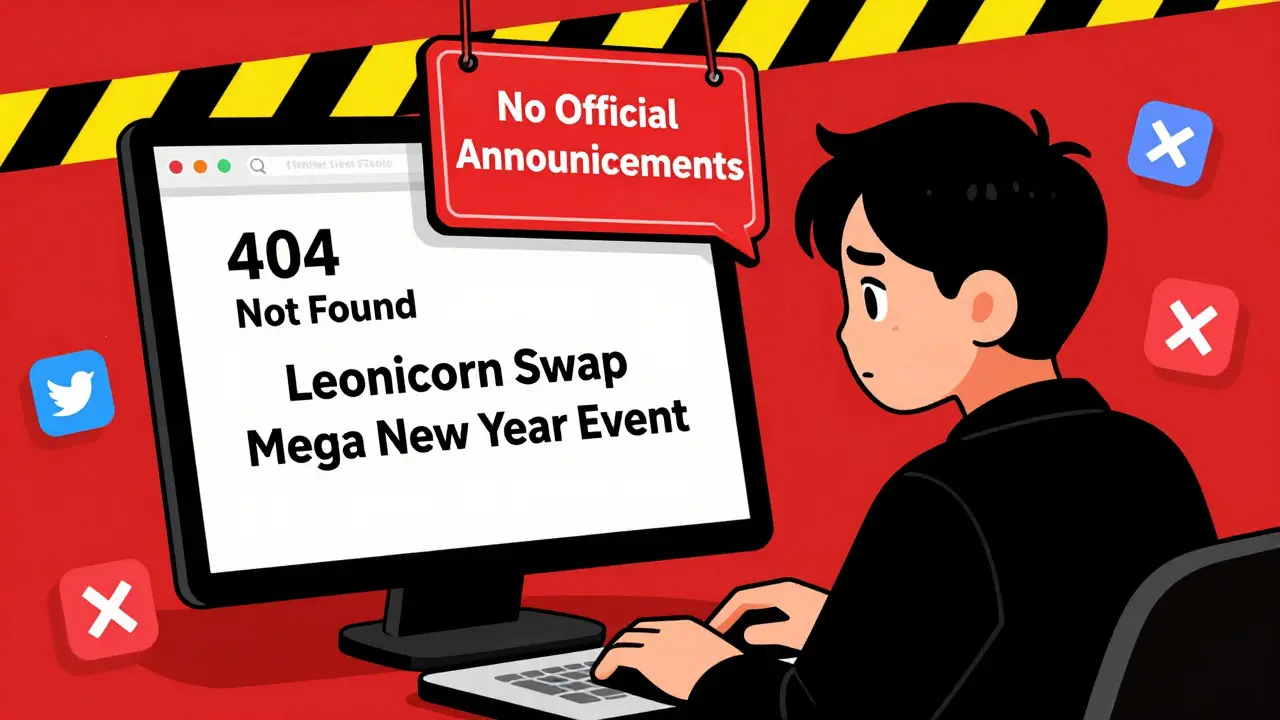
Last month, over $15 million was stolen from users who fell for fake airdrop scams. But when you search for details about Leonicorn Swap's Mega New Year event, you'll find zero official announcements. No press releases. No social media posts. No wallet addresses. Nothing.
Why You Can't Find Details About This Airdrop
Leonicorn SwapA cryptocurrency project with no verified presence. No official website, no token listings, and no legitimate airdrop announcements. isn't listed on CoinGeckoA leading cryptocurrency data platform that tracks market prices, volume, and project details. Legitimate projects are typically listed here. or CoinMarketCapA major cryptocurrency tracking service that lists market data and project information.. These platforms track thousands of tokens. If a project isn't there, it's a major red flag. Also, check their official website. A real project has a professional site with contact info, team details, and documentation. Fake projects often use generic names or copy legitimate sites. For example, a scam site might have 'leonicorn-swap.com' but the real one would have 'leonicornswap.com' or a similar verified domain.
Red Flags to Watch For
Scammers love airdrops. They create fake websites and social media accounts to trick you. Here's what to avoid:
- Asking for private keys or seed phrases. Legitimate airdrops never need this.
- Requiring you to send crypto to claim tokens. Real airdrops give tokens for free.
- Pressure tactics like 'claim now or lose it!' Scammers use urgency to rush you.
- Unverified social media accounts. Check for blue checks and official links.
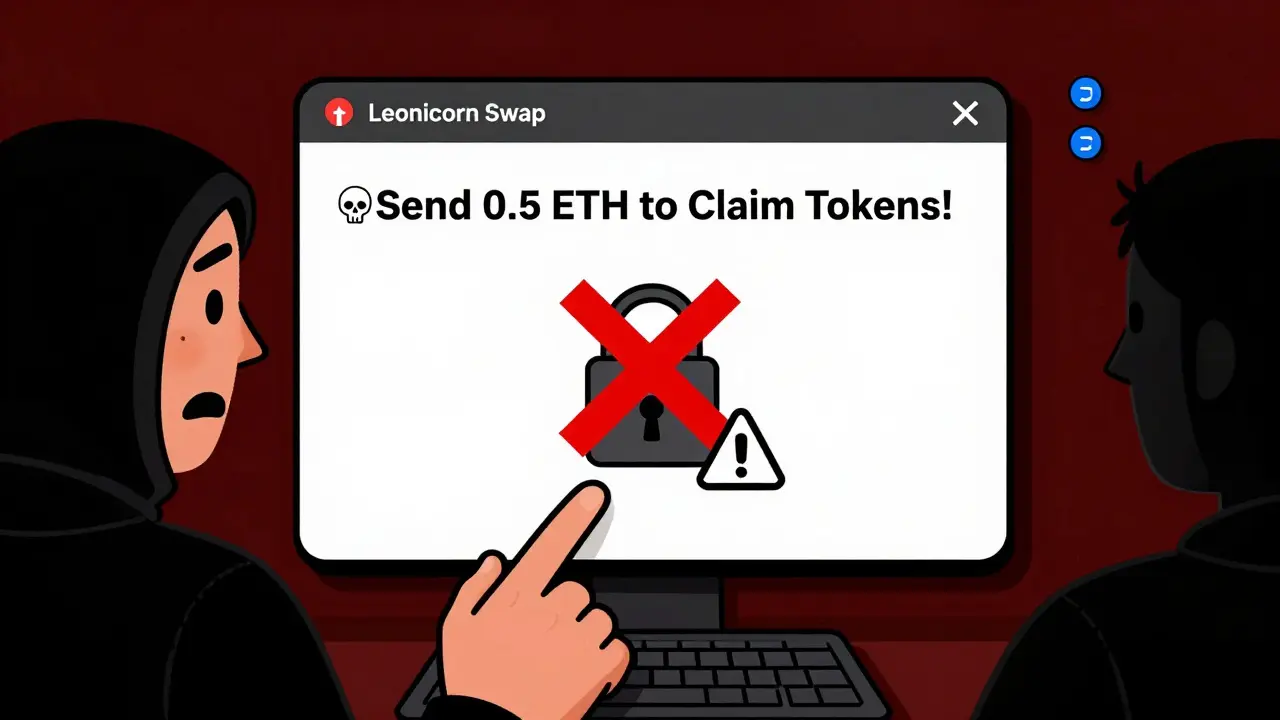
How to Verify Legitimate Airdrops
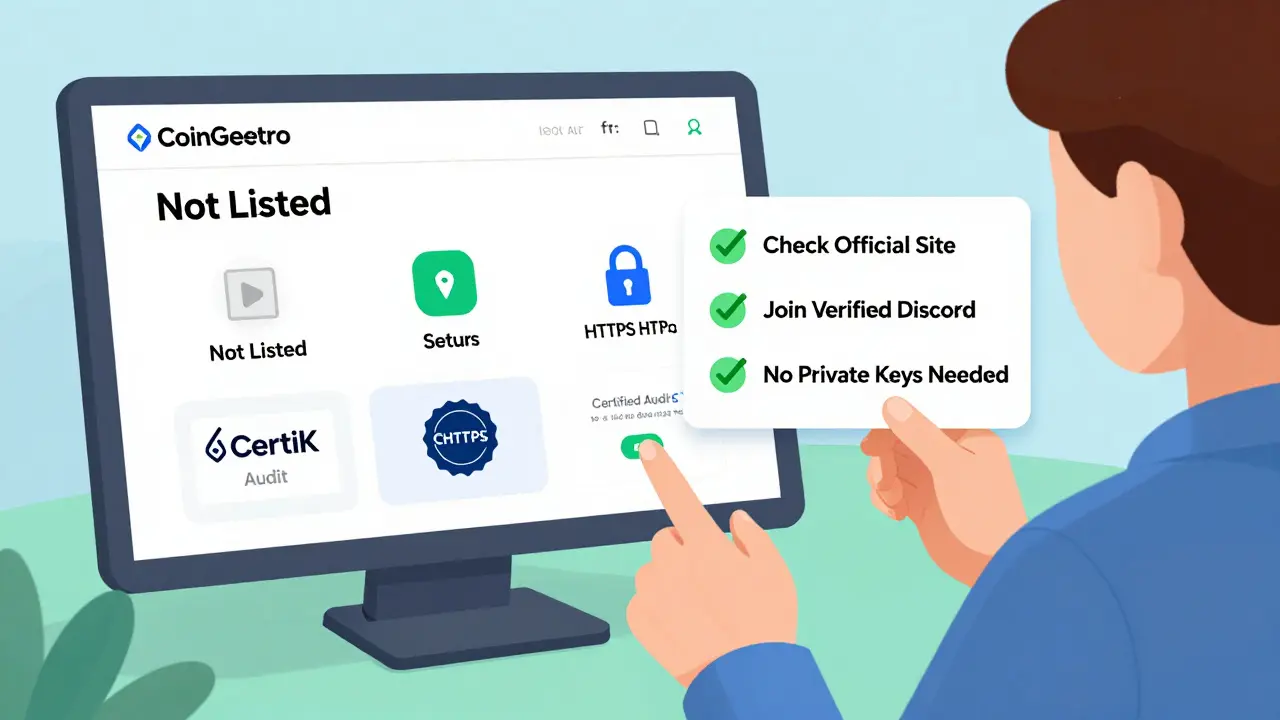
Before participating in any airdrop, do these checks:
- Visit CoinGecko or CoinMarketCap. Search for the token. If it's not listed, be cautious.
- Check the project's official website. Look for HTTPS and a clear 'Contact Us' section.
- Join their official Telegram or Discord. Legitimate projects have active communities.
- Read their whitepaper or documentation. Scams often skip this step.
- Search for audits. Reputable projects get security audits from firms like CertiK or OpenZeppelin.
What to Do If You Encounter a Suspicious Airdrop
If you find a suspicious airdrop, report it. In the U.S., the Federal Trade Commission (FTC)The U.S. government agency that handles consumer fraud reports, including cryptocurrency scams. They provide a platform for reporting incidents at ReportFraud.ftc.gov. handles crypto fraud. You can file a report at ReportFraud.ftc.gov. For other countries, check local authorities. Also, warn others on forums like Reddit's r/CryptoCurrency or Twitter. Sharing your experience helps protect the community.
FAQ
Is Leonicorn Swap a real project?
There is no verified information about Leonicorn Swap. No official website, no token listings, and no legitimate airdrop announcements exist. Treat any claims about this project with extreme caution.
How do I know if an airdrop is legitimate?
Check CoinGecko or CoinMarketCap listings, verify the official website's HTTPS security, join their verified social media channels, and look for security audits. Legitimate airdrops never ask for private keys or require sending funds.
Can I get scammed by airdrops?
Yes. In 2025, over $200 million was lost to fake airdrop scams. Always take time to verify airdrop legitimacy before participating.
What should I do if I sent funds to a fake airdrop?
Report it to your local authorities immediately. Contact your bank or crypto exchange to see if they can help. Unfortunately, recovering funds is difficult, so prevention is key.
Are all airdrops scams?
No. Many legitimate projects run airdrops to reward users. But scams are common. Always do your homework before participating.
Joshua Herder
February 8, 2026 AT 04:14Let me tell you a story. In 2017, I was part of a project that wasn't listed on CoinGecko or CoinMarketCap for months. People were calling it a scam because of that, but it turned out to be a legitimate project that just hadn't gotten around to the listings. The truth is, those platforms are useful but not the be-all-end-all. What matters more is the team's transparency, the code on GitHub, and community activity. This post is doing a disservice by overemphasizing CoinGecko listings. If you're going to judge a project, look at the actual substance, not just whether it's on a data platform. Also, the mention of 'no official website'-sometimes projects use decentralized domains or don't have a traditional site. The real red flags are things like anonymous teams, no code, or suspicious social media. This post is too simplistic and plays into the hands of those who want to spread fear. Many legitimate projects start small and grow organically. Jumping to conclusions based on CoinGecko listings is exactly how scams happen-people get scammed by projects that are listed but still rug pull. So instead of worrying about CoinGecko, focus on the project's actual progress and community engagement. It's not rocket science, but it requires actual work, not just checking a box on a website. For example, the original Bitcoin project wasn't on CoinGecko for years, yet it was legitimate. The fact that a project isn't listed doesn't mean it's a scam; it could just be new. Conversely, many listed projects have been scams. So this post's advice is dangerously misleading. Always do your own research, not just rely on third-party platforms.
Brittany Coleman
February 9, 2026 AT 13:18CoinGecko listings aren't everything but they're a good starting point for legitimacy checks.
laura mundy
February 10, 2026 AT 19:05Leonicorn is a scam. Period. No official website. No CoinGecko listing. No social media. Zero presence. Anyone defending it is either a shill or clueless. If it was legit, it wouldn't be hiding. Stop being naive. This is basic due diligence. If you can't find it, it's fake. End of story.
Mendy H
February 11, 2026 AT 16:27The author clearly lacks a nuanced understanding of the crypto space. CoinGecko and CoinMarketCap are not the be-all-end-all; they're just metrics. True legitimacy requires deeper analysis-code audits, team transparency, community engagement. This post oversimplifies to the point of being dangerously misleading. I'm surprised anyone would take it seriously. Real professionals know better.
Molly Andrejko
February 11, 2026 AT 23:52I appreciate the insights here, but I think it's important to balance both perspectives. While CoinGecko listings are a good indicator, they're not the only factor. Legitimate projects can be new and still grow. The key is to look at multiple sources and not jump to conclusions. Always do your research, but stay open-minded. This community thrives on sharing knowledge and helping each other.
sabeer ibrahim
February 13, 2026 AT 23:11Bro, this is basic. If there's no CoinGecko listing, it's a scam. Period. No official website? No social media? Zero presence. That's a dead giveaway. Stop overcomplicating things. Crypto is about transparency. If you can't find it, it's fake. Simple as that. Always check the basics before investing. Don't be a fool.
Deeksha Sharma
February 14, 2026 AT 20:28It's important to remember that the crypto space is evolving. Legitimate projects often start small and build up. CoinGecko listings take time, but the real test is community trust and project progress. Instead of focusing on listings, look at the team's commitment and the project's actual development. This post's advice is a bit too rigid-there's room for nuance.
Taybah Jacobs
February 15, 2026 AT 11:28The considerations presented in this post are valid; however, it is imperative to approach such matters with a balanced perspective. While CoinGecko and CoinMarketCap listings serve as useful indicators, they should not be the sole determinant of legitimacy. A comprehensive evaluation necessitates examining the project's whitepaper, community engagement, and technical documentation. This approach ensures a more informed decision-making process.
Jim Laurie
February 16, 2026 AT 11:44Yo, I get where you're coming from. CoinGecko listings aren't the end-all, but they're a good sign. But like, if there's no official site, no social media, that's a red flag. But also, some legit projects are just new. The key is to check everything-code, team, community. Don't just trust the listings. Do your homework. This is crypto, after all. Stay safe, fam!
mahikshith reddy
February 16, 2026 AT 23:47No official presence = scam. Period.
Brendan Conway
February 18, 2026 AT 07:22I think this is a good point. CoinGecko listings are helpful, but not everything. Some legit projects are new. But if there's no website or social media, that's a bad sign. Just check everything carefully. Don't jump to conclusions, but don't ignore red flags either.
Katie Haywood
February 19, 2026 AT 18:08Oh, for sure. CoinGecko listings aren't the whole story, but if there's literally nothing else-no website, no social media, no nothing-then yeah, it's a scam. Like, duh. Don't overthink it. Just look at the basics. If it's not there, it's probably fake. Simple.
Matt Smith
February 21, 2026 AT 17:28This is such a classic case of crypto FUD. CoinGecko listings? Who cares? Real projects don't need them. This post is just fearmongering. 🤦♂️ Look at the team, the code, the community. If it's legit, it'll shine without the listings. Stop being sheep. #CryptoIsDifferent
Jesse Pasichnyk
February 22, 2026 AT 02:43Look, if there's no official website or CoinGecko listing, it's a scam. Period. No excuses. Crypto is about transparency. If you can't find it, it's fake. Simple. Don't be stupid. Check the basics.
Jordan Axtell
February 22, 2026 AT 13:51You're right that it's not just about CoinGecko, but the lack of any official presence is a major red flag. If a project can't even bother to have a website or social media, how can it be legitimate? It's not about the listings; it's about basic existence. You're missing the forest for the trees.
James Harris
February 23, 2026 AT 19:15Love the discussion here! Everyone's got valid points. The key is to stay informed but not paranoid. Always check multiple sources, but remember that new projects take time. Stay safe and keep learning. Crypto is exciting, and we can all learn together!