State Crypto Laws: What You Need to Know in 2025
When it comes to state crypto laws, the rules governing cryptocurrency use, trading, and business operations at the state level. Also known as cryptocurrency regulation, these laws determine whether you can legally mine Bitcoin in Texas, accept Ethereum as payment in New York, or launch a DeFi startup in Wyoming. There’s no single federal rulebook—instead, each state writes its own playbook, and some are completely at odds with each other.
Take MiCA regulation, the European Union’s comprehensive crypto framework that sets licensing, transparency, and stablecoin rules for all crypto businesses. It’s not a state law, but it affects anyone doing business with EU customers—even if you’re based in Florida or California. Meanwhile, states like Wyoming have become crypto-friendly hubs by offering clear legal status for blockchain companies, while New York demands a costly BitLicense just to operate. And then there’s crypto ban, a term used to describe outright prohibitions on crypto transactions or mining, like those seen in China or parts of Africa. Even where crypto isn’t illegal, local banks might freeze accounts tied to exchanges, making it harder to move money in or out.
These differences aren’t just paperwork—they directly impact your wallet. If you’re staking Ethereum, running a DeFi vault, or trying to cash out from a crypto game, you need to know if your state considers that activity legal. Some states tax crypto gains like regular income. Others treat them as property. A few have passed laws forcing banks to work with crypto firms. And if you’re in a state that’s hostile to crypto, you might be trading underground—just like the $86.4 billion in crypto trades that happened in China despite its ban. The truth? Your location matters more than you think.
Below, you’ll find real reviews, breakdowns, and warnings from people who’ve dealt with these laws firsthand. From exchanges shut down for lacking licenses to airdrops blocked by state regulators, this collection shows exactly how state crypto laws are shaping what’s possible in 2025—whether you’re a beginner or a seasoned trader.
3
Dec
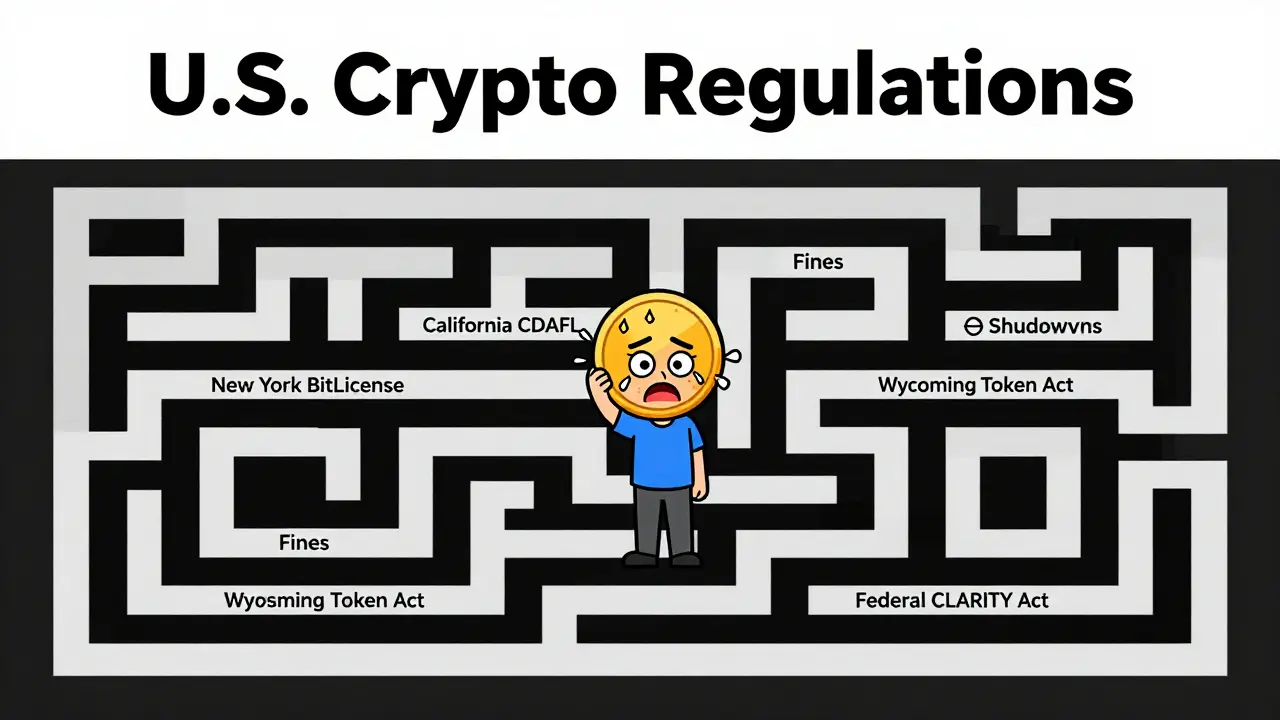
As of 2025, U.S. crypto regulations vary wildly by state. New York demands strict licenses, California balances innovation with oversight, and most states wait for federal clarity. Know where you stand before trading or building a crypto business.
Read More