CEX vs DEX: How Geography Blocks Your Crypto Trading
CEXs block users based on location due to regulations, while DEXs let you trade globally without ID - but come with big risks. Learn how geography shapes your crypto access.
Read MoreWhen you hear crypto geographic restrictions, rules that block or limit cryptocurrency use based on where you live. Also known as crypto censorship, these rules turn simple trades into legal gray zones overnight. This isn’t about tech problems—it’s about who controls your money. In some countries, banks refuse to touch crypto. In others, governments ban exchanges outright. And in places like Iran and Colombia, people are forced to use peer-to-peer networks just to buy Bitcoin.
These restrictions don’t happen in a vacuum. They’re tied to OFAC sanctions, U.S. government actions that freeze crypto access for certain nations and entities. Also known as crypto blacklists, they directly impact users in North Korea, Iran, and other targeted regions. When an exchange like Binance or Coinbase complies with OFAC, they block Iranian wallets or freeze accounts linked to sanctioned addresses. You don’t need to be a criminal to get caught—just living in the wrong place. That’s why non-custodial wallets, wallets where only you hold the keys, not a company or bank. Also known as self-custody wallets, they’re not optional in restricted countries—they’re survival tools. If your money sits on an exchange, and your country gets sanctioned, that money vanishes. But if you control your own wallet, you can still send and receive crypto—even if your bank won’t let you log in.
It’s not just about sanctions. Some countries, like China, outright ban crypto exchanges. Others, like Colombia, stop banks from processing crypto payments but let P2P trading continue. Meanwhile, places like Germany and Liechtenstein have clear licensing rules that make it easy to trade legally. The difference? One is control. The other is clarity. If you’re stuck in a restricted country, you’re not just fighting tech—you’re fighting bureaucracy, fear, and misinformation. That’s why guides on using DEXs like Uniswap in Iran, or avoiding scam platforms like Betconix, matter more than ever. You need to know what’s safe, what’s risky, and who’s really in control of your assets.
Below, you’ll find real-world stories from people navigating these restrictions. From how to trade crypto when your bank blocks you, to how governments track cross-border transactions, to which exchanges still work where—and which ones don’t. No theory. No fluff. Just what works when the rules are stacked against you.
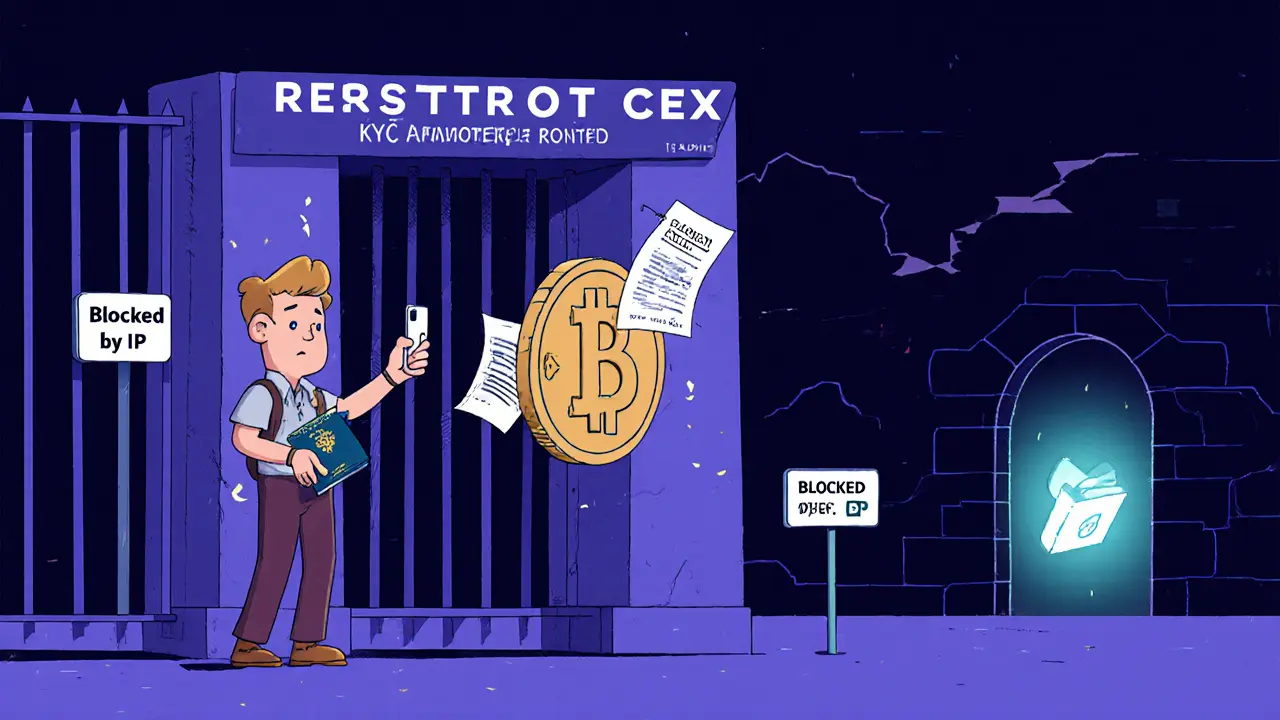
CEXs block users based on location due to regulations, while DEXs let you trade globally without ID - but come with big risks. Learn how geography shapes your crypto access.
Read More