CEX vs DEX: How Geography Blocks Your Crypto Trading
CEXs block users based on location due to regulations, while DEXs let you trade globally without ID - but come with big risks. Learn how geography shapes your crypto access.
Read MoreWhen you trade crypto, you’re not just picking a platform—you’re choosing who holds your money. That’s the core difference between a centralized exchange, a platform like Binance or Coinbase that acts as a middleman holding your crypto for you. Also known as CEX, it gives you speed and simplicity, but you’re trusting someone else with your keys. On the other side, a decentralized exchange, a platform like Uniswap or Curve that lets you trade directly from your own wallet without intermediaries. Also known as DEX, it puts control in your hands, but puts the responsibility there too. This isn’t just a technical detail—it changes everything about how safe, private, and accessible your crypto can be.
Most people start with a CEX because it feels like banking: you deposit fiat, click a button, and get crypto. But if your country bans crypto banking—like Colombia or Iran—you quickly learn that CEXs can freeze your account, block withdrawals, or get shut down by regulators. That’s where DEXs become essential. They don’t need your ID, don’t hold your funds, and can’t be easily shut down. Iranian traders use DEXs like Uniswap on Polygon to trade DAI because they can’t use banks. Users in restricted countries rely on non-custodial wallet, a wallet like MetaMask or Ledger where you alone control the private keys. Also known as self-custody crypto, it to connect to DEXs and stay in control. Meanwhile, CEXs like GalaxyOne and KoinBay offer easy on-ramps but come with hidden risks: high fees, unverified volumes, or sudden policy changes. The SEC might shut down GalaxyOne’s yield feature tomorrow. A DEX won’t—because it doesn’t offer yield at all.
The choice between CEX and DEX isn’t about which is better—it’s about what you value. Speed and customer support? Go CEX. Privacy, control, and censorship resistance? Go DEX. Many traders use both: buy crypto on a CEX, then move it to a non-custodial wallet and trade on a DEX. That’s the smart hybrid approach. The posts below show you exactly how this plays out in real life—from how OFAC sanctions block Iranian users on CEXs, to how DEXs let them trade anyway. You’ll see why KickEX and Betconix are risky CEXs with no real trading, why ZG.com and KoinBay lack transparency, and how non-custodial wallets are the only shield against government seizures. This isn’t theory. It’s what’s happening right now, in real markets, with real money. What you do next depends on which side of this divide you stand on.
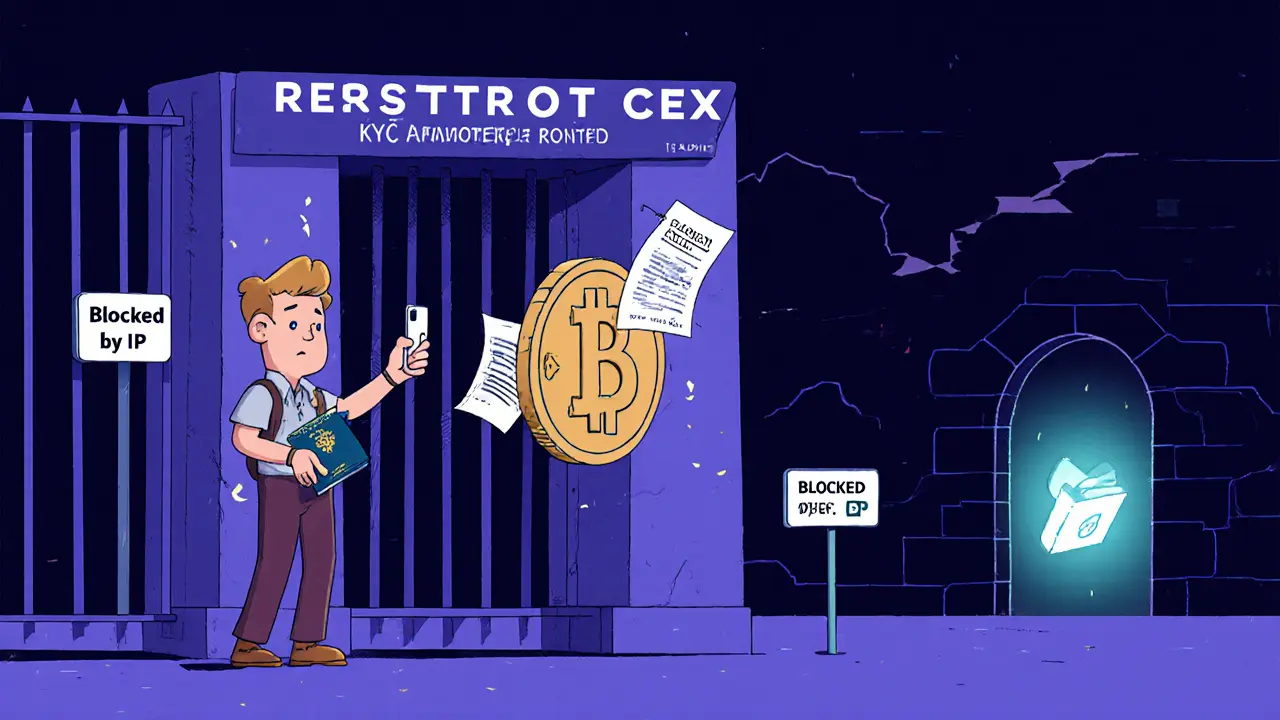
CEXs block users based on location due to regulations, while DEXs let you trade globally without ID - but come with big risks. Learn how geography shapes your crypto access.
Read More