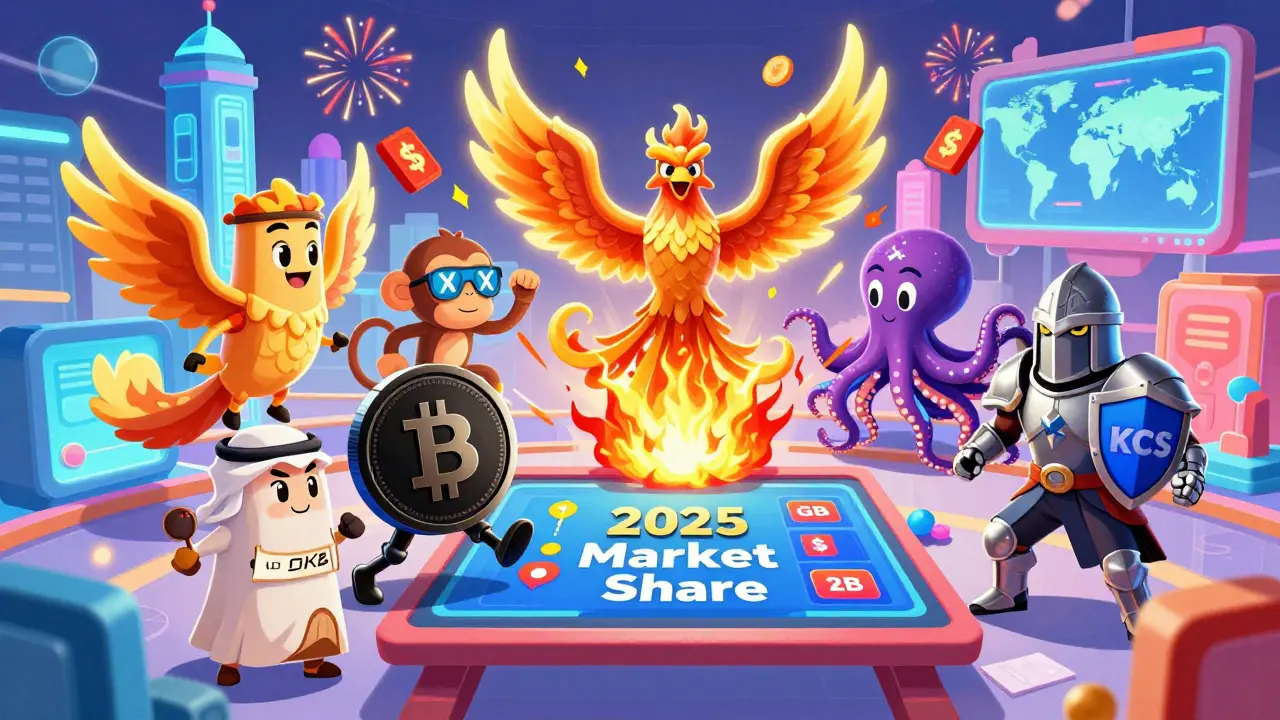
Exchange tokens aren’t just another crypto asset-they’re the backbone of centralized exchanges. Think of them as loyalty cards that also act as investments. If you trade on Binance, OKX, or MEXC, you’ve probably seen these tokens: BNB, OKB, MX, BGB, GT, KCS. They give you discounts, staking rewards, and sometimes even voting power. But not all are created equal. In 2025, the differences between them matter more than ever.
What Exactly Is an Exchange Token?
An exchange token is a cryptocurrency issued by a centralized crypto exchange. It’s not just a marketing gimmick. These tokens are built into the exchange’s business model. You use them to pay for trading fees, earn interest, participate in token burns, or even vote on platform changes. The first one, BNB from Binance, launched in 2017. Since then, nearly every major exchange has followed suit.
By December 2025, these six tokens-BNB, OKB, BGB, MX, GT, and KCS-had a combined market cap of $120 billion. That’s 8.7% of the entire crypto market. And they’re growing fast. Over the last three years, the sector grew at 34.2% annually. That’s faster than Bitcoin or Ethereum’s growth during their early years.
BNB: The Undisputed Leader
BNB still dominates. It holds 45.2% of the exchange token market share and accounts for 40% of all global exchange trading volume. Binance uses it like glue to hold its ecosystem together. Need to pay trading fees? Use BNB and get 25% off. Want to stake? Earn up to 15% APY. Trading on BNB Chain? Gas fees are cheaper with BNB.
What makes BNB different is its burn mechanism. Every quarter, Binance uses 20% of its profits to buy back and destroy BNB tokens. So far, 45.6% of the original 200 million supply has been burned. That’s not just a rumor-it’s on Binance’s public burn tracker. Few other tokens match this level of transparency.
But BNB isn’t perfect. After Binance’s $4.3 billion settlement with U.S. regulators in November 2024, many users worry about future regulatory pressure. Reddit users noted a 37% spike in concerns about BNB’s legal status. Still, 82% of Binance users hold BNB for fee discounts. That loyalty is hard to break.
OKB: Scarcity Over Supply
OKB takes a different approach. Instead of burning tokens, OKX keeps the total supply fixed at 21 million-same as Bitcoin. It’s a scarcity play. Every quarter, OKX uses 30% of its profits to buy back OKB and remove it from circulation. Since 2023, that’s cut the circulating supply by 12.3%.
OKB also leads in ecosystem integration. Over 412 decentralized apps run on OKX Chain. That’s more than any other exchange blockchain. Users can lend, borrow, and trade directly using OKB. The staking APY averages 8.5%, and OKX’s customer support has a 4.6/5 rating on Trustpilot.
But here’s the catch: OKB isn’t available everywhere. Due to MiCA regulations in Europe, OKX had to restrict OKB trading in several countries. If you’re outside Asia or North America, you might not even be able to buy it. Still, Dr. Garrick Hileman of Blockchain.com says OKB’s fixed supply gives it better long-term value potential than BNB’s burn model.
BGB: The Asian Copy-Trading Powerhouse
BGB isn’t trying to beat BNB head-on. It’s winning in Asia. Bitget, the exchange behind BGB, focused on copy-trading-letting users automatically copy the trades of top performers. That’s huge in markets like Indonesia, Vietnam, and the Philippines.
As of November 2025, BGB had burned 2.5 billion tokens through its 50% revenue burn model. It offers 20% trading fee discounts and staking yields up to 12% APY. Bitget’s Morph blockchain, launched in late 2025, already supports 42 dApps with $847 million locked in.
On Asian forums like BitKan, 78% of users praise BGB’s copy-trading tools. But English-speaking users complain the interface feels clunky. Bitget’s documentation isn’t as polished as Binance’s. Still, BGB’s market share jumped to 7.6% in 2025, and analysts predict it’ll close the gap with BNB by 2027.
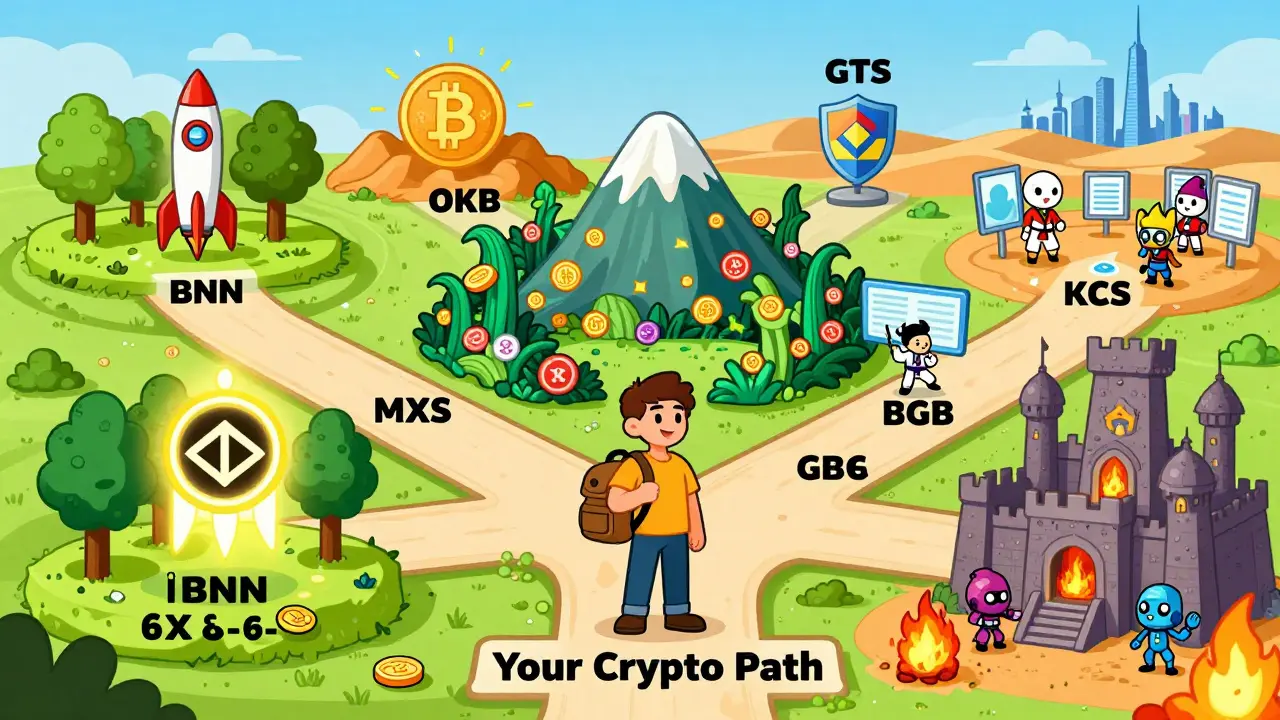
MX: The Altcoin King
If you trade obscure altcoins, MX is your token. MEXC has 2,690 spot trading pairs-the most of any exchange. That’s more than Binance, Coinbase, and Kraken combined. MX holders get a 50% discount on trading fees, the highest in the industry.
Since its launch, MEXC has bought back $487 million worth of MX tokens using 50% of its revenue. That’s more than any other exchange token in absolute terms. In Q4 2025 alone, MEXC added $34 billion in new trading volume.
But MX has a downside: complexity. The MEXC platform is packed with features, and learning it takes 8-12 hours. New users get overwhelmed. Still, on CoinGecko, 89% of MX users say the altcoin selection and fee discounts make it worth the effort. It’s the go-to token for traders who want access to the latest memecoins before they explode.
GT: The Middle East Contender
Gate.io’s GT token isn’t flashy, but it’s reliable. It offers 20% fee discounts and has a strong presence in the Middle East. Gate.io holds a VARA license in Dubai, making it one of the few exchanges legally allowed to operate there.
GT’s burn mechanism is simple: 20% of platform revenue goes toward buying back and destroying tokens. Since 2018, 1.8 billion GT have been burned. GateChain, its own blockchain, now supports cross-chain swaps for 18 major cryptocurrencies.
Gate.io’s sponsorship of Oracle Red Bull Racing in Formula 1 boosted GT’s visibility by 37% in late 2025. On Gate.io’s forums, 89% of users call GT’s tokenomics “fair and transparent.” The only real flaw? Documentation in English is thin. Non-Asian users report missing guides and tutorials.
KCS: The Security-Focused Token
KuCoin’s KCS stands out for two things: its burn rate and its safety net. Every day, 50% of trading fees are used to burn KCS. By December 2025, 387 million tokens had been destroyed. That’s a faster burn than most competitors.
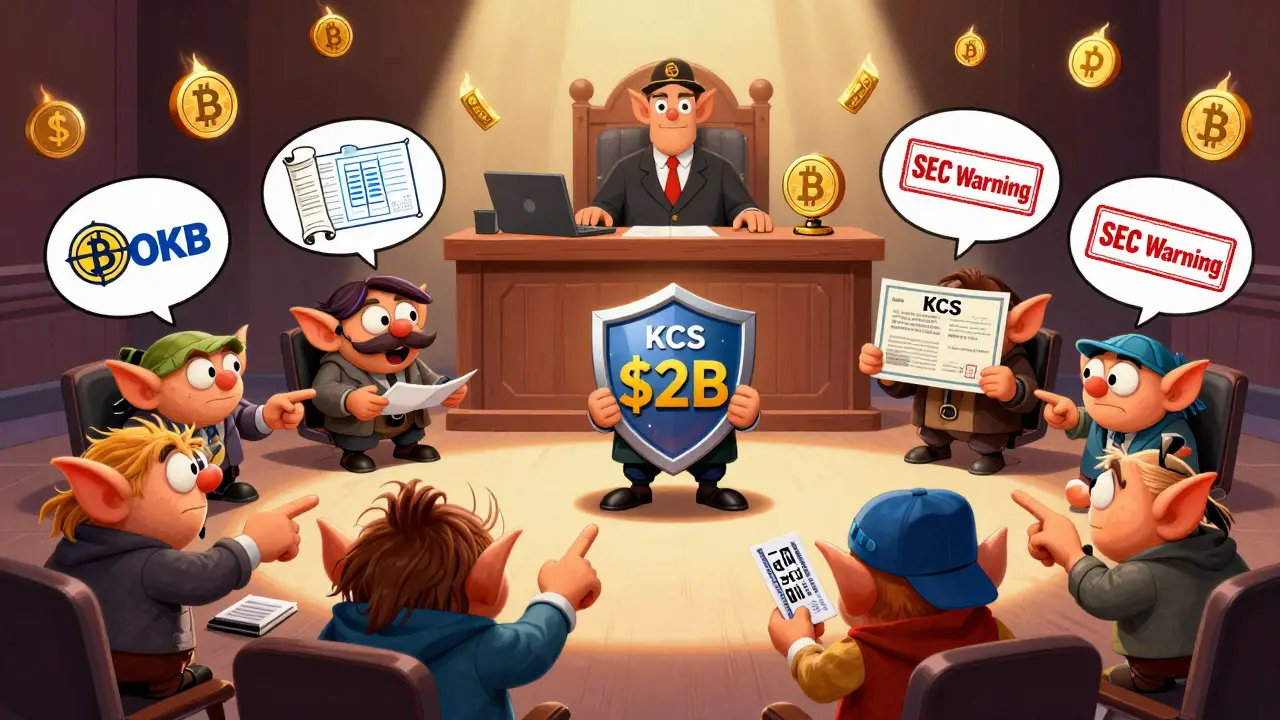
But KCS’s real edge is KuCoin’s $2 billion protection fund. If something goes wrong-like the February 2025 service outage-this fund covers losses. That reassured 89% of users who left positive reviews after the incident.
KCS also has unique features: Apple Pay integration for KuCard, AI-powered trading bots, and GemSlot, a platform that helped launch 317 new tokens in 2025. Projects using GemSlot saw 47% higher liquidity than others.
Still, KCS is tied to KuCoin’s performance. When the exchange had downtime, KCS dropped 18% in 24 hours. That’s the risk of relying on a single exchange. But for users who value security over hype, KCS is a solid pick.
Who Wins? It Depends on Your Goals
Here’s the quick breakdown:
- For maximum utility and ecosystem depth: BNB. It’s the most integrated, with BNB Chain, Binance Wallet, and Binance Launchpad all working together.
- For scarcity and long-term value: OKB. Fixed supply + regular buybacks = strong deflationary pressure.
- For altcoin traders: MX. 2,690 pairs and 50% discounts are unmatched.
- For copy-trading in Asia: BGB. It’s built for that audience.
- For Middle East access and reliability: GT. Regulatory compliance matters.
- For safety and daily burns: KCS. The $2 billion fund makes it the most secure.
Regulatory risk is the elephant in the room. The SEC’s November 2025 guidance warned that exchange tokens could be classified as securities if their utility is too weak. That could hit BGB, MX, and GT hardest-they rely more on trading discounts than real DeFi use cases.
BNB and OKB are better positioned because they’re tied to full blockchains. KCS has the safety net. GT has legal licenses. MX has volume. No single token is perfect. But if you’re holding just one, BNB still leads. If you’re trading altcoins daily, MX is your best friend. If you care about long-term value, OKB might be smarter.
What You Need to Know Before Buying
Don’t buy an exchange token just because it’s popular. Ask yourself:
- Do I trade often enough to benefit from fee discounts?
- Do I want to stake, or just hold?
- Is this exchange available in my country?
- Does the burn mechanism actually reduce supply, or is it just marketing?
- Is the exchange regulated where I live?
Most users only use exchange tokens for fee discounts. But if you’re serious, use them for staking and ecosystem access. The real gains come from being inside the ecosystem, not just holding the token.
Also, don’t ignore the learning curve. BNB’s ecosystem takes 3-5 hours to master. OKB takes 7-10. MX? 8-12. If you’re new, start with GT or KCS-they’re simpler.
Final Thoughts
Exchange tokens have moved far beyond discounts. They’re now part of multi-chain ecosystems, staking platforms, and even governance systems. The leaders-BNB and OKB-are building real infrastructure. The challengers-MX, BGB, GT, KCS-are carving out niches.
By 2027, 68% of exchanges plan to move toward DAO-style governance. That could change everything. For now, though, your choice comes down to where you trade, what you trade, and how much risk you’re willing to take.
There’s no single winner. But if you’re holding just one, make sure it fits your habits-not just your hype.
Are exchange tokens a good investment?
They can be, but not like Bitcoin or Ethereum. Exchange tokens derive value from the exchange they’re tied to. If the exchange grows, the token usually does too. But if the exchange gets hacked, regulated, or loses users, the token can crash. BNB and OKB have the strongest track records. MX and BGB are riskier but offer higher upside if their markets expand. Always consider the burn mechanism, regulatory exposure, and ecosystem depth before buying.
Can I use exchange tokens outside their exchange?
Yes, but with limits. BNB works on BNB Chain, which supports thousands of DeFi apps. OKB can be used on OKX Chain and some third-party wallets. KCS and GT are accepted on a few other platforms, but most exchange tokens are only useful on their native exchange. Don’t expect to pay for coffee with MX or BGB. Their utility is mostly inside the exchange ecosystem.
Which exchange token has the best staking rewards?
BNB leads with up to 15% APY on Binance’s staking platform. BGB follows with 12% APY, and OKB averages 8.5%. KCS and GT offer around 7-9%. MX’s staking yields are lower, around 5-6%, because it focuses more on trading volume than passive income. Always check the current APY on the exchange’s official site-these rates change frequently.
Do all exchange tokens have token burns?
Most do, but not all the same way. BNB, KCS, and OKB have transparent, regular burns funded by exchange profits. BGB burns 50% of revenue quarterly. MX buys back tokens with revenue but doesn’t always destroy them immediately. GT burns 20% of revenue quarterly. Some smaller tokens claim to burn but don’t publish proof. Stick to the top six-BNB, OKB, BGB, MX, GT, KCS-because they’re the most transparent.
Is it safe to hold exchange tokens long-term?
It depends on the exchange. Binance and OKX are the most stable, with strong reserves and global compliance. Gate.io and KuCoin are also reliable, especially with their protection funds. Bitget and MEXC are growing fast but have less regulatory history. If you’re holding long-term, prioritize exchanges with proof-of-reserves, legal licenses, and clear burn mechanisms. Avoid tokens from exchanges that don’t publish regular audits.
Will exchange tokens be regulated out of existence?
Not all of them. The SEC has flagged exchange tokens as potential securities if they’re sold as investments without sufficient utility. Tokens tied to real infrastructure-like BNB Chain or OKX Chain-are safer. Tokens that only offer fee discounts are at higher risk. Binance and OKX are already adapting by expanding DeFi use cases. The ones that survive will be those that evolve beyond simple discounts and become part of functional ecosystems.
christal Rodriguez
February 2, 2026 AT 05:26Steven Dilla
February 2, 2026 AT 12:12josh gander
February 3, 2026 AT 14:28Brianne Hurley
February 4, 2026 AT 22:39Dahlia Nurcahya
February 5, 2026 AT 01:34Lori Quarles
February 6, 2026 AT 07:00Jack Petty
February 8, 2026 AT 03:38Freddy Wiryadi
February 9, 2026 AT 03:14Jeremy Dayde
February 10, 2026 AT 17:18mary irons
February 11, 2026 AT 03:14Steven Dilla
February 11, 2026 AT 16:10Wayne mutunga
February 12, 2026 AT 08:57Tressie Trezza
February 12, 2026 AT 19:49Mark Ganim
February 14, 2026 AT 13:54Gavin Francis
February 14, 2026 AT 20:08Dahlia Nurcahya
February 15, 2026 AT 16:46