Art Forgery Prevention: How Blockchain Stops Fake Crypto Assets
When you buy a crypto token, you’re not just buying code—you’re trusting that it’s real. But just like a fake painting in a museum, art forgery prevention, the process of verifying authenticity to stop deception. Also known as digital provenance, it’s the backbone of trust in Web3. In crypto, forgery isn’t about brushstrokes—it’s about fake tokens, phantom exchanges, and airdrops that vanish after you sign up. Without proof of origin, you’re flying blind.
Blockchain fixes this by making every step public and unchangeable. If a token like IMT, the native coin of the game Immortal Rising 2 is minted on Immutable zkEVM, its creation date, contract address, and ownership history are locked in. No one can alter it. Same with GRT, The Graph’s token used for indexing blockchain data. If CoinMarketCap lists it as part of a Learn & Earn airdrop, you can trace every claim back to the official contract. That’s not marketing—it’s proof. When a project like AfroDex has zero trading volume and no circulating supply, blockchain lets you see it’s dead before you invest. You don’t need to trust a tweet—you can check the chain.
That’s why NFT provenance, the digital record of an asset’s full history from creation to sale matters more than ever. Fake tokens often copy real ones, but they can’t copy the blockchain’s fingerprint. Tools like on-chain analytics don’t guess—they track. If a token’s contract was created yesterday and has 10,000 holders, that’s a red flag. Real projects like MiCA-regulated platforms have audits, timelines, and verified addresses you can cross-check. The same logic applies to exchanges: if CRODEX or Betconix hides their trading volume or lacks third-party verification, the chain will show it. You’re not just avoiding scams—you’re learning to read the truth written in code.
What you’ll find below isn’t just a list of posts—it’s a field guide to spotting the fakes. From airdrops that cost you money to exchanges that don’t exist, each article shows you how to use blockchain itself as your detector. No guesswork. No hype. Just facts you can verify.
12
Nov
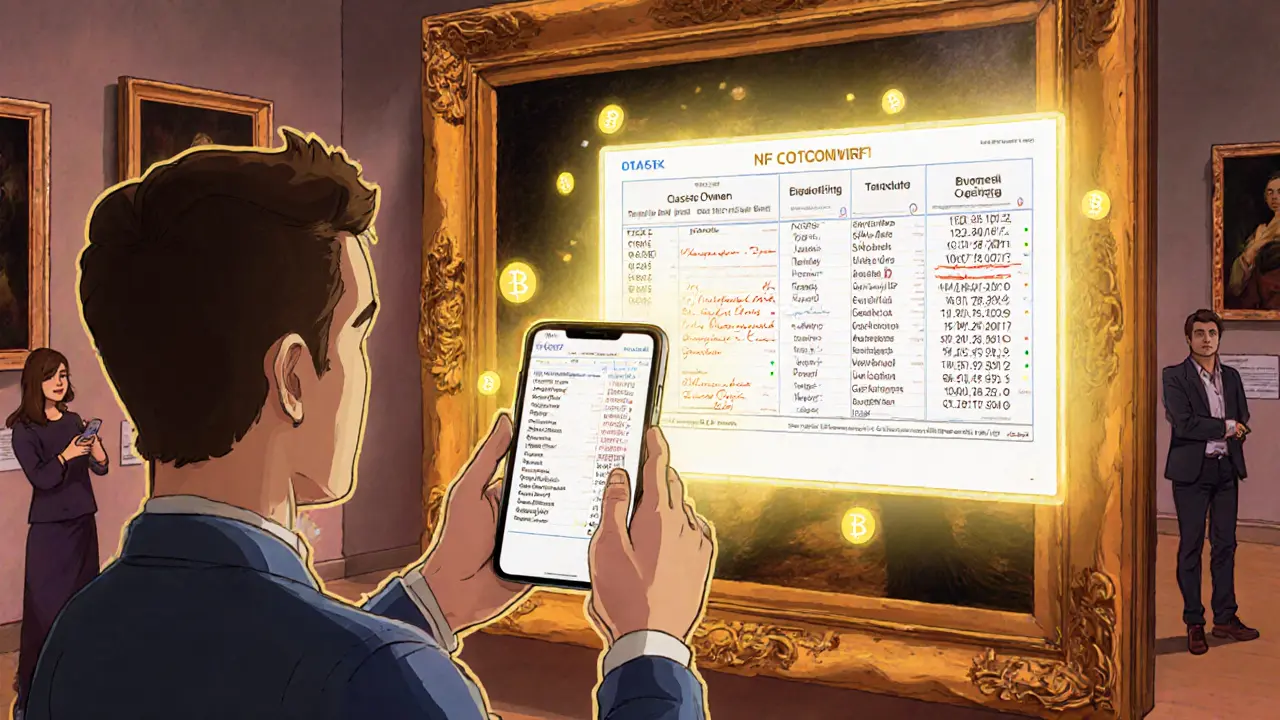
NFTs are revolutionizing how digital and physical art are authenticated, using blockchain to create tamper-proof ownership records. Learn how QR codes, NFC chips, and digital watermarks stop forgery and give collectors confidence.
Read More