You’ve probably seen the ticker ROG pop up on your screen. But what exactly is it? Is it just another meme coin riding the artificial intelligence hype train, or does it have actual utility?
ROGin AI (ticker: ROG) is an ERC-20 cryptocurrency token that powers a Web3 finance ecosystem developed by Giraffe AI Labs Pte. Ltd., a Singapore-based fintech company. The project aims to bridge traditional finance and decentralized finance by using AI-driven quantitative trading strategies. It’s not just a speculative asset; it’s designed to be used within their platform for staking, governance, and accessing earning products like "ROG Up," and participating in social trading via "Roger."
If you are considering buying ROG or integrating it into your portfolio, you need to understand how it works, where you can buy it, and the significant risks involved. Let’s break down the facts.
How the ROGin AI Ecosystem Works
At its core, ROGin AI is trying to solve a specific problem: most retail traders don’t have the time, skills, or capital to compete with institutional algorithms. The ecosystem offers two main products to address this.
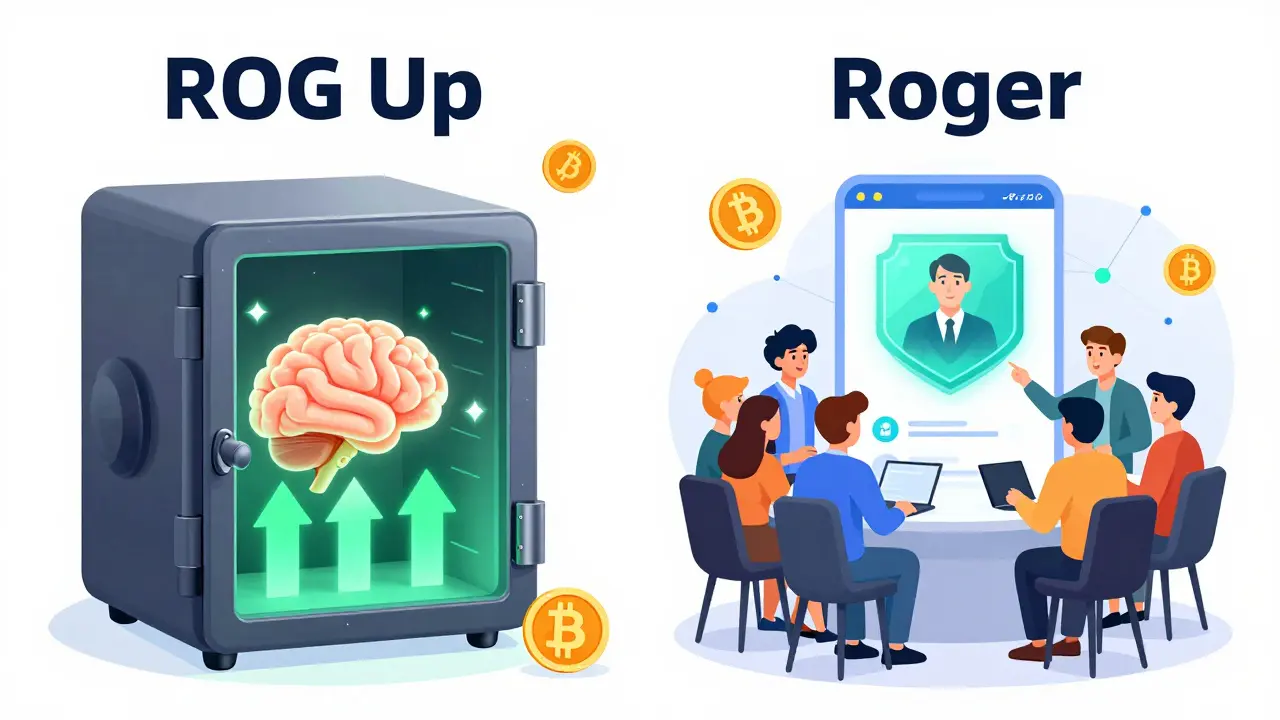
First, there is ROG Up. This is an AI-based earning service. You deposit crypto assets, and the platform’s proprietary algorithms allocate that capital across various markets to generate yield. Think of it as a passive income tool where the AI makes the active decisions. While exact Annual Percentage Yields (APY) vary based on market conditions and lock-up periods, the goal is to provide returns through quantitative strategies rather than simple lending.
Second, there is Roger, the social trading component. Roger allows users to follow, copy, or interact with trading strategies created by professional traders or AI agents. Here is where it gets interesting: the platform uses Non-Fungible Tokens (NFTs) to protect the intellectual property of these strategies. When a trader certifies a strategy, it becomes an NFT. This means the creator retains ownership rights, potentially sharing revenue from those who copy their trades.
The ROG token is the fuel for this engine. You use it to pay fees, stake for rewards, and vote on protocol governance. Without holding or interacting with ROG, you can’t fully participate in the economic incentives of the platform.
Technical Foundation and Tokenomics
Technically, ROG is an ERC-20 token deployed on the Ethereum blockchain. This matters for two reasons. First, it means you can store it in any standard Ethereum-compatible wallet like MetaMask, Trust Wallet, or hardware wallets like Ledger and Trezor. Second, it inherits the security model of Ethereum, which relies on Proof-of-Stake consensus after the Merge.
Let’s look at the supply numbers, as these dictate scarcity and potential inflation.
| Metric | Value / Status |
|---|---|
| Circulating Supply | ~66.99 Million ROG |
| All-Time High (ATH) | $0.7230 |
| All-Time Low (ATL) | $0.1328 |
| Market Cap Range | $14M - $17M USD |
| Blockchain | Ethereum (ETH) |
The circulating supply sits at approximately 66.99 million tokens. Public sources do not always disclose the total maximum supply cap, so investors should monitor official announcements for any minting functions or future unlocks. The token has experienced significant volatility, dropping roughly 68% from its all-time high of $0.7230. This drawdown is typical for mid-cap altcoins but highlights the risk profile.
Where to Buy and Trade ROG
Unlike major coins like Bitcoin or Ethereum, ROG is not listed on every exchange. Its primary listing is on MEXC Global. MEXC is a centralized exchange (CEX) that supports the ROG/USDT trading pair. To buy ROG here, you typically need to:
- Create an account on MEXC and complete KYC (Know Your Customer) verification.
- Deposit funds, usually in USDT, USDC, or fiat currency supported by your region.
- Trade the ROG/USDT pair.
You might also see price tracking pages for ROG on platforms like Binance, Coinbase, or CoinGecko. Be careful here: having a price page on Binance or Coinbase does not mean you can trade the token directly on those exchanges. They often track prices for informational purposes only. For actual execution, MEXC remains the go-to venue.
If you prefer self-custody, you can withdraw your ROG tokens from MEXC to an Ethereum wallet. Keep in mind that because it’s an ERC-20 token, you will need to pay Ethereum gas fees for transfers. These fees fluctuate based on network congestion, ranging from under a dollar to several dollars per transaction.
Risks and Considerations
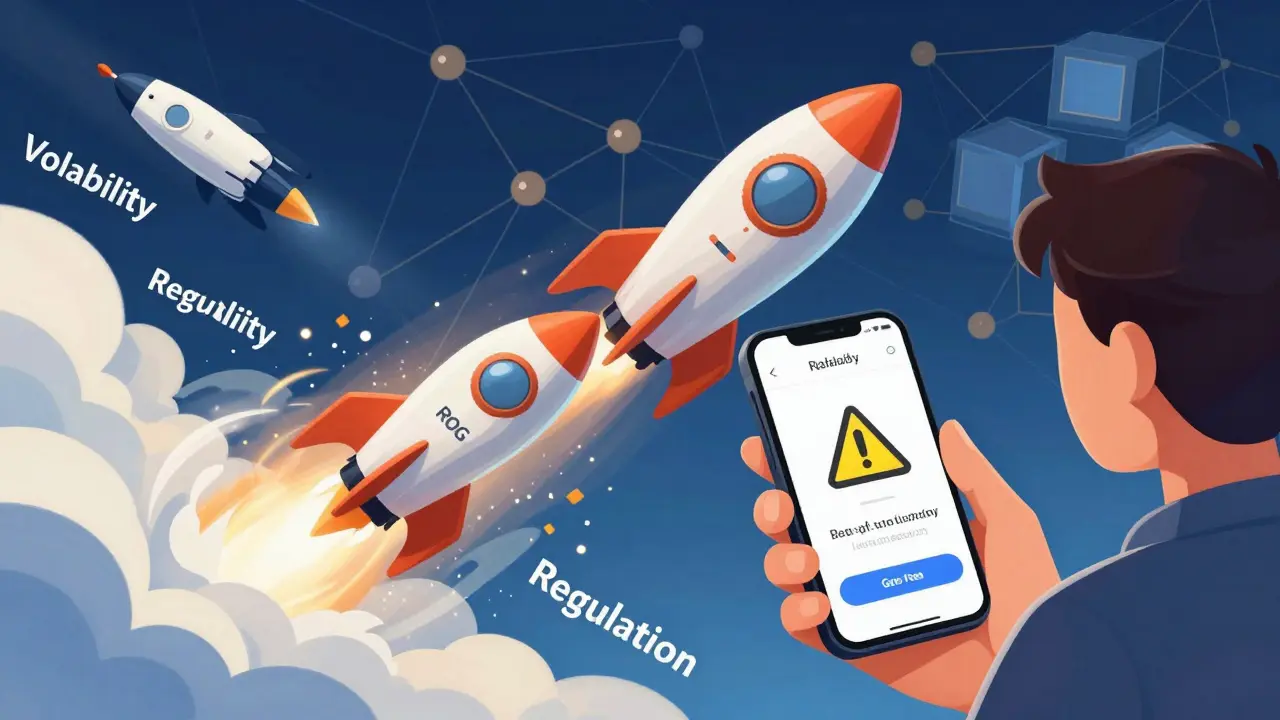
Before you invest, let’s talk about the downsides. ROGin AI operates in a niche that combines three highly volatile sectors: cryptocurrency, artificial intelligence, and leveraged trading.
Regulatory Risk: The platform promises features like "futures underwriting" and managed yield products. In many jurisdictions, including the United States and parts of Europe, offering managed investment services requires strict licensing. If regulators classify ROG Up or Roger as unregistered securities or collective investment schemes, the project could face legal hurdles. Giraffe AI Labs is based in Singapore, which has progressive digital asset regulations, but global compliance is complex.
Execution Risk: The roadmap mentions launching beta services for futures underwriting in late 2025 and full services in early 2026. Building robust AI trading engines that consistently beat the market is incredibly difficult. Many AI-trading projects fail to deliver promised alpha (excess returns). There is limited public data on long-term performance metrics like Sharpe ratios or consistent profitability over multiple market cycles.
Liquidity Risk: With a market cap between $14 million and $17 million, ROG is considered a small-to-mid-cap asset. Daily trading volumes hover around $40,000 to $900,000 depending on market sentiment. Lower liquidity means larger trades can cause significant slippage, and price swings can be more extreme than in larger cryptocurrencies.
Future Roadmap and Viability
The long-term viability of ROG depends on its ability to execute its roadmap. The transition from a basic earning platform to a full-scale social trading ecosystem with futures support is ambitious. If they successfully launch the Roger platform and attract a critical mass of professional traders to create certified NFT strategies, the utility of the ROG token could increase.
However, competition is fierce. Larger players like SingularityNET (AGIX), Fetch.ai (FET), and Render (RNDR) dominate the AI-narrative space with significantly higher market caps and deeper liquidity. ROGin AI differentiates itself by focusing specifically on *trading* education and risk mitigation via its Metaverse sandbox, rather than general-purpose AI compute. Whether this niche focus is enough to capture sustained investor interest remains to be seen.
Is ROGin AI a scam?
There is no public evidence labeling ROGin AI as a scam. It is a legitimate project developed by Giraffe AI Labs, listed on reputable exchanges like MEXC, and tracked by major aggregators like CoinMarketCap and CoinGecko. However, "legitimate" does not mean "risk-free." As with all crypto investments, you should verify contract addresses, never share private keys, and be aware that the value of the token can drop significantly.
Can I buy ROG on Binance?
Not directly for spot trading. While Binance may display price charts and conversion rates for ROGin AI, it does not currently list ROG for direct buying and selling on its main exchange. You would need to use MEXC Global or a decentralized exchange (DEX) if a liquidity pool exists.
What is the purpose of the ROG token?
ROG is a utility and governance token. It is used to access the ROG Up earning service, pay fees on the Roger social trading platform, stake for rewards, and vote on governance proposals within the Giraffe AI Labs ecosystem. Holding the token aligns user incentives with the growth of the platform.
How does the Metaverse sandbox work?
The Metaverse sandbox is a training environment designed to help traders learn risk mitigation without risking real money initially. Users can test strategies and develop an investment mindset. Once a strategy is proven and certified, it can be tokenized as an NFT, allowing the creator to monetize their IP while others copy the trades.
Who founded ROGin AI?
ROGin AI was developed by Giraffe AI Labs Pte. Ltd., a company based in Singapore. Specific names of individual founders or CEOs are not prominently featured in public marketing materials, which is common for some DAO-style or corporate-backed crypto projects that emphasize the brand over individual personalities.