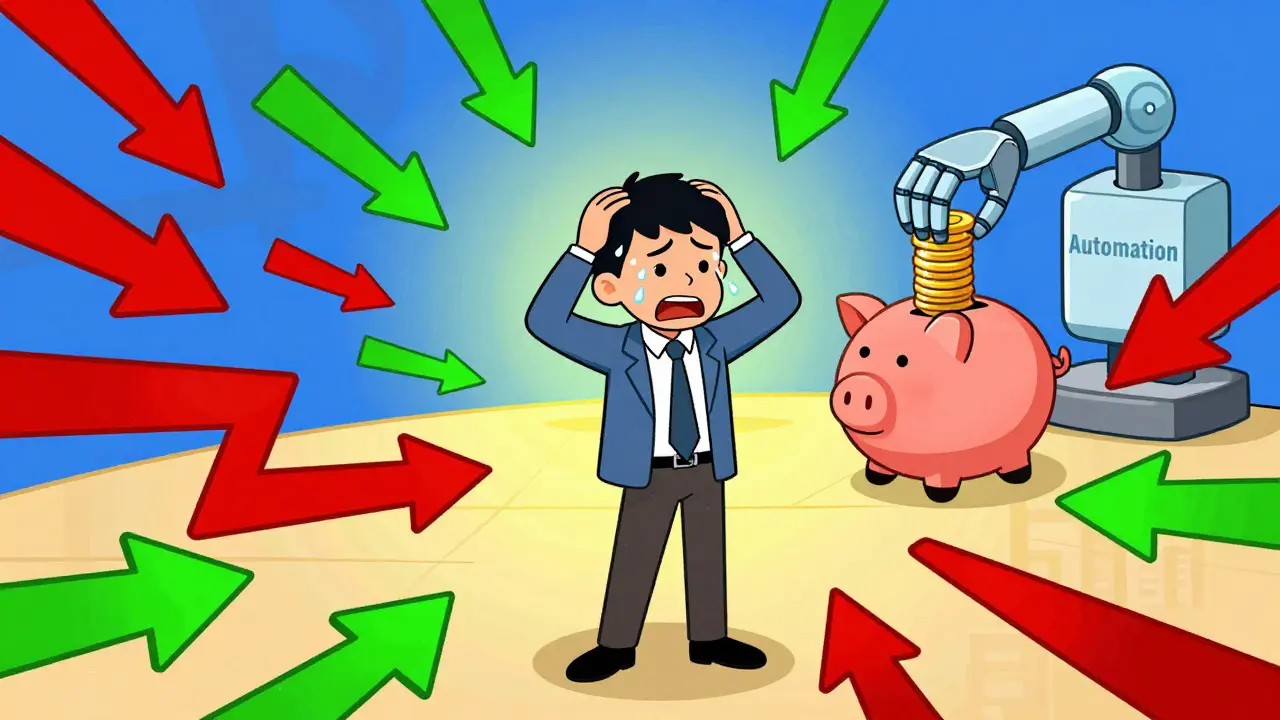
Why Manual Investing Is Losing to Automation
You have probably heard the advice before: "Time in the market beats timing the market." It is sound logic, but executing it consistently is surprisingly difficult. When prices drop, your instinct screams to sell or wait. When they spike, FOMO pushes you to buy at the top. This emotional tug-of-war is exactly why automated DCA tools are taking over retail investing.
Dollar-Cost Averaging (DCA) is a strategy where you invest a fixed amount of money at regular intervals, regardless of the asset's price. By automating this process, you remove human emotion from the equation. You buy more units when prices are low and fewer when they are high, smoothing out your average entry cost over time.
The technology behind these tools has evolved rapidly. What started as simple recurring deposits in mutual funds during the 1940s has transformed into sophisticated algorithms running on blockchain networks and centralized exchanges. Today, whether you are building long-term wealth in stocks or trading volatile cryptocurrencies, there is a platform designed to execute your strategy without you lifting a finger.
How Automated DCA Actually Works
At its core, an automated DCA system is just a scheduler connected to a wallet or brokerage account. But the mechanics differ significantly depending on which type of platform you choose. Understanding these differences helps you pick the right tool for your risk tolerance and technical skill level.
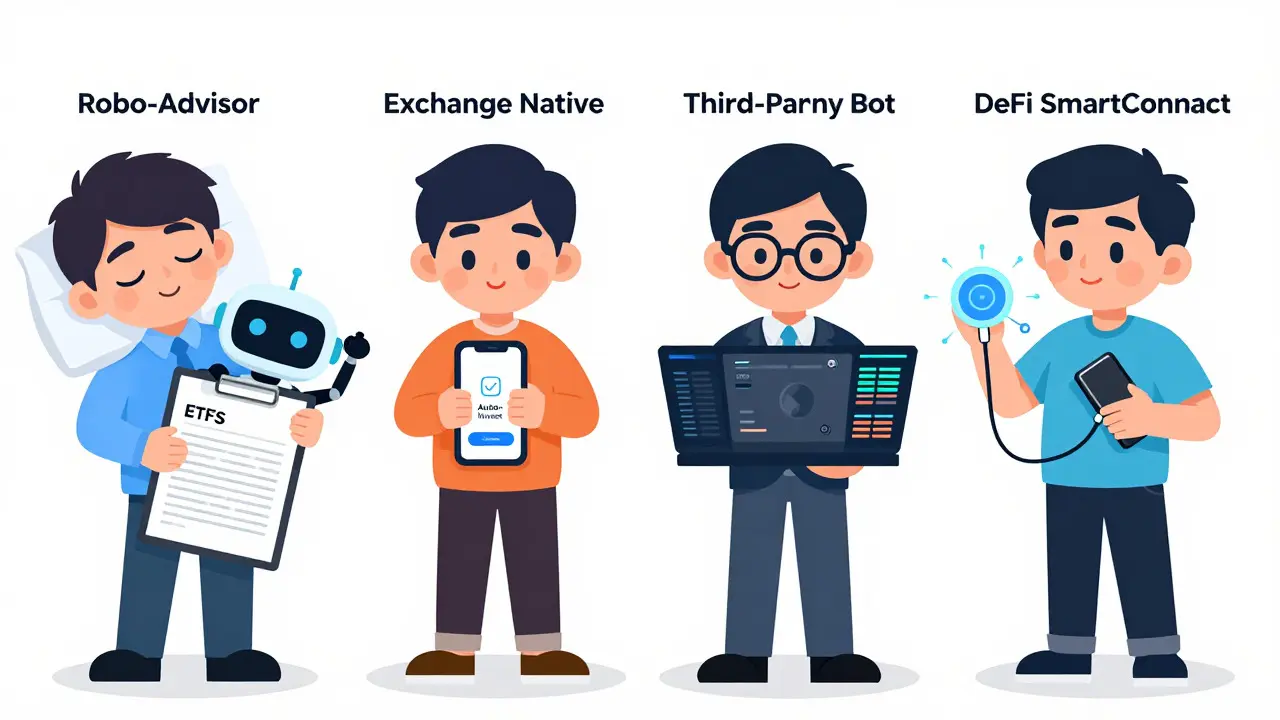
In traditional finance, robo-advisors like Betterment or Wealthfront hold custody of your funds. They use your deposited cash to automatically purchase shares of ETFs according to a pre-set portfolio allocation. In the crypto world, the architecture is more varied. Centralized exchanges (CEX) like Binance offer native auto-invest features that trigger buys directly from their order books. Third-party bot platforms connect to your exchange via API keys, sending trade instructions remotely. Meanwhile, DeFi protocols use smart contracts on the blockchain to execute swaps autonomously.
The key benefit across all these models is behavioral consistency. Research by Vanguard found that while lump-sum investing often yields higher returns in rising markets, DCA reduces downside risk and investor regret. Automation ensures you stick to the plan even when the market looks scary.
Types of Automated DCA Platforms
Not all DCA tools are created equal. They fall into four distinct categories, each serving a different user profile.
- Robo-Advisors and Broker Plans: These are best for passive investors. Platforms like Betterment, Wealthfront, and Vanguard’s Automatic Investment Plan handle everything from fund selection to rebalancing. You set up a monthly transfer, and the rest happens in the background. Fees typically range from 0% to 0.25% annually.
- Centralized Exchange Native Features: If you already trade on Coinbase, Binance, or Kraken, check their built-in tools first. Binance Auto-Invest supports over 300 assets with no subscription fee. These are simple, secure (since you don't need API keys), and easy to set up.
- Third-Party Crypto Bot Platforms: For traders who want granular control, platforms like 3Commas, Cryptohopper, and Pionex allow complex strategies. You can configure "safety orders" that buy more if the price drops further, or set take-profit targets. These require API setup and carry a steeper learning curve.
- DeFi Smart Contracts: Protocols like Mean Finance allow non-custodial DCA on chains like Ethereum and Polygon. Your tokens never leave your wallet until the swap executes. This offers maximum security against platform hacks but requires managing gas fees and understanding smart contract risks.
Top Platforms Compared
| Platform | Type | Best For | Cost Model | Key Feature |
|---|---|---|---|---|
| Betterment | Robo-Advisor | Passive Stock/ETF Investors | 0.25% Annual Fee | Tax-Loss Harvesting |
| Binance Auto-Invest | Exchange Native | Crypto Beginners | No Sub Fee (Trading Fees Only) | Supports 300+ Assets |
| 3Commas | Third-Party Bot | Advanced Crypto Traders | $14.50 - $49.50/Month | Safety Orders & Grid Trading |
| Pionex | Exchange + Bot | Low-Cost Bot Users | 0.05% Trading Fee | Built-in Bots, No API Needed |
| Mean Finance | DeFi Protocol | Self-Custody Enthusiasts | Gas Fees + Protocol Fee | Non-Custodial Smart Contracts |
Configuring Your Strategy: Beyond Simple Buys
If you are using a third-party bot platform, you have options that go far beyond "buy $50 every Monday." Advanced users leverage features like Martingale logic and safety orders to optimize entries.
A standard DCA bot places a base order. If the price drops by a certain percentage (e.g., 5%), the bot triggers a "safety order" to buy more, lowering your average entry price. Some bots allow up to 50 layers of these safety orders. However, this introduces risk. If the asset continues to crash, you might run out of capital before the price rebounds. This was a common pitfall during the 2022 crypto bear market, where many leveraged DCA bots exhausted their funds buying falling knives.
To mitigate this, successful traders combine DCA with trend filters. For example, you might configure your bot to only activate when the asset price is above its 200-day moving average. Tools like TradersPost bridge this gap by allowing you to convert TradingView indicators into automated execution rules.
Security Risks and How to Avoid Them
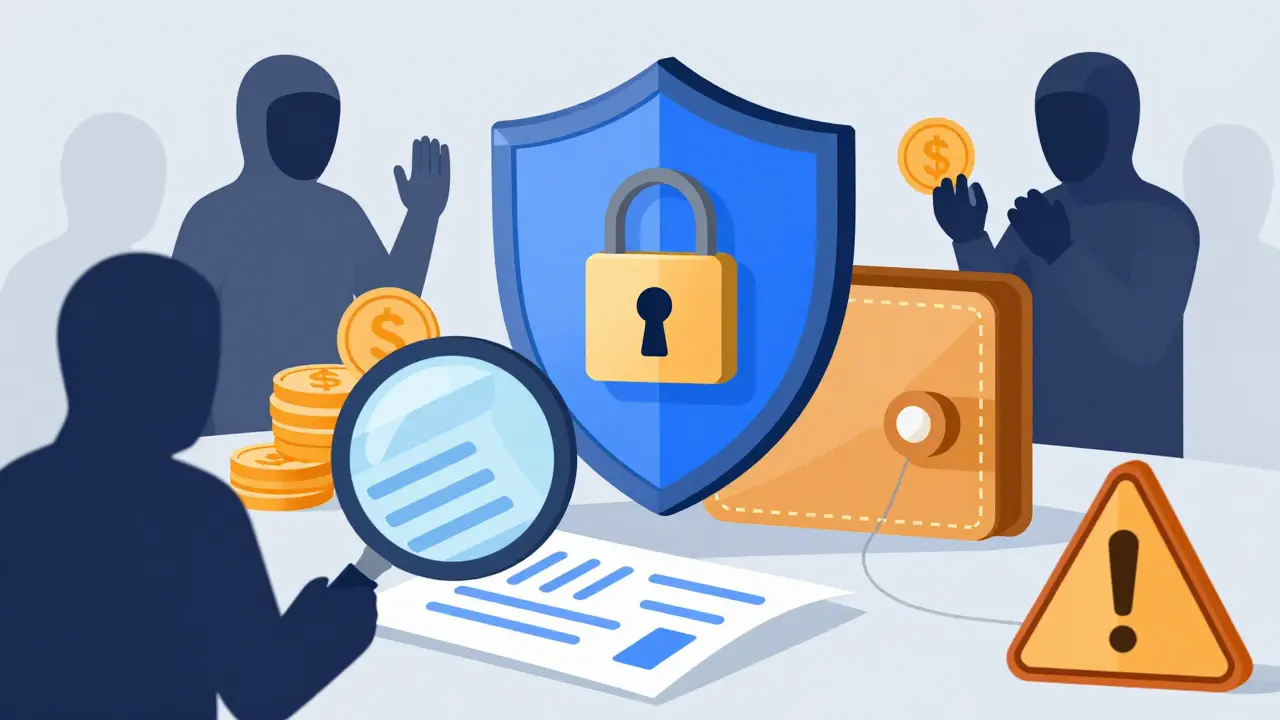
Automation brings convenience, but also specific security vulnerabilities. The biggest risk in third-party bot platforms is API key management. Always generate API keys with "Trade" permissions enabled but "Withdrawal" disabled. This ensures that even if the bot provider is hacked, your funds remain stuck in your exchange account.
In late 2022, several incidents involving API key leaks highlighted the importance of two-factor authentication (2FA) and IP whitelisting. While platforms like Pionex reduce this risk by keeping funds and bots in one place, they introduce custodial risk-if the exchange goes down, your access is blocked. DeFi solutions avoid custodial risk entirely but expose you to smart contract bugs. Always check if a DeFi protocol has been audited by firms like CertiK or Quantstamp.
Costs: What Are You Really Paying?
Hidden costs can eat into your DCA profits. Robo-advisors charge annual management fees based on Assets Under Management (AUM). A 0.25% fee sounds small, but on a $100,000 portfolio, that is $250 per year. Traditional brokers like Fidelity or Schwab often offer zero-commission stock trades and free automatic investment plans, making them cheaper for DIY investors.
In crypto, watch out for subscription fees versus trading fees. Platforms like 3Commas charge monthly subscriptions ($15-$50), while Pionex charges nothing upfront but takes a cut of every trade (0.05%). If you are making frequent, small trades, the trading fee model might be more expensive than a flat subscription. Always calculate your break-even point before committing to a paid plan.
Who Should Use Automated DCA?
Automated DCA is not a magic bullet, but it is a powerful tool for specific goals. It is ideal for:
- Long-Term Accumulators: Investors who want to build a position in Bitcoin or S&P 500 ETFs over years without watching charts daily.
- Volatile Market Navigators: Traders who want to smooth out entry points in choppy markets using grid or safety order strategies.
- Behavioral Discipline Seekers: Anyone who struggles with impulse trading or panic selling.
It is less suitable for those seeking quick flips or those unwilling to learn basic risk management. Remember, automation executes your rules; it does not create them. Garbage in, garbage out.
Is automated DCA better than lump-sum investing?
Statistically, lump-sum investing often yields higher returns because markets tend to rise over time. However, automated DCA reduces psychological stress and downside risk. It prevents you from buying all at once before a major crash, making it a better choice for most retail investors who struggle with timing the market.
Are crypto DCA bots safe to use?
They are generally safe if configured correctly. The main risk lies in API key security. Always disable withdrawal permissions on your API keys. Additionally, be cautious with "Martingale" strategies that aggressively average down, as they can deplete your capital in prolonged bear markets.
What is the cheapest way to automate DCA?
For stocks, use a traditional broker like Fidelity or Schwab with $0 commissions and free automatic investment plans. For crypto, exchange-native tools like Binance Auto-Invest or Coinbase Recurring Buys are free to use, charging only standard trading fees. Avoid paid subscription bots unless you need advanced features like safety orders.
Can I use DCA bots for day trading?
Yes, advanced bots on platforms like 3Commas or Pionex support short-interval DCA combined with grid trading. This allows you to profit from small price fluctuations in sideways markets. However, this requires active monitoring and careful parameter setting to avoid losses in trending markets.
Do I need coding skills to use DeFi DCA tools?
No. Modern DeFi interfaces like Mean Finance provide user-friendly dashboards where you can select tokens, set amounts, and define intervals. The smart contracts handle the complexity in the background. You just need to manage your wallet and pay gas fees.