Imagine finding a shiny new coin on the street. It looks valuable, maybe even promising. But before you pocket it, you’d want to know who minted it, if anyone else accepts it, and whether it’s actually worth anything. That is exactly where Bitcoin Future (BTCF) stands today.
If you stumbled upon the ticker symbol BTCF in June 2026, you are likely looking at a micro-cap cryptocurrency that promises big things but delivers very little transparency. It claims to be an intermediary currency for everyday commerce, yet it struggles with basic data consistency across major exchanges. Before you buy even a single satoshi of this asset, let's pull back the curtain on what this project actually is, how its weird dual-token system works, and why the numbers don't always add up.
The Core Concept: What Is Bitcoin Future?
Bitcoin Future is a speculative cryptocurrency token launched in 2023, operating primarily on the BNB Smart Chain as a BEP-20 token. The project positions itself not just as another meme coin or tech experiment, but as a practical tool for exchanging goods and services. According to its public descriptions on platforms like KuCoin and CoinMarketCap, the goal is to bridge merchants, consumers, and community members through a digital medium of exchange.
However, there is a catch. Unlike established assets such as Bitcoin (BTC) or Ethereum (ETH), which have clear utility, massive developer communities, and transparent governance, BTCF operates in the shadows of obscurity. As of mid-2026, there is no widely recognized founding team, no audited whitepaper from a reputable firm, and no corporate entity publicly attached to the project. It ranks around #4732 by market capitalization, placing it firmly in the "micro-cap" category-where volatility is extreme and liquidity is often thin.
The Dual-Token Model: BTCF vs. BITCOINF
One of the most confusing aspects of this project is its structure. It isn't just one coin; it’s part of a dual-token ecosystem. To understand BTCF, you have to look at its sibling token, BITCOINF.
| Feature | Bitcoin Future (BTCF) | BITCOINF |
|---|---|---|
| Primary Role | Store of value / Accumulation asset | Ecosystem expansion / Utility |
| Blockchain | BNB Smart Chain (BEP-20) | Multi-chain deployment |
| Supply Strategy | Limited supply for scarcity | Not clearly defined in public data |
| Intended Use | Intermediary for merchant/consumer exchange | Governance or broader network utility |
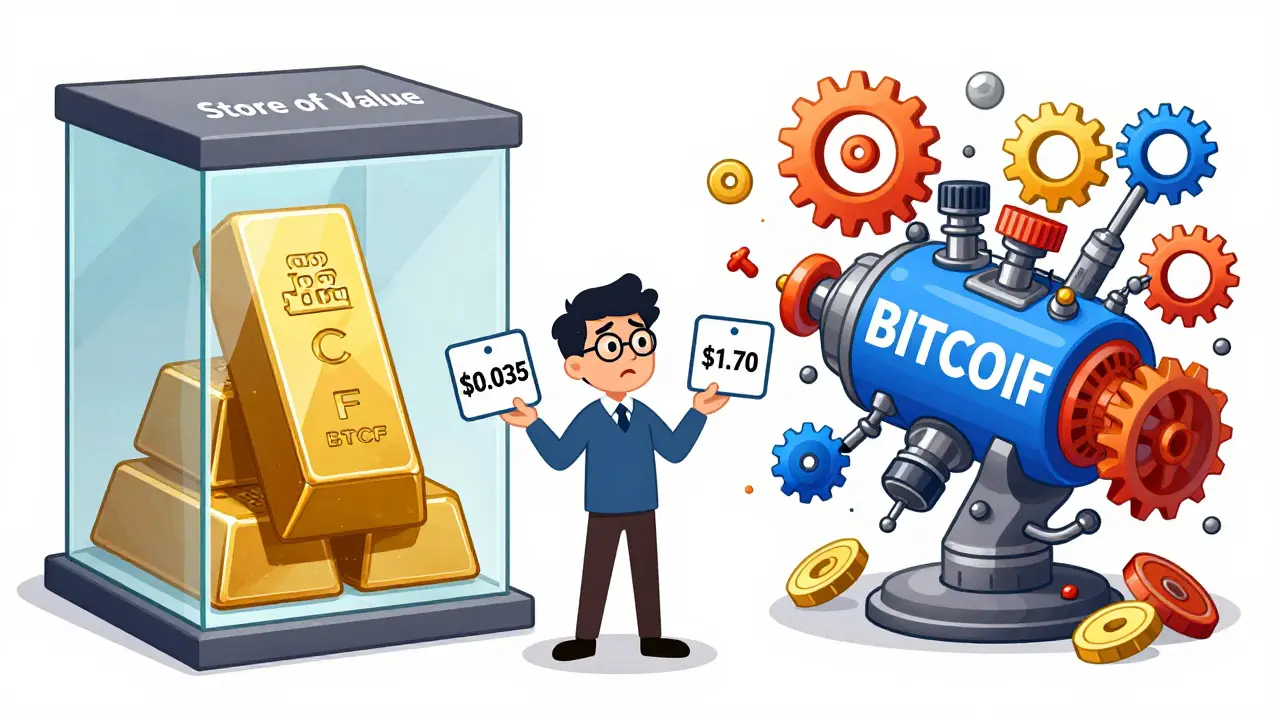
Think of BTCF as the "gold" in this system. The project claims it has a limited circulating supply to encourage hoarding and long-term value appreciation. BITCOINF, on the other hand, is described as the engine for growth, deployed across multiple chains to expand the ecosystem. While this sounds sophisticated, the lack of detailed documentation on how these two tokens interact-or how BITCOINF governance actually works-leaves investors guessing.
The Data Nightmare: Supply and Price Inconsistencies
If you are used to checking prices on Coinbase or Binance, you expect them to match within a fraction of a cent. With BTCF, that is not the case. This inconsistency is a major red flag for any serious investor.
Let's look at the supply. Different sources give completely different answers:
- Yahoo Finance & KuCoin: Report a circulating supply of approximately 1,100,000 tokens.
- CoinLore (2025 data): Mentions a total supply of 2 million, with 2.1 million circulating.
- Binance & Mudrex: Often show circulating supply as "0" or market cap as "0," indicating they cannot verify the actual amount of tokens in play.
Now, look at the price. In June 2025, BTCF hit an all-time high (ATH) of roughly $2.21 USD. By June 2026, the price had crashed by over 97%. But here is where it gets messy:
- CoinMarketCap: Shows a price around $0.035 USD.
- Binance: Lists it near $0.052 USD.
- BeInCrypto: At times quotes it as high as $0.70 USD (likely stale or erroneous data).
- Bitget Wallet: Has shown snapshots as low as $0.00017 USD.
Why does this happen? Because BTCF has extremely low liquidity. When trading volume drops to a few thousand dollars a day-as it often does on venues like Crypto.com-a small buy or sell order can swing the price wildly. There is no deep pool of money stabilizing the asset. You might see a price on one app that doesn't exist on another because the markets aren't connected efficiently.
Technology: Riding the BNB Smart Chain Wave
Technically, BTCF is a BEP-20 token built on the BNB Smart Chain (BSC). This means it doesn't have its own blockchain. Instead, it piggybacks on BSC’s infrastructure.
This has pros and cons. On the plus side, transactions are fast (block times around 3 seconds) and cheap (fractions of a cent in gas fees). If you were to use BTCF to buy coffee, the transaction would settle quickly without costing you much in fees. However, this technology is generic. Thousands of tokens live on BSC. Being a BEP-20 token gives BTCF compatibility with wallets like Trust Wallet or Bitget Wallet, but it offers no unique security features or technological advantages over the thousands of other tokens on the same chain.
There is no evidence of custom smart contracts, unique consensus mechanisms, or proprietary security audits specific to BTCF. It inherits the security of the BNB Chain, which is robust, but the token contract itself remains unaudited by major firms according to available public records.
Is There Real Utility? The Merchant Promise
The pitch for BTCF is simple: become a valuable digital asset for everyday trade. The project aims to facilitate exchanges between merchants and consumers. But where are the merchants?
As of June 2026, there are no widely known partnerships with e-commerce giants, payment processors, or retail chains. No point-of-sale systems list BTCF as a supported currency. No case studies show a local bakery accepting BTCF for pastries. The "large amount of holders" claimed by some listings is not backed by on-chain data showing active, distinct wallet addresses making purchases.
In the world of crypto, utility drives long-term value. Without real-world adoption, BTCF remains a speculative asset rather than a functional currency. It is easier to buy a coffee with Lightning Network Bitcoin or even USDT (Tether) on various networks than it is to find a vendor willing to accept BTCF.
Risk Assessment: Who Should Avoid BTCF?
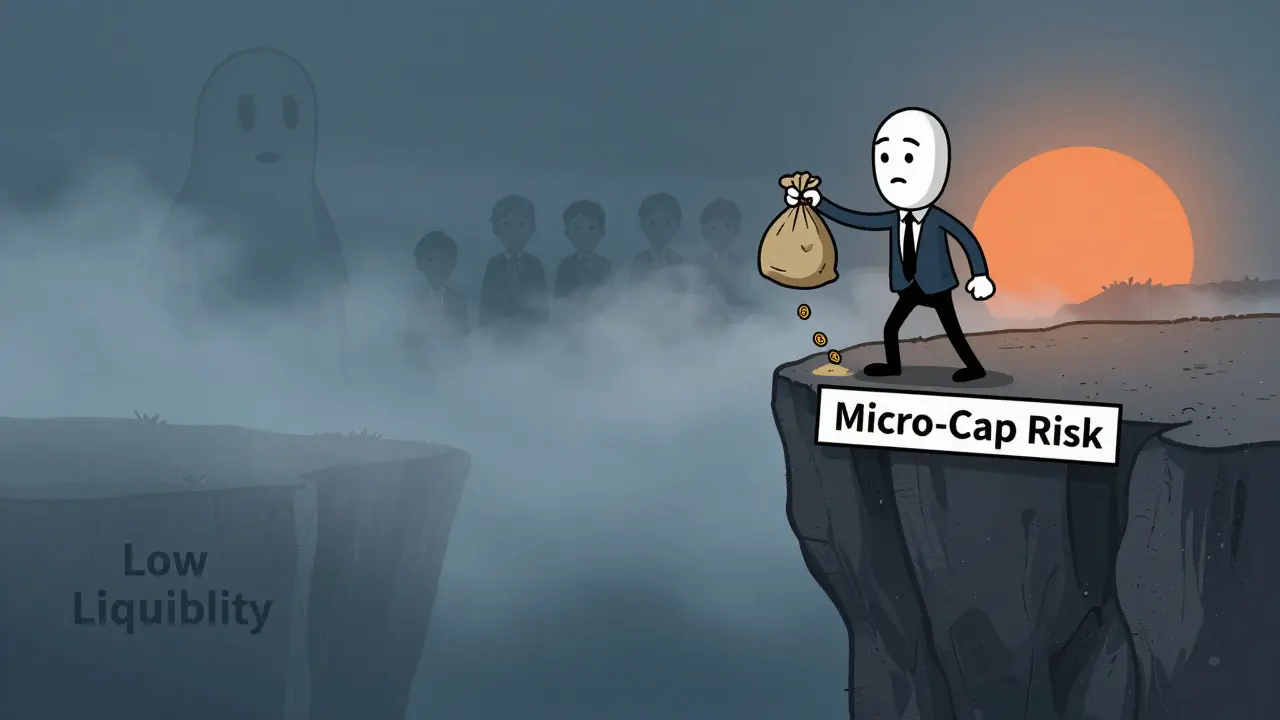
Let’s be direct. Investing in micro-cap tokens like Bitcoin Future carries significant risk. Here is what you need to weigh:
- Liquidity Risk: With daily volumes sometimes under $2,000, selling your holdings could be difficult. You might not find a buyer at the price you see on the screen.
- Data Opacity: Conflicting supply numbers and missing market caps suggest poor data hygiene. If you can’t trust the basic stats, how can you trust the valuation?
- Team Anonymity: No known founders or legal entity means no accountability. If the project fails or disappears, there is no one to hold responsible.
- Price Volatility: A drop from $2.21 to $0.03 represents a loss of over 98%. Such drawdowns are common in this sector, but they wipe out inexperienced investors quickly.
This is not financial advice, but it is a reality check. BTCF fits the profile of a high-risk, low-reward speculative bet rather than a foundational investment.
How to Buy and Store BTCF (If You Still Want To)
If you decide to proceed despite the risks, the process is standard for BEP-20 tokens. You will primarily use centralized exchanges or multi-chain wallets.
- Create an Exchange Account: Platforms like KuCoin and Binance have listed BTCF. You will need to complete identity verification (KYC) as required by their regulations.
- Deposit Funds: Add USDT or another stablecoin to your account. Avoid depositing fiat directly if possible, as conversion paths for obscure tokens can be clunky.
- Execute the Trade: Search for the BTCF trading pair (e.g., BTCF/USDT). Be careful to check the contract address to ensure you are buying the correct token, as scams often mimic popular tickers.
- Withdraw to a Wallet: For better security, move your tokens to a non-custodial wallet like Bitget Wallet or Trust Wallet. Import the BNB Smart Chain network and paste the official BTCF contract address.
Note: Never share your private keys or seed phrase. And remember, just because a wallet shows the balance doesn't mean the token has value. Liquidity is still required to cash out.
Future Outlook: Speculation vs. Substance
Looking ahead, the future of Bitcoin Future depends entirely on execution. The concept of tokenization-turning assets into digital tokens-is a growing trend, as noted in academic discussions by researchers like Georgii Zvonka in 2026. Multi-chain ecosystems are also becoming more common.
However, concepts alone do not drive price. For BTCF to recover from its 97% decline and establish itself, the project needs:
- Audited smart contracts to prove security.
- Transparent tokenomics with verified supply data.
- Real merchant integrations to prove utility.
- A revealed team to build trust.
Until then, automated prediction tools that forecast modest growth based on historical averages are misleading. They ignore the fundamental lack of adoption and the severe price drawdown. Treat any price target you see online as a mathematical guess, not a promise.
Is Bitcoin Future (BTCF) the same as Bitcoin (BTC)?
No, they are completely different. Bitcoin (BTC) is the original cryptocurrency created by Satoshi Nakamoto, running on its own blockchain. Bitcoin Future (BTCF) is a separate, unrelated token launched in 2023 on the BNB Smart Chain. The similar name is likely a marketing tactic to attract attention, but BTCF has no technical or economic link to the original Bitcoin network.
Why are the prices of BTCF different on every website?
This happens due to low liquidity and fragmented trading. Because BTCF is traded in small volumes across various exchanges and decentralized pools, there is no single unified market price. One exchange might have a large sell order driving the price down, while another has a buy order pushing it up. Additionally, some sites may display stale or cached data, leading to discrepancies of hundreds of percent.
What is the difference between BTCF and BITCOINF?
The project uses a dual-token model. BTCF is designed as a scarce "store of value" token on the BNB Smart Chain, intended for accumulation. BITCOINF is a companion token aimed at ecosystem expansion and potential governance functions, deployed across multiple blockchains. However, specific details on how BITCOINF works are not fully disclosed in public documentation.
Can I use BTCF to buy goods and services?
Theoretically, yes, but practically, it is very difficult. While the project claims to be an intermediary currency for merchants, there are no widely known partnerships or point-of-sale integrations as of mid-2026. Most vendors do not accept BTCF, meaning you would likely need to convert it back to a stablecoin or fiat currency before spending it.
Is Bitcoin Future (BTCF) a safe investment?
It is considered a high-risk speculative asset. It lacks a transparent founding team, audited smart contracts, and consistent supply data. The token has experienced a price drop of over 97% from its all-time high, and trading volumes are extremely low. Investors should only allocate funds they can afford to lose entirely.
Where can I store my BTCF tokens?
Since BTCF is a BEP-20 token on the BNB Smart Chain, you can store it in any wallet that supports BSC. Popular options include Trust Wallet, Bitget Wallet, and MetaMask (configured for BNB Chain). You can also keep it on centralized exchanges like KuCoin or Binance, though holding on a personal wallet is generally safer for long-term storage.