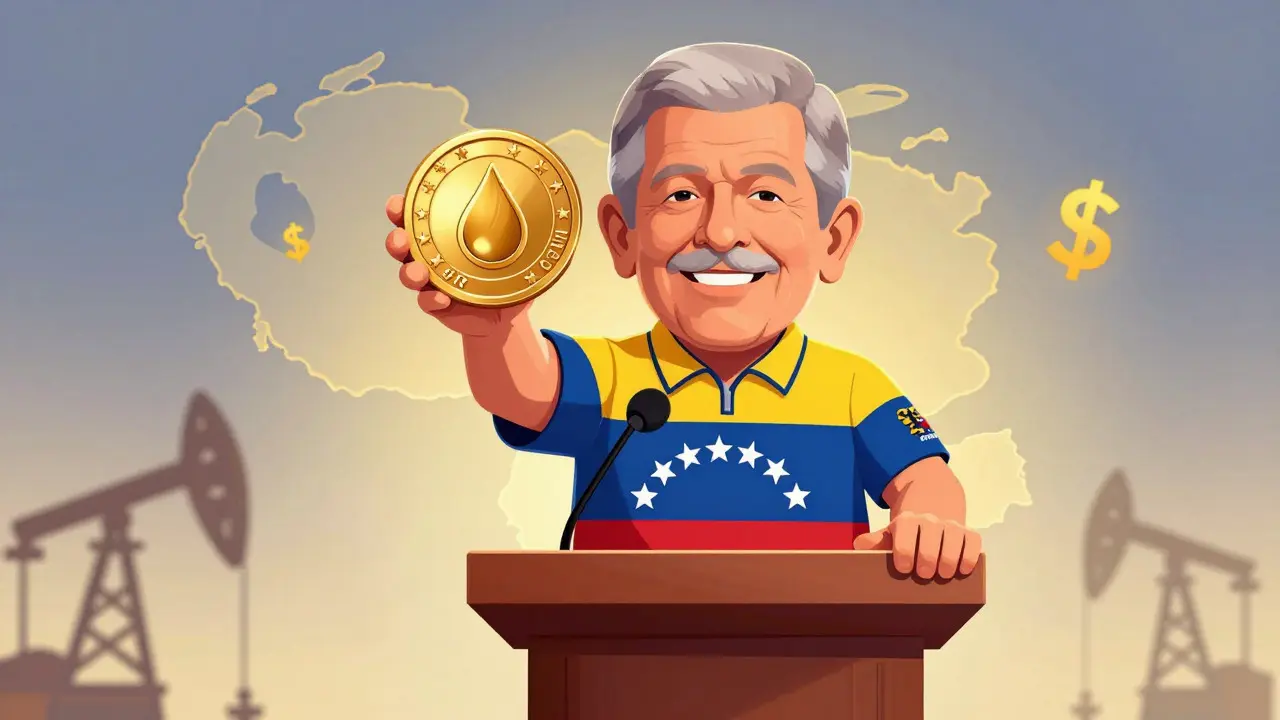
Imagine a country so heavily sanctioned that its government decides to build its own digital currency just to keep the lights on. That is exactly what happened in Venezuela. Since 2018, the Maduro regime has turned cryptocurrency into a primary tool for evading Western financial restrictions. It is not just about buying Bitcoin with spare change; it is a state-sponsored strategy involving oil smuggling, shell companies, and billions of dollars in stablecoins. For anyone watching global finance or trying to understand how sanctions actually work in the age of blockchain, Venezuela is the ultimate case study.
The story starts with the Petro, which was the world's first government-issued national cryptocurrency backed by natural resources, specifically oil reserves. Launched in February 2018, the Petro was explicitly designed to do two things: combat hyperinflation-driven currency devaluation and facilitate sanctions evasion. President Nicolas Maduro openly declared that bypassing Western sanctions was a primary goal. While the Petro struggled to gain traction globally due to U.S. sanctions complications, it laid the groundwork for a broader crypto ecosystem controlled by the state.
The State-Controlled Crypto Ecosystem
Venezuela did not just launch a coin; it built an infrastructure. The government authorized seven cryptocurrency exchanges to operate within the country, creating what experts describe as a "financial sanctuary." These are not independent businesses like Coinbase or Binance. They are directly controlled by government entities. Take Criptolago, for example. This exchange is owned by Venezuela's Zulia state and managed by Governor Omar Prieto, a staunch ally of Maduro who is personally under U.S. sanctions for refusing to deliver humanitarian aid.
This level of control allows the regime to monitor and direct capital flows. By controlling the exchanges, the government can ensure that cryptocurrency transactions serve state interests rather than just individual wealth preservation. It creates a closed loop where citizens can convert bolivars to crypto, but the exit routes to the global economy are filtered through channels loyal to the administration. Financial intelligence provider Sayari has confirmed this direct government control, establishing clear pathways for sanctions violations.
| Entity | Role in Ecosystem | Sanctions Status / Control |
|---|---|---|
| Petro | National cryptocurrency backed by oil reserves | State-created; targeted by OFAC |
| Criptolago | State-controlled cryptocurrency exchange | Owned by Zulia state; linked to sanctioned officials |
| PDVSA | State oil company facilitating oil-to-crypto swaps | Heavily sanctioned by U.S. Treasury |
| Tether (USDT) | Stablecoin used for value transfer and liquidity | Unregulated in Venezuela; widely used for illicit transfers |
Oil, Smuggling, and Stablecoins
The real engine of this system is not the Petro, but the combination of oil and stablecoins. The Venezuelan state oil company, PDVSA, which is the state-owned petroleum corporation responsible for Venezuela's oil production and export, has been central to these efforts. In October 2022, the U.S. Department of Justice issued an indictment exposing schemes where five Russian nationals assisted PDVSA in sanctions evasion, money laundering, and oil smuggling using cryptocurrency networks.
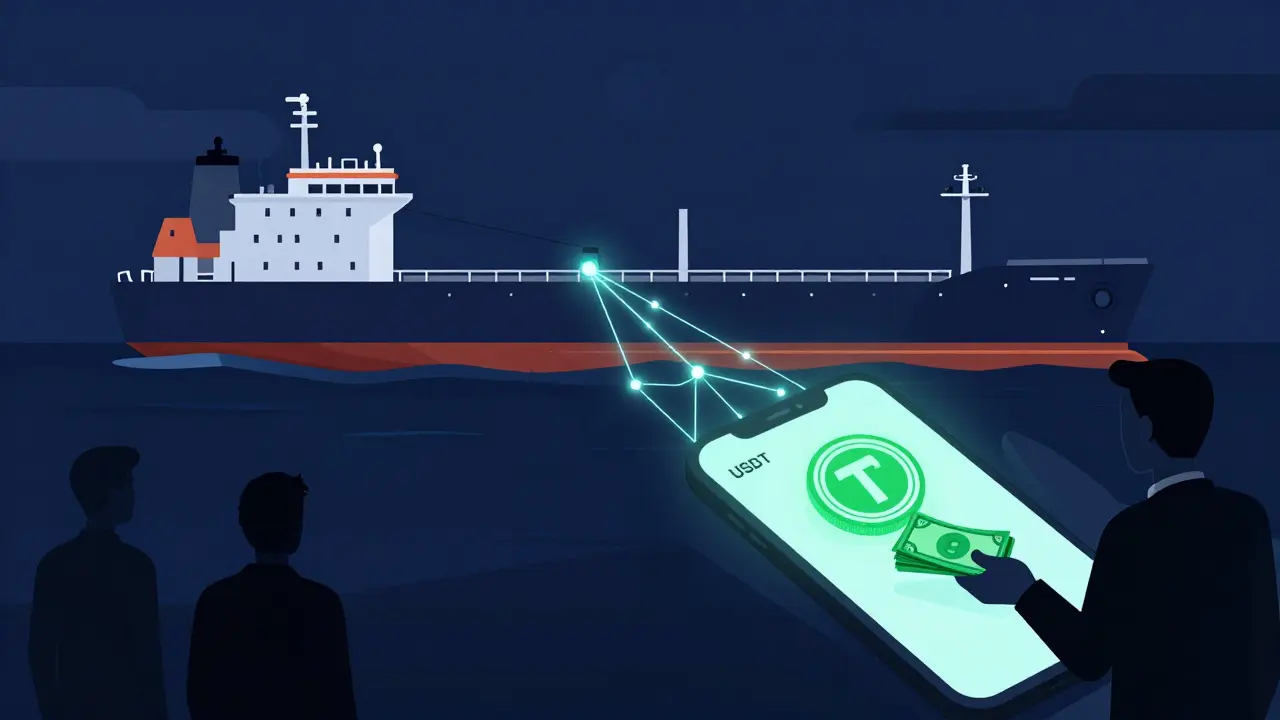
Here is how it works on the ground: Oil is moved via ship-to-ship transfers in international waters to discretely move cargo while avoiding port inspections. Simultaneously, financial transactions are facilitated through cryptocurrency intermediaries. Instead of using traditional banking channels that would flag the transaction immediately, PDVSA uses stablecoins like Tether (USDT), a cryptocurrency pegged to the value of the U.S. dollar to minimize price volatility. USDT became the fuel for both legitimate and illicit commerce during Venezuela's ongoing liquidity crisis. One defendant in the DOJ case explicitly explained their preference for cryptocurrency due to its utility in evading financial oversight.
The Wilson Center’s analysis identifies cryptocurrency as "a critical instrument for the regime to launder its most valuable natural resource: oil" following Western sanctions that severed Venezuela's access to reputable financial institutions. By converting oil revenue into USDT, the regime can move value across borders without touching the SWIFT banking system. This method provides more direct access to global markets while maintaining a layer of transaction anonymity that traditional correspondent banking lacks.
The Role of OTC Brokers and Parallel Economies
You do not need to be a government official to participate in this shadow economy. Over-the-counter (OTC) brokers in Caracas have become critical infrastructure for sanctions circumvention. These informal cash-to-crypto markets allow ordinary Venezuelans to preserve wealth during hyperinflation, but they also serve as on-ramps for illicit funds. Compliance professionals in fintech report growing challenges in distinguishing legitimate Venezuelan cryptocurrency usage from sanctions evasion activities.
Money laundering experts identify specific red flags, including transactions involving Venezuelan OTC brokers and unusual stablecoin transfer patterns. GNET Research emphasizes that Venezuela's role in global crypto-laundering has empowered transnational criminal networks. U.S. Treasury’s OFAC and Israeli counterterrorism authorities have documented Hezbollah-linked money launderers increasingly relying on USDT for cross-border value transfers. The same infrastructure that helps a grandmother in Caracas buy groceries with her pension savings is also used to move millions of dollars in illicit proceeds.

Comparison: Venezuela vs. Other Sanctioned Nations
Venezuela’s approach is unique because it is comprehensively state-sponsored. While other sanctioned nations like Russia have considered cryptocurrency for cross-border transactions following Western economic restrictions imposed after the February 2022 Ukraine invasion, Venezuela represents the most comprehensive government-led implementation. Russia’s Ministry of Finance has explored virtual currency settlement mechanisms, but Venezuela turned crypto adoption into a systematic economic policy starting in 2018.
Unlike conventional sanctions circumvention that typically involves complex correspondent banking arrangements or barter systems, Venezuela's cryptocurrency approach leverages decentralized financial infrastructure. This difference matters because it changes the scale and speed of evasion. Traditional methods require setting up shell banks and navigating bureaucratic delays. Crypto allows for near-instantaneous value transfer. However, the scale of Venezuelan operations surpasses isolated evasion attempts seen elsewhere, making it a primary case study for government-sponsored adoption.
Enforcement and Future Risks
Is the strategy working? Partially. Chainalysis indicates that Venezuela's cryptocurrency adoption presents significant sanctions evasion risks while potentially providing some poverty mitigation for ordinary citizens. But enforcement is tightening. OFAC maintains active monitoring of Venezuelan cryptocurrency activities and periodically adjusts sanctions frameworks. The Treasury Department suspended certain Venezuela-related sanctions in October 2023 following Maduro's agreement to hold elections, but disclosed plans to renew restrictions based on compliance with democratic commitments.
Recent enforcement actions demonstrate continued U.S. commitment to disrupting these networks. The October 2022 DOJ indictments targeting Russian nationals facilitating PDVSA cryptocurrency operations sent a clear message: intermediaries are fair game. Sanctions experts predict continued evolution of Venezuelan cryptocurrency evasion techniques, with potential expansion into privacy-focused cryptocurrencies and decentralized finance protocols as enforcement measures intensify. The long-term viability depends on the balance between technological innovation and international enforcement capabilities. As blockchain analysis tools improve, the window for anonymous large-scale evasion may shrink.
What is the Petro cryptocurrency?
The Petro is Venezuela's national cryptocurrency, launched in 2018 and backed by the country's oil reserves. It was created by the Maduro regime to combat hyperinflation and evade Western sanctions by providing an alternative asset for international trade.
How does PDVSA use crypto to evade sanctions?
PDVSA, the state oil company, uses cryptocurrency networks to facilitate payments for smuggled oil. By using stablecoins like USDT and engaging in ship-to-ship transfers, PDVSA can receive payment without using the traditional SWIFT banking system, thus bypassing U.S. Treasury restrictions.
Are all crypto exchanges in Venezuela state-controlled?
The major exchanges authorized by the government, such as Criptolago, are directly controlled by state entities or allies of the Maduro regime. This allows the government to monitor and direct crypto flows for political and economic purposes.
Why is Tether (USDT) important in Venezuela?
USDT is a stablecoin pegged to the U.S. dollar, making it ideal for preserving value in a hyperinflationary economy. It is widely used by both ordinary citizens and illicit networks to move value across borders without the volatility of other cryptocurrencies.
Has the U.S. successfully stopped crypto sanctions evasion in Venezuela?
Not entirely. While the U.S. Department of Justice has indicted individuals involved in these schemes and OFAC monitors transactions, the decentralized nature of crypto makes complete prevention difficult. Enforcement focuses on key intermediaries and exchanges.
Alex Di Mango
August 8, 2026 AT 04:18It is fascinating to see how technology adapts to political pressure. The use of stablecoins like USDT really highlights the demand for financial stability in volatile economies.
Lorraine Surringer
August 9, 2026 AT 14:39i mean honestly it's just crazy that they think a government backed coin can actually work when the whole system is corrupt
like who is buying this stuff besides their own people who have no other choice??
Nick Darring
August 10, 2026 AT 00:27You are missing the bigger picture here because everyone focuses on the corruption but ignores the fact that sanctions hurt ordinary people more than the elites
The elites always find a way to move money whether it is through crypto or shell companies or whatever else they come up with so blaming the technology is kind of silly really
I have seen similar things happen in other countries where the government tries to control everything and then the people just find another way around it which is what is happening now with these OTC brokers
It is not about the Petro failing it is about the resilience of human commerce despite heavy handed restrictions from foreign governments who think they know better
So maybe we should look at why the sanctions are there in the first place instead of just pointing fingers at the crypto usage which is just a tool after all
Aryan MISHRA
August 11, 2026 AT 22:50Incorrect analysis; the mechanism is purely illicit capital flight facilitated by unregulated OTC desks leveraging Tether’s lack of reserve transparency.
Eden Tadesse
August 13, 2026 AT 12:17thats so sad for the regular folks trying to survive
Earl Kott65
August 15, 2026 AT 09:11Wow! 🤯 This is wild!
Who knew oil could be traded like Pokémon cards? 😂
But seriously, the part about ship-to-ship transfers is terrifyingly efficient for bad guys. 💸🚢
Ethan Yuwono
August 17, 2026 AT 05:58the irony is thick here
they want freedom from western banks but end up creating their own controlled system
is it really decentralization if the state owns the exchange?
Matthew Smith
August 17, 2026 AT 19:39Morally bankrupt regime using decentralized tech for centralized oppression
It shows the true nature of power seeking entities
They do not care about the philosophy of liberty only the utility of evasion
Ryan Robinson
August 18, 2026 AT 18:47i guess its kinda clever though even if it is shady
using usdt to bypass swift is pretty smart engineering wise
Jack Delasquez
August 20, 2026 AT 10:50Yea but its gonna crash eventually
Nothing lasts forever especially when the govt is involved
Just wait till the next sanction round hits harder
Harman Singh
August 21, 2026 AT 04:54why does nobody talk about the russian connection enough?
it feels like everyone is ignoring that part
Qolbina Islami
August 21, 2026 AT 15:36AMERICA IS THE PROBLEM!!!
THEY SANCTION EVERYONE WHO DOESNT BOW DOWN TO THEIR EMPIRE!!
VENEZUELA IS JUST FIGHTING BACK FOR THEIR SOVEREIGNTY!!!
WAKE UP SHEEPLE!!!
Amor Jordan
August 22, 2026 AT 07:44Please let us focus on the humanitarian impact rather than the politics.
The grandmother buying groceries with her pension is the real story here.
She just wants to eat and the system forces her into this shadow economy.
It is heartbreaking that she has to rely on informal brokers to survive while the politicians play games with billions.
We need more empathy for the people caught in the middle of these geopolitical chess matches.
Their lives are being disrupted by decisions made thousands of miles away in boardrooms and congress halls.
Let us remember the human cost behind every transaction and every sanction order.
It is not just numbers on a screen it is real people struggling to keep their heads above water.
Maybe if we understood that better we would approach solutions differently.
But until then they will continue to adapt and survive as best they can.
SUBHAM CHOUDHURY
August 23, 2026 AT 21:30Great perspective on the human side of things.
Technology is neutral but its application depends on the context.
Keep sharing these insights.