
Imagine starting a global financial revolution with a single line of code. No press release, no CEO interview, just a block of data created on a Tuesday afternoon in January 2009. That is the Genesis Block, the foundational anchor for every cryptocurrency we know today. It sounds simple, but this specific block changed how humans exchange value forever.
Most people hear "blockchain" and think of complex math or volatile prices. But the story starts much earlier, with a quiet declaration of independence from central banks. If you have ever wondered why your Bitcoin wallet works, or why other coins like Ethereum or Solana exist, you need to look at where it all began. This article breaks down the famous genesis blocks that shaped digital currency, focusing heavily on Bitcoin’s origin while touching on how its template influenced the rest of the industry.
What Exactly Is a Genesis Block?
A genesis block is the first block in a blockchain network. Think of it as page one of a book that everyone else will copy. In technical terms, it is the only block that does not point to a previous block because there isn’t one yet. Every subsequent block references the hash of the block before it, creating an unbreakable chain back to this original entry.
Unlike regular blocks, which are mined by computers solving puzzles, the genesis block is hardcoded into the software. The creator writes it directly into the source code. This ensures that every node joining the network starts with the exact same starting point. Without this shared anchor, the decentralized consensus mechanism would fail immediately. You cannot have agreement if everyone starts counting from a different number.
| Feature | Description | Why It Matters |
|---|---|---|
| Block Height | Index 0 (or sometimes 1) | Establishes the chronological start of the ledger. |
| Previous Hash | All zeros (null reference) | Signals the end of the chain backward; no parent exists. |
| Reward Status | Unspendable | Prevents inflation from the very first coin issuance. |
| Creation Method | Hardcoded | Ensures uniformity across all nodes without mining effort. |
The Bitcoin Genesis Block: A Symbolic Rebellion
Bitcoin’s genesis block is arguably the most famous piece of data in computer science history. Created by Satoshi Nakamoto on January 3, 2009, at 18:15 GMT, it wasn’t just a technical milestone. It was a political statement.
Satoshi embedded a headline from The Times newspaper inside the block’s coinbase parameter: "The Times 03/Jan/2009 Chancellor on brink of second bailout for banks." Why include a news snippet? It served two purposes. First, it proved the block wasn’t mined years earlier and backdated. Second, it highlighted the context: the 2008 financial crisis. While governments were bailing out failed banks with taxpayer money, Satoshi proposed a system where trust didn’t require intermediaries.
This message turned a dry database entry into a manifesto. It signaled that Bitcoin was designed as an alternative to centralized finance. The block contains a reward of 50 BTC, but here is the twist: those coins are unspendable. Satoshi locked them away forever. This prevents any initial advantage for the founder and reinforces the idea that Bitcoin belongs to the community, not a single entity.
Technical Anatomy of Block 0
If you dig into the raw data of Bitcoin’s genesis block, you see unique traits that don’t appear in later blocks. The hash begins with many zeros, reflecting the low difficulty at launch. But more importantly, the structure differs slightly from standard blocks due to early software quirks.
- No Previous Block Reference: The field usually reserved for the previous block’s hash is filled with zeros. This is the definitive marker of a genesis block.
- Merkle Root: The root hash covers the single transaction within the block. Since there was only one transaction (the coinbase), the Merkle root matches the transaction ID.
- Timestamp Accuracy: The timestamp is precise to the second. This immutability anchors the entire timeline of Bitcoin. Every transaction since then relies on this starting clock.
Developers often struggle with genesis blocks when building new chains. Because they lack a parent, standard validation logic fails unless specifically handled. You must hardcode the expected hash. If your software calculates a different hash for the first block, your node won’t sync with the network. This fragility highlights why the genesis block must be treated as sacred, immutable data.
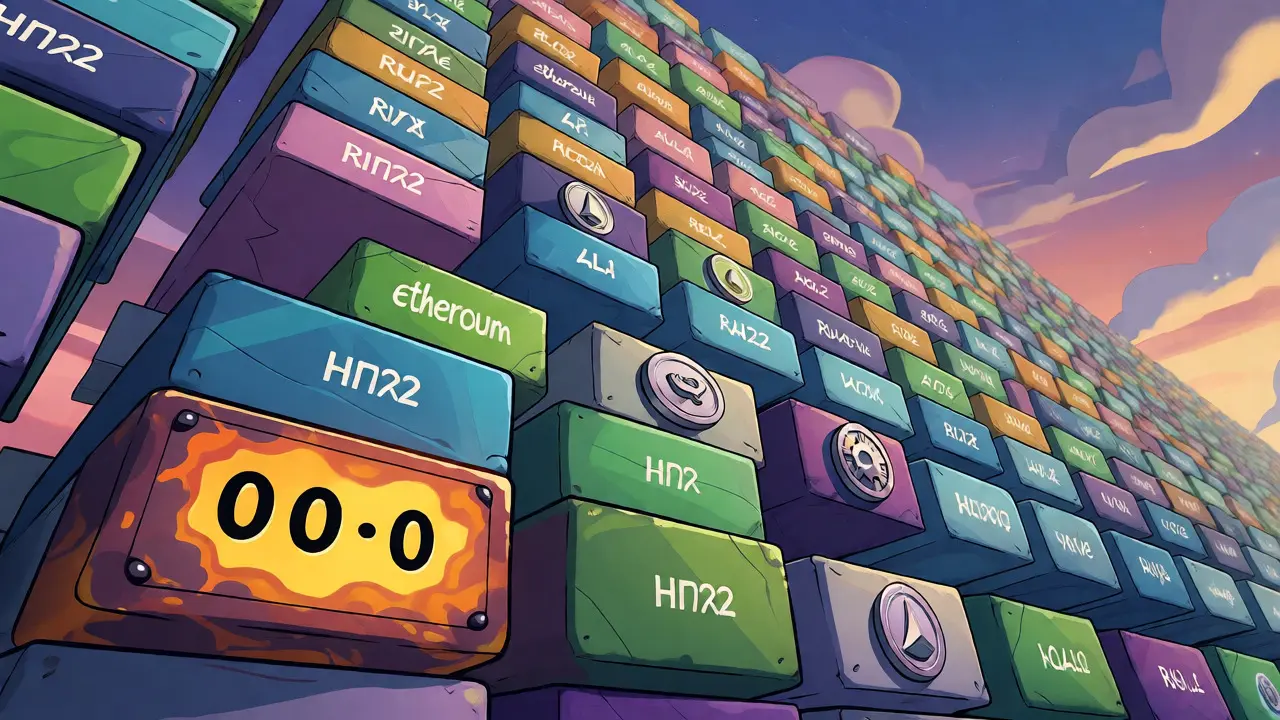
Beyond Bitcoin: Other Notable Genesis Blocks
While Bitcoin started the trend, other cryptocurrencies adapted the concept. Each new chain creates its own genesis block, often embedding messages that reflect their specific goals.
Ethereum, launched in 2015, took a different approach. Its genesis block included allocations for early investors who participated in the crowdsale. Unlike Bitcoin’s anonymous start, Ethereum’s origin involved a known group of contributors. The block also set up the initial state for smart contracts, allowing programmable money to exist from day one. The message embedded here was less about bank bailouts and more about enabling decentralized applications.
Litecoin, created by Charlie Lee in 2011, aimed to be the "silver to Bitcoin’s gold." Its genesis block reflected faster block times and a different hashing algorithm (Scrypt). The creation date, October 7, 2011, marked the beginning of altcoins-alternative coins that forked or improved upon Bitcoin’s design. Litecoin’s genesis block proved that Bitcoin’s model could be replicated and modified, sparking the explosion of thousands of other tokens.
Ripple (XRP) offers a contrasting example. Ripple’s ledger didn’t start with a traditional proof-of-work genesis block in the same way. Instead, it began with a pre-mined supply distributed among founders and partners. This highlights a key distinction: not all blockchains prioritize decentralization from the very first block. Some sacrifice immediate decentralization for speed and enterprise adoption.
Why the Unspendable Reward Matters
You might wonder why Satoshi made the first 50 BTC unspendable. It seems wasteful. But consider the incentives. If those coins were spendable, Satoshi could have moved them, potentially causing market panic or signaling insider knowledge. By locking them, Satoshi removed himself from the economic game. He couldn’t profit from selling the first batch, nor could he manipulate the price by dumping his initial stake.
This decision established a culture of fairness in Bitcoin. It showed that the network’s rules applied equally, even to its creator. Later projects often copied this trait, though some chose to distribute initial supplies differently. For instance, many modern Layer-1 blockchains allocate a percentage of the total supply to foundation treasuries or staking rewards right from the genesis block. These choices define the tokenomics of the project long before trading begins.

The Legacy of January 3rd
Today, the Bitcoin network has processed over 1 billion transactions. Institutions hold billions in reserves. Yet, the community still celebrates January 3rd. Why? Because the genesis block represents the moment theory became reality. Before 2009, double-spending problems plagued digital cash attempts. After the genesis block, a working solution existed.
This legacy extends beyond finance. Governments now explore Central Bank Digital Currencies (CBDCs), often using similar blockchain structures. Enterprises use private ledgers derived from these principles. Even non-financial sectors, like supply chain tracking, rely on the immutable history started by that first block. The genesis block isn’t just history; it’s the blueprint for future digital infrastructure.
Understanding genesis blocks helps you evaluate new cryptocurrencies. When researching a new token, check its genesis block. Who created it? Was the supply pre-mined? What message did they embed? These details reveal the project’s intent. A hidden, pre-mined supply might signal centralization risks. A transparent, community-focused launch suggests alignment with Bitcoin’s original ethos.
Frequently Asked Questions
Can the Genesis Block be changed?
No, the Genesis Block is hardcoded into the client software. Changing it would create a completely new network incompatible with existing nodes. It serves as the absolute ground truth for the blockchain’s history.
Why is the Bitcoin Genesis Block reward unspendable?
Satoshi Nakamoto intentionally made the first 50 BTC unspendable to prevent any initial unfair advantage. This ensures that the creator cannot sell the first coins for profit, reinforcing the decentralized and fair-launch nature of Bitcoin.
What is the significance of the newspaper headline in Bitcoin's genesis block?
The headline "Chancellor on brink of second bailout for banks" proves the block was created after January 3, 2009. It also serves as a political statement criticizing central banking practices during the 2008 financial crisis, highlighting Bitcoin’s purpose as an alternative monetary system.
Do all cryptocurrencies have a Genesis Block?
Yes, every blockchain-based cryptocurrency requires a starting point. However, the implementation varies. Some use traditional mining-based genesis blocks like Bitcoin, while others may use pre-mined distributions or different consensus mechanisms that alter how the first block is validated.
How do developers handle Genesis Blocks in new networks?
Developers hardcode the expected hash and parameters of the genesis block into the network’s source code. Nodes compare their calculated genesis block against this hardcoded value. If they match, the node joins the network; if not, it rejects the chain to avoid forks.