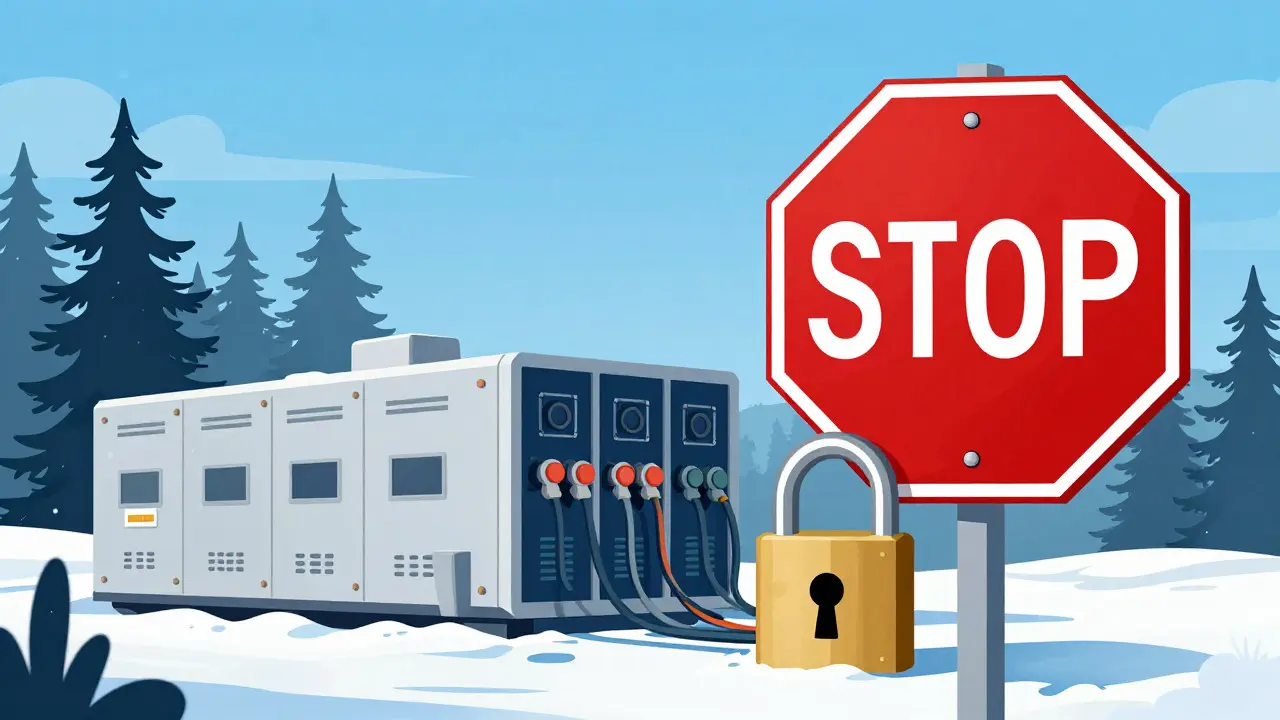
The lights went out for a new wave of digital gold rushers in Atlantic Canada. If you are looking to plug in a massive Bitcoin mining rig in New Brunswick is a Canadian province that has implemented one of the strictest bans on cryptocurrency mining electricity connections in North America, you will hit a wall. There is no waiting list. There is no special permit application. The door is simply closed.
This isn't a temporary glitch or a bureaucratic delay. It is a deliberate policy decision by the provincial government to prioritize local residents over energy-hungry data centers. For miners who have been scouting locations across Canada since China’s 2021 crackdown, this ban is a major roadblock. But why did New Brunswick go so far? And what does it mean for the future of crypto energy use?
The Timeline of the Shutdown
To understand the current situation, you have to look at how quickly things escalated. The story starts in early 2022. On March 1, 2022, the New Brunswick cabinet issued an order to NB Power is the Crown-owned electrical utility responsible for generating and distributing electricity in New Brunswick. The directive was clear: halt all new electricity service requests from cryptocurrency mining operations.
At first, many industry watchers thought this was just a pause-a chance for the grid operators to catch their breath and assess the demand. They were wrong. By November 2023, the province turned that indefinite pause into a comprehensive moratorium. This ban covers two distinct groups:
- New Operations: Any company trying to establish a new mining facility in the province cannot get connected to the grid.
- Expanding Operations: Existing miners who want to add more servers or increase their power draw are also blocked from getting additional capacity.
Unlike other regions that set end dates for their reviews, New Brunswick’s moratorium is open-ended. There is no scheduled date for re-evaluation. As of mid-2026, the ban remains firmly in place, signaling that the government views this as a long-term structural issue rather than a short-term supply hiccup.
Why New Brunswick Said No
You might wonder why a province with abundant hydroelectric resources would turn away lucrative industrial clients. The answer lies in the sheer scale of electricity consumption required for Proof of Work is a consensus mechanism used by cryptocurrencies like Bitcoin that requires significant computational power and electricity to validate transactions.
Bitcoin mining is not like running a few computers in a basement. Large-scale mines operate thousands of ASICs (Application-Specific Integrated Circuits) 24/7. These machines draw massive amounts of power. When you connect several large mines to a provincial grid designed primarily for homes, small businesses, and light industry, the strain becomes visible immediately.
The primary justification cited by New Brunswick officials is the protection of electricity supply stability. The fear is simple: if the grid is saturated with crypto loads, there may not be enough surplus power for other essential needs. This includes the electrification of heating systems, electric vehicle charging infrastructure, and general economic development. The government decided that keeping rates low and supply reliable for citizens took precedence over accommodating speculative tech industries.

How New Brunswick Compares to Other Provinces
New Brunswick is not alone in tightening the screws, but its approach is notably stricter than most of its neighbors. To see where it stands, let’s look at how other Canadian provinces handle crypto mining energy requests.
| Province | Policy Status | Key Details |
|---|---|---|
| New Brunswick | Moratorium (Indefinite) | Ban on new connections and expansions since Nov 2023. Administered by NB Power. |
| Manitoba | Moratorium (Extended) | Pause extended through April 30, 2026. Focuses on preserving hydro capacity for residents. |
| British Columbia | Regulated Limits | Bill 24 regulates the sector. BC Hydro caps allocations and raises rates. Court upheld public interest priority. |
| Quebec | Capped & Priced | Hydro-Québec temporarily reduced provision in 2022, then raised rates and capped allocations to manage load. |
| Alberta | Open / Favorable | Deregulated market. Government support for mining due to surplus natural gas power and flaring reduction goals. |
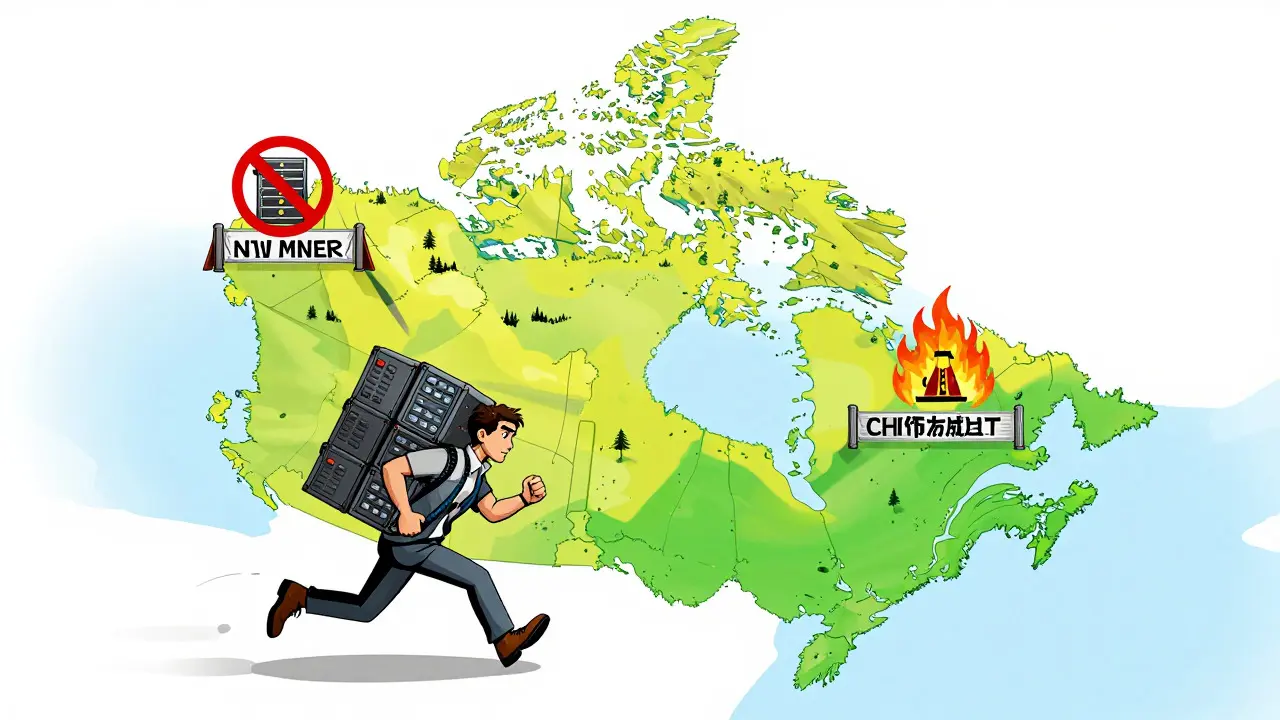
The contrast with Alberta is stark. While New Brunswick slams the door, Alberta opens it wide. Alberta’s deregulated energy market and abundance of natural gas make it a haven for miners. In fact, much of the mining capacity that got pushed out of Eastern Canada has migrated westward. This geographic shift highlights a key trend: crypto mining is increasingly becoming a regional game, dictated by local energy politics rather than global market forces.
Even Manitoba, which shares New Brunswick’s concern about grid strain, operates on a timeline. Their moratorium had an expiration date (April 2026), suggesting a willingness to revisit the policy once conditions change. New Brunswick’s lack of a sunset clause implies a deeper skepticism toward the industry’s sustainability within their specific grid constraints.
The Global Context: Why Bans Are Spreading
New Brunswick’s move didn’t happen in a vacuum. It reflects a broader international trend where governments are waking up to the environmental and infrastructural costs of Bitcoin mining. As of April 2024, at least eight countries had implemented outright bans on cryptocurrency mining.
The most famous example is China’s 2021 shutdown. Before that, China hosted nearly 75% of the world’s Bitcoin mining hash rate. When Beijing pulled the plug, the industry scrambled for new homes. Canada, with its cool climate (good for cooling servers) and clean hydroelectricity, became a prime target. But that influx exposed vulnerabilities.
In Manitoba, CEO Jay Grewal revealed in 2022 that connecting every interested crypto operator would increase the province’s total electrical load by 4,600 megawatts. At the time, the province’s total capacity was only 6,100 megawatts. That math is terrifying for any grid operator. You don’t need to be an engineer to see that dedicating 75% of your entire province’s power output to one speculative industry leaves very little room for error during heatwaves or cold snaps.
This realization has driven policies in British Columbia too. BC Hydro successfully defended its power limits in court against Conifex Timber, a major mining operator. The court ruled that the utility’s priority was to act in the public interest-preserving electricity supply and preventing higher consumer rates. New Brunswick seems to have adopted this same "public interest first" philosophy without needing to go to court.
Impact on Miners and the Industry
For crypto mining companies, the New Brunswick ban is a significant loss of potential real estate. The province offered access to cheap, renewable hydroelectric power, which is crucial for maintaining profit margins when Bitcoin prices fluctuate. With the ban in place, miners face three main challenges:
- Relocation Costs: Mines already planning facilities in New Brunswick must pivot to other jurisdictions, often moving to Alberta or even the United States. This involves new leases, construction delays, and logistical headaches.
- Capped Growth: Existing miners in the province cannot expand. This means they cannot benefit from economies of scale that larger competitors enjoy elsewhere.
- Uncertainty: The indefinite nature of the ban makes long-term investment planning difficult. Investors prefer predictable regulatory environments, and an open-ended moratorium is the opposite of predictability.
However, the ban also sends a signal to the industry: efficiency matters. Miners can no longer rely on dumping massive loads onto any willing grid. They must seek out jurisdictions with genuine surplus power, like Alberta’s flared gas projects, or invest in more efficient hardware. This could accelerate innovation in green mining technologies, forcing the industry to prove it can coexist with local energy needs.
What Comes Next?
As we move through 2026, the status quo in New Brunswick shows no signs of changing. The provincial government has not announced any review dates. This suggests that NB Power and policymakers view the electrical capacity constraints as a permanent feature of the grid, not a temporary bug.
Future developments will likely depend on two factors. First, technological advancements in mining efficiency. If rigs become significantly less power-hungry, the argument against them weakens. Second, broader changes in provincial energy strategy. If New Brunswick builds more generation capacity or sees a drop in residential demand, the pressure might ease. But until then, the message to miners is clear: look elsewhere.
For other provinces watching New Brunswick, this serves as a case study. It demonstrates that controlling electricity access is an effective tool for regulating crypto mining. We may see more provinces adopt similar "plug-pulling" strategies if grid stress continues to rise. The era of free-for-all crypto expansion in Eastern Canada appears to be over.
Is the crypto mining ban in New Brunswick permanent?
As of August 2026, the moratorium is indefinite. There is no specified end date or scheduled review process. The policy was strengthened from a pause in March 2022 to a full ban in November 2023, and it remains in effect without a timeline for reversal.
Can existing crypto miners in New Brunswick expand their operations?
No. The moratorium applies to both new connections and expansions. Existing operations are blocked from requesting additional electricity capacity from NB Power, effectively capping their growth within the province.
Why did New Brunswick ban crypto mining?
The primary reason is to protect the stability of the provincial electrical grid and keep consumer electricity costs low. Officials feared that large-scale mining operations would consume too much hydroelectric power, leaving insufficient supply for residents and other industries.
Which Canadian province is best for crypto mining in 2026?
Alberta is currently the most favorable jurisdiction in Canada. It has a deregulated energy market, abundant natural gas power, and government support for mining operations. Other provinces like Manitoba and British Columbia have strict caps or moratoriums.
Does the ban apply to all types of cryptocurrency mining?
The ban specifically targets large-scale, energy-intensive operations, particularly those using Proof of Work consensus mechanisms like Bitcoin. Small-scale, residential-level mining may not trigger the same scrutiny, but industrial-scale facilities are definitely excluded.
How does New Brunswick's ban compare to Manitoba's?
Both provinces restrict new mining connections, but Manitoba’s moratorium had a defined end date (extended to April 2026), while New Brunswick’s is open-ended with no scheduled review. New Brunswick’s approach is considered more restrictive and permanent.