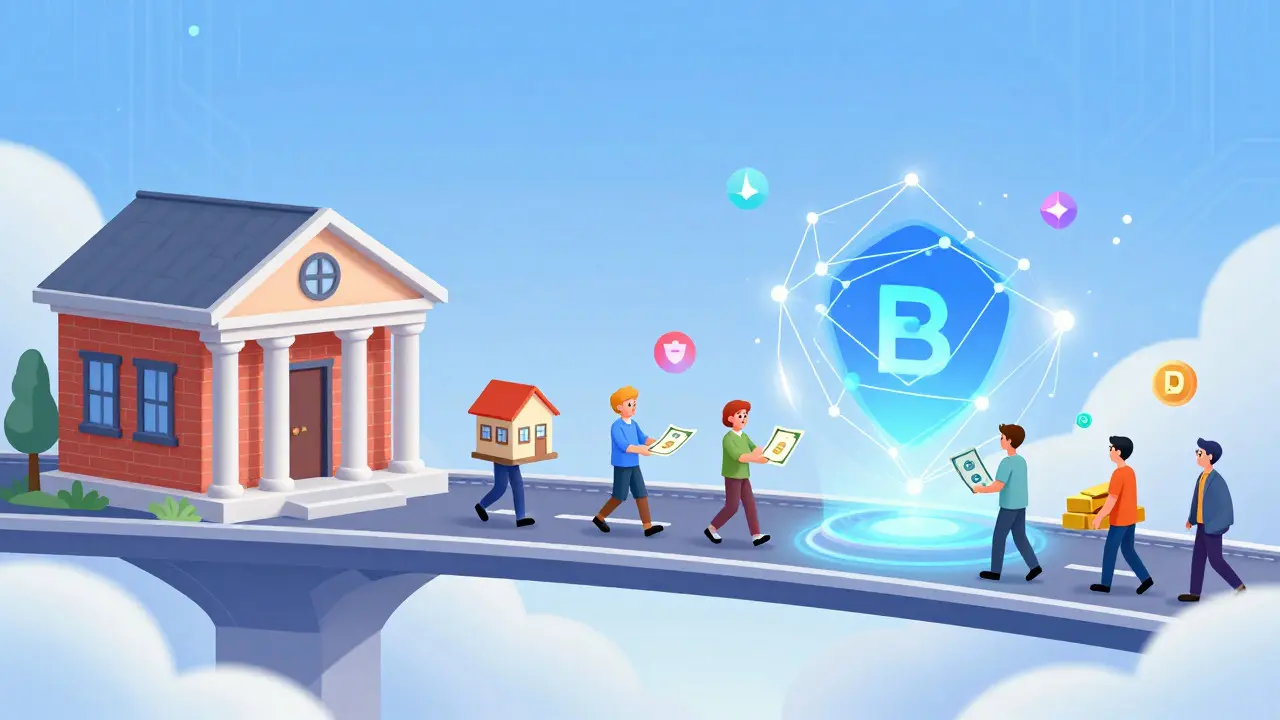
You have probably heard that billions of dollars are moving onto the blockchain. But it is not just about Bitcoin or Ethereum anymore. The real action is happening with RWA tokenization platforms. These systems take physical things-like a building in New York, a corporate bond, or even gold-and turn them into digital tokens you can trade online. It sounds like science fiction, but as of August 2026, this is how major institutions are buying and selling assets.
If you are looking to invest in real estate without buying a whole house, or if you are a business trying to raise capital faster, understanding these platforms is crucial. They bridge the gap between slow, traditional finance and fast, borderless blockchain technology. However, picking the right platform is tricky because the rules change depending on where you live and what asset you are tokenizing.
What Exactly Is an RWA Tokenization Platform?
At its core, an RWA tokenization platform is a software infrastructure that converts ownership rights of real-world assets into digital tokens on a blockchain. Think of it as a digital wrapper around a physical object. When you buy a token representing a share of a commercial building, you do not get the keys to the lobby. Instead, you get a cryptographic proof of ownership that lives on a distributed ledger.
The process usually involves six steps. First, the asset is selected and verified by experts. Second, a legal structure, often called a Special Purpose Vehicle (SPV), is created to hold the asset legally. Third, the tokens are minted on a blockchain like Ethereum or Polygon. Fourth, smart contracts are set up to handle rules like who can buy the token and how dividends are paid. Fifth, the tokens are sold to investors. Finally, those tokens can be traded on secondary markets.
This system solves a big problem: liquidity. Traditional assets like art or private equity are hard to sell quickly. Tokenization breaks these large assets into smaller pieces, allowing anyone with enough money to buy a fraction. This opens up investment opportunities to people who previously could not afford to participate.
Top RWA Tokenization Platforms Compared
Not all platforms are built the same way. Some focus on real estate, while others specialize in government bonds or commodities. Here is a look at the leaders in the space as of mid-2026.
| Platform | Primary Focus | Key Feature | Best For |
|---|---|---|---|
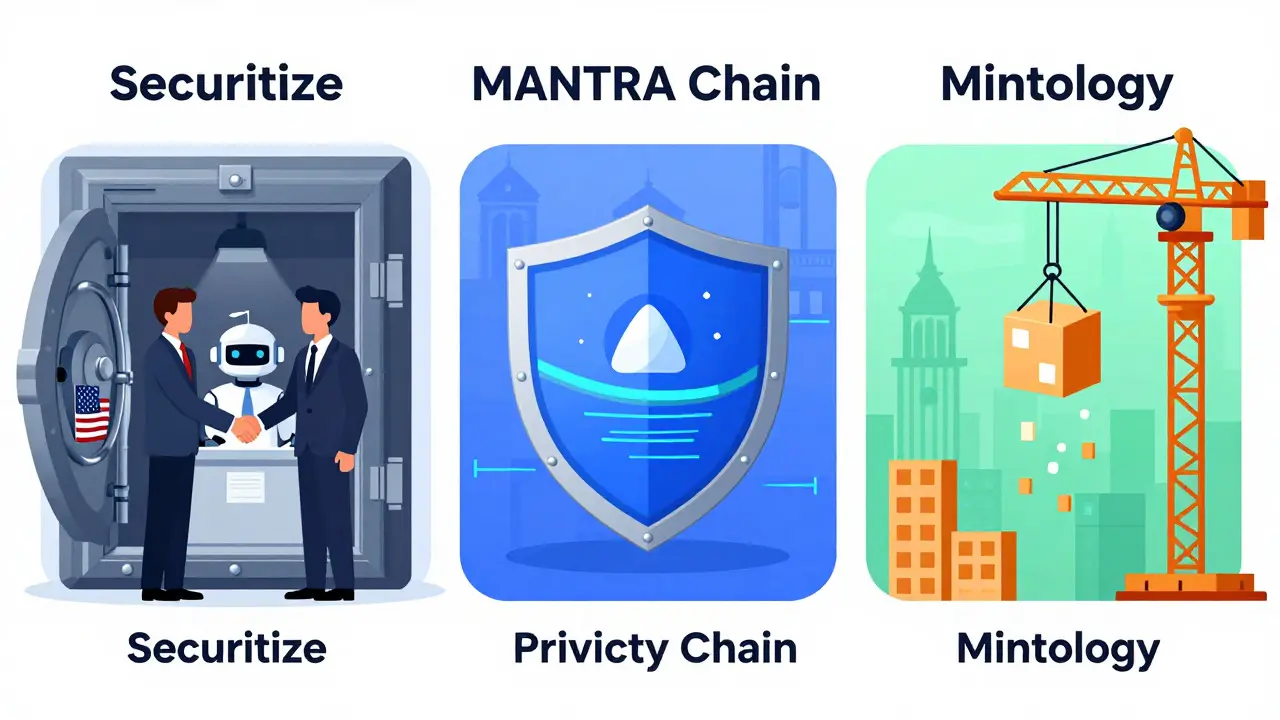
| Securitize | Security Tokens & Bonds | Deep integration with US broker-dealers | Institutional investors seeking regulatory safety |
| MANTRA Chain | Regulated Assets (EMEA) | Built-in KYC/AML compliance | European firms needing strict privacy and control |
| Mintology | Commercial Real Estate | Integration with property management software | Real estate developers and funds |
| S-PRO | End-to-End Services | Strong European legal framework support | Companies needing full-service tokenization |
Securitize is a leading platform for security token offerings, particularly strong in North America with partnerships like BlackRock's BUIDL fund. If you are dealing with US Treasuries or large institutional bonds, Securitize is often the default choice because it connects directly to traditional banking rails.
MANTRA Chain is a Layer 1 blockchain designed specifically for regulated assets, offering high privacy and compliance features. It has gained significant traction in Europe and Asia. Its architecture embeds Know Your Customer (KYC) and Anti-Money Laundering (AML) checks directly into the token standard, which saves time during trading.
Mintology is a platform specializing in commercial real estate tokenization, focusing on seamless integration with existing property management systems. It is popular among real estate developers who want to tokenize buildings without disrupting their current operational workflows.
How the Technology Works Under the Hood
To understand why some platforms work better than others, you need to know what happens behind the scenes. The most critical component is the oracle. An oracle is a service that feeds real-world data into the blockchain. For example, if the value of the underlying real estate changes, the oracle updates the smart contract.
Chainlink is the dominant decentralized oracle network used by most major RWA platforms to ensure accurate price feeds and data integrity. Without reliable oracles, your token might show a wrong price, leading to losses. Platforms using Chainlink report 99.98% uptime for these critical data feeds. Those that build their own proprietary oracles often face downtime during market volatility.
Another key piece is the blockchain itself. Most platforms use Ethereum due to its security and large user base. However, Ethereum can be expensive and slow. Many newer platforms, including MANTRA and some Mintology projects, use sidechains or Layer 2 solutions like Polygon to keep transaction costs low and speed up settlements. Settlement times have dropped from weeks in traditional finance to near-instant execution on these blockchains.
Costs and Implementation Challenges
Tokenizing an asset is not cheap. You are not just writing code; you are navigating complex laws. The average cost to tokenize a single asset class ranges from $100,000 to $300,000. The biggest expense is usually legal fees. You need lawyers to set up the SPV, draft the token terms, and ensure compliance with securities laws in every jurisdiction where you sell.
Implementation takes time. A typical project lasts 6 to 9 months. About 40% of that time is spent on legal framework development. Another 30% is dedicated to getting regulatory approvals. If you plan to expand to new countries later, expect to add 20-30% more development time for each new regulatory environment.
There are also technical hurdles. Integrating with legacy financial systems is difficult. Many older banks and accounting firms do not speak "blockchain." This causes friction when trying to move money in and out of the tokenized ecosystem. User reviews often cite ease of integration as the weakest point of current platforms, with scores averaging around 3.1 out of 5.
Regulatory Landscape in 2026
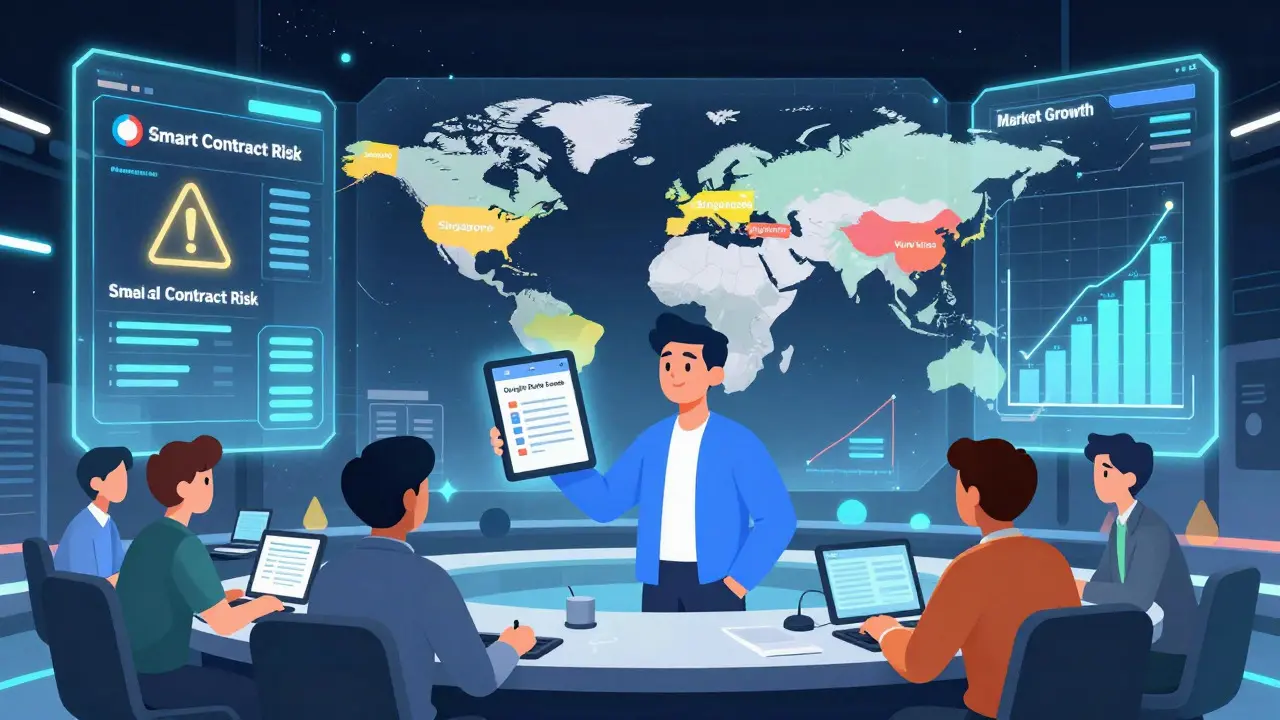
Regulation is the biggest wildcard in RWA tokenization. In 2026, the landscape is still fragmented. Switzerland leads with its Digital Asset Law (DALT), which provides clear rules for tokenized assets. Singapore’s Project Guardian offers a supportive sandbox for innovation. In the United States, regulations vary by state, with Wyoming being particularly friendly through its Special Purpose Depository Institution (SPDI) charters.
This fragmentation means you cannot easily sell a token globally. You must tailor your offering to each region. For instance, a token sold in the EU must comply with MiCA (Markets in Crypto-Assets) regulations, while a token sold in the US must adhere to SEC guidelines. This complexity is why many platforms choose to focus on specific regions rather than going global immediately.
Despite the challenges, adoption is growing. Major asset managers are running pilots. By early 2024, 73 of the top 100 global asset managers had active RWA projects. The trend suggests that by 2030, tokenized assets could represent a $16 trillion market, according to Boston Consulting Group projections.
Who Should Use RWA Tokenization?
RWA tokenization is not for everyone. It is best suited for:
- Real Estate Developers: Who want to unlock liquidity from illiquid properties and attract a broader pool of investors.
- Private Equity Firms: Looking to offer fractional ownership stakes to clients without creating a public company.
- Institutional Investors: Seeking 24/7 access to assets like government bonds or commodities with faster settlement times.
- High-Net-Worth Individuals: Wanting diversification into alternative assets like fine art or vintage cars.
For the average retail investor, the barriers are still high. While you can buy small fractions of real estate, the secondary market liquidity is limited. Bid-ask spreads can be wide (8-12%), meaning you might lose money if you try to sell quickly. It is better viewed as a long-term holding strategy rather than a day-trading opportunity.
Future Outlook and Risks
The future looks promising but cautious. Experts predict that 10% of Fortune 500 companies will tokenize at least one major asset class by the end of 2026. We are seeing convergence with traditional finance, such as SWIFT connecting its network to RWA platforms for seamless fiat-crypto settlement.
However, risks remain. Smart contract vulnerabilities are a constant threat. Although rare, bugs in code can lead to lost funds. Custody is another issue. Who holds the physical asset? If the warehouse storing the gold burns down, does the token still have value? Insurance products like Nexus Mutual’s RWA coverage are emerging to mitigate these risks, but they are not yet universal.
Also, regulatory crackdowns could slow growth. If governments decide that tokenized securities are too risky or unregulated, they could impose stricter rules that increase costs further. Staying informed about local laws is essential for anyone entering this space.
What is the minimum investment for RWA tokenization?
Minimum investments vary by platform and asset. For retail-focused real estate platforms like RealT, you can start with as little as $500 to $1,000. For institutional-grade platforms like Securitize, minimums are often higher, ranging from $10,000 to $100,000, depending on whether you are an accredited investor.
Is RWA tokenization legal?
Yes, but it depends on your jurisdiction. Most reputable platforms use Special Purpose Vehicles (SPVs) to ensure legal compliance. Countries like Switzerland, Singapore, and certain US states like Wyoming have clear frameworks. Always check local securities laws before investing.
Which blockchain is best for RWA tokenization?
Ethereum is the most common due to its security and ecosystem. However, many platforms use Layer 2 solutions like Polygon or dedicated chains like MANTRA to reduce gas fees and improve speed. The choice depends on the platform’s specific needs for cost and performance.
How do I sell my RWA tokens?
You can sell tokens on secondary markets provided by the platform or third-party exchanges. Liquidity varies significantly. Real estate tokens may take longer to sell due to lower trading volume, while bond tokens often have deeper markets. Be aware of potential bid-ask spreads.
What are the main risks of RWA tokenization?
Key risks include regulatory uncertainty, smart contract bugs, custody issues (loss of physical assets), and liquidity risk (difficulty selling tokens quickly). Diversification and choosing platforms with strong insurance and audit records can help mitigate these risks.