
You bought Bitcoin in 2023. You traded it for Ethereum in 2024. Maybe you spent some Dogecoin on a coffee last month. Now, the tax deadline is looming, and you’re staring at a spreadsheet that makes no sense. Did you make money? Did you lose money? Do you even owe taxes?
Here’s the hard truth: if you touched crypto, you likely have a tax event. The IRS treats cryptocurrency as property, not currency. This means every swap, sale, or payment triggers a potential taxable gain or loss. As of 2025, the rules have tightened significantly with new forms and stricter tracking requirements. But don’t panic. We’ll break down exactly how to report your digital assets without needing a law degree.
The Core Rule: Crypto Is Property
Before you open any forms, you need to understand the classification. In 2014, the IRS issued Notice 2014-21, declaring digital assets as property. This hasn’t changed. Why does this matter? Because when you sell property, you calculate capital gains or losses. If you buy a stock for $100 and sell it for $150, you owe tax on the $50 profit. The same logic applies to crypto.
This distinction separates crypto from cash. If you exchange dollars for euros, there’s no immediate tax event because both are currencies. But swapping Bitcoin for USDC? That’s a disposal of property. You must calculate the value of the Bitcoin at the moment of the swap, compare it to what you paid for it, and report the difference. Even if you didn’t cash out to fiat, you still triggered a taxable event.
New Forms and Reporting Changes for 2025
The landscape shifted dramatically in January 2025. Under the Infrastructure Investment and Jobs Act, centralized exchanges like Coinbase and Kraken now issue Form 1099-DA. This form reports gross proceeds from your sales. Think of it as the crypto equivalent of the Form 1099-B you get from traditional brokerages.
However, there’s a catch. For the 2025 tax year, these forms only report the total amount received (gross proceeds), not your cost basis. Your cost basis is what you originally paid for the asset plus fees. Without this number on the form, you can’t automatically know your profit. You have to calculate it yourself. Starting January 1, 2026, brokers will begin reporting cost basis, making things easier. Until then, you’re doing the heavy lifting.
Also, pay attention to the top of your Form 1040. There’s a mandatory checkbox asking if you disposed of digital assets. Answering "no" when you actually did trade can lead to penalties. It’s an affirmative declaration, so be honest.
Where to List Your Transactions
Your transactions don’t just go into one bucket. They land on specific schedules depending on the activity type.
- Capital Gains and Losses: Use Schedule D and Form 8949. This is where you list disposals-selling crypto for cash, trading one coin for another, or spending crypto on goods. Each line item requires the date acquired, date sold, cost basis, and sale price.
- Ordinary Income: If you mined coins, staked tokens, or received airdrops, this isn’t a capital gain. It’s income. Report mining and staking rewards on Schedule C if you’re self-employed, or Schedule 1 if you’re an individual hobbyist. The value at the time of receipt is your income.
- Self-Employment: If you accept crypto payments for freelance work, treat it like any other business income. Convert the crypto to USD at the fair market value on the day you received it and report it as revenue.
The Wallet-by-Wallet Accounting Shift
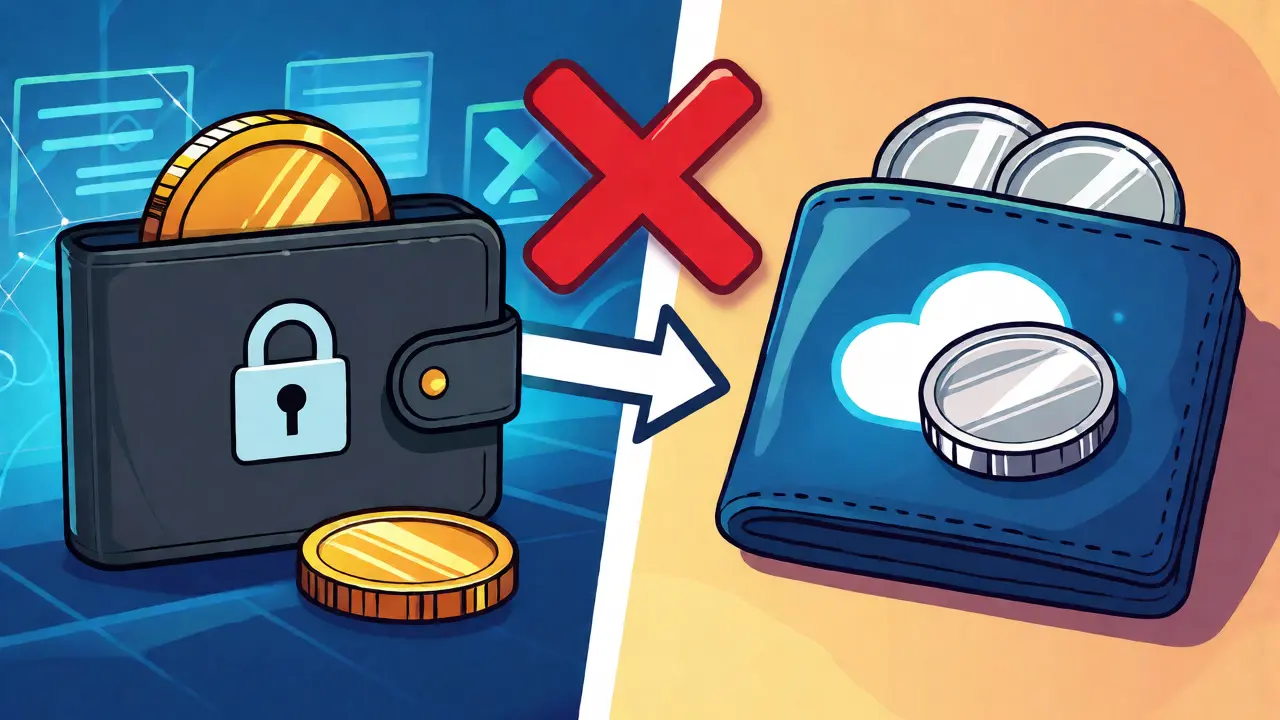
For years, many users used a "universal" accounting method, averaging their cost basis across all wallets. Imagine buying Bitcoin on Coinbase at $20k and on Binance at $30k. With universal accounting, you might average those costs. The IRS ended this practice effective January 1, 2025.
Now, you must use wallet-by-wallet accounting. This means the cost basis for Bitcoin in your Ledger wallet is tracked separately from Bitcoin in your Coinbase account. If you move coins between wallets, you must document the transfer carefully. If you fail to track which specific coins moved, you might permanently lose your cost basis data, leading to inflated gains and higher taxes. This change adds complexity but increases accuracy.
Decentralized Finance (DeFi) and NFTs
What about platforms like Uniswap or Aave? In March 2025, the Senate repealed the DeFi Broker Rule. This means decentralized exchanges (DEXs) do not currently send you 1099-DA forms. However, this doesn’t exempt you from reporting. You still owe taxes on gains realized through DeFi swaps, lending, or liquidity pool activities. Since no broker sends you a form, you rely entirely on your own records.
NFTs follow similar rules. Buying an NFT is acquiring property. Selling it is a disposal. If you created an NFT and sold it, the income might be ordinary rather than capital gain, depending on whether you’re considered a creator or an investor. The Treasury Department updated instructions for Form 8949 in late 2025 specifically to address NFT taxation nuances.

Tools and Best Practices
Manual entry is painful and error-prone. Most active traders use specialized software. Tools like Koinly, CoinTracker, or TokenTax integrate with over 300 exchanges and blockchains. They pull your transaction history, apply FIFO (First-In, First-Out) or other costing methods, and generate the necessary tax forms.
Even with software, keep your own logs. Document the date, amount, USD value at the time of transaction, and purpose for every trade. If you participate in airdrops, note the source and value. If you forked a chain, record the new assets received. These details save you during audits.
| Activity | Tax Treatment | Form Required | Reporting Source |
|---|---|---|---|
| Selling crypto for cash | Capital Gain/Loss | Schedule D & 8949 | Exchange 1099-DA + Self |
| Trading BTC for ETH | Capital Gain/Loss | Schedule D & 8949 | Self-Reported |
| Mining/Staking Rewards | Ordinary Income | Schedule C or 1 | Self-Reported |
| Airdrops | Ordinary Income | Schedule 1 | Self-Reported |
| Paying with Crypto | Disposal (Gain/Loss) | Schedule D & 8949 | Self-Reported |
Common Mistakes to Avoid
Don’t ignore small transactions. The IRS uses blockchain analysis tools to trace movements. If you skipped reporting ten small trades, they might flag your return. Also, don’t confuse transfers with sales. Moving Bitcoin from your hardware wallet to an exchange to sell it isn’t a taxable event until you actually sell. But moving it to a different wallet without documentation can mess up your cost basis tracking.
Another pitfall: forgetting state taxes. While federal rules are uniform, states vary in how they treat crypto income. Check your local regulations, especially if you live in a high-tax state.
Frequently Asked Questions
Do I have to pay taxes if I haven't sold my crypto?
No, unrealized gains are not taxed. You only owe taxes when you dispose of the asset by selling, trading, or spending it. Holding Bitcoin while its price rises creates an unrealized gain, which has no tax impact until you convert it to cash or another asset.
What happens if I receive a 1099-DA but didn't sell anything?
This often happens if you transferred funds between accounts on the same platform or if the broker misclassified a deposit. Review the form details. If it's incorrect, contact the broker for a corrected form. On your tax return, you may need to explain the discrepancy to avoid double-counting.
Are DeFi transactions reported to the IRS?
Currently, no. Decentralized exchanges do not issue 1099-DA forms because the DeFi Broker Rule was repealed in 2025. However, you are still legally required to report gains and losses from DeFi activities on your tax return using your own records.
Can I deduct crypto losses against other income?
Yes, capital losses can offset capital gains. If your losses exceed gains, you can deduct up to $3,000 against ordinary income per year. Any remaining loss carries forward to future tax years. This helps reduce your overall tax bill if you had a bad trading year.
What if I lost my private keys or forgot my password?
You generally cannot claim a loss solely because you lost access to your wallet unless you can prove the asset is unrecoverable and abandoned. The IRS rarely allows deductions for lost keys without substantial evidence. Keep backups to avoid this expensive mistake.