Have you ever wondered if your idle crypto wallet could earn you free tokens just for paying attention? That’s the promise behind the Bit Hotel (BTH) campaign. This isn't just another vague promise of future wealth; it's a specific push by a Social-first Play-to-Earn NFT Gaming Metaverse project to get its community involved. If you've been hearing whispers about the BTH airdrop but aren't sure where to look or how to actually claim your share, you're in the right place.
The Bit Hotel ecosystem is designed around nostalgia and social interaction, blending 8-bit aesthetics with modern blockchain utility. But before you rush to connect your wallet, let's break down exactly what these campaigns are, how they work, and whether the effort is worth your time. As of late 2025, the BTH token trades at approximately $0.0001626 USD, a price point that makes even small airdrops feel like a nice bonus rather than a life-changing windfall. Yet, for gamers and collectors, the real value often lies in the NFTs and governance rights that come with participation.
What Exactly Is Bit Hotel?
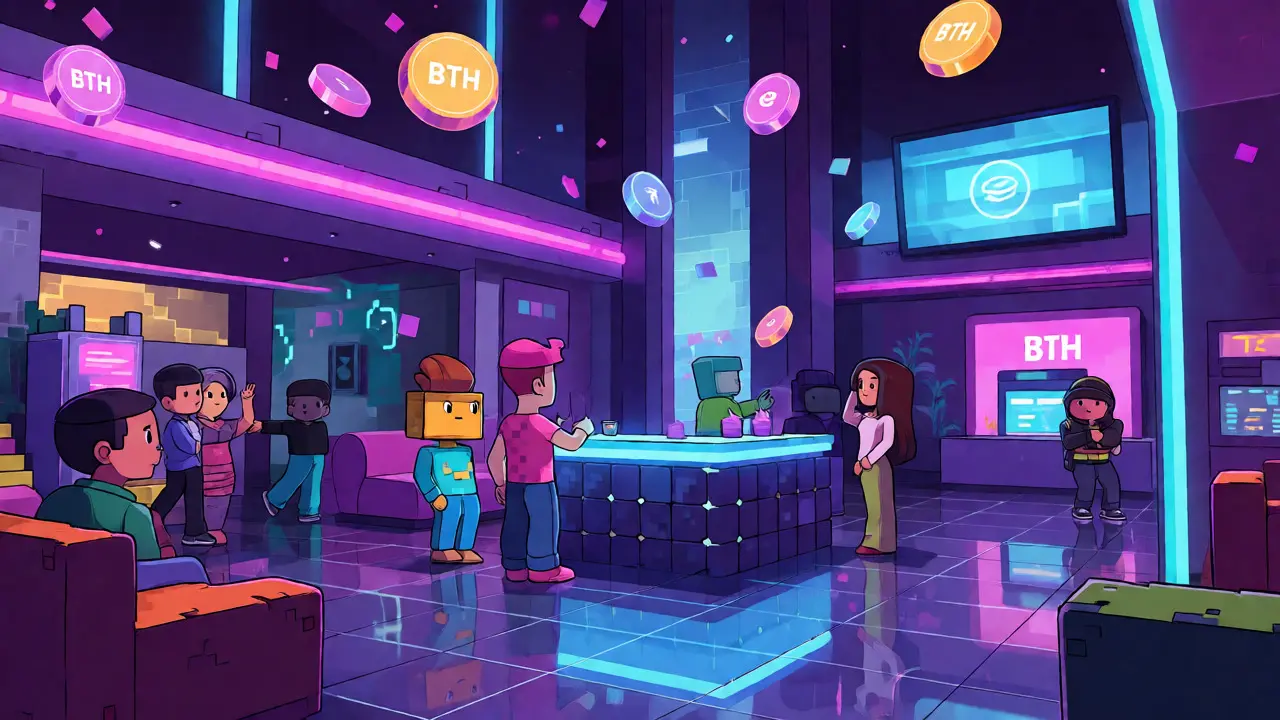
To understand the airdrop, you first need to grasp the platform. Bit Hotel is a decentralized gaming metaverse where users build hotels, collect NFT characters, and interact socially. Think of it as a digital hotel lobby meets retro arcade. You don't just hold tokens; you use them to buy rooms, which serve as personal hubs for hosting gatherings, chatting with other players, and competing in mini-games.
The core appeal here is the blend of social features and gaming utility. Unlike many DeFi projects that feel cold and purely financial, Bit Hotel leans into community events, global leaderboards, and DAO-driven activities. The BTH token acts as the glue holding this together-it’s used for governance voting, purchasing native NFTs like accessories and room upgrades, and accessing exclusive in-game features. It’s a closed loop designed to keep users engaged long after the initial hype fades.
The Major Airdrop Campaigns Explained
Not all airdrops are created equal. In 2025, Bit Hotel launched two significant distribution initiatives that caught the eye of the crypto community. These weren't random drops; they were strategic partnerships aimed at expanding the user base through established platforms.
| Campaign Partner | Reward Pool Size | Mechanism | Max Individual Win |
|---|---|---|---|
| CoinMarketCap | 1,500,000 BTH | Task-based verification & eligibility checks | 300 BTH |
| MEXC Exchange | 680,000 BTH | Voting mechanism via Kickstarter initiative | Variable based on vote weight |
The CoinMarketCap partnership was the heavyweight champion of these campaigns. With a massive pool of 1.5 million BTH tokens, it offered individual participants the chance to win up to 300 tokens each. This structure suggests a broad distribution model intended to onboard new users who might not have heard of Bit Hotel otherwise. By leveraging CoinMarketCap’s vast user base, the project cast a wide net.
On the other hand, the MEXC exchange ran a "Kickstarter" style airdrop. This one was more interactive. Instead of just signing up, users had to participate in a voting mechanism to qualify for a slice of the 680,000 BTH reward pool. This gamified approach aligns perfectly with Bit Hotel’s brand identity-rewarding active engagement rather than passive holding. It forced users to think about their preferences within the ecosystem, fostering a deeper connection to the project from day one.
How to Participate and Claim Your BTH
If you missed the live windows, don’t panic. Many of these campaigns have lingering effects or recurring opportunities. However, for those looking to engage with current or future drops, the process generally follows a predictable pattern. Here is what you typically need to do:
- Connect Your Wallet: Most campaigns require a Web3-compatible wallet like MetaMask or Trust Wallet. Ensure your network settings are correct (usually Ethereum or Binance Smart Chain, depending on the specific deployment).
- Complete Verification Tasks: For CoinMarketCap-style drops, this often involves verifying your email, connecting your Twitter account, and sometimes holding a minimum amount of ETH or BNB to cover gas fees.
- Engage with Voting: If participating in MEXC-style campaigns, you’ll need to log into the exchange, navigate to the Kickstarter section, and cast your votes. This usually requires having a verified account with KYC completed.
- Claim Your Tokens: Once the campaign ends, tokens aren't always auto-distributed. You often need to visit the official Bit Hotel claim portal or the partner exchange’s rewards page to manually claim your BTH.
A common pitfall I see is people forgetting to claim. They assume the tokens will magically appear in their wallet. They won’t. Always check the official channels for claim deadlines. Missing these can mean leaving money on the table, especially when trading volumes are low and every token counts.
Is the Effort Worth It? Analyzing Value and Utility
Let’s be real: at $0.0001626 per token, winning 300 BTH nets you roughly $0.05. That’s enough to buy a coffee bean, maybe not the coffee itself. So why bother? The answer lies beyond the immediate dollar value.
First, consider the NFT potential. BTH holders can use their tokens to acquire native NFTs. While the token price is low, the utility of owning a unique hotel room or character accessory in a growing metaverse can appreciate independently of the token’s market cap. Second, there’s the governance angle. Holding BTH gives you a voice in the project’s direction. If you believe in the vision of a social-first gaming hub, your vote has intrinsic value.
However, we must address the elephant in the room: liquidity. Recent data shows a 24-hour trading volume of near zero USD on some trackers. This indicates that while people are earning tokens, few are actively trading them. This low activity level means selling large amounts of BTH quickly might result in slippage or difficulty finding buyers. The airdrop recipients are likely holding for utility or speculation on future growth, not flipping for quick profits.
Strategic Tips for Maximizing Airdrop Returns
If you’re serious about collecting crypto airdrops, treat them like any other investment strategy. Don’t just click buttons blindly. Here are a few heuristics that have served me well in Wellington’s tight-knit crypto circles:
- Diversify Your Wallet Activity: Algorithms often filter out "airdrop hunters" who only interact with drop contracts. Keep your main wallet active with regular transactions across different dApps to maintain a high reputation score.
- Read the Fine Print on Vesting: Some BTH distributions may have vesting schedules. Check if your tokens unlock immediately or over time. This affects your ability to sell or stake.
- Join the Community Early: Bit Hotel emphasizes social interaction. Joining their Discord or Telegram groups early can give you heads-up on unannounced micro-airdrops or special event rewards that aren’t advertised on major exchanges.
- Watch for Gas Fees: Claiming tokens costs gas. If the fee exceeds the value of the airdrop, skip it. With BTH’s low price, claiming during high-network-congestion times might cost more than the reward is worth.
The Future of Bit Hotel Tokenomics
The total allocation of over 2.18 million BTH tokens across these identified campaigns represents a significant chunk of the circulating supply dedicated to community building. This signals that the developers prioritize user acquisition over immediate revenue extraction. For investors, this is a double-edged sword. On one hand, a large community is essential for a metaverse project’s survival. On the other, heavy dilution from airdrops can suppress price appreciation in the short term.
Looking ahead, the success of Bit Hotel depends on converting these airdrop recipients into active gamers. If the 8-bit nostalgia and social features retain users, the demand for BTH for governance and NFT purchases will rise. If users leave once the free tokens are claimed, the token will struggle to find a floor. Keep an eye on daily active user metrics rather than just token price. Engagement is the true north star for this project.
Where can I check if I am eligible for the BTH airdrop?
Eligibility is typically checked on the specific partner platform where the campaign was hosted, such as CoinMarketCap or MEXC. Log into your account on these sites and look for the "Rewards" or "Airdrops" section. Additionally, the official Bit Hotel website often provides a claim checker tool where you can paste your wallet address to verify status.
Do I need to pay gas fees to claim my BTH tokens?
Yes, claiming tokens on-chain usually requires paying network gas fees. Since BTH operates on major blockchains, you will need ETH, BNB, or MATIC (depending on the specific chain deployment) to cover the transaction cost. Always check the estimated fee before confirming the transaction to ensure it doesn't exceed the value of your airdrop.
Can I trade BTH tokens immediately after receiving them?
Generally, yes, unless the specific campaign terms specify a vesting period. However, due to low trading volumes mentioned in recent reports, you might face liquidity issues. It is advisable to check the order book depth on exchanges like MEXC before attempting to sell large quantities to avoid significant price impact.
What is the primary utility of the BTH token?
BTH serves three main functions: governance participation, allowing holders to vote on project decisions; NFT acquisition, enabling the purchase of in-game assets like rooms and characters; and in-game utility, used for accessing premium features and mini-games within the Bit Hotel metaverse.
Why is the trading volume for BTH so low?
Low trading volume often reflects a lack of speculative interest or limited exchange listings compared to top-tier coins. For Bit Hotel, it may also indicate that most current holders are retaining tokens for utility or long-term speculation rather than active trading. This is common in niche gaming metaverse projects during their growth phase.