
Imagine checking your bank account and seeing a transaction flagged not because it was suspicious, but simply because you bought coffee with digital currency. In Algeria, that scenario is no longer hypothetical-it’s criminal. Since July 24, 2025, holding, buying, selling, or even talking about cryptocurrency has been strictly prohibited under Law No. 25-10, which defines crypto assets as 'virtual instruments used as means of exchange via a computer system, without support from a central bank' and bans them outright. This isn't just a regulatory tweak; it's a total crackdown. The law imposes fines ranging from 200,000 to 1 million Algerian dinars ($1,540 to $7,700) and prison sentences up to one year for first-time offenders. Repeat offenders face doubled penalties.
So, did this shut down the crypto market? Not exactly. Instead of disappearing, the market went underground. Before the ban, Algeria was one of the largest cryptocurrency markets in the Middle East and North Africa (MENA), according to a 2024 Chainalysis report. Today, that activity persists in the shadows, driven by peer-to-peer networks, international exchanges accessed via VPNs, and heavy reliance on stablecoins. For traders in Algiers, Oran, or Constantine, navigating this landscape requires more than just technical know-how-it demands operational security akin to spy craft.
The Legal Landscape: What Law No. 25-10 Actually Bans
To understand the underground market, you first need to grasp what the authorities are hunting for. The previous legal framework, Article 117 of the 2018 Financial Law, banned cryptocurrencies but lacked clear enforcement mechanisms. Law No. 25-10 changed that dramatically. It explicitly criminalizes eight categories of activity:
- Issuing new tokens
- Purchasing or selling digital assets
- Using crypto as payment for goods or services
- Holding virtual currencies (even passive ownership)
- Trading for speculation
- Promoting crypto through advertising or content creation
- Operating exchange platforms
- Mining operations
This comprehensive scope means that even posting a tweet about Bitcoin could theoretically be construed as "promotion." The government’s justification centers on protecting monetary sovereignty, preventing money laundering, and curbing terrorism financing, aligning with guidance from the Financial Action Task Force (FATF). However, critics like Amir Haddadi, a North Africa-based fintech analyst, argue that this approach stifles innovation and deters investment in the digital economy. The result is a black-and-white legal environment where gray areas don’t exist-everything is either compliant or criminal.
How the Underground Market Operates
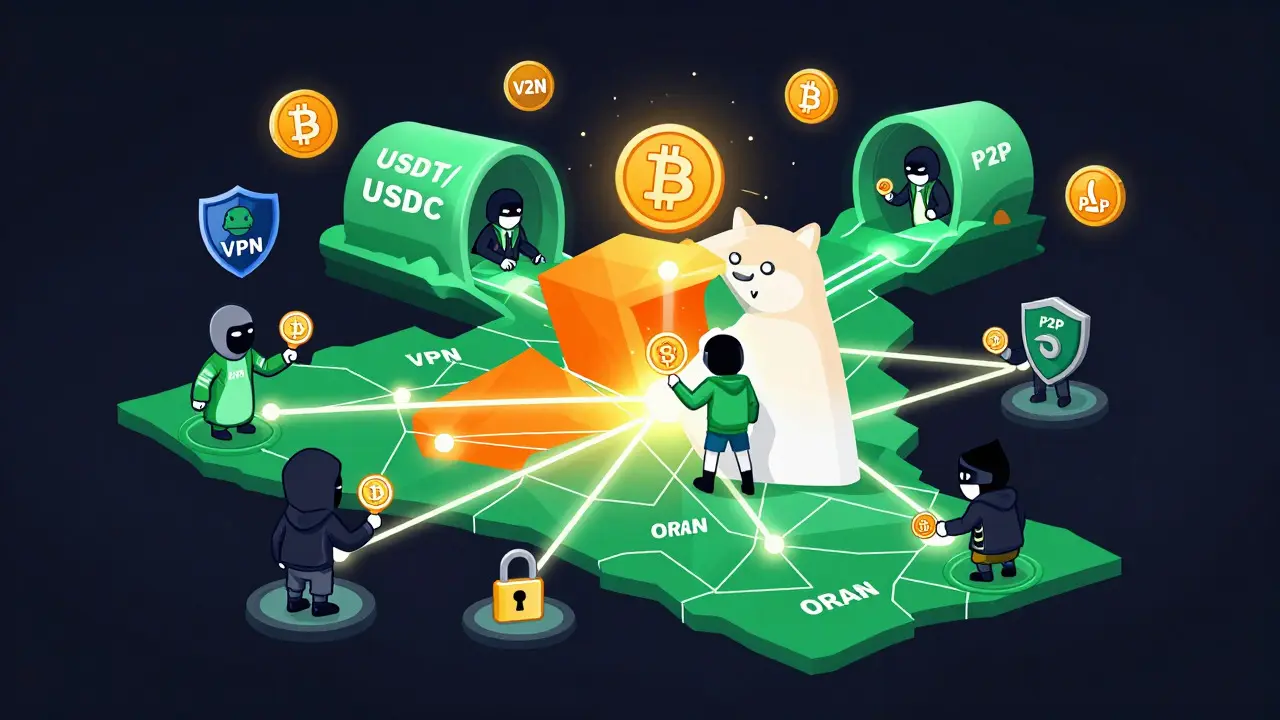
If the doors are closed, how do people still trade? The answer lies in three primary mechanisms: peer-to-peer (P2P) trading, international exchange access, and stablecoin utilization. These methods form the backbone of Algeria’s clandestine crypto ecosystem.
Peer-to-Peer Trading Networks
P2P trading remains the most common method for moving value. Without local exchanges, users connect directly with each other using encrypted messaging apps like Telegram or Signal. Transactions often involve cash handovers or informal banking transfers disguised as personal loans or family gifts. To avoid detection, traders use compartmentalized networks, meaning they rarely interact with the same counterparty twice. Trust is built slowly, often through intermediaries who vouch for both parties.
International Exchange Access
Since local platforms are banned, Algerians turn to global giants like Binance, Kraken, or KuCoin. But accessing these sites requires bypassing state-imposed internet filters. Most users rely on Virtual Private Networks (VPNs) to mask their IP addresses and appear as if they’re connecting from France, Turkey, or the UAE. Even then, linking a local bank account to an international exchange is risky. Many opt for credit cards issued abroad or use prepaid Visa/Mastercard cards purchased online, though availability varies.
Stablecoin Utilization
Volatility is the enemy in a restricted market. If you spend weeks acquiring Bitcoin only to see its price drop before you can sell it, you’ve lost real money. That’s why stablecoins like USDT (Tether) and USDC (USD Coin) dominate the underground scene. They allow traders to preserve value without exposing themselves to wild price swings. Stablecoins also facilitate faster settlements compared to slower blockchain confirmations of coins like Bitcoin or Ethereum.
| Method | Risk Level | Anonymity | Liquidity | Technical Barrier |
|---|---|---|---|---|
| P2P Cash Trades | High (Physical Risk) | Medium | Low | Low |
| International Exchanges + VPN | Very High (Legal Risk) | High | High | Medium |
| Stablecoin Swaps | Medium | Medium | High | Low |
Risks You Can't Ignore
Participating in Algeria’s underground crypto market isn’t just inconvenient-it’s dangerous. The risks fall into three buckets: legal, financial, and operational.
Legal Risks
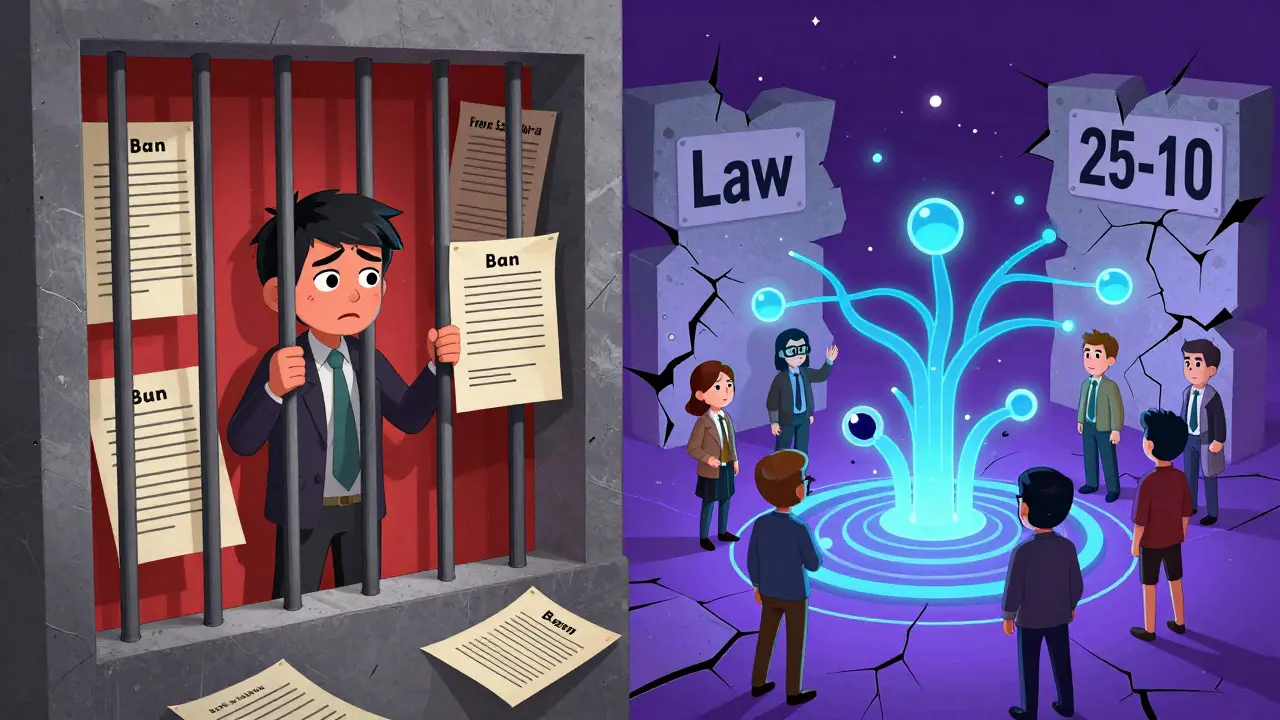
The stakes are high. A single arrest can lead to two months to one year in prison, plus fines that can reach $14,700. Beyond the immediate punishment, a criminal record affects future employment, travel visas, and even banking relationships. Authorities have shown willingness to prosecute, particularly targeting large-volume traders and those involved in mining operations.
Financial Risks
Without legal recourse, fraud is rampant. Scammers exploit the fear-driven nature of the market, offering fake deals or disappearing after receiving funds. Asset seizure is another threat-if authorities discover your holdings, they can confiscate them without compensation. Additionally, limited supply channels mean higher premiums. Buying Bitcoin in Algeria often costs significantly more than the global average due to scarcity and risk arbitrage.
Operational Risks
Maintaining anonymity requires constant vigilance. Digital footprints-like metadata in photos, location data from apps, or careless social media posts-can expose traders. Law enforcement agencies are increasingly sophisticated, using blockchain analysis tools to trace transactions back to individuals. Infiltration of trading groups by undercover agents is also a growing concern.
Who Still Plays the Game?
You might wonder who keeps this market alive despite the dangers. The answer is simple: necessity and opportunity. For many Algerians, crypto offers a way to hedge against inflation and currency devaluation. The Algerian dinar has faced pressure for years, making hard assets attractive. Others see crypto as a gateway to global opportunities-freelancers earning in USD, students paying tuition abroad, or entrepreneurs accessing venture capital.
However, the barrier to entry has risen sharply. Casual users who once traded on local apps have largely exited. Those remaining tend to be technically sophisticated individuals comfortable with privacy tools, decentralized finance (DeFi) protocols, and complex security measures. This shift mirrors patterns seen in China after its 2021 crypto ban, where activity didn’t vanish but concentrated among experienced players willing to take greater risks.
Future Outlook: Will the Ban Hold?
No policy lasts forever, especially when technology moves faster than legislation. Algeria’s commitment to monetary sovereignty is strong, but enforcing a total ban on something as borderless as cryptocurrency is incredibly difficult. Experts suggest several scenarios for the future:
- Stabilized Underground Market: If enforcement remains resource-intensive and inconsistent, the current shadow economy may persist at reduced levels. Traders adapt, authorities struggle to keep up, and a stalemate emerges.
- Tech-Driven Evasion: Advances in privacy-focused cryptocurrencies (like Monero) and decentralized exchange protocols could make tracking nearly impossible. As these tools become easier to use, even less tech-savvy users might re-enter the market.
- Policy Reversal: Economic pressures could force a rethink. If foregone opportunities in the digital economy grow too costly, the government might consider regulated frameworks similar to those adopted by neighboring Tunisia or Morocco. While unlikely soon, history shows that rigid bans often soften over time.
For now, the message from Algiers is clear: stay out of crypto unless you’re prepared to fight for every satoshi. But as long as demand exists-and it will-the underground market will find ways to survive.
Is owning Bitcoin illegal in Algeria?
Yes. Under Law No. 25-10 enacted in July 2025, merely holding cryptocurrency constitutes a criminal offense punishable by fines and imprisonment.
What are the penalties for crypto trading in Algeria?
First-time offenders face fines between 200,000 and 1 million Algerian dinars ($1,540-$7,700) and up to one year in prison. Repeat offenses double these penalties.
How do Algerians buy crypto today?
Most users rely on peer-to-peer (P2P) networks via encrypted apps, access international exchanges through VPNs, and prefer stablecoins like USDT to minimize volatility risks.
Are there any safe ways to invest in crypto in Algeria?
There are no legally safe ways. All forms of crypto involvement carry significant legal and financial risks. Participants must weigh potential gains against severe consequences including asset seizure and criminal records.
Will Algeria lift the crypto ban soon?
Unlikely in the short term. The government views crypto as a threat to monetary sovereignty. However, long-term economic pressures or technological advancements could eventually lead to policy adjustments.
Dave Kjendal
August 10, 2026 AT 13:05its just like everything else the government tries to control they end up making it worse for everyone involved
Joshua Hofford
August 11, 2026 AT 19:41I actually find this fascinating because it shows how resilient human ingenuity is when faced with restrictive policies. It reminds me of the old days of underground jazz clubs or black market literature during wartime, where culture and value exchange happened in the shadows because the mainstream channels were blocked. The fact that people are using stablecoins like USDT to hedge against inflation tells me that the demand for financial freedom is universal and unstoppable. We should probably look at this as a case study for how heavy-handed regulation often creates more complex problems rather than solving them. Maybe if they had just regulated it properly from the start, we wouldn't have this whole spy-craft scenario unfolding now.
Kat Bennett
August 13, 2026 AT 15:08It's really interesting to see how the community adapts to these kinds of restrictions over time, especially when you consider that many of these traders are just trying to protect their savings from local currency devaluation which is a very real problem for everyday people who aren't tech experts but still need a way out of the economic squeeze they are facing daily.
Candice Cornett
August 15, 2026 AT 03:44people always say freedom but really its just greed masquerading as liberty
the state knows best and these crypto bros are just reckless gamblers ruining the social fabric
Lance Jantz
August 16, 2026 AT 10:05Ah, the exquisite dance of the digital shadow! To think that one can merely whisper about Bitcoin on a tweet and risk the wrath of the law is simply divine theater. It’s almost poetic, isn’t it? The government playing cat and mouse with invisible money while the people slip through the cracks like ghosts in the machine. I suppose one must admire the sheer audacity of trading in such a high-stakes environment, where every click could be your last free moment before the iron fist of bureaucracy descends upon you with all its glorious, crushing weight.
Don Fizy
August 17, 2026 AT 02:31Hey folks, just wanted to drop a quick tip for anyone navigating similar waters elsewhere: always double-check your VPN settings and consider using a dedicated device for crypto activities to keep your main digital footprint clean :) Stay safe out there!
Phil Babb
August 17, 2026 AT 02:38THIS IS ABSOLUTELY CRITICAL FOR EVERYONE TO UNDERSTAND!!!
The cultural shift happening here is massive!! You cannot ignore the implications of this ban on the global stage!! It’s not just Algeria!! It’s a warning shot to the entire world about monetary sovereignty!! Wake up people!!!
Dominic Greco
August 19, 2026 AT 00:39They want to control your money so they can control your mind 🧠💸 The central banks are terrified because they know the game is up. This ban is just a desperate move by the elites to keep us poor and compliant. Don’t let them win! Keep stacking sats in secret! 🔒🚀
Sean Rowland
August 19, 2026 AT 22:16One might argue that the semantic distinction between 'promotion' and mere discussion is entirely lost on the bureaucratic apparatus, leading to an absurdity where even casual conversation becomes a criminal act, thereby necessitating a complete overhaul of social interaction protocols among the populace.
Sus Sawyer
August 20, 2026 AT 06:18look i get the fear but u gotta trust the process if u wanna stay ahead of the curve
just make sure ur opsec is tight af or u gonna get burned bad lol
Aryan MISHRA
August 20, 2026 AT 08:03THE LEGAL FRAMEWORK IS FLAWED BECAUSE IT IGNORES THE TECHNICAL REALITY OF DECENTRALIZED NETWORKS!!!
YOU CANNOT BAN WHAT YOU CANNOT CONTROL!!!
IT IS A FUTILITY EXERCISE!!!
Ryan Robinson
August 21, 2026 AT 10:42i mean its kinda crazy how they try to stop it but everyone just uses vpn anyway so its basically pointless tbh
Emma Smith
August 21, 2026 AT 21:08the ontological status of virtual assets is fundamentally misunderstood by those who legislate
they see code as contraband but miss the deeper philosophical implication of trustless systems replacing institutional faith
it is a paradigm shift they are trying to suppress with brute force
yet the subterranean flow of value persists like water under a dam
inevitable and corrosive to the rigid structures above