You’ve heard the name "Retro" buzzing around social media groups or maybe saw an ad promising easy gains. You type it into your browser, looking for a solid place to park your Bitcoin or trade Ethereum. But then you hit a wall. There’s almost no real information about this platform. No clear founding date, no known regulatory licenses, and certainly no presence on major financial tracking sites like CoinMarketCap.
If you are reading this, you are likely trying to decide whether Retro crypto exchange is a hidden gem or a dangerous trap. The short answer? Proceed with extreme caution. In the world of digital assets, obscurity is rarely a feature; it is usually a red flag.
The Silence Around Retro: A Major Red Flag
In 2026, the cryptocurrency market is more transparent than ever before. Legitimate exchanges do not hide in the shadows. They publish their team members’ LinkedIn profiles, display their regulatory licenses from bodies like the FCA in the UK or FinCEN in the US, and list their trading volumes on independent aggregators.
When we look at Retro, a cryptocurrency platform with virtually no verifiable public data regarding its ownership, security audits, or regulatory status, we find a void. This silence is deafening. Established platforms like Kraken or Coinbase have years of historical data, user reviews on Trustpilot, and news coverage. Retro has none of this.
- No Regulatory Footprint: A search through global financial regulator databases yields no results for a licensed entity named Retro operating as a crypto exchange.
- Missing Technical Audits: Reputable exchanges undergo smart contract audits by firms like CertiK or Hacken. There is no record of such audits for Retro.
- Absence from Aggregators: Platforms like CoinGecko and CoinMarketCap vet exchanges before listing them. Retro is absent from these critical resources.
This lack of transparency makes it impossible to verify if your funds are actually held in cold storage or if they are simply sitting in a wallet controlled by anonymous developers who could vanish at any moment.
How to Spot a Fake or High-Risk Exchange
Many users get lured in by flashy websites that promise high returns or unique features. If you are evaluating Retro or any similar obscure platform, check for these common characteristics of fraudulent or high-risk operations:
- Pressure to Deposit Quickly: Does the site claim limited-time bonuses that expire in hours? This creates urgency to bypass your logical risk assessment.
- Vague Team Information: Instead of real names and photos, do they use stock images or generic titles like "Crypto Expert" without verifiable credentials?
- Poor Customer Support: Try contacting them before depositing. Do they respond with copy-pasted answers? Are they slow to reply? Legitimate businesses have robust support teams.
- Unrealistic Promises: Guarantees of daily profits or zero fees are mathematically unsustainable in the long run. Something always gives.
If Retro exhibits even one of these traits, it is wise to walk away. The cost of losing your principal investment far outweighs the potential benefit of finding a "new" platform.
What Happens When an Exchange Vanishes?
We have seen this play out many times. Users deposit funds into a new, unregulated platform. For a few weeks, everything looks fine. Maybe they can withdraw small amounts. Then, the withdrawals start getting delayed. "Technical issues," they say. "Network congestion." Days turn into weeks. Finally, the website goes offline, and the social media accounts become inactive.
Without legal recourse or insurance (like FDIC coverage in traditional banking), there is often nothing you can do. Your money is gone. This is why sticking to established, regulated entities is not just advice-it is a survival strategy in crypto.
Safe Alternatives to Consider in 2026
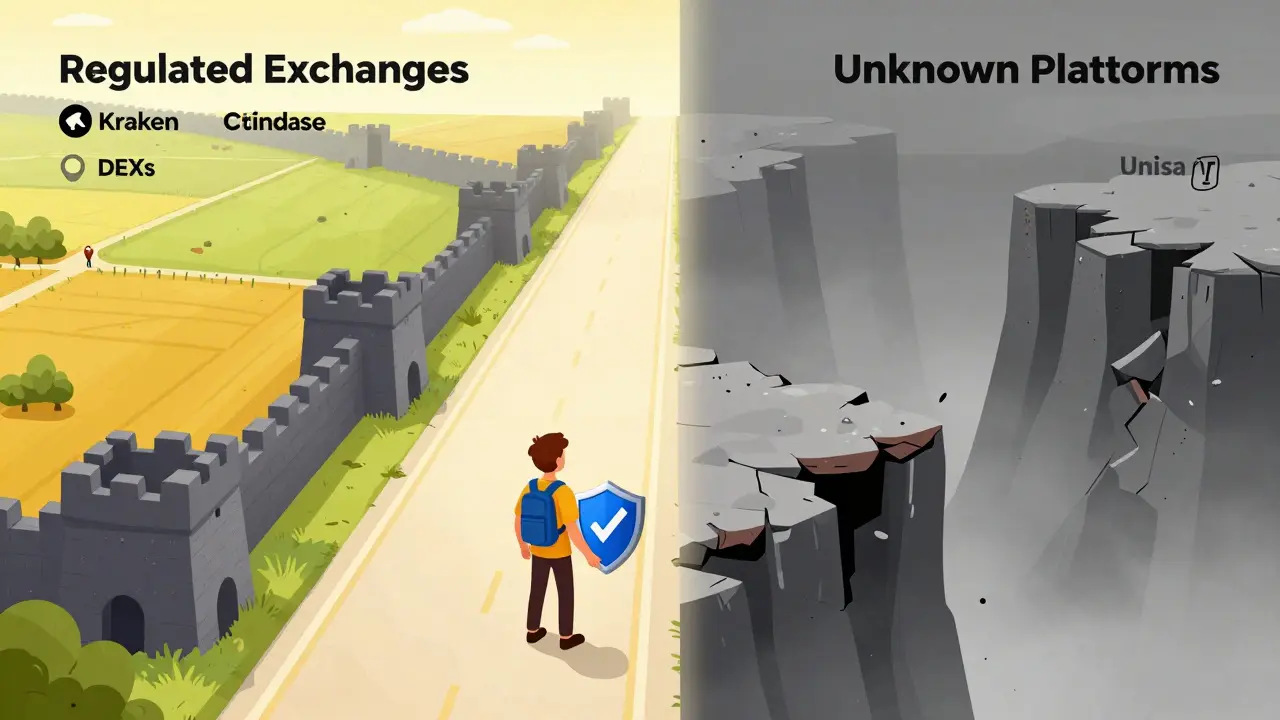
Instead of risking your capital on an unknown entity like Retro, consider using platforms that have proven their reliability over time. These exchanges offer better security, clearer fee structures, and legal protection.
| Feature | Trusted Exchanges (e.g., Kraken, Coinbase) | Unknown Platforms (e.g., Retro) |
|---|---|---|
| Regulatory Compliance | Licensed in multiple jurisdictions | Unknown or non-existent |
| Security Audits | Regular third-party audits | No public audit records |
| User Reviews | Thousands of verified reviews | Few or no independent reviews |
| Custody | Cold storage with insurance | Unclear custody model |
| Support | 24/7 dedicated support | Automated or non-responsive |
Kraken, a leading centralized cryptocurrency exchange known for its strong security history and regulatory compliance since 2011 is a great example of a platform that prioritizes user safety. Similarly, Coinbase, a publicly traded company offering insured custodial services and a wide range of cryptocurrencies provides peace of mind through its corporate accountability.
If you prefer lower fees, platforms like Binance, the largest crypto exchange by volume, offering competitive trading fees and advanced tools or OKX, a global exchange providing spot, futures, and DeFi integration with robust security measures are viable options. For those in the US, WEEX has emerged as a strong contender with low fees and a growing selection of assets.
Decentralized Options: Taking Control Back
If your interest in Retro stemmed from a desire to avoid centralization, you might be better off using Decentralized Exchanges (DEXs). Platforms like Uniswap, a leading decentralized exchange protocol allowing peer-to-peer token swaps without intermediaries or PancakeSwap, a popular DEX built on the BNB Chain offering automated market maker functionality allow you to trade directly from your own wallet.
With a DEX, you never give up custody of your funds. While you must manage your own private keys, you eliminate the risk of an exchange shutting down or freezing your account. This is a much safer alternative to trusting an unknown centralized entity.
Protecting Yourself: Best Practices for Crypto Trading
Regardless of which platform you choose, adopting strong security habits is essential. Here is how to keep your assets safe:
- Use Two-Factor Authentication (2FA): Never rely solely on SMS. Use an authenticator app like Google Authenticator or Authy.
- Enable Withdrawal Whitelists: Only allow withdrawals to pre-approved wallet addresses.
- Start Small: If you must try a new platform, deposit only what you can afford to lose. Test the withdrawal process immediately.
- Verify URLs: Phishing sites often mimic legitimate exchanges. Always bookmark the official site and double-check the URL.
- Keep Records: Save all transaction IDs, emails, and chat logs. These may be needed if you need to dispute a charge or report fraud.
Conclusion: Why Caution Wins
The allure of a "new" exchange like Retro is understandable. We all want an edge. But in crypto, the edge comes from knowledge and security, not from gambling on unverified platforms. The absence of information is itself information. It tells you that this platform has not been vetted, audited, or trusted by the broader community.
Stick to the giants or go fully decentralized. Your financial well-being depends on it. Don’t let curiosity cost you your savings.
Is Retro crypto exchange legit?
There is no verifiable evidence that Retro is a legitimate, regulated crypto exchange. It lacks regulatory licenses, security audits, and presence on major tracking sites, which are significant red flags for potential scams.
Can I trust unknown crypto exchanges?
Generally, no. Unknown exchanges pose a high risk of fraud, theft, or sudden shutdown. Always prioritize platforms with a proven track record, regulatory compliance, and positive user reviews.
What should I do if I already deposited money into Retro?
Attempt to withdraw your funds immediately. If withdrawals are blocked, contact your bank or payment provider to dispute the transaction. Report the platform to relevant financial authorities and cybersecurity agencies in your country.
Are there safe alternatives to Retro?
Yes. Trusted centralized exchanges include Kraken, Coinbase, Binance, and OKX. For decentralized trading, consider Uniswap or PancakeSwap, which allow you to retain control of your private keys.
How can I verify if a crypto exchange is regulated?
Check the exchange’s website for license numbers and verify them on the official websites of regulators like the FCA (UK), FinCEN (US), or ASIC (Australia). Legitimate exchanges proudly display this information.