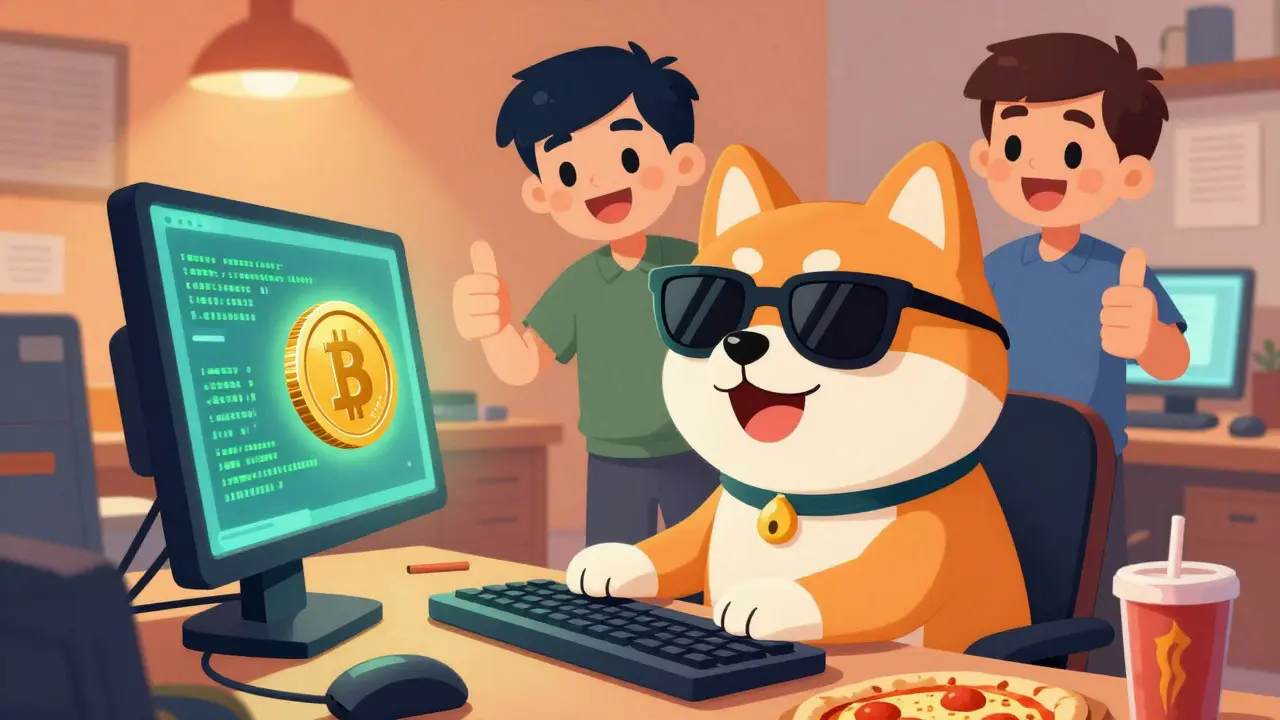
Picture this: It’s late 2013. The cryptocurrency world is serious, stiff, and obsessed with complex mathematics. Then, out of nowhere, a Shiba Inu dog wearing sunglasses appears on the blockchain. This wasn’t just a cute image; it was the birth of Dogecoin, the original memecoin that turned internet humor into a multi-billion dollar financial asset. Created as a joke, it became a cultural phenomenon. But how did a satirical project survive the brutal volatility of the crypto market to become the grandfather of all memecoins?
The Accidental Birth of a Crypto Icon
Dogecoin didn’t start in a boardroom or a tech incubator. It started with two friends who were tired of the pretentiousness surrounding digital currency. On December 6, 2013, software engineers Billy Markus from Portland, Oregon, and Jackson Palmer from Sydney, Australia, launched the coin. Their goal? To create a lighthearted alternative to Bitcoin that could appeal to a broader audience beyond hardcore tech geeks.
Palmer had been watching the rise of Bitcoin and noticed how intimidating it was for newcomers. He wanted something fun. He used the popular "Doge" meme-a Shiba Inu with broken English captions in Comic Sans-as the face of the project. Within days of launching, the website attracted over one million visitors. That speed of adoption was unheard of at the time. They weren’t selling a revolution; they were selling a vibe. And people loved it.
Here is the timeline of those first chaotic weeks:
- November 28, 2013: Palmer tweets about investing in Dogecoin as a joke.
- December 4, 2013: The domain dogecoin.com is registered.
- December 6, 2013: The genesis block is mined. The network goes live.
- January 2014: The first official price listing appears at roughly $0.0015.
This rapid launch proved that community engagement could drive value faster than any whitepaper ever could. Unlike projects that spent years planning, Dogecoin hit the ground running because it tapped into existing internet culture.
Under the Hood: More Than Just a Meme
You might think a joke coin has no real technology behind it. That’s a common misconception. Dogecoin is built on solid engineering principles, even if its branding is silly. Technically, Dogecoin is a fork of Luckycoin, which itself came from Litecoin, and ultimately traces back to Bitcoin’s codebase. However, it made some critical changes that set it apart.
The most important technical difference is the hashing algorithm. Bitcoin uses SHA-256, which requires specialized ASIC miners. Dogecoin uses Scrypt. At the time, Scrypt was designed to be more memory-intensive, making it harder for early ASICs to dominate and allowing regular computers to mine it. This kept the network decentralized in its early days.
Another massive difference is the supply model. Bitcoin has a hard cap of 21 million coins, making it deflationary. Dogecoin has an unlimited supply. Every year, approximately 5 billion new Dogecoins are added to the circulation. Why? Because the creators wanted it to be a currency for spending, not hoarding. If you hold Bitcoin, you hope it gets more scarce. If you hold Dogecoin, you’re encouraged to use it for transactions, tipping content creators, or buying coffee.
| Feature | Dogecoin | Bitcoin |
|---|---|---|
| Hashing Algorithm | Scrypt | SHA-256 |
| Block Time | 1 minute | 10 minutes |
| Total Supply | Unlimited (Inflationary) | 21 Million (Deflationary) |
| Mining Method | Merge-mined with Litecoin | Solo Mining |
| Primary Use Case | Transactions & Tipping | Store of Value |
Notice the block time difference. Dogecoin creates a block every minute, while Bitcoin takes ten. This means Dogecoin transactions confirm much faster. For everyday purchases, waiting ten minutes is annoying. Waiting one minute is acceptable. This design choice makes Dogecoin practical for micropayments, which Bitcoin struggles with due to high fees and slow speeds.
The Merge-Mining Lifeline
In late 2014, Dogecoin faced a potential crisis. As the network grew, securing it required more computing power. Small miners couldn’t keep up. To solve this, the team implemented merge-mining with Litecoin. This is a clever technical trick. Because both coins use the Scrypt algorithm, miners can mine Litecoin and Dogecoin simultaneously without extra cost. When a miner finds a Litecoin block, they also find a Dogecoin block.
This move was genius for two reasons. First, it secured the Dogecoin network using Litecoin’s substantial hash rate. Second, it created a symbiotic relationship between the two communities. Even today, this merge-mining setup ensures that Dogecoin remains secure against attacks, despite having a lower individual market cap than many other cryptocurrencies. It’s a perfect example of how technical cooperation can sustain a project long after the initial hype fades.
From Joke to Billion-Dollar Asset
If you looked at Dogecoin in 2014, you saw a novelty. By 2018, it was a legitimate financial contender. The turning point wasn’t just price action; it was cultural acceptance. The community began organizing charitable drives, raising millions for causes like funding a bobsled team for the Jamaican Olympic team and providing clean water in Africa. These actions showed that Dogecoin wasn’t just for speculation-it was for doing good.
Then came 2021. Elon Musk, Tesla’s CEO and a self-proclaimed "doge dad," started tweeting about Dogecoin. Suddenly, mainstream media couldn’t ignore it. Prices skyrocketed, reaching an all-time high of nearly $0.73 per coin. The market cap exceeded $100 billion. Critics called it a bubble. Supporters called it validation. Regardless of your stance, one thing was clear: Dogecoin had bridged the gap between niche internet culture and global finance.
Galaxy Digital, a major crypto asset manager, famously referred to Dogecoin as "The Most Honest Sh*tcoin." This wasn’t an insult. It meant that unlike many projects that promised revolutionary technology but delivered nothing, Dogecoin admitted it was a joke from day one. Its transparency built trust. People knew exactly what they were getting: a fun, community-driven currency with no hidden agendas.

Why Dogecoin Still Matters in 2026
Fast forward to August 2026. The memecoin space is crowded. Thousands of new meme tokens launch daily on Ethereum, Solana, and other chains. Many fail within hours. So why does Dogecoin still stand tall?
First, there is the network effect. Dogecoin has the highest brand recognition of any cryptocurrency outside of Bitcoin and Ethereum. You don’t need to explain what Dogecoin is to your grandparents. That familiarity reduces friction for new users entering the crypto space.
Second, the infrastructure is mature. Wallets, exchanges, and payment processors have integrated Dogecoin deeply over the last decade. It’s not an experiment anymore; it’s a utility. Businesses accept it. Merchants use it. It has proven resilience through multiple bear markets where newer, trendier coins vanished completely.
Finally, the community remains active. While other projects rely on venture capital funding, Dogecoin relies on its users. The non-profit Dogecoin Foundation continues to support development and trademark protection, ensuring no single entity controls the narrative. This decentralization of governance is rare in the crypto world and adds to its longevity.
Common Misconceptions About Dogecoin
Even after more than a decade, people get Dogecoin wrong. Let’s clear up three major myths:
- Myth: Dogecoin has no value because it’s infinite.
Truth: Value isn’t just about scarcity. Gold is scarce, but so is oil, yet we burn oil constantly. Dogecoin’s value comes from its utility as a medium of exchange. Its inflation rate is predictable and low compared to fiat currencies like the US Dollar, which often inflate by higher percentages annually. - Myth: Only Elon Musk controls Dogecoin.
Truth: Musk influences sentiment, but he doesn’t control the protocol. No one holds a supermajority of the supply. The network runs on code and consensus, not celebrity tweets. When Musk stops talking, Dogecoin still processes thousands of transactions daily. - Myth: It’s too risky to use for payments.
Truth: While prices fluctuate, the transaction fees remain consistently low. For small purchases, the risk is minimal. Plus, many merchants convert Dogecoin to fiat instantly, eliminating price risk for them.
Understanding these nuances helps you see Dogecoin not as a gamble, but as a unique social experiment that succeeded beyond expectations. It proved that money doesn’t have to be serious to be effective. Sometimes, it just needs to be fun.
Who actually created Dogecoin?
Dogecoin was created by Billy Markus, a software engineer from IBM, and Jackson Palmer, a marketing professional from Adobe. They launched it in December 2013 as a parody of Bitcoin, using the Doge meme as its mascot.
Is Dogecoin safe to store?
Yes, Dogecoin is considered safe due to its robust blockchain security and merge-mining relationship with Litecoin. Like any cryptocurrency, you should store it in a reputable hardware wallet or a trusted software wallet to protect against hacks.
Why does Dogecoin have an unlimited supply?
The creators designed Dogecoin with an unlimited supply to encourage spending rather than hoarding. With a fixed annual inflation rate of around 5 billion coins, it aims to function as a transactional currency similar to traditional fiat money, rather than a scarce store of value like Bitcoin.
How is Dogecoin different from other memecoins?
Unlike newer memecoins that are often launched on smart contract platforms like Ethereum or Solana, Dogecoin has its own independent blockchain. It was the first memecoin, giving it a decade-long head start in terms of brand recognition, liquidity, and infrastructure support.
Can you mine Dogecoin with a regular computer?
Not really anymore. In the early days, yes. Today, mining Dogecoin requires powerful ASIC miners. However, because it is merge-mined with Litecoin, most mining happens through Litecoin pools, making it difficult for individual users to mine profitably without significant hardware investment.
What is the role of the Dogecoin Foundation?
The Dogecoin Foundation is a non-profit organization established in 2014 to support the growth and sustainability of the Dogecoin ecosystem. It handles trademark protection, funds development projects, and promotes adoption among merchants and users worldwide.