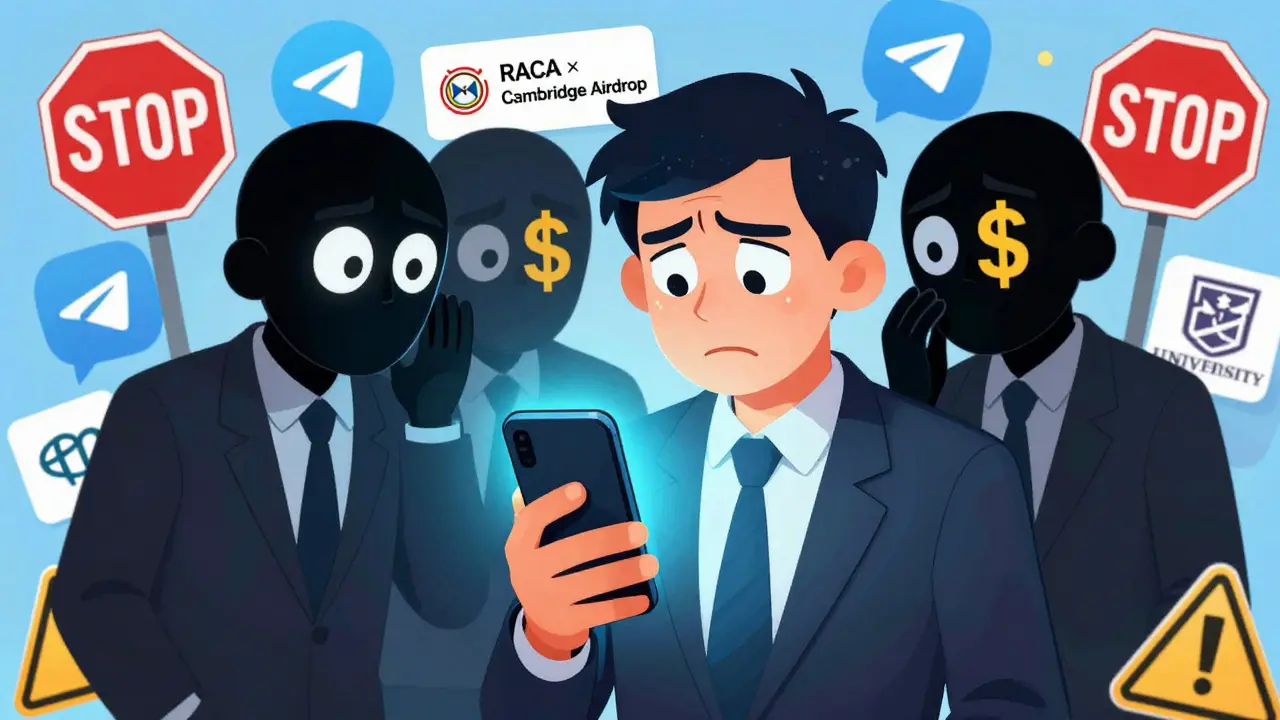
There’s no official RACA × Cambridge airdrop. Not yet. Not in any verified announcement from RACA’s team, their website, or their social channels. If you’ve seen a post, tweet, or Telegram group claiming otherwise, it’s likely a scam.
RACA, short for Radio Caca, is a real cryptocurrency project that launched in 2021 with a focus on the metaverse, NFTs, and gaming. It’s been around long enough to have a community, but it’s never partnered with Cambridge University or any official Cambridge entity. There’s no such thing as a "Cambridge airdrop" tied to RACA. Not in 2024. Not in 2025. Not in early 2026.
Why does this myth keep popping up? Because scammers know people are hungry for free crypto. Airdrops are real - and they pay out. In 2024, over $20 billion in value was distributed through verified token airdrops, according to CoinGecko. That’s real money. And scammers use that truth to trick you.
They’ll say: "Join the RACA × Cambridge airdrop. Sign up now. Connect your wallet. Pay a small gas fee to claim." That’s not how airdrops work. Legit airdrops don’t ask you to pay anything to receive tokens. They don’t need your private key. They don’t ask you to click shady links.
Here’s what actually happened with RACA in 2025: the team did run a small community reward campaign for users who held RACA tokens and participated in their metaverse events. But it was limited to their own ecosystem - no university, no Cambridge, no special partnership. The distribution was announced on their official blog and mirrored on their Twitter account. No third parties were involved.
How to spot a fake airdrop
If you’re looking for real airdrops, you need to know what to ignore. Here’s how to tell the difference:
- Real airdrops are announced on the project’s official website and verified social media accounts. RACA’s official site is radio-caca.com. Their Twitter is @RadioCacaOfficial. Anything else is suspect.
- Real airdrops never ask for your private key, seed phrase, or a payment to "unlock" your tokens.
- Real airdrops use smart contracts that auto-distribute tokens to wallets that meet the criteria. You don’t need to "claim" them manually unless it’s a multi-step process - and even then, it’s free.
- Real airdrops have clear timelines: snapshot dates, distribution dates, vesting schedules. If the details are vague or missing, walk away.
There’s a reason the phrase "Cambridge airdrop" keeps showing up in scam posts. Cambridge University is a globally trusted name. Scammers know that attaching it to a crypto project makes it feel more legitimate. But Cambridge doesn’t run crypto airdrops. It doesn’t endorse tokens. It doesn’t partner with blockchain startups to give away free money.
What RACA actually did in 2025
RACA’s team focused on expanding their metaverse platform, RACA Metaverse, and launching new NFT collections tied to in-game items. They did reward long-term holders with exclusive NFTs and early access to new features. That’s not an airdrop - it’s a loyalty program.
They also ran a referral program where users could earn RACA tokens by inviting others to join their ecosystem. That’s the only way to earn RACA tokens legitimately right now - by using their platform, not by signing up for fake campaigns.
Tokenomics for RACA (as of January 2026):
- Total supply: 1,000,000,000,000 RACA
- Current circulating supply: ~450 billion RACA
- Trading pairs: RACA/USDT on PancakeSwap, RACA/BUSD on MEXC
- Market cap (as of Jan 2, 2026): ~$120 million
No official airdrop was announced in Q4 2025. No future airdrop has been confirmed for 2026. If one is planned, it will be announced on their official channels - not on Reddit, not on TikTok, not on a random Telegram group.
Where to find real RACA updates
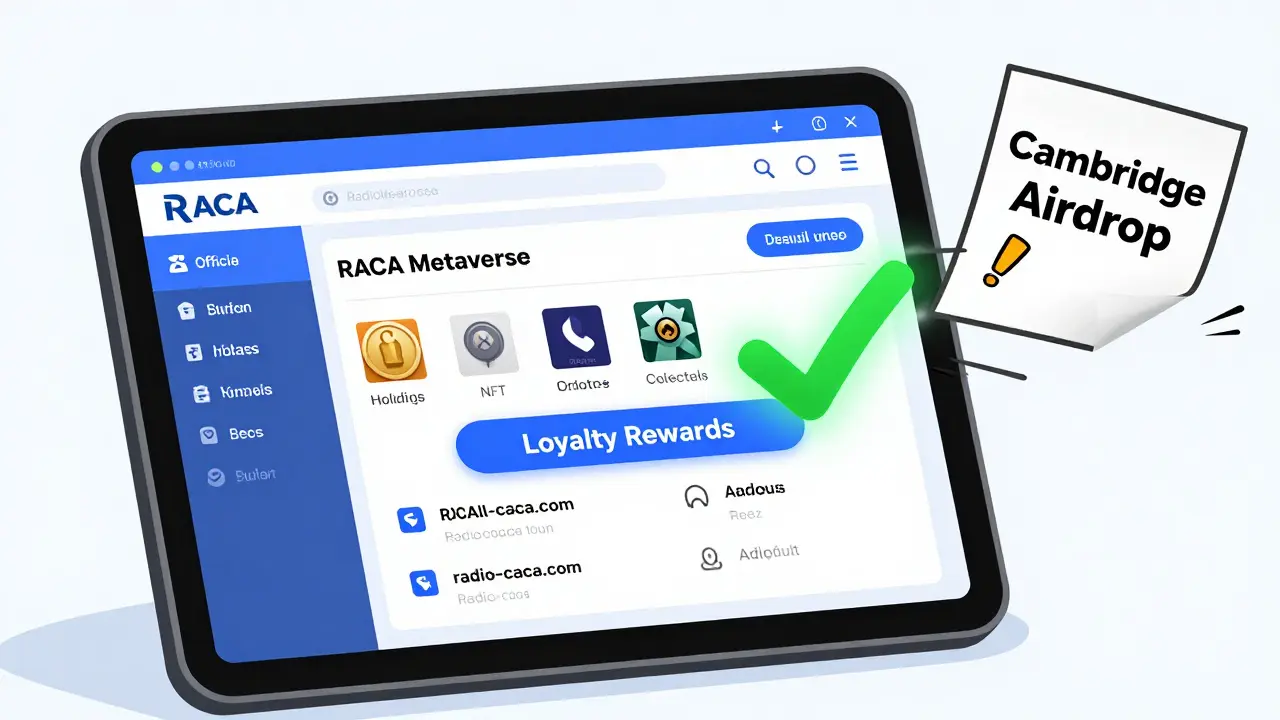
If you want to stay updated on RACA’s actual plans, here are the only places you should check:
- Official website: radio-caca.com - look for the "News" or "Announcements" section.
- Twitter: @RadioCacaOfficial - this is their primary communication channel.
- Discord: The official RACA Discord server (linked on their website) - no third-party servers are authorized.
- Medium: RACA’s Medium blog posts are signed by team members and include verifiable signatures.
Any other source - even if it looks professional - is not reliable. Copy-paste articles from AirdropBee.com or CoinMarketCap’s community section often repeat rumors as facts. Don’t trust them.
What to do if you already clicked a fake link
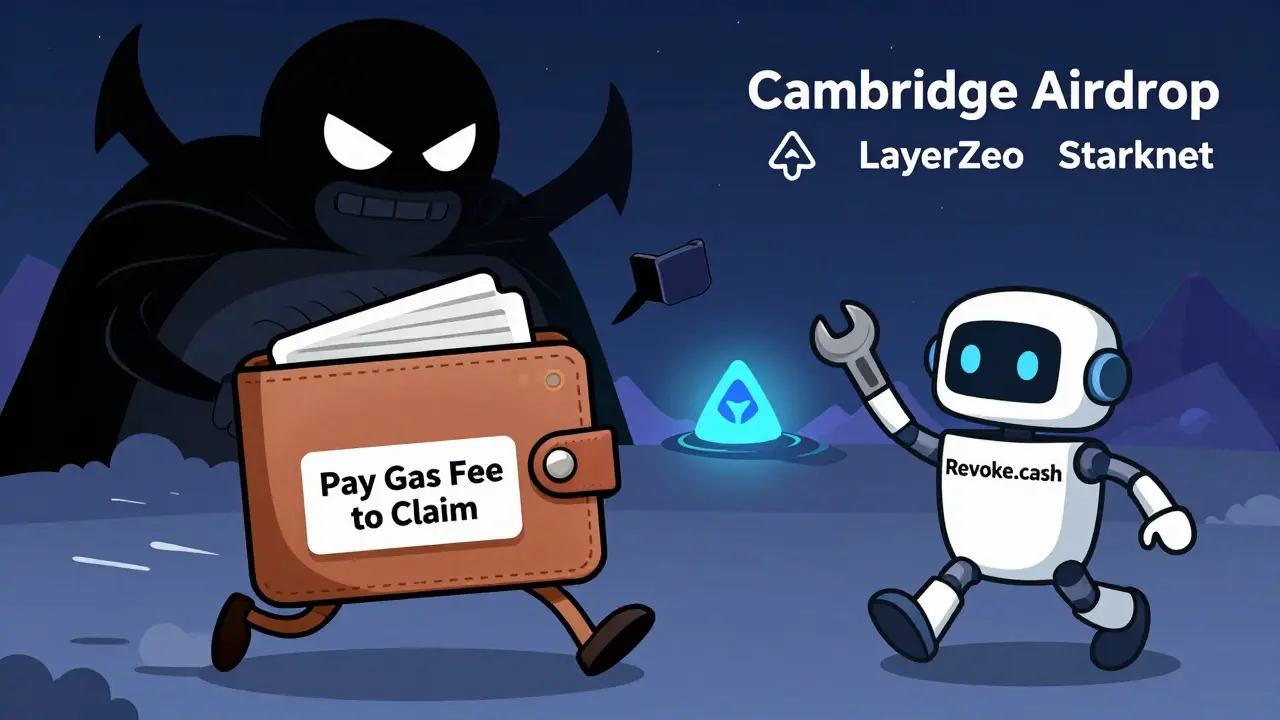
If you connected your wallet to a fake RACA × Cambridge airdrop site, act fast:
- Disconnect all permissions from that wallet using revoke.cash.
- Move any remaining assets to a new wallet - don’t just send them to another address on the same wallet.
- Never use that wallet again for anything crypto-related.
- Report the scam to the platform where you found it (Telegram, Twitter, etc.).
Once your private key is exposed, or your wallet is linked to a malicious contract, your funds are at risk. No amount of "claiming" will get them back.
Alternatives to fake RACA airdrops
If you’re looking for real crypto airdrops in early 2026, here are a few legitimate ones you can still qualify for:
- LayerZero - ongoing airdrop for users who bridged assets across chains before December 2025.
- Worldcoin - if you’ve done the iris scan, you may be eligible for future distributions.
- Starknet - airdrops still being distributed to early users and liquidity providers.
- Blur - rewards for NFT traders on the platform.
These projects have clear documentation, public smart contracts, and verifiable eligibility criteria. They don’t need to fake a university name to seem credible.
Don’t chase myths. Don’t risk your wallet for a rumor. The real airdrops don’t need to shout - they just show up in your wallet when you’ve earned them.
surendra meena
January 5, 2026 AT 02:46Alex Strachan
January 5, 2026 AT 12:42Brandon Woodard
January 6, 2026 AT 22:27Daniel Verreault
January 8, 2026 AT 08:09prashant choudhari
January 8, 2026 AT 17:27Abhisekh Chakraborty
January 10, 2026 AT 03:49dina amanda
January 11, 2026 AT 06:46Gavin Hill
January 12, 2026 AT 05:55SUMIT RAI
January 12, 2026 AT 08:53Jordan Fowles
January 13, 2026 AT 00:17Bianca Martins
January 14, 2026 AT 18:06