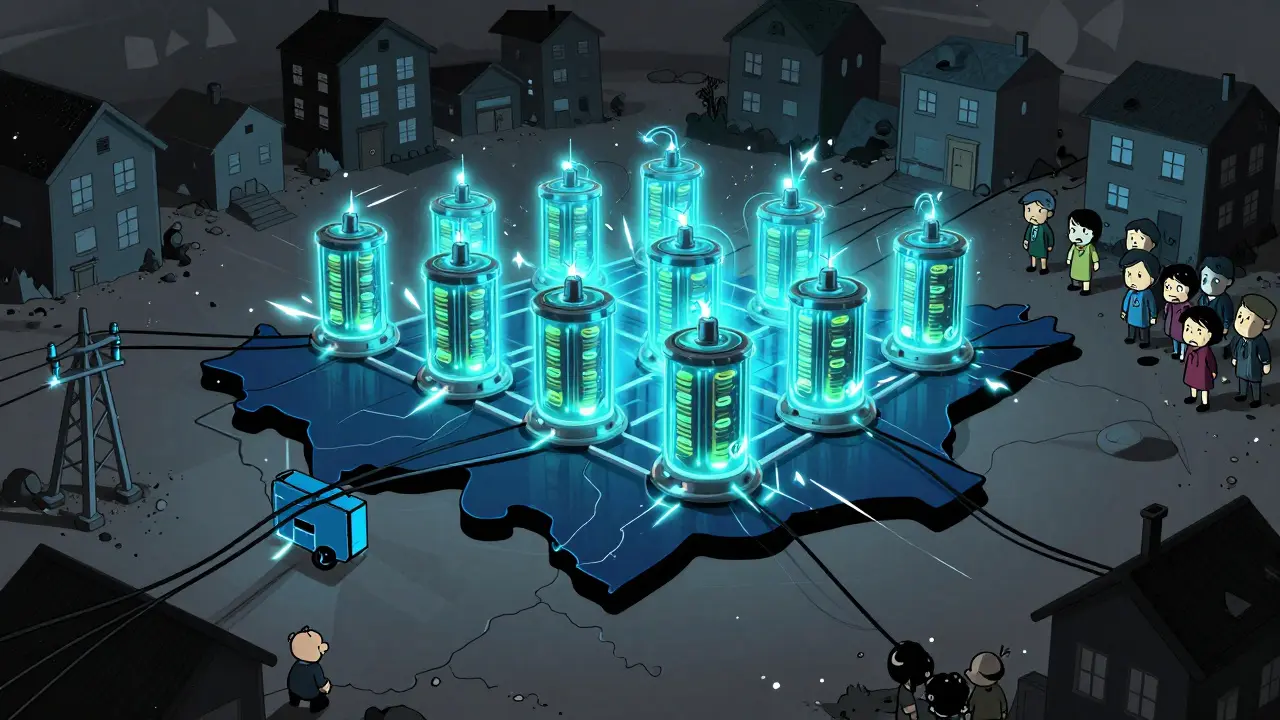
Imagine a country that went from being the world’s capital of Bitcoin mining to enforcing some of the strictest regulations on the planet-all because its power grid nearly collapsed. That is exactly what happened in Kazakhstan, a nation where the rush for cheap electricity turned into a national security crisis. If you are looking to mine cryptocurrency there today, the days of plugging in rigs and ignoring the rules are over. The government has completely rewritten the playbook since the energy infrastructure reached breaking point.
In this guide, we will break down how the recent energy crisis reshaped the legal landscape for miners. We will look at the specific licenses you need, the new tax obligations, and why the Astana International Financial Centre (AIFC) is now the only place you can legally trade your earnings. You will also learn about the massive crackdown on illegal operations and what it means for legitimate businesses trying to survive in a regulated environment.
The Energy Crisis That Forced Change
To understand the current restrictions, you have to look back at why they exist. In 2019, Kazakhstan welcomed crypto miners with open arms. Electricity was cheap, and the government saw an opportunity to attract foreign investment. By 2021, the country held the largest share of global Bitcoin hash power. But this rapid growth came at a steep price.
The national electrical infrastructure simply could not handle the load. As mining farms expanded, they began consuming electricity equivalent to entire cities. Residential areas faced blackouts. Hospitals struggled with power stability. Strategically important industries were left without reliable energy. The situation became so critical that the government had to intervene to prevent total grid failure.
The turning point came when authorities realized that illegal mining operations were not just using excess power-they were stealing it. In August 2025, a shocking case emerged in East Kazakhstan Oblast. Authorities dismantled a massive illegal mining network that consumed over 50 megawatt-hours of electricity. To put that in perspective, that single operation used enough power to supply a city of 50,000 to 70,000 residents.
This wasn’t just a technical glitch; it was a systemic theft. Corrupt employees at utility companies diverted electricity intended for local populations and social facilities. The value of the stolen energy was approximately $16 million (9 billion tenge). This incident highlighted the urgent need for stricter oversight and marked the beginning of a harsher regulatory era.
Who Controls Crypto Mining Now?
If you want to operate legally in Kazakhstan, you cannot deal with just one agency. The regulatory framework involves multiple governmental bodies working together to monitor every aspect of the industry. Understanding who does what is crucial for compliance.
- National Bank of Kazakhstan (NBK): They oversee the broader financial implications and digital asset regulation strategies.
- Astana Financial Services Authority (AFSA): Located within the Astana International Financial Centre (AIFC), they manage the licensing and trading requirements for crypto assets.
- Ministry of Digital Development, Innovation and Aerospace Industry (MDDIAI): They handle the technological aspects and ensure alignment with national digital goals.
- Financial Monitoring Agency (FMA): They focus on anti-money laundering (AML) compliance and track suspicious transactions.
- Ministry of Energy: They control the distribution of electricity to mining farms through a state-run platform.
As of 2025, the government has issued 84 licenses to mining operations. They have accredited five mining pools and registered 415,000 mining machines as of 2023. These numbers show that while the sector is still active, it is tightly controlled. Every machine must be accounted for, and every operator must be licensed.
New Licensing and Trading Rules
The biggest change for miners is not just getting permission to run hardware-it is what you do with the money you earn. The government has mandated that all trading activities must go through the AIFC platform. This centralizes oversight and ensures that funds are traceable.
Here is the rule you need to know: As of 2025, miners are required to sell 75% of their cryptocurrency assets on AIFC platforms. This is an increase from the previous requirement of 50% in 2024. The government wants to ensure that the majority of crypto revenue enters the formal financial system, boosting transparency and tax collection.
Additionally, mining operations face a 15% tax rate on their profits. This applies to both domestic and foreign investors. While 15% might seem reasonable compared to other jurisdictions, the complexity of reporting and the strict enforcement make compliance non-negotiable. Failure to adhere to these rules results in severe penalties, including asset forfeiture and criminal prosecution.
| Requirement | Detail | Enforcement Body |
|---|---|---|
| Licensing | Mandatory license from AFSA/AIFC | Astana Financial Services Authority |
| Trading Platform | All trades must occur on AIFC platforms | AIFC |
| Sale Mandate | 75% of mined crypto must be sold on AIFC | Financial Monitoring Agency |
| Tax Rate | 15% on operational profits | Tax Committee / FMA |
| Electricity Purchase | Only via state-run Ministry of Energy platform | Ministry of Energy |
Cracking Down on Illegal Operations
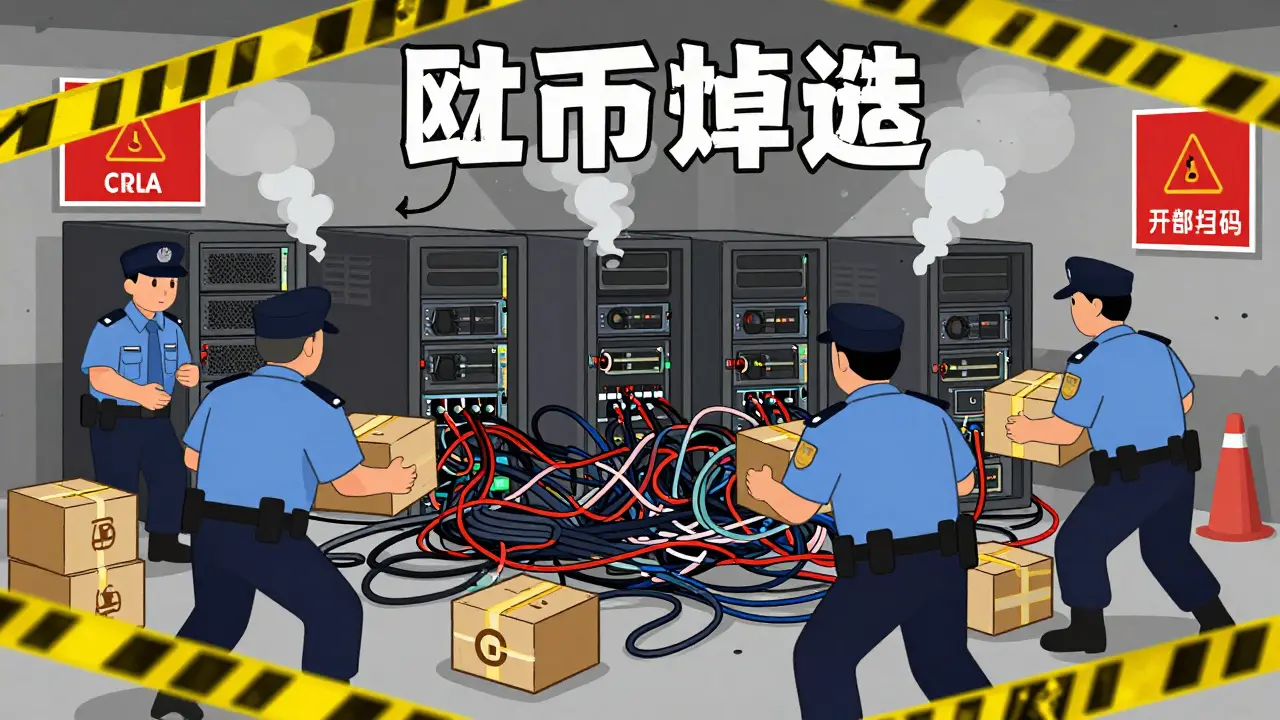
The government’s approach to illegal mining is aggressive and systematic. By 2024, authorities had closed 36 unregulated cryptocurrency exchanges and confiscated 4,000 mining devices. This was not a minor cleanup; it was a signal that the state would not tolerate underground operations.
The East Kazakhstan Oblast case mentioned earlier serves as a warning. Prosecutors identified sophisticated schemes where illicit profits funded high-end real estate and vehicle purchases. In response, the National Security Committee (KNB) and the Financial Monitoring Agency conducted coordinated raids. They seized luxury apartments in the capital and multiple vehicles bought with stolen electricity profits.
For legitimate miners, this creates a safer competitive environment. You are no longer competing against operators who pay zero taxes and steal power. However, it also raises the barrier to entry. You must navigate complex registration processes with the newly established National Association of Blockchain and Data Center Industry in Kazakhstan. This association monitors energy consumption and environmental impact, ensuring that your operations align with national sustainability goals.

Electricity Access and the 70/30 Program
Access to power is the most critical resource for any miner, and Kazakhstan has tightened control over it. Mining farms can no longer negotiate directly with local utilities. Instead, they must purchase electricity through a state-run platform operated by the Ministry of Energy. There is a strict limit: purchases are capped at one megawatt-hour per transaction. This prevents large-scale hoarding and ensures fair distribution.
In 2024, the government introduced temporary restrictions on electricity supply to mining farms during peak consumption periods. This measure stabilized the national grid but created uncertainty for miners relying on consistent uptime. To address this, officials have proposed a long-term solution known as the 70/30 energy program.
Under this proposal, foreign investors would fund upgrades to thermal power plants. In return, 70% of the generated capacity would go to the national grid to support residential and industrial needs, while 30% would be allocated to crypto miners. Tuleushin, a representative of the Energy Minister, positioned this as a way for miners to contribute to economic modernization rather than drain resources. It transforms miners from a burden into partners in infrastructure development.
There is also a growing emphasis on renewable energy. Solar and wind projects are being initiated to support crypto mining energy needs. This shift helps Kazakhstan meet its environmental commitments while providing a more stable power source for data centers. If you are planning a new facility, integrating renewable energy sources may become a strategic advantage in securing licenses and favorable terms.
Regional Trends and Future Outlook
Kazakhstan’s regulatory evolution mirrors trends in neighboring countries. Russia, for example, has launched a national registry for mining equipment and pledged tougher enforcement against underground operators. France has explored redirecting unused nuclear power to regulated Bitcoin mining facilities. These examples show that the global consensus is shifting toward regulated, transparent mining rather than wild-west expansion.
Despite the tightening rules, Kazakhstan remains a viable destination for legitimate operations. Major global cryptocurrency mining companies have established presence in the country, leveraging the clear regulatory framework and resource availability. They contribute to local economic development through job creation and technological advancement.
Legislators like Ekaterina Smyshlyaeva have called for greater control over licensed exchanges and the decriminalization of crypto trading for users of licensed platforms. A proposed project would mandate miners to store portions of their assets on registered exchanges to increase sector size and oversight. This suggests that the government views crypto mining as a permanent part of the economy, provided it operates within strict boundaries.
The trajectory indicates continued refinement of laws and enforcement mechanisms. Innovation is encouraged, but only within a cage of compliance. Non-compliance carries significant legal risks, including asset forfeiture and criminal charges. For serious investors, the key is to build relationships with the right agencies, secure proper licensing, and integrate fully with the AIFC ecosystem.
Is cryptocurrency mining legal in Kazakhstan in 2026?
Yes, cryptocurrency mining is legal in Kazakhstan, but it is heavily regulated. You must obtain a license from the Astana Financial Services Authority (AFSA) and register your equipment. Unlicensed mining is considered illegal and subject to confiscation and criminal prosecution.
What percentage of mined crypto must be sold on AIFC platforms?
As of 2025, miners are required to sell 75% of their cryptocurrency assets on AIFC platforms. This increased from the 50% requirement that was in place in 2024. The goal is to ensure transparency and bring more revenue into the formal financial system.
How much tax do crypto miners pay in Kazakhstan?
Mining operations face a 15% tax rate on their profits. This applies to both domestic and foreign investors. Compliance with tax reporting is strictly enforced by the Financial Monitoring Agency and the Tax Committee.
Can I buy electricity directly from local utilities for my mining farm?
No. Mining farms must purchase electricity exclusively through a state-run platform operated by the Ministry of Energy. Purchases are limited to one megawatt-hour per transaction to prevent hoarding and ensure fair distribution across the grid.
What happens if I am caught running an unlicensed mining operation?
Authorities will confiscate your mining equipment and shut down your operation. You may also face criminal prosecution for electricity theft and tax evasion. In severe cases, such as the East Kazakhstan Oblast raid, assets purchased with illicit profits, including real estate and vehicles, can be seized.
What is the 70/30 energy program?
The 70/30 energy program is a proposal where foreign investors fund upgrades to thermal power plants. In exchange, 70% of the generated capacity goes to the national grid for public use, and 30% is allocated to crypto miners. This aims to balance grid stability with mining demand.