Unverified Crypto Token: What It Is and Why You Should Avoid It
When you see a new crypto token with no exchange listings, no audit reports, and no clear team behind it, you’re likely dealing with an unverified crypto token, a digital asset with no public proof of legitimacy, often created to trick investors into buying before it vanishes. Also known as a shill coin, it’s not just risky—it’s often designed to disappear after collecting funds. These tokens don’t get listed on reputable exchanges like Coinbase or Binance. They show up on obscure platforms with names like Piyasa, Coinopts, or AfroDex—platforms that don’t exist in any official database, have zero user reviews, and no regulatory licenses.
Most fake crypto exchange, a website pretending to be a legitimate trading platform but with no real infrastructure, security, or customer support behind these tokens are built in days, copied from real sites, and hosted on cheap servers. They use flashy websites, fake testimonials, and promises of 100x returns to lure people in. The crypto scam, a deliberate deception where users are tricked into sending crypto to a wallet controlled by criminals usually follows the same pattern: airdrops that require you to pay gas fees, tokens that vanish after launch, or fake team members with stolen LinkedIn profiles. Look at the posts here—MakiSwap, Piyasa, AfroDex, Coinopts—all had zero trading volume, no proof of reserves, and no real users. They weren’t just inactive; they were traps.
Even when a project claims to be a DeFi platform or a gaming token, if you can’t find a whitepaper, a GitHub repo, or a verified Twitter account with real engagement, it’s a red flag. The unregulated crypto platform, a service operating without oversight from any financial authority, making it impossible to recover funds if things go wrong doesn’t need to be evil to be dangerous—it just needs to be invisible. When Hacken’s HAI token crashed 99% after a breach, scammers didn’t fix it—they started fake airdrops pretending to be Hacken. When Mars Ecosystem shut down, copycats used the same name to run new scams. The pattern is clear: no verification = no safety.
You don’t need to be a crypto expert to avoid these traps. Check if the token is listed on CoinGecko or CoinMarketCap. Look for independent security audits from firms like CertiK or Hacken. If the team is anonymous, if the website looks like a template, or if the only way to buy is through a new, unknown DEX—you’re being targeted. The unverified crypto token isn’t a gamble—it’s a rigged game. The posts below show real cases: dead exchanges, fake airdrops, and tokens that never had a chance. Learn from them. Don’t be the next person who loses money because they trusted something that wasn’t real.
4
Dec
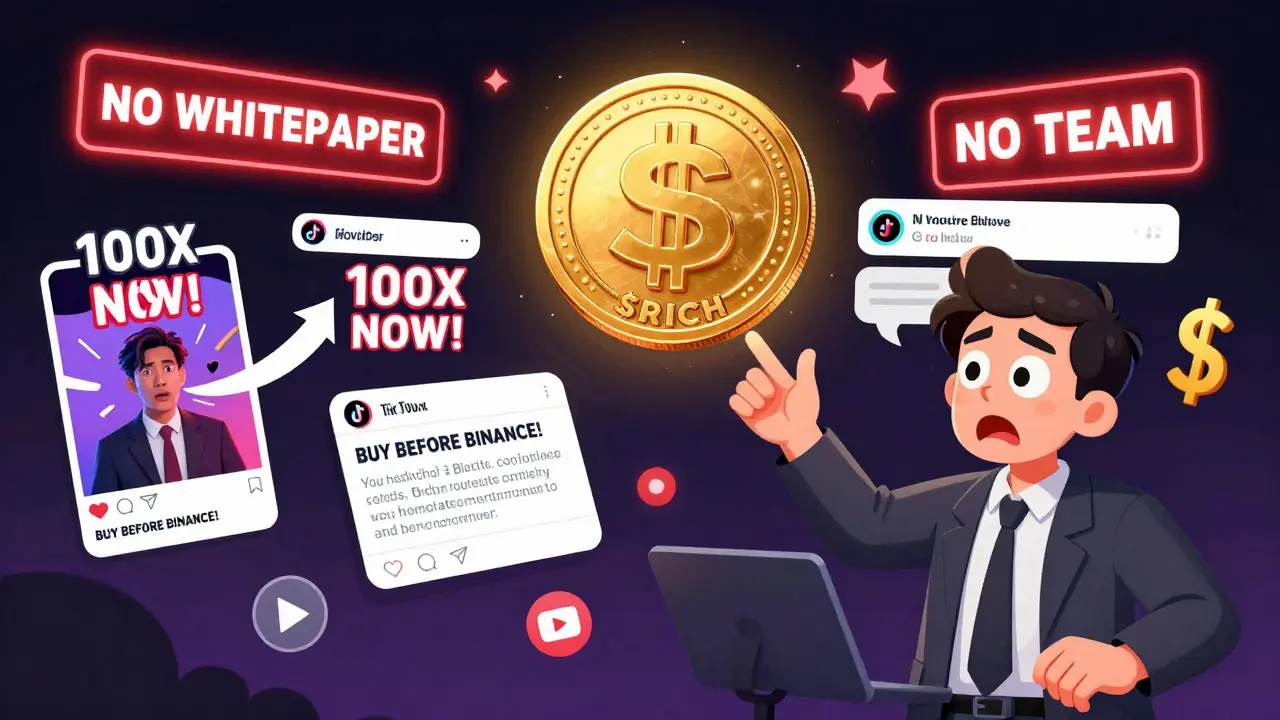
$RICH is not a real cryptocurrency. No credible sources list it, no exchanges trade it, and there's no team or whitepaper behind it. It's likely a scam or meme coin designed to trap unsuspecting investors.
Read More