NFT Provenance: Track Real Ownership and History on the Blockchain
When you buy an NFT, you’re not just buying a picture—you’re buying a NFT provenance, the complete, tamper-proof record of who created it and every person who’s owned it since. Also known as blockchain ownership history, it’s the only way to prove an NFT isn’t a copy, a fake, or stolen. Without it, you’re guessing. With it, you know.
NFT provenance isn’t just a fancy term—it’s the backbone of trust in digital collectibles. Every time an NFT is sold, minted, or transferred, that action gets locked into the blockchain as a permanent, public entry. This means you can check exactly when a Bored Ape was first created, who bought it for $100,000, and who owns it today—all without trusting a single company or person. It’s like having a car’s full service history, but for a digital image. And just like you wouldn’t buy a used car without checking its VIN, you shouldn’t buy an NFT without checking its provenance.
This record also connects to other key concepts. NFT authenticity, the guarantee that an NFT is the original version and not a copy. Also known as originality verification, it relies entirely on provenance data. If the first owner was the artist and every transfer matches known wallets, it’s authentic. If the NFT popped up out of nowhere with no clear origin, it’s risky. Then there’s digital asset verification, the process of confirming an NFT’s legitimacy using on-chain data. Also known as on-chain validation, it’s how tools like OpenSea and Blur check if an NFT is safe to trade. And don’t forget NFT history, the full timeline of sales, transfers, and metadata changes tied to a single token. Also known as ownership trail, it’s what lets collectors spot rare editions or track the rise of a project. These aren’t separate things—they’re all parts of the same system. Provenance is the engine. Authenticity is the result. Verification is the tool. History is the story.
What you’ll find in the posts below aren’t just random NFT guides. They’re real-world checks on what works and what doesn’t. You’ll see how some NFTs have clean, verifiable chains from creator to current owner—and others have gaps, dead wallets, or suspicious transfers that scream fraud. You’ll learn how to use free tools to trace ownership yourself, spot red flags before you spend money, and understand why some NFTs hold value while others vanish overnight. No fluff. No hype. Just how to use blockchain data to protect yourself in a space full of fakes.
12
Nov
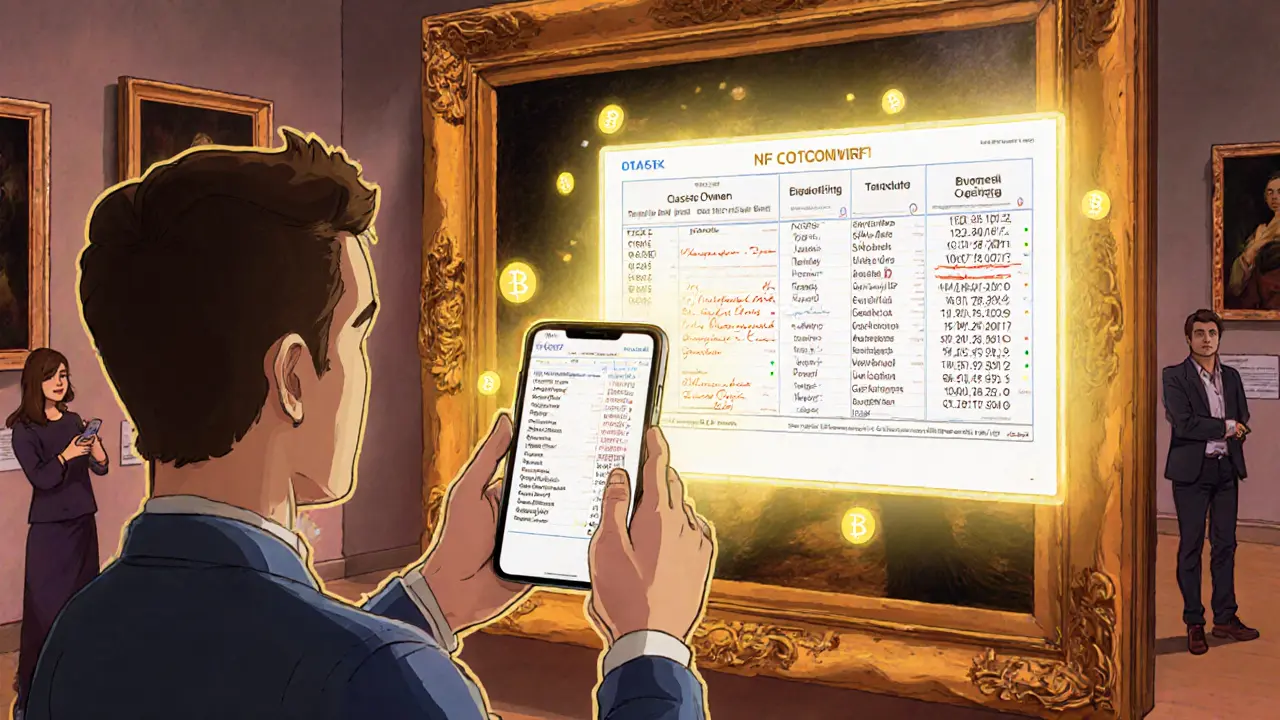
NFTs are revolutionizing how digital and physical art are authenticated, using blockchain to create tamper-proof ownership records. Learn how QR codes, NFC chips, and digital watermarks stop forgery and give collectors confidence.
Read More