CEX vs DEX: How Geography Blocks Your Crypto Trading
CEXs block users based on location due to regulations, while DEXs let you trade globally without ID - but come with big risks. Learn how geography shapes your crypto access.
Read MoreWhen you buy Bitcoin or Ethereum on a platform like Binance or Coinbase, you're using a centralized exchange, a company-controlled platform that holds your crypto and handles trades between buyers and sellers. Also known as CEX, it’s the most popular way to enter crypto—but it’s also where most losses happen if you don’t know what you’re doing.
Unlike decentralized exchanges where you control your keys, a centralized exchange, acts like a bank for crypto: it stores your coins, sets the prices, and decides if you can withdraw. This makes it easy for beginners, but it also means you’re trusting someone else with your money. If the exchange gets hacked, freezes withdrawals, or gets shut down by regulators—like what happened with FTX or the crypto bans in Colombia—you lose access. That’s why custodial wallet, the type of account these platforms give you is risky if you’re holding large amounts long-term.
Not all centralized exchanges are the same. Some, like GalaxyOne, let you trade both stocks and crypto in one app, while others, like KickEX or KoinBay, have shaky track records, blocked withdrawals, or no real trading volume. The best ones follow strict rules: they’re licensed by governments like Germany’s BaFin, report to agencies like FinCEN, and use cold storage to protect funds. But even then, you’re still relying on their honesty. That’s why knowing the difference between a regulated exchange and a sketchy one matters more than ever—especially with OFAC sanctions blocking Iranian traders or North Korean hackers targeting weak platforms.
Most people start with a centralized exchange because it’s simple: you link your bank account, buy crypto with a credit card, and trade in minutes. That’s called a fiat on-ramp, a bridge between traditional money and crypto. But if you’re in a country where banks ban crypto—like China or Colombia—you’ll need to find workarounds. Some users turn to P2P platforms or non-custodial wallets, but those aren’t always easy for newcomers. That’s why understanding how centralized exchanges fit into the bigger picture is key: they’re fast, familiar, and dangerous if you treat them like a vault.
What you’ll find below are real reviews of exchanges people actually use—some trustworthy, some risky. You’ll see how GalaxyOne blends stocks and crypto, why Betconix is more casino than exchange, and how ZG.com and Excalibur stack up in security and fees. You’ll also learn how regulations like MiCA and the Travel Rule force exchanges to track your trades, and why that’s not always bad. This isn’t a list of top 10 platforms. It’s a guide to spotting what’s real, what’s fake, and where your money is truly safe.
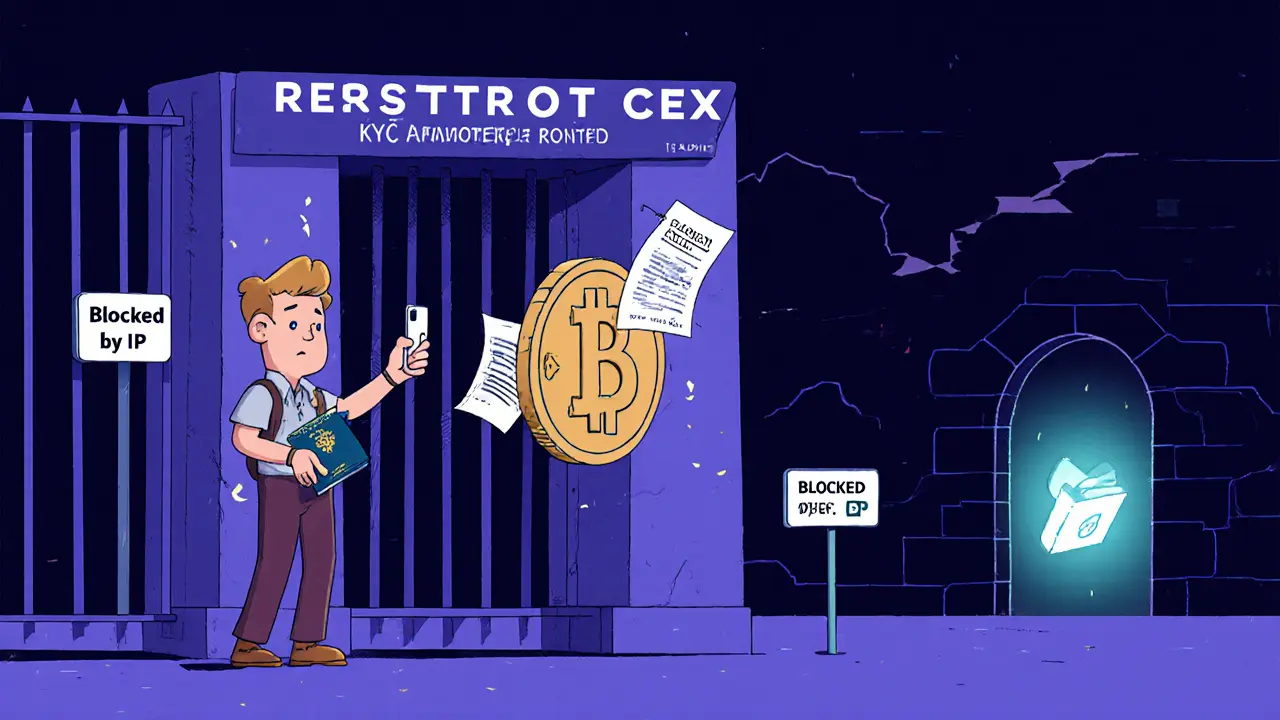
CEXs block users based on location due to regulations, while DEXs let you trade globally without ID - but come with big risks. Learn how geography shapes your crypto access.
Read More