Blockchain Claims Verification: How to Spot Fake Claims and Protect Your Crypto
When someone says a crypto project is blockchain claims verification, the process of checking if a token, airdrop, or transaction is real by examining public blockchain records. Also known as on-chain validation, it’s the only way to tell if a claim is legit or just a trap. Most crypto losses don’t come from hacking—they come from believing fake promises. You see a tweet: "Free $HAI tokens!" Or a Discord post: "RAI Finance is giving away SOFI tokens to the first 1,000 users!" But if you don’t check the blockchain, you’re just handing over your crypto to a scammer.
Real blockchain claims verification means looking at the actual transaction history on the chain—not trusting a website, a Discord bot, or a YouTube ad. For example, the HAI token airdrop never happened. Hacken got hacked. The token crashed. But scammers kept pushing fake airdrop links. People lost money because they didn’t check the token contract address or verify if the airdrop was listed on the official project page. Same with DSG token airdrop—it wasn’t free. You had to spend USDT to vote for it. Zero trading volume. Zero value. All of this could’ve been avoided with basic on-chain data checks.
Good verification doesn’t need fancy tools. Start with Etherscan or BscScan. Look at the token contract. Is it verified? Are there real transactions? Is the team address moving funds? Check if the airdrop is listed on the project’s official website—not a copycat site. If the claim sounds too good to be true, it is. And if no one else is talking about it on trusted forums like Reddit or CoinMarketCap, that’s a red flag. You don’t need to be a coder. You just need to know where to look.
Blockchain analytics tools help, but they’re not magic. They just make it easier to see patterns—like a token with zero holders, or a wallet that sent out 10,000 fake airdrops in one hour. That’s not innovation. That’s fraud. The same way you’d check a business license before handing over cash, you need to verify blockchain claims before sending crypto. The difference? On-chain records are public, permanent, and impossible to fake if you know how to read them.
Below, you’ll find real cases where people got burned—because they skipped verification. You’ll see how fake exchanges like Piyasa and AfroDex tricked users, how dead tokens like MakiSwap still get promoted, and how even big names like The Graph have legitimate, simple ways to claim tokens without risking your funds. This isn’t theory. It’s what happened. And it can happen to you—if you don’t check.
25
Nov
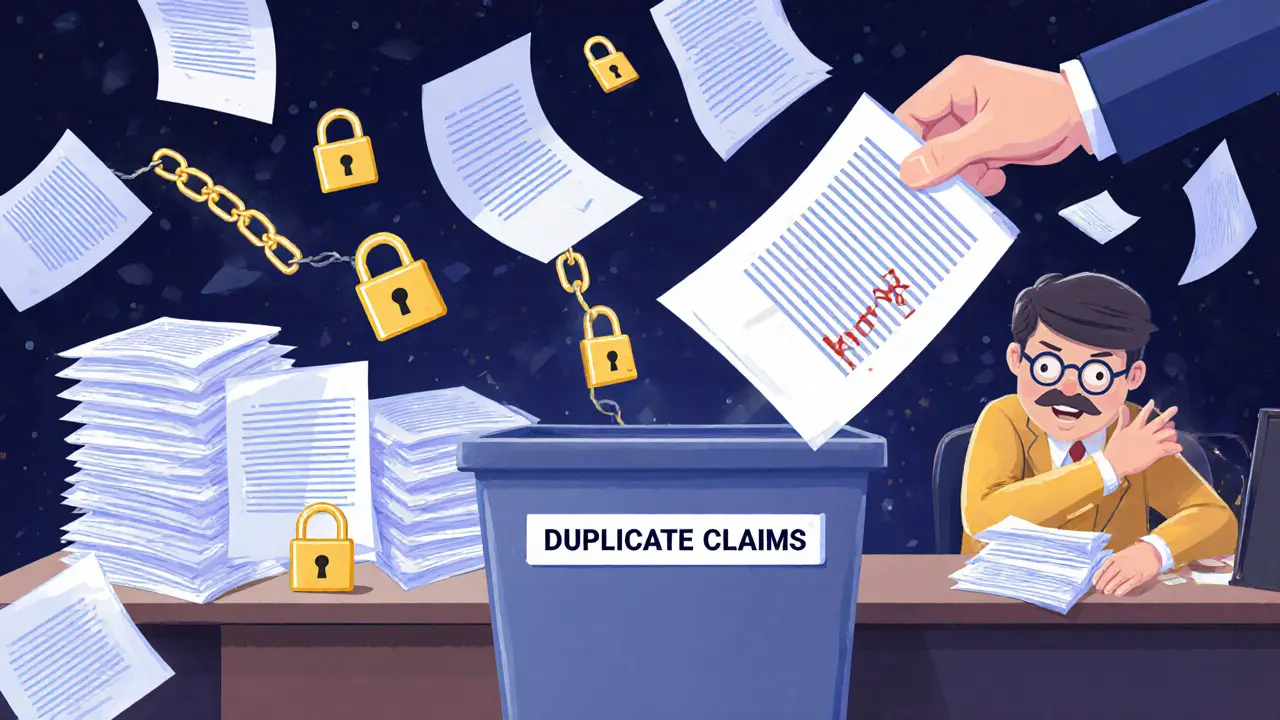
Blockchain is cutting insurance fraud by creating tamper-proof records, automating claims, and enabling cross-insurer verification. Learn how it works, where it's succeeding, and why it's not a silver bullet.
Read More