Remittance Cost Calculator
Send Money to the U.S. from Nigeria
Calculate how much you save by using P2P crypto instead of traditional services
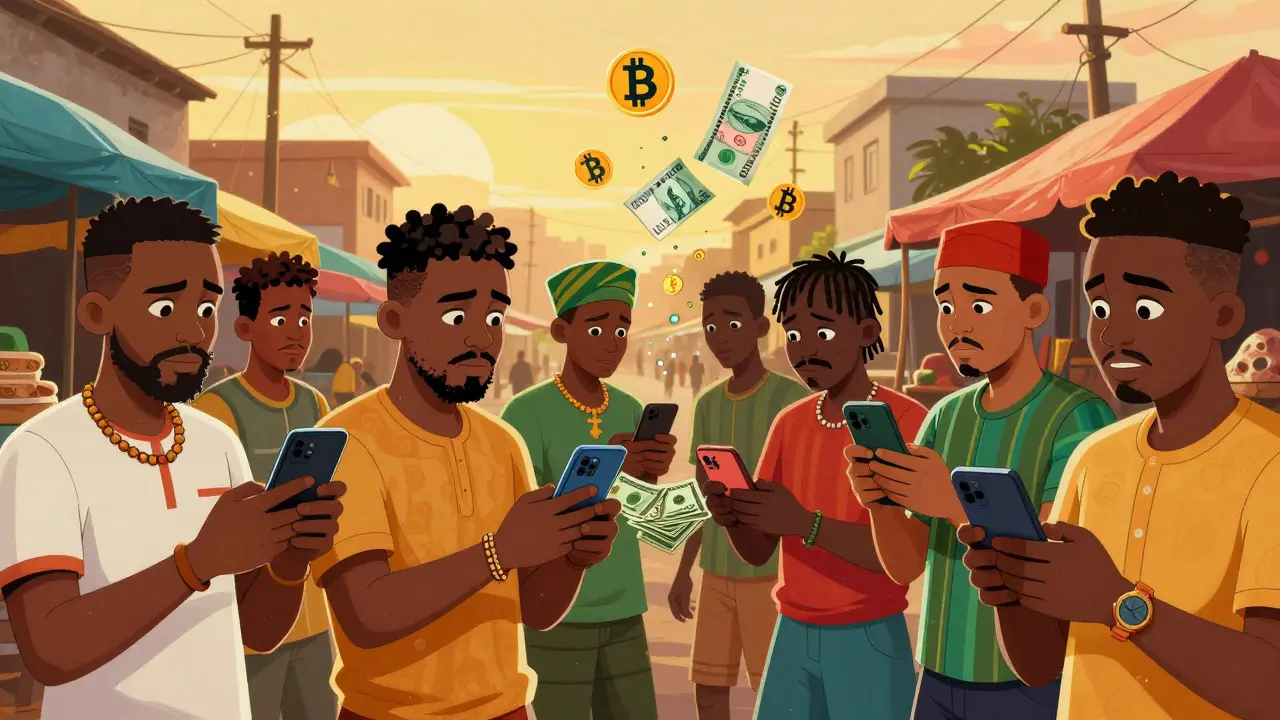
When most people think of cryptocurrency adoption, they picture Silicon Valley startups or European fintech hubs. But the real story isn’t there. It’s in Lagos, Abuja, and Port Harcourt-where millions of Nigerians are using Bitcoin and other digital assets to bypass broken banking systems, protect their savings, and send money across borders for less than the cost of a bus ticket. Nigeria isn’t just participating in the crypto revolution-it’s leading it.
How Nigeria Became the World’s Top P2P Crypto Market
In 2025, Nigeria ranked among the top three countries globally for peer-to-peer (P2P) cryptocurrency trading, according to Chainalysis and Cornell Business. While some reports place it at sixth overall in crypto adoption, when you look only at P2P volume-transactions directly between individuals, not through exchanges-Nigeria is #1. Over $59 billion in crypto was traded on P2P platforms between July 2023 and June 2024. That’s more than most developed nations, including Germany and Japan, combined. This didn’t happen because of government support. It happened because the government tried to stop it. In 2017, the Central Bank of Nigeria (CBN) told banks to cut off crypto businesses. They were told not to open accounts for crypto exchanges, not to process payments to them, and not to even acknowledge their existence. Instead of killing crypto, the ban forced it underground. People started trading directly with each other-cash in hand, mobile money transfers, bank deposits between strangers. They built a decentralized network that worked even when banks refused to help.The Real Reason Nigerians Use Crypto
It’s not speculation. It’s survival. Inflation hit 24% in 2023. The naira has lost more than 75% of its value against the US dollar since 2016. If you’re earning in naira, your salary buys less every month. Savings vanish. That’s why so many Nigerians turn to Bitcoin-not as a gamble, but as a store of value. Bitcoin doesn’t print more money. It doesn’t devalue because a central bank decides to. Add to that: 36% of Nigerian adults have no bank account. Even those who do often can’t access foreign currency. Want to pay for an online course from the U.S.? Pay for a Shopify subscription? Send money to a sibling in Canada? Traditional banks charge up to 8% in fees and take days. P2P crypto? You can send $500 to the U.S. in 10 minutes for less than $2 in fees. The most traded pair? Bitcoin to naira. But people also use Dash, Ripple, and USDT. Why? Because USDT (Tether) is pegged to the dollar. It’s the closest thing to holding real U.S. currency without needing a U.S. bank account.From Underground to Institutional
The government didn’t win the war on crypto. It lost. By late 2023, the CBN reversed course. Banks were told they could now work with licensed crypto exchanges. Why? Because the people had already built the system. The CBN realized they couldn’t stop it-and that maybe, just maybe, they could benefit from it. In 2025, the Nigeria Inter-Bank Settlement System (NIBSS), the backbone of the country’s banking network, partnered with Zone’s blockchain platform. Now, banks can settle transactions faster, cheaper, and with less fraud. This isn’t crypto replacing banks-it’s crypto making banks better. The Investments and Securities Act of 2025 officially recognized cryptocurrencies as financial securities. That means crypto exchanges must now follow strict rules: know-your-customer checks, anti-money laundering protocols, and licensed operations. It’s not the wild west anymore. It’s regulated-but still decentralized.
Who’s Using Crypto in Nigeria-and How
About 22 million Nigerians are expected to use crypto by 2025. That’s roughly 10% of the population. For comparison, the U.S. has about 40 million crypto users out of 330 million people-around 12%. Nigeria’s adoption rate is close to the U.S.’s, but with far less infrastructure and far more obstacles. Most users start on platforms like Quidax, Patricia, or Luno. They verify their identity, link their bank account, and buy Bitcoin with naira. From there, they either hold it as a hedge or trade it on P2P markets like Paxful, Binance P2P, or LocalBitcoins. The learning curve isn’t steep. Most people get comfortable in 2-4 weeks. They learn how to send crypto, check wallet addresses, and avoid scams. The real challenge? Volatility. Prices swing fast. A Bitcoin bought for 15 million naira one day might be worth 18 million the next-or drop to 12 million. That’s risky, but still better than watching your naira savings evaporate. Community support is huge. Telegram groups, WhatsApp chats, and local meetups in Lagos and Kano help new users learn. YouTube tutorials in Pidgin English and Yoruba make it accessible. You don’t need a finance degree. You just need a phone and the willingness to try.Why This Matters Beyond Nigeria
Nigeria’s story isn’t unique to Nigeria. It’s a blueprint for every country where the banking system fails its people. In Argentina, Venezuela, Turkey-places with high inflation and currency controls-crypto adoption is rising too. But none match Nigeria’s scale, speed, or grassroots energy. Nigeria’s P2P network is the most mature, the most resilient, and the most deeply embedded in daily life. Experts say crypto acts as a “disciplining device” for central banks. When people can easily switch to Bitcoin, governments can’t print money recklessly without losing public trust. That’s why some CBN researchers now argue that crypto might actually help control inflation-not cause it. Nigeria’s fintech scene is booming because of crypto. Moniepoint, a fintech company that lets small businesses accept payments and manage cash flow, became Africa’s first crypto-linked unicorn in 2025, valued at $1 billion after backing from Google. Their success isn’t accidental. It’s built on the foundation of crypto adoption.What’s Next? Risks and Realities
There are still risks. Regulatory reversals are possible. If a new government comes in, will they ban crypto again? International pressure from the IMF or FATF could force stricter rules. And the Central Bank of Nigeria is developing its own digital currency, the eNaira. Will that replace crypto-or work alongside it? Most users don’t see the eNaira as a replacement. It’s government-controlled. Crypto is not. People want choice. The future looks like a hybrid: regulated exchanges handling large transactions, P2P platforms serving everyday people, and blockchain tech quietly improving banking behind the scenes. Nigeria didn’t wait for permission. It didn’t wait for banks to fix themselves. It built its own system. And now, the world is watching.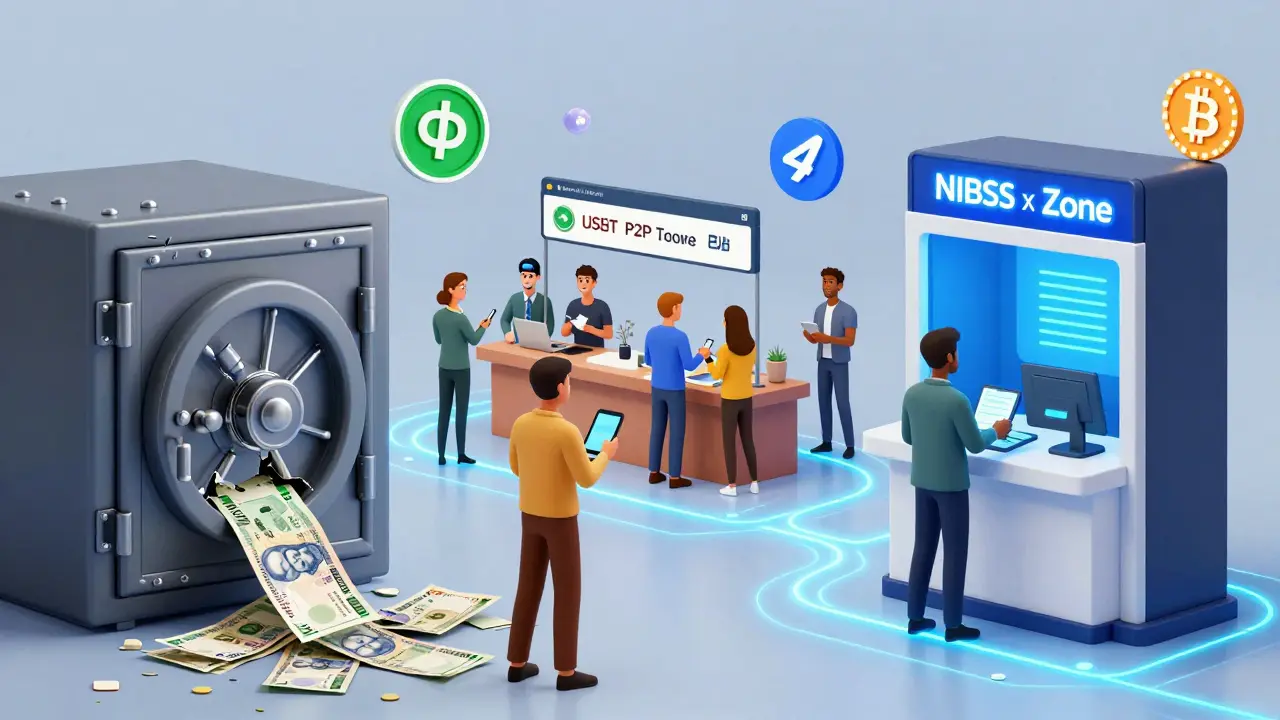
How to Get Started (If You’re in Nigeria)
If you’re in Nigeria and want to try P2P crypto, here’s how:- Choose a licensed exchange: Quidax, Patricia, or Luno are trusted and regulated.
- Complete KYC: Upload your ID and a selfie. Takes 10 minutes.
- Buy USDT or BTC with naira: Most people start with USDT because it’s stable.
- Switch to P2P: Once you have crypto, go to Binance P2P or Paxful to trade directly with others.
- Use a hardware wallet: For larger amounts, store crypto offline. Trust Wallet or Ledger are good options.
- Join a local group: Telegram and WhatsApp crypto communities in your city offer real-time help.
What You Need to Know About Security
Scams are real. Remember Bitconnect? MMM? Those were Ponzi schemes. Real crypto isn’t about getting rich quick. It’s about financial freedom. Never share your private key. Never click on links sent by strangers. Always double-check wallet addresses before sending. Use two-factor authentication on every account. Most Nigerian crypto users say the biggest mistake beginners make? Trusting someone who says, “I’ll hold your crypto for you.” Don’t. Ever.Final Thought: It’s Not About Technology. It’s About Freedom.
Nigeria’s crypto boom isn’t about blockchain algorithms or mining rigs. It’s about people taking control of their money. When banks won’t let you send cash abroad, you find another way. When your savings lose value every month, you find something that doesn’t. When the system fails, you build your own. That’s not just adoption. That’s empowerment.Why is Nigeria ranked so high in P2P crypto adoption?
Nigeria ranks high because its people use crypto to solve real problems: inflation, banking restrictions, and high remittance fees. With over $59 billion in P2P trades in 2024, Nigerians bypass traditional finance by trading directly with each other using platforms like Binance P2P and Paxful. This isn’t speculation-it’s necessity.
Did the Central Bank of Nigeria ban crypto?
Yes, in 2017, the CBN told banks to stop servicing crypto businesses. But instead of killing crypto, the ban forced it underground. People started trading peer-to-peer using mobile money and cash. By late 2023, the CBN reversed its stance and allowed licensed exchanges to operate legally, recognizing that crypto was already too widespread to stop.
Is Bitcoin legal in Nigeria?
Yes. While the CBN doesn’t recognize Bitcoin as legal tender, it’s not illegal to own or trade it. The 2025 Investments and Securities Act officially classified cryptocurrencies as financial securities, meaning they’re regulated but permitted. You can legally buy, sell, and hold Bitcoin through licensed exchanges.
What’s the most popular crypto in Nigeria?
Bitcoin is the most traded, but USDT (Tether) is the most used. USDT is pegged to the U.S. dollar, so it helps people protect savings from naira inflation. Dash and Ripple are also popular for faster, cheaper transfers. Many Nigerians hold a mix of Bitcoin for long-term value and USDT for daily use.
How much does it cost to send crypto from Nigeria to the U.S.?
Using P2P crypto, you can send $500 to the U.S. for under $2 in fees, often within 10 minutes. Traditional services like Western Union or MoneyGram charge 6-8% in fees and take 2-5 days. Crypto cuts costs by up to 80% and is nearly instant.
Can I lose money using crypto in Nigeria?
Yes. Crypto prices can swing quickly. Bitcoin might rise 20% in a week-or drop 15%. Also, scams are common. Never trust strangers who offer to "hold your crypto" or promise guaranteed returns. Only use licensed exchanges and store large amounts in a hardware wallet. Education and caution reduce risk.
Is the eNaira going to replace crypto in Nigeria?
Probably not. The eNaira is a government-controlled digital currency. Crypto is decentralized. Most Nigerians want choice, not more government control. The eNaira may complement crypto for official payments, but P2P crypto will remain the go-to for remittances, savings, and bypassing restrictions.
What’s the best way to learn crypto in Nigeria?
Start with a licensed exchange like Quidax or Patricia-they offer free guides in English and local languages. Join Telegram groups like "Nigeria Crypto Learners" or watch YouTube tutorials in Pidgin. Local meetups in Lagos and Abuja offer hands-on help. Most people get comfortable in 2-4 weeks with consistent practice.
Kathryn Flanagan
December 15, 2025 AT 12:50It’s wild to think about how people just figure things out when the system lets them down. I’ve read so much about Nigeria’s crypto scene now, and honestly, it’s one of the most inspiring things I’ve seen in years. No fancy government grants, no Silicon Valley funding-just folks with phones and a will to survive. I’ve talked to my students about this in my economics class, and they couldn’t believe it. One girl said, ‘So they’re not trying to get rich? They’re just trying to eat?’ And I said, ‘Yeah. And that’s more revolutionary than any IPO.’
It’s not about tech. It’s about dignity. When your money loses value faster than your milk goes bad, you don’t wait for permission. You just move. And that’s what Nigeria did. No drama. No hashtags. Just action.
I wish more people in the West would stop calling it ‘crypto speculation’ and start calling it what it is: financial self-defense. We talk about financial literacy like it’s a college course. But in Nigeria, it’s survival 101. And they’re acing it.
I’ve started recommending this story to every friend who thinks crypto is just for gamblers. It’s not. It’s for the people who’ve been told ‘no’ too many times. And they said, ‘Fine. We’ll do it ourselves.’
Also, the part about USDT being the real MVP? That’s genius. It’s not flashy. It doesn’t have a whitepaper. But it’s the quiet hero holding people’s savings together. I love that.
And the fact that the CBN had to flip because the people built something they couldn’t kill? That’s the definition of grassroots power. No protest signs. No marches. Just transactions.
I’m not even Nigerian. But I feel proud of them. And honestly? I’m a little ashamed that my country still thinks crypto is a risk instead of a right.
Anyway. I just wanted to say thank you for writing this. It made me cry a little. Not because it’s sad. Because it’s beautiful.
Also, if you’re reading this and you’re in Nigeria-keep going. You’re not alone. The whole world is watching, and we’re learning from you.
Kathy Wood
December 17, 2025 AT 08:25Stop glorifying chaos. This isn’t empowerment-it’s desperation dressed up as innovation.
People aren’t choosing crypto-they’re being forced into it by a broken system. And now you’re making it sound heroic? No. It’s tragic.
Jessica Eacker
December 18, 2025 AT 04:57Hey Kathy, I hear you. But you’re missing the point. This isn’t about whether the system failed-it’s about what people built after it did. That’s the real story.
And yes, it’s beautiful. Not because it’s perfect. But because it’s human.
Rakesh Bhamu
December 20, 2025 AT 02:10Really appreciate this breakdown. I’ve been following crypto in India for years, and the parallels are striking-except here, we still have banking access, even if it’s slow and expensive. What Nigeria did wasn’t just clever-it was courageous.
Most people think crypto is about making money. But in places like Nigeria, it’s about keeping what you’ve got. That’s a fundamentally different mindset.
Also, the fact that they’re using Pidgin and Yoruba tutorials? That’s next-level inclusion. No one’s waiting for a whitepaper to be translated-they’re teaching each other in the language they speak every day.
And the eNaira? I doubt it’ll replace crypto. People don’t want another government app. They want control. The fact that the CBN had to back down? That’s the real win.
One thing I’d add: the real unsung heroes are the P2P traders who meet in parking lots with cash. No app. No ID. Just trust and a phone. That’s the original blockchain.
Kelly Burn
December 20, 2025 AT 22:10OMG I LOVE THIS SO MUCH 💖💖💖
BITCOIN IS THE PEOPLE’S CURRENCY 🌍✨
THE CBNA DIDN’T WIN THEY LOST 💥🤯
USDT IS MY NEW BESTIE 😭💸
WHY ISN’T EVERYONE DOING THIS??
THEY’RE NOT SPECULATING THEY’RE SURVIVING 😭😭😭
MY HEART IS SO FULL RIGHT NOW 🥹🫶
JUST BUY USDT AND YOU’LL UNDERSTAND 🙏
WE NEED A MOVEMENT. #CryptoIsFreedom #NigeriaWon
Hari Sarasan
December 21, 2025 AT 00:53While the narrative presented here is emotionally compelling, it lacks rigorous macroeconomic grounding. The phenomenon of P2P crypto adoption in Nigeria cannot be divorced from the structural deficiencies of the Naira as a reserve currency, nor can it be uncritically framed as a triumph of decentralized finance. The 2025 regulatory shift by the CBN was not a capitulation-it was a strategic recalibration to preserve monetary sovereignty in the face of capital flight. Furthermore, the adoption metrics cited are heavily skewed by informal, unregulated transactions that lack audit trails, rendering them statistically unreliable for cross-border comparisons. The notion that crypto functions as a ‘disciplining device’ for central banks is a libertarian fantasy unsupported by empirical evidence from emerging markets. The eNaira, by contrast, represents a necessary evolution toward sovereign digital currency infrastructure, which, when properly implemented, can coexist with, rather than be supplanted by, private digital assets. The romanticization of informal P2P networks as ‘grassroots empowerment’ ignores the systemic risks they impose on financial stability, consumer protection, and tax compliance. One must ask: is this innovation-or institutional erosion?
Stanley Machuki
December 21, 2025 AT 23:19They didn’t wait for permission. They just did it.
That’s it.
That’s the whole story
Simple as that
Kurt Chambers
December 22, 2025 AT 03:20USA is weak. We got banks telling us what to do. Nigeria? They said ‘screw you’ and built their own money. That’s real freedom.
USA still thinks crypto is a fad. Nigeria knows it’s survival.
Our kids are learning about NFTs in school. Their kids are learning how to not starve.
Who’s really winning?
Also, the CBN is just mad because they can’t print more naira and steal people’s savings anymore. That’s why they tried to ban it.
Freedom isn’t pretty. But it’s real.
USA needs to wake up before it’s too late.
amar zeid
December 23, 2025 AT 13:05Thank you for this comprehensive overview. I find the Nigerian case particularly fascinating from a behavioral economics perspective. The transition from formal banking exclusion to informal crypto adoption represents a classic case of institutional voids being filled by emergent, self-organized systems. The fact that users gravitated toward USDT as a stable unit of account-despite its centralized backing-reveals a pragmatic prioritization of utility over ideological purity. This is not anarchism; it’s adaptive resilience.
Moreover, the integration of blockchain into NIBSS suggests a rare case where state and grassroots innovation converged not through coercion, but mutual recognition of efficacy. The regulatory framework introduced in 2025, while imperfect, demonstrates that governance can evolve in tandem with technology-not in opposition to it.
What remains underexplored is the gender dimension: are women disproportionately represented among P2P traders? If so, this could signal a quiet revolution in financial inclusion. I would welcome further data on user demographics, particularly in rural areas.
Finally, the cultural role of Telegram and WhatsApp groups as decentralized education hubs is perhaps the most underrated element. This isn’t just finance-it’s community-building. A model worth studying globally.
John Sebastian
December 24, 2025 AT 10:03Interesting. I’m not sure I agree with the framing. Crypto isn’t freedom. It’s just another asset class. People are using it because they have no choice. That’s not empowerment. That’s resignation.
And now the government is regulating it. So it’s not really decentralized anymore, is it?
It’s just a different cage.