Blockchain Art Verification: How to Prove Ownership and Authenticity of Digital Art
When you buy a piece of blockchain art verification, a system that uses public ledgers to confirm the origin and ownership of digital artwork. Also known as digital provenance tracking, it turns blurry copies into verifiable originals—no middleman needed. Before blockchain, anyone could screenshot a digital image and call it their own. Now, every time a piece is created, sold, or moved, that action gets recorded on a public ledger. This isn’t just about bragging rights—it’s about real value. Artists finally get paid when their work resells. Collectors know they’re not buying a fake. And galleries? They can’t hide behind vague claims anymore.
At the heart of this are two key players: NFT authentication, a digital certificate tied to a unique token on a blockchain that proves a piece is original, and provenance tracking, the continuous record of every owner, sale, and transfer since the artwork was first minted. These aren’t theoretical concepts. They’re what make a CryptoPunk worth millions—or a random JPEG worth nothing. If you can’t trace every step back to the artist, it’s just a file. If you can? It’s a collectible with history. This is why platforms like OpenSea and Foundation rely on it. And why scams drop fast when buyers start checking the chain.
But here’s the catch: blockchain art verification doesn’t stop at the first sale. It keeps going. Every time the artwork changes hands, the new owner’s wallet address is stamped into the ledger. That means if someone tries to sell you a "rare" piece that was never listed before, you can see right away it’s a lie. No bank, no curator, no auction house can override that. It’s all out in the open. This level of transparency is why collectors in places like Singapore, Berlin, and Miami are shifting away from traditional galleries. They don’t need them anymore. The chain is the authority.
You’ll find posts here that show how this works in practice—from how artists use smart contracts to earn royalties every time their art sells, to how fraudsters try to fake provenance and get caught. Some guides break down the tools you need to check an NFT’s history yourself. Others warn you about fake marketplaces that pretend to verify art but don’t. There’s even a post on how crypto exchanges like DODO and AfroDex have zero connection to art verification—because they’re trading platforms, not authentication systems. What ties it all together? Trust built on code, not contracts.
Whether you’re an artist trying to protect your work, a collector looking to avoid scams, or just curious why some digital art costs more than a car—this collection gives you the facts. No hype. No fluff. Just how blockchain art verification actually works, who benefits, and what to watch out for in 2025.
12
Nov
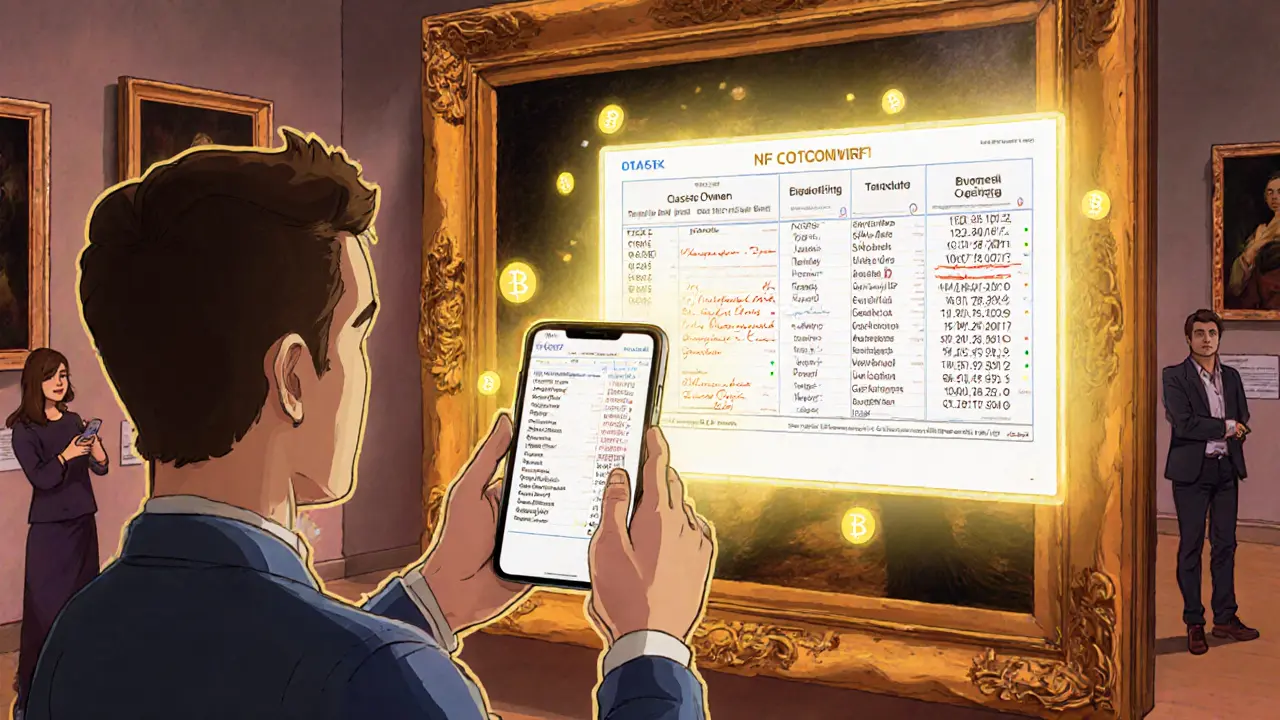
NFTs are revolutionizing how digital and physical art are authenticated, using blockchain to create tamper-proof ownership records. Learn how QR codes, NFC chips, and digital watermarks stop forgery and give collectors confidence.
Read More