
South Korea's cryptocurrency market has shifted dramatically over the last few years. As we move through 2026, the environment feels less like a wild west experiment and more like a structured financial district. If you are operating a business, investing, or simply tracking the blockchain space, the rules matter. The Financial Services Commission (FSC) serves as the primary supervisory body here. They oversee how Virtual Asset Service Providers, or VASPs, operate. This isn't just about keeping bad actors out; it is about building trust for institutions.
The landscape has evolved from the restrictive measures seen between 2017 and 2020. Back then, caution was the name of the game. Now, the focus is on institutional adoption while keeping retail investors safe. Understanding the current framework helps avoid costly mistakes. You don't need to be a lawyer to navigate this, but knowing the basics is essential. Let's look at what the regulations actually require from day one.
Licensing and Compliance Requirements for Exchanges
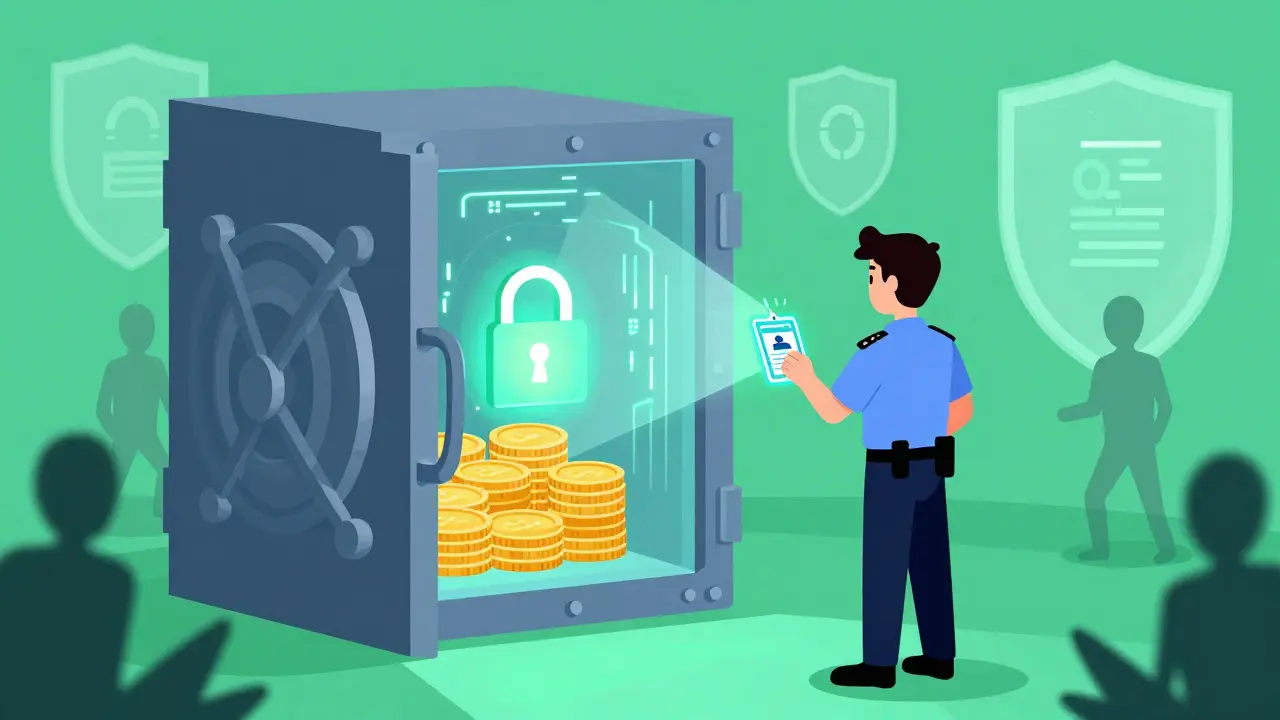
To operate legally, any crypto service provider must register with Korean financial regulators before starting. This isn't optional. The FSC mandates strict compliance requirements that cover buying, selling, transferring, and storing digital assets. One of the most critical rules involves real-name verification. Exchanges cannot just let anyone open an account.
You need to verify identity through authorized bank accounts. Specifically, clients must have access to real-name bank accounts maintained at the same institution as the exchange's own authorized accounts. This links your crypto activity directly to your traditional banking profile. It removes anonymity completely, which might feel intrusive, but it prevents money laundering. The system forces transparency from the ground up.
- Register with the Financial Intelligence Unit (KoFIU).
- Implement Anti-Money Laundering (AML) procedures.
- Maintain Know Your Customer (KYC) documentation.
- Keep audit logs of transactions exceeding specific thresholds.
This setup ensures that if suspicious activity pops up, regulators can trace it back to a physical person or entity instantly.
Security Standards and Information Safety
Beyond financial trails, technical security is non-negotiable. Exchanges must obtain certification from the Korea Internet Security Agency (KISA). This agency checks the Information Security Management Systems (ISMS). Without this certificate, an exchange cannot legally operate in the country.
Think of ISMS as a health check for your digital infrastructure. It covers everything from data encryption to server protection. The goal is to stop hacks before they happen. In the past, high-profile breaches shook confidence. Today, mandatory ISMS certification acts as a shield. It raises the baseline for safety across the entire sector. If you are comparing exchanges, check their KISA certification status first. It tells you they meet national security standards.
| Organization | Primary Function | Scope |
|---|---|---|
| Financial Services Commission (FSC) | Oversight and Policy | Nationwide Regulation |
| Korean Financial Intelligence Unit (KoFIU) | AML Reporting | Suspicious Activity Monitoring |
| Korea Internet Security Agency (KISA) | Cybersecurity Certification | Technical Infrastructure |
| Virtual Asset Task Force | Policy Development | Institutional Access & Tax |
The FATF Travel Rule Implementation
Global standards also apply here. South Korea implements the Financial Action Task Force (FATF) Travel Rule strictly. When you transfer cryptocurrency, originator and beneficiary information must be exchanged. The threshold is KRW 1 million, which is approximately EUR 800.
This means even smaller transactions trigger reporting requirements if they cross that boundary. For VASPs involved in crypto-to-crypto exchanges or storage, passing this data along is compulsory. It connects local regulation with international anti-money laundering efforts. You cannot hide behind the border. The data travels with the funds.
Major Market Players and Licensing Status
Who actually runs the show? As of recent updates, four major platforms dominate the compliant landscape. Bithumb, Upbit, Coinone, and Korbit initially implemented the full regulatory framework. While other players exist, these giants set the precedent for compliance. All VASPs are now mandated to adhere to the same rules regardless of size.
These companies act as the bridge between the public and the regulated market. They handle the heavy lifting of KYC and security so regular users can trade without dealing with legal paperwork directly. However, the responsibility remains with the platform to keep records accurate. Investors should stick to these licensed names to ensure their funds fall under consumer protection laws.
The 2025 Virtual Asset Basic Law
A major turning point arrived with the Virtual Asset Basic Law. Announced with bold steps in February 2025, this legislation was designed to enhance legitimacy and liquidity. By early 2026, its effects were visible in market behavior. The law focuses on protecting investors while navigating regulations for emerging technologies like DeFi and NFTs.
Key pillars include curbing market manipulation. This is huge because price volatility often stems from unchecked trading practices. Clear market parameters for platforms help define what is legal and what is not. The government wants to close loopholes where fraud could slip through. This creates a stable environment for long-term holding rather than quick speculation.
Institutional Investment and ETFs
Perhaps the biggest change is opening doors for institutions. The FSC plans to legalize spot cryptocurrency exchange-traded funds (ETFs). These instruments allow pensions and mutual funds to get regulated exposure without managing private wallets. ETF sponsors face strict requirements regarding transparent index methodologies and real-time net asset value reporting.
This moves digital assets from the fringe into mainstream finance. If a pension fund can buy Bitcoin through a broker, liquidity increases significantly. It validates the asset class for conservative investors. Additionally, the task force reviewed restrictions on corporate holdings. Previously, corporations faced stiff penalties for holding virtual assets. Now, phased relaxation allows them to transact within defined limits. This enables treasury-level allocations for big businesses.
Taxation Policies and Future Risks
Tax policy shows a cautious approach. Originally, a tax on virtual asset gains was set to begin in 2025. However, the government postponed this implementation. Currently, profits from trading are not subject to capital gains tax. This attracts traders, but do not bet on it staying this way forever. Future legislation is still on the table.
If taxes return, the system likely includes provisions for offsetting gains with losses incurred within the same tax year. This reduces volatility in after-tax returns. It makes planning easier for professionals. NFTs have a nuanced treatment. Those deemed investment or payment functions fall under strict rules. Collectible NFTs generally escape regulation unless they have financial characteristics. You need to evaluate the asset type to know your risk.

Regional Hubs and Innovation Zones
Regulation isn't just central. Busan is leading with the Busan Digital Asset Nexus. This is a regulatory testbed for Security Token Offering (STO) implementation. It channels foreign institutional participation directly into local markets. Other regions like Jeju and Incheon are monitoring closely.
This decentralization allows for experimentation. If a rule works in Busan, it can spread nationwide. It signals South Korea's commitment to becoming a global digital asset hub while maintaining oversight. Regional governments compete to attract talent and tech firms. For startups, this offers a potentially smoother path to testing products before full national rollout.
Practical Steps for Compliance
So how does this affect you? If you run a business, start by identifying whether you fit the VASP definition. Are you exchanging, transferring, or storing assets? If yes, preparation begins immediately. Contact a local legal expert familiar with FSC requirements. Security audits take time, so budget accordingly.
For individual investors, the advice is simpler. Stick to the top-tier, licensed exchanges. Avoid offshore platforms that bypass FSC rules. Keep your records for tax purposes, even if current liabilities are zero. Be ready for tax laws to shift. Stay informed through official channels rather than social media rumors.
Conclusion on Market Maturity
The evolution from restrictive bans to institutional frameworks marks a maturation process. South Korea recognized that banning crypto did not stop demand. Regulating it brings order. The balance between innovation and protection is delicate. With the Virtual Asset Basic Law in effect, the jurisdiction positions itself as a leader in Asia. Market participants who understand these rules gain an edge over those ignoring them.
The road ahead includes continuous updates. Emerging technologies move faster than legislatures can draft text. The FSC continues reviewing and updating regulations. Keeping track of these shifts is vital. Whether you are holding, trading, or developing, the regulatory layer is the foundation you build upon. Ignore it at your own peril.
Are cryptocurrency exchanges legal in South Korea?
Yes, cryptocurrency trading is officially legal but operates within a strict regulatory framework. Exchanges must be registered as VASPs and comply with FSC rules.
Is there currently a capital gains tax on crypto profits?
As of 2026, the planned capital gains tax has been postponed. Profits are not currently taxed, but future legislation may change this status.
What is the FATF Travel Rule threshold in South Korea?
The threshold is KRW 1 million (approx EUR 800). VASPs must share originator and beneficiary information for transfers exceeding this amount.
Can corporations hold cryptocurrency in South Korea?
Restrictions are relaxing. Corporate entities can now open verified accounts at licensed exchanges to transact within defined reporting limits.
Which agencies regulate crypto exchanges?
The primary body is the Financial Services Commission (FSC), supported by KoFIU for reporting and KISA for security certification.
Joy Crawford
March 30, 2026 AT 07:09i feel like the amount of paperwork required for verification is just exhausting everyone around me honestly and the constant updates on regulations make it hard to breathe sometimes :( the anxiety is real though
Beverly Menezes
March 31, 2026 AT 09:13It is nice to see clear rules for everyone to follow without confusion
Safety is important for all investors who want to keep money secure
We should support these new steps for better protection
Shaira Vargas
April 1, 2026 AT 21:14OMG this is such a big change for the whole market and I am so scared something bad will happen to my funds now! Everyone is talking about how strict the checks are which is totally crazy drama town
Samson Abraham
April 2, 2026 AT 17:07Compliance ensures stability in the financial sector
We must adhere to the standards set by the FSC to maintain integrity
Boundaries help protect the community
Cara Boyer
April 3, 2026 AT 18:37They are definitely tracking all our moves with these new systems which is scary for privacy rights
The state wants full control over digital assets and nothing less tehy say
We should be careful about giving up info so easily :)
Chris R
April 4, 2026 AT 01:07South Korea shows great leadership in shaping crypto norms globally
Their approach balances innovation with necessary safeguards
Other nations can learn from this model
Colin Finch
April 4, 2026 AT 12:28The interplay between liberty and order creates a fascinating tapestry of modern finance. When governments step in they bring structure but we must question where the line gets drawn for freedom. Trust becomes the currency rather than just gold or silicon chips. History tells us that regulation often follows crisis yet here it feels proactive which is novel. The busan nexus looks promising as a test bed for future policies. We stand at a crossroads where technology dictates policy instead of the reverse. Investors need to understand that risk management includes regulatory adherence now. It is not just about profit anymore but about survival in a watched ecosystem. Transparency breeds confidence even when it feels intrusive to individuals. The travel rule connects local habits to global standards effectively. Institutions joining the fray brings volume but removes some mystery. We must cherish the ability to transact while accepting oversight. This phase marks maturity beyond the wild west days. Future generations will study this period of transition. The foundation laid today determines tomorrow's skyline.
Lisa Walton
April 5, 2026 AT 12:50Your analysis misses the obvious point that freedom is already lost.
Shubham Maurya
April 7, 2026 AT 02:40Stop pretending this is safe because the system will hack you eventually 😠😡 regulations do not stop hackers just slows them down a bit! You people are naive about security risks involved here
Katrina Tate
April 7, 2026 AT 13:19The data presented regarding KISA certification aligns with industry expectations
No deviations noted in the current framework assessment
Justin Garcia
April 8, 2026 AT 10:35This is garbage talk about safety since no system is actually safe anyway
You are being manipulated by false security assurances constantly
athalia georgina
April 9, 2026 AT 08:25I dont know why everyone cares so much about these rules personally but it affects my wallet too much lol
teh government takes so much power now and it bothers me quite a lot