
Before September 2025, if you were a Jordanian who wanted to buy Bitcoin or trade Ethereum, you had to go underground. The Central Bank of Jordan had made it clear: no crypto in the banking system. No deposits. No withdrawals. No exchanges linked to local banks. Yet, thousands of people still traded. Not because they were breaking the law for fun, but because they saw opportunity - and the system gave them no other way.
Trading in the Shadows
Jordanians didn’t have access to licensed crypto platforms. No CoinMENA, no Binance Jordan, no local exchange you could sign up for with your national ID. The Central Bank’s warnings weren’t just advisory - they were enforced. Banks froze accounts linked to crypto transactions. ATMs wouldn’t let you withdraw cash if your account showed activity on Paxful or LocalBitcoins. So people got creative.The only way left was peer-to-peer (P2P). You’d find a buyer or seller on Telegram, WhatsApp, or Facebook groups. No middleman. No bank involved. Just two people, a digital wallet, and cash. One person sent Bitcoin from their wallet. The other showed up at a café with a stack of Jordanian dinars. No receipts. No contracts. Just a handshake and a QR code scan.
It worked - but it was dangerous. There was no recourse if someone vanished after you sent the crypto. No chargebacks. No dispute center. No police report that would help. And if you were caught using a bank account linked to crypto, even accidentally, you risked having your account shut down permanently.
Why P2P Was the Only Option
Why didn’t Jordanians just move to the UAE or Turkey? Many did. But for those who couldn’t - students, small business owners, people with family ties - leaving wasn’t an option. Crypto wasn’t a luxury. It was a lifeline. In a country with high unemployment and inflation, Bitcoin offered a way to store value outside the weakening dinar. Stablecoins like USDT became a way to pay freelancers overseas without waiting weeks for bank transfers or paying 15% in fees.Some used prepaid debit cards bought with cash, loaded with crypto earnings, then spent abroad. Others traded crypto for gold through informal networks. A few even bartered - 0.1 BTC for a laptop, 0.5 ETH for a used car. These weren’t just fringe activities. They were daily survival tactics.

The Brain Drain
The lack of legal infrastructure didn’t just affect everyday users. It pushed talent out of the country. Talal Tabbaa, co-founder of CoinMENA, left Jordan because he couldn’t build a crypto business at home. He wasn’t alone. Dozens of developers, fintech engineers, and blockchain entrepreneurs moved to Dubai, Berlin, or Singapore - places where crypto wasn’t illegal, but regulated.That’s the hidden cost of prohibition: it doesn’t stop people from using crypto. It just stops them from building businesses around it. Jordan lost a generation of innovators who could’ve turned this into an economic engine. Instead, they built it elsewhere.
How the 2025 Law Changed Everything
On September 14, 2025, everything shifted. Law No. 14 - the Virtual Assets Transactions Regulation Law - was published in the Official Gazette. For the first time, crypto wasn’t banned. It was licensed.The law defined virtual assets clearly: Bitcoin, Ethereum, stablecoins (as long as they weren’t issued by the Central Bank), even NFTs with economic value. It created three types of licenses: crypto exchanges, payment providers, and custodians. And it required every provider to have a physical office in Jordan.
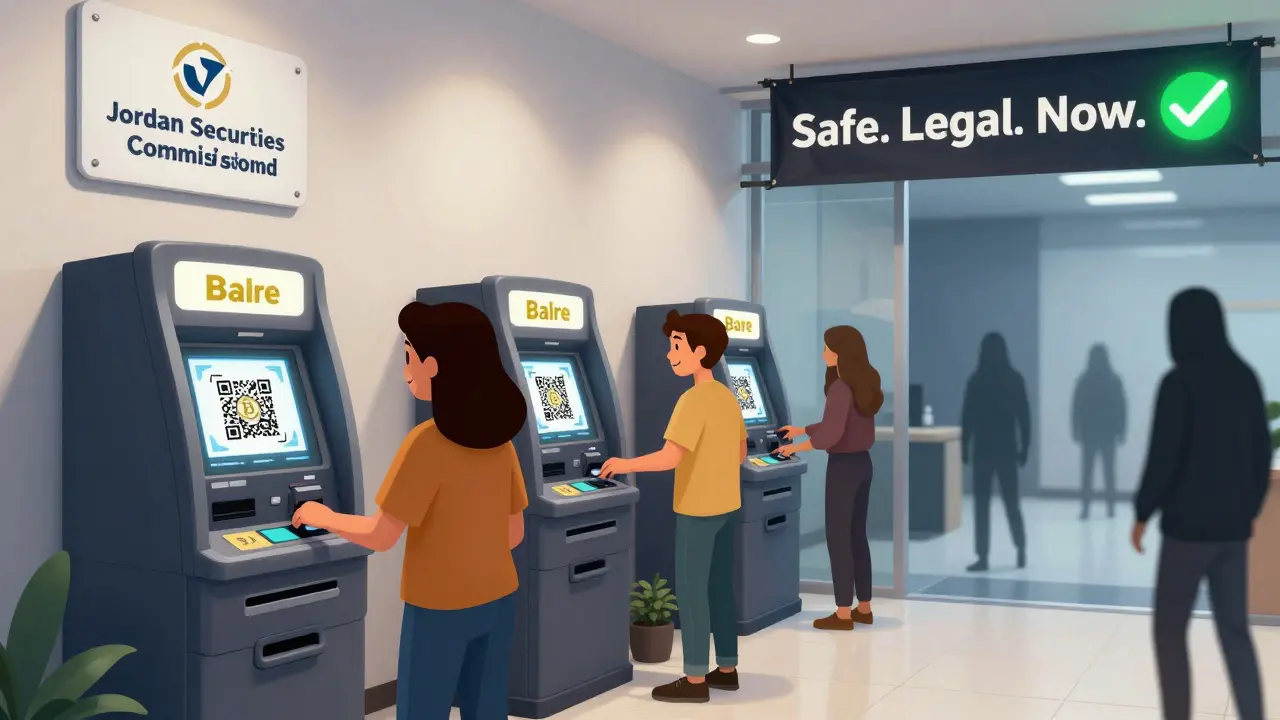
Now, you can open a wallet with a licensed Jordanian exchange. Deposit dinars via bank transfer. Buy Bitcoin. Sell it. Withdraw cash. All legal. All tracked. All protected by the Jordan Securities Commission.
Most importantly - the underground P2P market started to fade. Why risk a cash deal when you can trade on a regulated platform with identity verification, insurance, and customer support? The law didn’t just legalize crypto. It made the old ways obsolete.
What’s Still Missing
Even with the new law, challenges remain. Many older Jordanians still don’t trust digital wallets. Some banks are slow to integrate with licensed VASPs. And while the law allows crypto payments, most shops still won’t accept Bitcoin - not because it’s illegal, but because they don’t know how to handle it.There’s also a gap in education. The government hasn’t launched widespread public campaigns. Schools don’t teach it. Financial advisors don’t mention it. So while the door is open, many people still stand outside, unsure if they should walk in.
What This Means for the Future
Jordan’s shift from prohibition to regulation wasn’t just about crypto. It was about trust. Trust in technology. Trust in institutions. Trust that your government can protect you without crushing innovation.Before 2025, Jordanians traded crypto because they had no choice. Now, they can trade because they have a real option. The law didn’t create demand. It just gave it a safe home.
The next step? More exchanges. More education. More integration with banks. And maybe, just maybe, Jordan will stop being the country that drove its talent away - and start being the one that brings it back.
Was crypto completely illegal in Jordan before 2025?
Yes. The Central Bank of Jordan explicitly banned the use of cryptocurrencies within the formal banking system. While owning crypto wasn’t technically a crime, using banks to buy, sell, or transfer crypto was prohibited. Banks froze accounts linked to crypto activity, and financial institutions refused to process related transactions.
How did Jordanians actually buy Bitcoin without banks?
They used peer-to-peer (P2P) networks. People met in person - at cafes, malls, or homes - to exchange cash for crypto. Transactions happened via wallet addresses on platforms like Paxful or LocalBitcoins. No bank involvement. No official records. Just direct trades between individuals, often arranged through WhatsApp or Telegram groups.
What risks did people face trading crypto without regulation?
The biggest risks were fraud, scams, and account freezes. If you sent crypto and the other person disappeared, you had no legal recourse. If your bank detected crypto activity, they could shut down your account permanently. There was no insurance, no dispute system, and no way to prove you weren’t involved in illegal activity.
How does the 2025 Virtual Assets Law protect users now?
The law requires all crypto service providers to be licensed by the Jordan Securities Commission. Licensed platforms must verify users’ identities, keep transaction records, and follow anti-money laundering rules. Users now have legal recourse if something goes wrong. Their funds are protected under regulated custody rules, and platforms must have a physical presence in Jordan.
Can Jordanians now use crypto to pay for goods and services?
Yes, legally. The law permits virtual assets to be used for payments and investments. However, adoption is still slow. Most businesses haven’t set up crypto payment systems yet. While it’s allowed, it’s not yet common. That’s changing as more licensed payment providers launch services in the country.
Did the law stop all P2P trading?
Not overnight, but it’s declining fast. Before 2025, P2P was the only option. Now, licensed exchanges offer the same services - but safely, with bank integration, customer support, and legal protection. Most people who once traded in cash now use regulated platforms. P2P still exists, but it’s no longer the main way people access crypto in Jordan.
Why did Jordan wait until 2025 to regulate crypto?
Jordan watched what happened in the UAE and Bahrain. Those countries built strong crypto ecosystems early, attracting investment and talent. Jordan’s delay cost it brain drain - many skilled Jordanians left to build crypto businesses abroad. By 2025, the pressure from citizens, returning expats, and regional competition forced a change. The law wasn’t visionary - it was necessary.
Are stablecoins like USDT legal in Jordan now?
Yes. The 2025 law explicitly includes stablecoins - as long as they’re not issued by the Central Bank of Jordan. USDT and USDC are fully legal for trading, holding, and transferring. Many Jordanians use them to hedge against dinar inflation and send money abroad with lower fees than traditional remittance services.
Leona Fowler
March 21, 2026 AT 11:59What's fascinating is how Jordanians turned necessity into innovation. P2P wasn’t just a workaround-it became a community-driven financial system. People developed trust networks, word-of-mouth vetting, even informal reputation scores. No app, no algorithm-just human reliability. That’s the real story behind the numbers.
It’s a reminder that regulation follows behavior, not the other way around. The law didn’t create demand-it just tried to catch up.
Neil MacLeod
March 21, 2026 AT 19:53Let’s be brutally honest: this whole saga reads like a textbook case of institutional incompetence. A government that bans something so fundamentally inevitable-digital money-only to scramble a decade later when the damage is done. The real tragedy? They didn’t just lose users. They lost credibility.
Annette Gilbert
March 23, 2026 AT 12:53Oh wow, another ‘crypto underdog story’ where the hero is ‘just trying to survive’? Cute. Meanwhile, the rest of the world built regulated infrastructure while Jordanians were trading Bitcoin for falafel in parking lots. Congrats on being the poster child for regulatory failure.
John Alde
March 24, 2026 AT 14:19There’s a deeper layer here that rarely gets discussed: the psychological shift. Before 2025, crypto wasn’t about investment-it was about autonomy. People weren’t speculating; they were reclaiming control over their own economic agency. In a country where inflation eroded savings and banks refused to adapt, Bitcoin became the only voice that said, ‘You still have power.’
This wasn’t a fringe movement. It was a quiet revolution-one that didn’t need hashtags, just wallet addresses and cash in plastic bags.
manoj kumar
March 25, 2026 AT 13:33Stop romanticizing this. People were getting scammed left and right. I know guys who lost 5000 JDs to ‘trusted’ P2P sellers. No one was building anything-just gambling with their life savings. And now they want a medal because the government finally got its act together? Wake up. This wasn’t innovation. It was desperation.
JOHN NGEH
March 25, 2026 AT 23:13It’s interesting how the most resilient communities are the ones forced to build without permission. Jordanians didn’t wait for approval-they created their own rules. No bank? Fine. No legal framework? Okay. But they still moved value. That’s the real lesson here: human ingenuity doesn’t need a license. It just needs a reason.
Kevion Daley
March 26, 2026 AT 09:59LOL at the ‘brain drain’ narrative. Of course the smart people left. Why would anyone stay in a country where the central bank treats Bitcoin like a drug? Dubai gave them offices. Jordan gave them paranoia. Easy choice. 🤷♂️
YANG YUE
March 27, 2026 AT 00:29There’s a philosophical truth buried in all this: prohibition doesn’t kill demand-it just hides it. And when it hides, it mutates. What Jordan had wasn’t a black market-it was a parallel economy built on trust, not institutions. The law didn’t fix crypto. It just gave it a passport.
Now we ask: who really won? The regulators? Or the people who kept trading when no one was watching?
Anna Lee
March 27, 2026 AT 02:35Y'all are so cool for making this happen!! I'm just so proud of Jordanians for sticking it out and building something beautiful even when the system said no!! 💪❤️
And now that the law's here, let's make sure we teach kids about this! Imagine if schools taught crypto as part of economics class?? SO MUCH POTENTIAL!! 😍
Shana Brown
March 27, 2026 AT 22:00I love how this story flips the script. It’s not about crypto being ‘the future’-it’s about people refusing to be left behind. The real innovation wasn’t the tech. It was the solidarity. People showing up with cash, trusting strangers, risking everything to stay in control of their money. That’s the legacy.
And yeah, the law helps-but the heart of this movement? That was always human.
Marie Mapilar
March 28, 2026 AT 07:12From a compliance standpoint, the 2025 law is actually quite elegant-KYC/AML alignment with FATF standards, licensed custodians, physical presence requirements. But what’s missing is the cultural bridge. You can’t just pass a law and assume adoption. You need onboarding-workshops, community ambassadors, maybe even crypto literacy pop-ups in mosques and universities. The infrastructure is there. Now we need the human touch.
Dominic Taylor
March 28, 2026 AT 22:20What’s striking is how this mirrors the early days of mobile money in Kenya. No banking infrastructure? Build around it. The P2P model in Jordan was essentially a decentralized financial layer-akin to M-Pesa, but for digital assets. The law didn’t invent the system; it formalized an organic network. That’s the hallmark of successful regulation: codification, not creation.
Shelley Dunbrook
March 29, 2026 AT 15:25How poetic. A nation that spent years treating crypto as contraband now offers a ‘regulated’ path-complete with forms, fees, and compliance officers. The irony? The underground system was more honest. No paperwork. No bureaucracy. Just people keeping their word.
Now we’re trading freedom for paperwork. Is this progress? Or just another kind of cage?
Aman Kulshreshtha
March 31, 2026 AT 05:19As an Indian who’s seen similar stories with hawala networks and crypto remittances, I’m not surprised. When formal systems fail, informal ones rise. What Jordan did? Classic. The real win isn’t the law-it’s that people kept believing in a better way. And now, maybe, they’ll get to build it from the inside.