
When someone loses $50,000 to a fake crypto investment scheme, they don’t just lose money-they lose trust. And if that scammer is in Nigeria, the victim in Canada, and the money flows through a mix of Bitcoin, Ethereum, and Monero across five countries, no single police force can fix it alone. That’s why international cooperation on crypto crime enforcement isn’t just helpful anymore-it’s the only thing keeping the system from collapsing.
Why Borders Don’t Matter in Crypto Crime
Crypto doesn’t care about passports. A scammer in Angola can set up a mining rig funded by stolen funds from Germany, launder the money through a decentralized exchange in Singapore, and cash out in Zambia-all in under 48 hours. Traditional law enforcement? Still stuck waiting for mutual legal assistance treaties to crawl through bureaucracy. That’s why operations like INTERPOL’s Serengeti 2025 were a game-changer. In August 2025, authorities in 14 countries raided 25 illegal crypto mining centers, arrested 89 suspects, and froze over $120 million in assets-all in a single coordinated sweep. The key? Real-time sharing. No delays. No red tape. Just action.Before 2022, most countries had no way to trace crypto transactions across borders. Now, thanks to INTERPOL’s Global Rapid Intervention of Payments (I-GRIP), financial intelligence units can flag suspicious transfers within minutes. If a victim in Seoul reports a romance scam where $3.9 million was sent to a Dubai bank account, the Korean National Police can alert UAE authorities, freeze the funds, and recover the money before the criminal even logs off. That’s what happened in April 2025. In 2021, that kind of recovery would’ve taken six months. Now it takes days.
How the Global System Actually Works
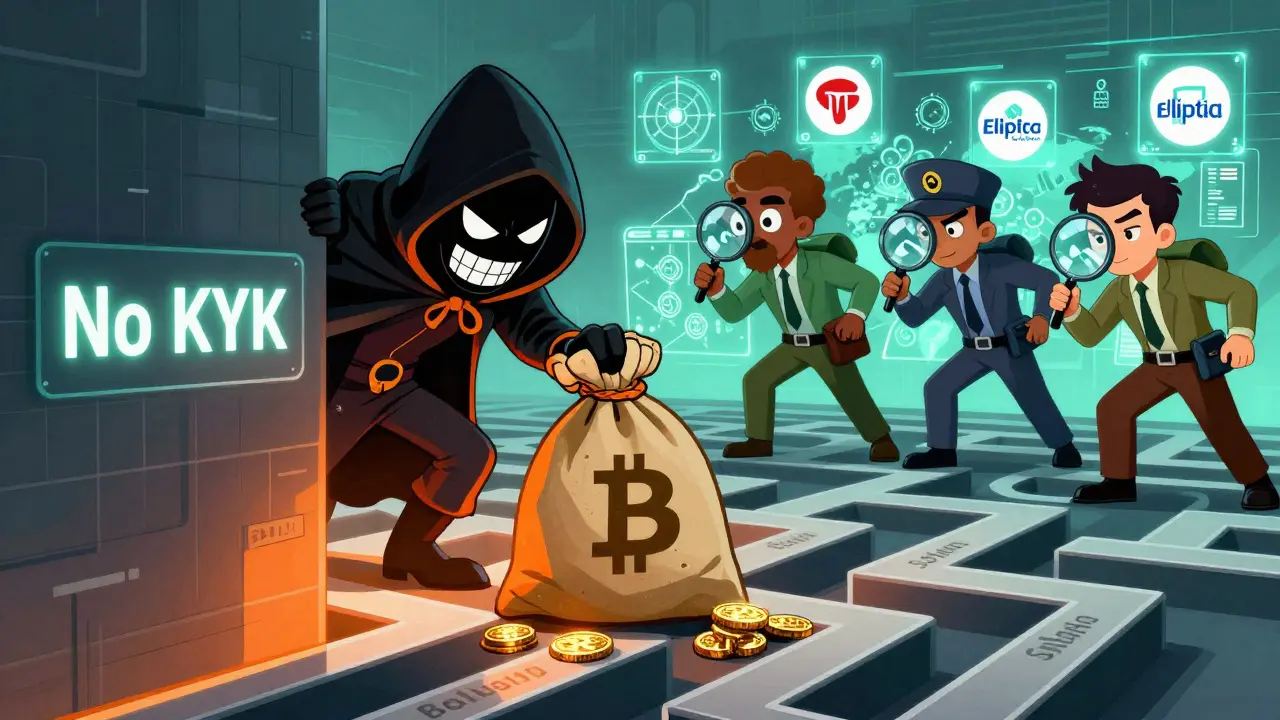
It’s not magic. It’s infrastructure. At the center is INTERPOL’s Financial Crime and Anti-Corruption Centre, which coordinates 195 member countries. But they don’t work alone. They rely on private sector tools like Chainalysis, Elliptic, and TRM Labs-companies that build blockchain analytics software used by police forces worldwide. These tools can trace a Bitcoin from a ransomware payout to a crypto exchange, even if it passed through five different wallets and three cross-chain bridges.Here’s how it flows:
- A scammer tricks a victim into sending ETH to a fake DeFi platform.
- The funds get swapped to BTC via a no-KYC bridge, then mixed through a privacy protocol.
- The transaction pattern is flagged by Chainalysis AI as matching known laundering behavior.
- The alert is sent to INTERPOL’s Cybercrime Atlas platform.
- Law enforcement in the victim’s country, the exchange’s jurisdiction, and the wallet’s origin all get notified simultaneously.
- Freeze orders are issued across borders within hours.
That’s the new standard. And it’s working. In Operation HAECHI VI (April-August 2025), 40 countries recovered $439 million in stolen crypto and fiat. That’s more than double what was recovered in 2024. And it’s not just about big scams. Smaller frauds-like fake NFT marketplaces or fake crypto loan apps-are being taken down too, because now, even small cases can trigger international alerts.
Where Countries Are Winning-and Where They’re Falling Behind
Not every country plays by the same rules. The U.S. leans on prosecution. The DOJ charged 17 people in October 2024 for using bots to manipulate meme coin prices. The SEC sues crypto firms for unregistered securities. But they don’t always share data fast enough with partners abroad.Europe? They’re focused on money laundering linked to child exploitation and extremist recruitment. Europol’s August 2025 conference revealed that 37% of crypto-linked crimes in the EU now involve grooming minors through crypto-based payment platforms. Their response? Tighter KYC rules on exchanges and mandatory reporting of suspicious wallet activity.
Meanwhile, African nations-long overlooked-are now leading in operational speed. Angola, Zambia, and Kenya have built dedicated crypto investigation units after training with INTERPOL. In August 2025, Angolan police shut down 25 mining farms in one day, using blockchain analytics tools provided by TRM Labs. They didn’t wait for help. They asked for it, trained hard, and acted.
The biggest gap? Cross-chain tracing. Criminals are moving funds between blockchains-Bitcoin to Solana to Polygon-to confuse investigators. Elliptic’s 2025 report found over $21.8 billion in illicit crypto has been laundered this way. Most tools still work on single chains. Only Elliptic and TRM Labs have full cross-chain screening. And even then, it’s not automatic. It still takes hours of manual work. That’s the next frontier.
The Private Sector Is the Secret Weapon
You won’t hear this from politicians, but the real heroes in this fight aren’t cops-they’re software engineers at Chainalysis, Elliptic, and TRM Labs. These companies don’t just sell tools. They train police. They share threat intelligence. They build custom dashboards for national units. INTERPOL’s Director Theos Badege says it plainly: “Working with private sector experts has doubled our insight into criminal behavior.”Here’s what they do that governments can’t:
- Update their AI models daily to catch new laundering patterns
- Track wallets that have been used by sanctioned entities, ransomware gangs, or terrorist groups
- Identify which exchanges are weak links-those that don’t verify identities or ignore SARs (suspicious activity reports)
- Provide real-time alerts when a known criminal wallet interacts with a new platform
And it’s working. In 2022, only 62% of INTERPOL member countries had crypto investigation units. By 2025, that number jumped to 87%. Why? Because the tools are now affordable, easy to use, and backed by training programs. A police officer in Lima can now trace a crypto transaction just like a forensic accountant in London.
What’s Still Broken-and Why It Matters
The system is better than ever. But it’s not perfect. Here’s what’s still failing:- Speed of recovery: Even with I-GRIP, it can take 72 hours to freeze assets in some countries due to legal delays. Criminals know this. They cash out within 24.
- Jurisdictional conflicts: If a wallet is registered in Cyprus but the scammer lives in Russia, who gets to seize it? No clear answer.
- Small-time fraud: Most crypto scams are low-value but high-volume. A $200 phishing scam targeting retirees in Brazil won’t trigger an international alert. But 10,000 of them? That’s $2 million. No system tracks that scale.
- Regulatory fragmentation: Some countries ban crypto. Others regulate it. Some don’t even classify it as property. That creates safe zones.
Chainalysis found that direct transfers from illicit wallets to exchanges dropped from 40% in 2021 to just 15% in 2025. Why? Because criminals are smarter. They use peer-to-peer trading, decentralized exchanges, and cash-out kiosks in places with no KYC laws. That’s the new normal. And it’s getting harder to track.
What’s Next? The Future of Global Crypto Enforcement
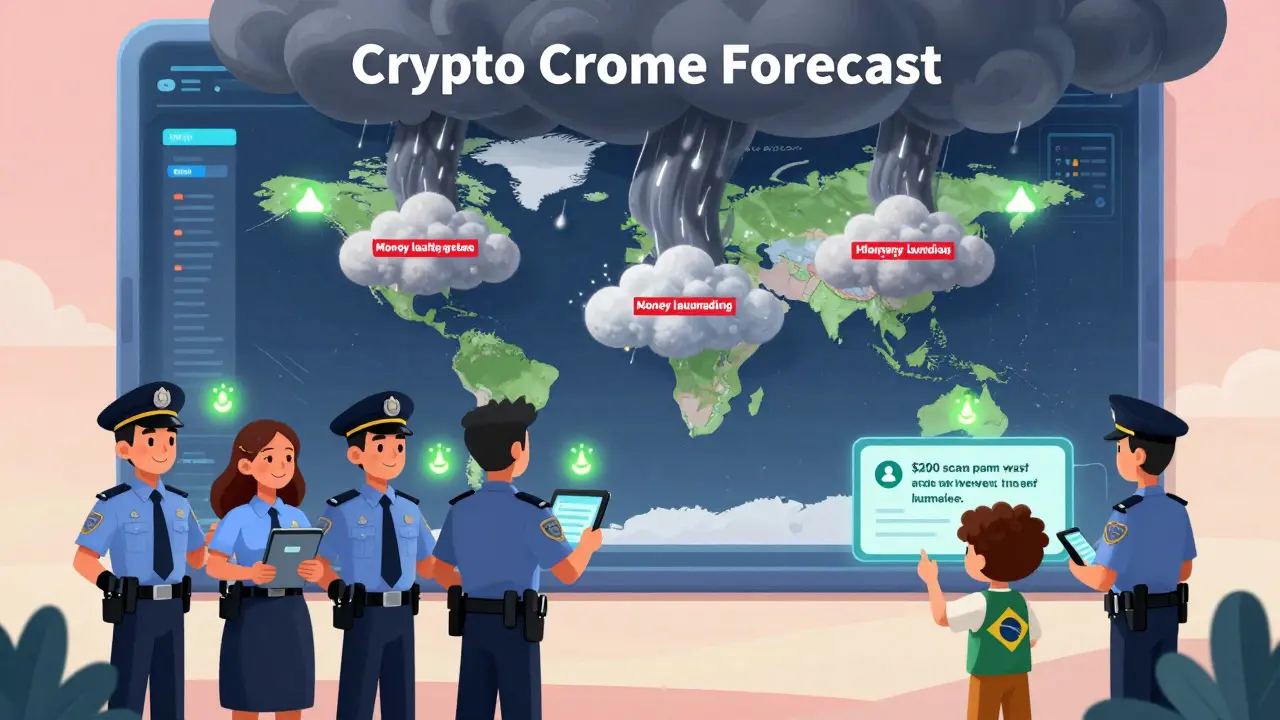
The next big leap? Automation. Elliptic just released the first cross-chain tracing tool that reduces manual investigation from hours to minutes. Imagine a system where, as soon as a scammer sends stolen ETH to a bridge, the system auto-notifies every relevant law enforcement agency, freezes the destination wallet, and alerts the victim’s bank-all without human input.That’s coming. By 2026, INTERPOL plans to launch AI-assisted threat prediction models that flag high-risk transactions before they happen. Think of it like a weather alert for crypto crime. If a wallet shows signs of being used for money laundering-small, rapid transfers, mixing, then sudden cash-out-the system flags it before the funds leave the chain.
But technology alone won’t fix this. What’s needed is political will. Countries must stop treating crypto crime as a national issue. It’s global. And only global cooperation can stop it.
Right now, the system is fragile. One country refuses to share data, and the whole chain breaks. But the momentum is real. More arrests. More recoveries. More training. More tools. The criminals are adapting. But so are we.
Can crypto crime be stopped completely?
No-because as long as there’s money and anonymity, criminals will find a way. But it can be made so difficult and risky that it’s no longer worth it. International cooperation has turned crypto crime from a low-risk, high-reward game into a high-risk, low-reward one. That’s progress.
How do I report a crypto scam internationally?
Start by reporting it to your local police. Then contact your country’s INTERPOL National Central Bureau. They’ll coordinate with other nations if the scam crosses borders. You can also report it to Chainalysis or Elliptic through their public reporting portals-they share data with law enforcement. Don’t wait. The faster you report, the higher the chance of recovery.
Why do some countries recover more crypto than others?
It’s not about wealth-it’s about coordination. Countries that joined INTERPOL’s training programs, adopted blockchain analytics tools early, and built fast legal pathways for asset freezes are recovering far more. South Korea, the U.S., Germany, and several African nations now lead in recovery rates because they treat crypto crime as a top priority-not a footnote.
Is Bitcoin still the main currency for crypto crime?
Yes. According to Chainalysis, Bitcoin makes up 75% of all illicit crypto holdings in 2025. Why? It’s the oldest, most liquid, and most widely accepted. But criminals are shifting to privacy coins like Monero and using decentralized exchanges to avoid tracing. Still, Bitcoin wallets are the easiest to track-and that’s why most seizures still involve BTC.
What’s the biggest threat to international crypto enforcement?
Fragmentation. If one country refuses to cooperate, or if a jurisdiction has no laws against crypto crime, criminals will use it as a safe haven. The lack of global legal standards means there are still too many places where you can launder crypto with zero risk. Until every country treats crypto crime the same way, the system will always have holes.