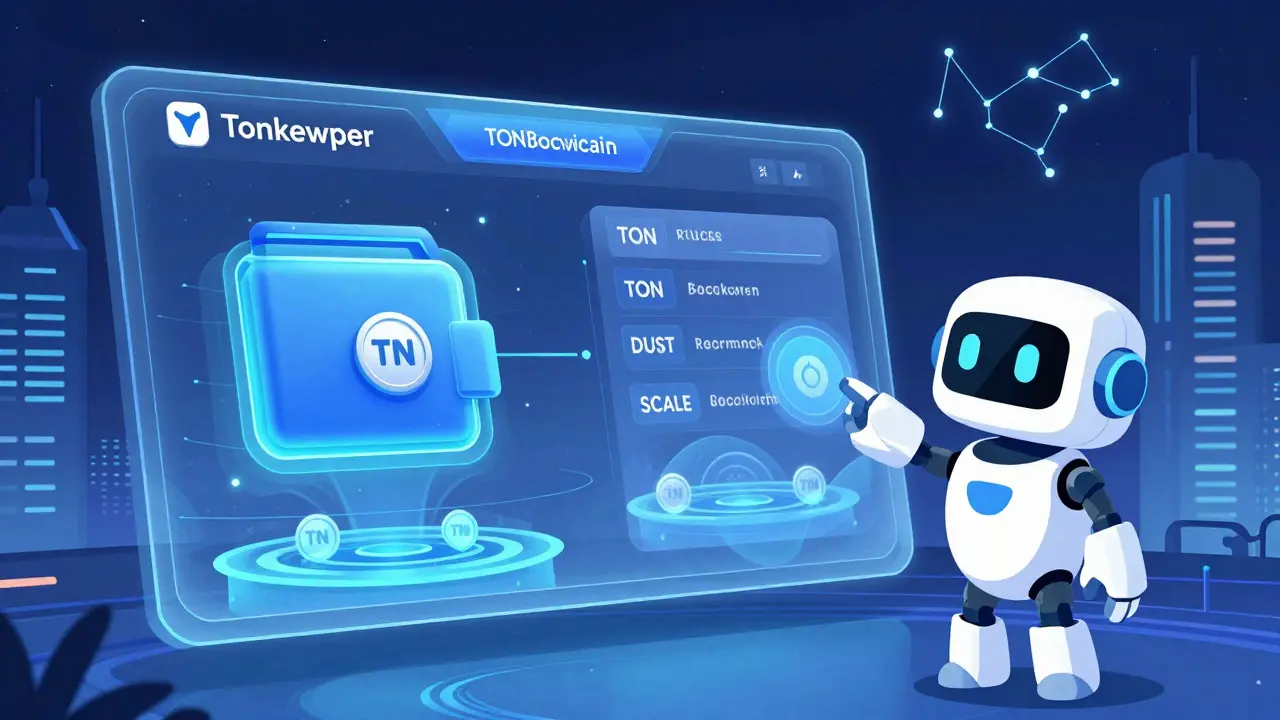
What is DeDust?
DeDust is a decentralized exchange (DEX) built natively on the TON (The Open Network) blockchain. Unlike centralized platforms like Binance or Coinbase, DeDust lets you trade crypto directly from your wallet without handing over control of your funds. It’s designed for users who want fast, low-cost trades within the TON ecosystem, and it’s one of the most advanced DEXs on the network as of early 2026.
DeDust runs on Protocol 2.0, a major upgrade that improves how trades are processed, reduces gas fees, and makes the platform more scalable. It supports trading for all TON-based tokens - including TON itself, DUST, and SCALE - and allows users to add liquidity to pools to earn trading fees and rewards. The platform also has a cross-chain bridge connecting TON to Ethereum, letting you move wrapped Bitcoin (WBTC), USDC, USDT, and DAI between the two networks.
How DeDust Works
DeDust uses an automated market maker (AMM) model, similar to Uniswap or SushiSwap, but optimized for TON’s unique sharding architecture. This means trades happen instantly without order books. When you swap TON for a token like DUST, the platform uses liquidity pools - funds locked in smart contracts by other users - to execute your trade.
The key innovation is how DeDust handles assets. Instead of treating every token as a separate entity, it uses an abstraction layer that simplifies interactions. This lets the platform support new tokens faster and reduces errors during swaps. It’s not just a trading interface - it’s a smart, modular system built to grow with the TON ecosystem.
To use DeDust, you need a TON-compatible wallet like Tonkeeper or MyTonWallet. Once connected via TON Connect, you can trade, add liquidity, or stake SCALE tokens directly from the interface. There’s no KYC, no sign-up, and no account creation. You own your keys. That’s the whole point.
The SCALE Token: Rewards and Governance
SCALE is DeDust’s native token. As of October 2025, it traded around $1.37 USD, up 8.54% in 24 hours. Its all-time high was $11.76 - a reminder that DeFi tokens can swing wildly. SCALE isn’t just a speculative asset; it’s the backbone of DeDust’s incentive system.
- Liquidity providers earn SCALE rewards for adding funds to trading pools.
- Stakers lock up SCALE to earn additional tokens and voting power.
- Governance holders can propose and vote on upgrades, fee changes, or new features.
These mechanics encourage long-term participation. If you’re active in the TON ecosystem, holding SCALE isn’t just about price - it’s about having a say in how the platform evolves.
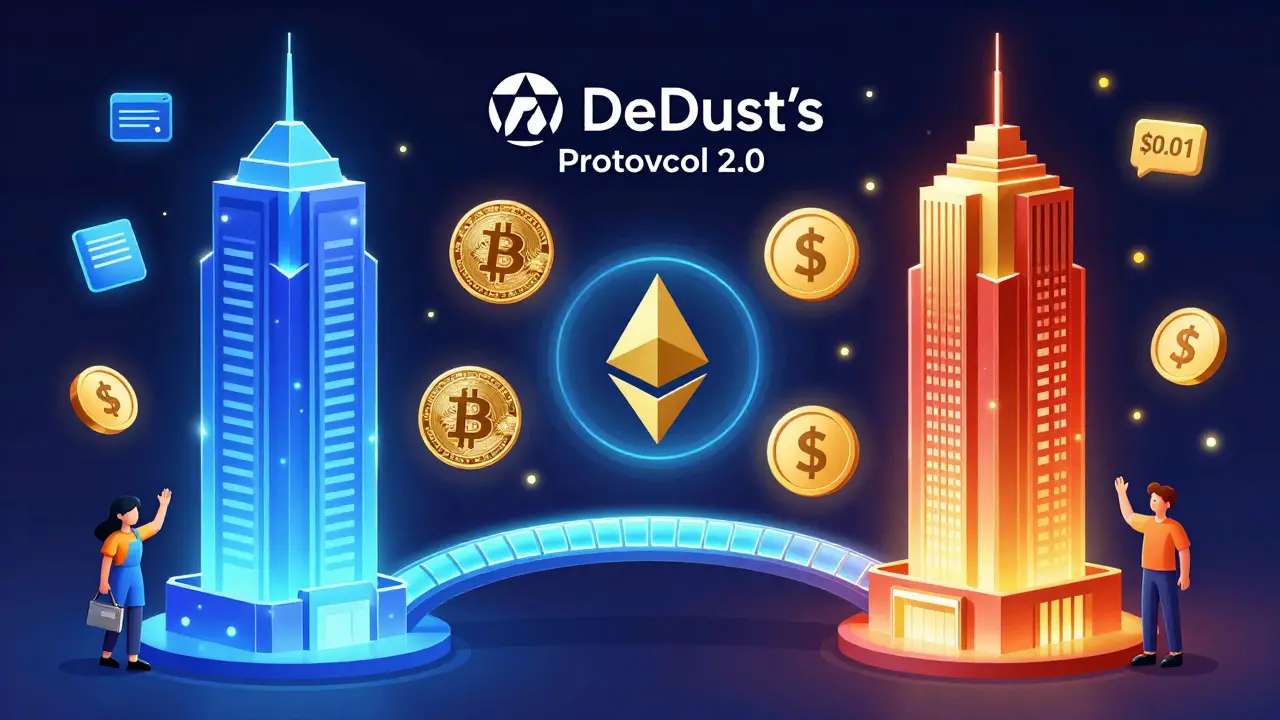
DeDust vs. STON.fi: Who Wins on TON?
DeDust’s main rival on TON is STON.fi. Both are DEXs built on the same blockchain, but they take different approaches.
| Feature | DeDust | STON.fi |
|---|---|---|
| Technology | Protocol 2.0 with asset abstraction | Standard AMM model |
| Cross-chain Bridge | Yes (Ethereum) | No |
| Trading Volume (24h) | $14K (DUST token data) | Higher, estimated $50K+ |
| Interface | More complex, developer-friendly | Simpler, beginner-focused |
| Liquidity Pools | Smaller, growing | Larger, more established |
| Telegram App | Still buggy | More stable |
If you’re new to DeFi on TON, STON.fi might feel easier. But if you care about cross-chain access, future upgrades, and deeper technical control, DeDust offers more. It’s the platform for users who want to be ahead of the curve - not just along for the ride.
How to Get Started
Using DeDust is straightforward if you already have a TON wallet. Here’s how:
- Download a TON wallet like Tonkeeper or MyTonWallet.
- Buy TON or another supported token (like USDT) on a centralized exchange and send it to your wallet.
- Go to dedust.io and click "Connect Wallet".
- Sign the connection request in your wallet.
- Start trading, adding liquidity, or staking SCALE.
You can also use the Telegram mini-app, but it’s still unstable. Many users report crashes or slow loading. Stick to the web version unless you’re testing features.
Security Risks and Warnings
DeDust is built on TON’s secure blockchain, but that doesn’t make it risk-free. Here’s what you need to watch out for:
- Fake websites: Scammers create lookalike sites like dedust.co or dedust.io.net. Always double-check the URL.
- Telegram bots: Never click links from strangers in Telegram. Official DeDust support only communicates through the official app or website.
- Smart contract risk: Bugs in code can lead to lost funds. DeDust’s contracts are audited, but no code is perfect.
- Liquidity risk: If a pool has low volume, your trade might slippage badly or get stuck.
- Cross-chain bridge risk: Moving assets between TON and Ethereum adds complexity. If the bridge fails, your funds could be locked.
Always start small. Test with $10 before putting in $1,000. Never share your seed phrase. Ever.
Who Is DeDust For?
DeDust isn’t for everyone. If you’re just buying TON to hold, you don’t need it. But if you fit any of these profiles, it’s worth your time:
- You’re active in the TON ecosystem and want to earn rewards from trading.
- You want to move ETH-based assets like USDC or WBTC to TON and trade them natively.
- You’re comfortable with DeFi and want to experiment with advanced features.
- You believe in TON’s long-term potential and want to support its DeFi growth.
If you’re new to crypto, start with a centralized exchange. If you’re already trading on TON, DeDust is one of the most powerful tools you can use.
Final Verdict: Is DeDust Worth It?
DeDust is technically impressive. Protocol 2.0, the cross-chain bridge, and the asset abstraction layer show serious engineering. But technology alone doesn’t make a platform successful - adoption does.
Right now, DeDust has lower trading volume than STON.fi. Its Telegram app is unreliable. Liquidity pools are thin. But it’s also the only DEX on TON offering real cross-chain access. That’s a big deal.
If you’re willing to tolerate some early-stage bugs for future upside, DeDust is a standout. It’s not the easiest DEX on TON, but it’s the most ambitious. For users who want to build, earn, and influence the next wave of DeFi on TON, DeDust is where you need to be.
Frequently Asked Questions
Is DeDust safe to use?
DeDust runs on the secure TON blockchain, and its smart contracts have been audited. But like all DeFi platforms, it’s not risk-free. Fake websites, buggy apps, and smart contract bugs can lead to losses. Always verify the URL, never share your seed phrase, and start with small amounts.
How do I buy SCALE tokens?
You can buy SCALE directly on DeDust by swapping TON, USDT, or other supported tokens. You can also find it on some smaller TON-based DEXs. Avoid buying from centralized exchanges unless they list it - most don’t yet.
Can I use DeDust on my phone?
Yes, but not through the Telegram app - it’s still unstable. Use the mobile web version at dedust.io with Tonkeeper or MyTonWallet. Both wallets have built-in browsers that work smoothly with DeDust.
Does DeDust charge fees?
DeDust charges a small trading fee - around 0.2% - which goes to liquidity providers. There are no hidden fees. Gas fees on TON are extremely low, often less than $0.01 per transaction.
What’s the difference between DUST and SCALE?
DUST is the original token used for liquidity mining and early rewards. SCALE is the newer governance token introduced with Protocol 2.0. SCALE replaces DUST as the main incentive token and gives holders voting rights. DUST is still tradable, but SCALE is where the future focus is.
Can I withdraw my funds anytime?
Yes. Since DeDust is non-custodial, your funds are always in your wallet. You can withdraw liquidity from pools or sell your tokens anytime. There’s no lock-up period unless you choose to stake SCALE, which is optional.
Dave Lite
January 11, 2026 AT 12:41Jennah Grant
January 11, 2026 AT 20:17Jon Martín
January 13, 2026 AT 03:11Becky Chenier
January 14, 2026 AT 09:57Denise Paiva
January 15, 2026 AT 16:21Caitlin Colwell
January 17, 2026 AT 13:12Mujibur Rahman
January 17, 2026 AT 16:56Dennis Mbuthia
January 19, 2026 AT 15:23Staci Armezzani
January 21, 2026 AT 14:30Tracey Grammer-Porter
January 22, 2026 AT 11:33jim carry
January 24, 2026 AT 05:34