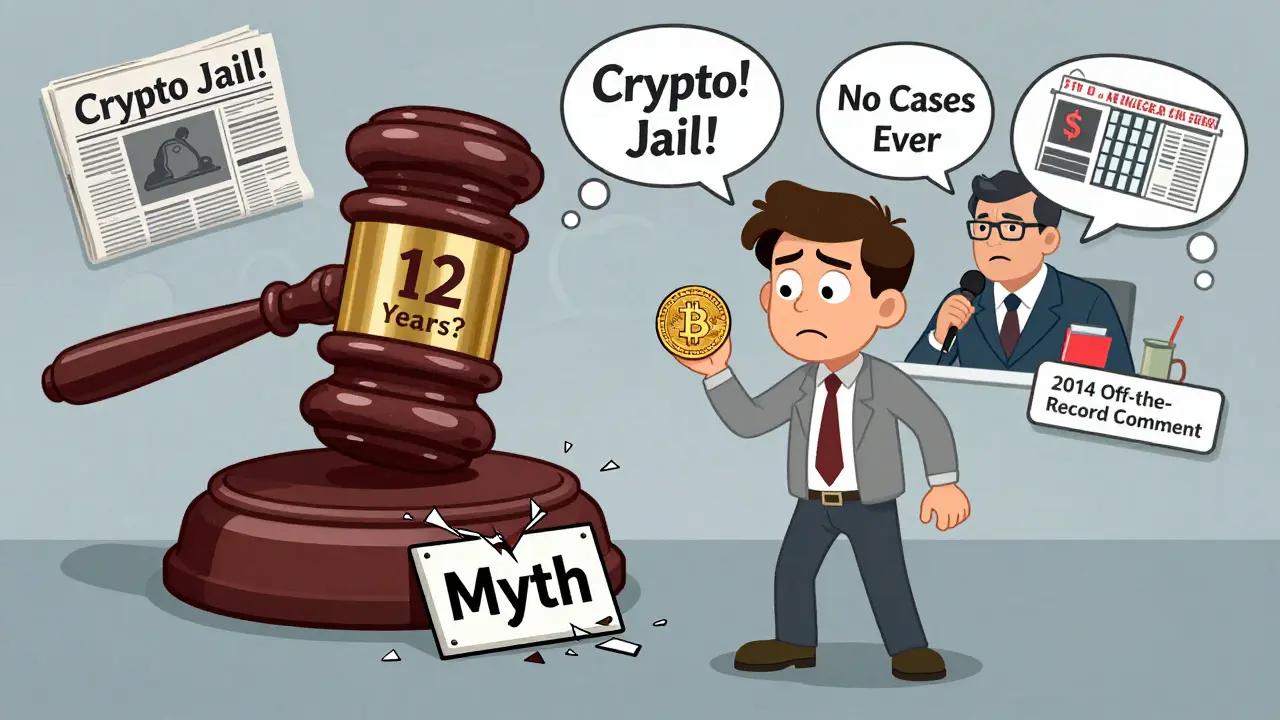
When you hear that trading cryptocurrency in Bangladesh can land you in jail for 12 years, it sounds terrifying. And it’s been repeated everywhere - from headlines to WhatsApp forwards. But here’s the truth: no one has been sentenced to 12 years for just owning or trading Bitcoin in Bangladesh. Not one case. Not even close.
Where Did the 12-Year Number Come From?
The 12-year figure didn’t come from a law. It came from a press statement.
In 2014, Bangladesh Bank - the country’s central bank - issued a warning. They said Bitcoin isn’t legal tender. That any transaction using it could violate existing laws. Then, in an off-the-record comment to reporters, a bank official said violators could face up to 12 years in prison. That number stuck. Media outlets ran with it. Social media turned it into a scare tactic.
But here’s what no one told you: that 12-year figure isn’t written in any statute. It’s an extrapolation - a guess - based on how penalties under the Money Laundering Prevention Act 2012 might apply if crypto was used to hide illegal money.
The actual law says: if you commit money laundering, you can get 1 to 10 years in prison. Not 12. The Anti-Terrorism Act 2009 and the Foreign Exchange Regulation Act 1947 also get mentioned in Bangladesh Bank’s warnings, but none of them set a 12-year maximum for crypto trading alone.
What’s Actually Illegal?
It’s not owning Bitcoin. It’s not buying Ethereum. It’s not even using a P2P exchange like Binance to trade crypto.
What’s illegal is using crypto to break existing laws - especially those around foreign exchange and money laundering.
Under the Foreign Exchange Regulation Act 1947, you must use authorized banks to send or receive foreign currency. If you use crypto to bypass that system - say, to send money overseas without going through a licensed bank - that’s a violation. And yes, that could trigger penalties under the Money Laundering Act.
Think of it this way: if you used cash to bribe a government official, you wouldn’t be jailed for having cash. You’d be jailed for bribery. Same logic applies here. Crypto isn’t the crime. What you do with it might be.
Legal experts at Mahbub & Company made this clear back in 2021: “The regulator has fallen short of banning or criminalizing the use of bitcoin except in cases where it is used to commit an existing offence.”
Enforcement? Almost Nonexistent
Despite the scary headlines, enforcement has been minimal - and targeted.
According to Bangladesh’s Anti-Money Laundering Department’s 2022 report, only 37 cases nationwide were filed under digital financial crimes. Not one was labeled as “crypto trading.”
In 2024, the Cyber Security Division recorded 17 crypto-related cases. Again, none resulted in anything near a 12-year sentence. Most involved suspected fraud, phishing, or large-scale money movement - not someone buying Dogecoin on a phone app.
Chainalysis data shows something even more surprising: cryptocurrency adoption in Bangladesh jumped 206% between mid-2021 and mid-2022. By December 2024, an estimated 2.1 million people - over 1% of the population - owned some form of crypto. P2P trading volumes on Binance rose 347% after the 2021 crackdown.
People are trading. The banks are warning. But no one’s being locked up for it.
The Government’s Confusing Message
Bangladesh’s stance isn’t just strict - it’s contradictory.
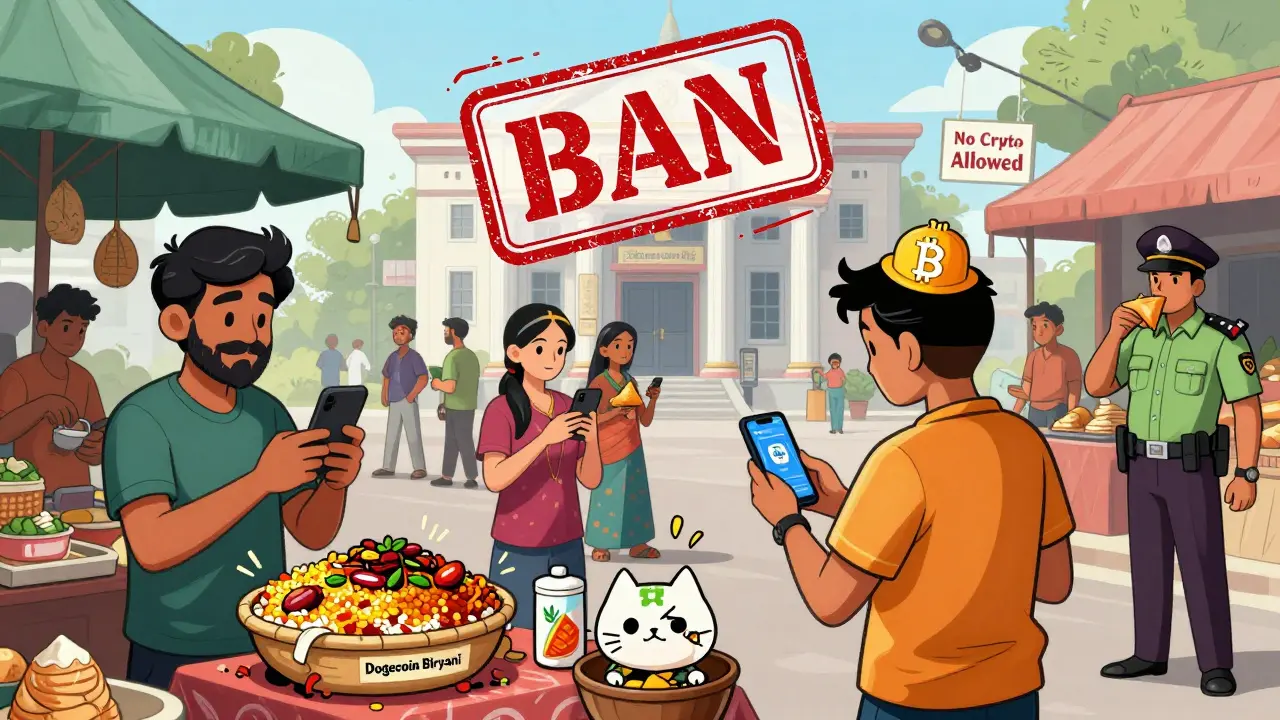
On one hand, Bangladesh Bank keeps issuing warnings. In March 2024, they told all commercial banks to block any crypto-related transactions. They didn’t mention jail time. They didn’t cite new laws. They just said: “Don’t do it.”
On the other hand, the government published a National Blockchain Strategy in 2020. That document doesn’t ban blockchain. It encourages exploring it for public services, land records, and supply chains. Blockchain and cryptocurrency are not the same thing - but most people don’t know that.
So the state says: “Don’t use crypto,” but “We’re building blockchain systems.”
This confusion feeds into the gray zone where people operate. You can trade crypto on P2P platforms. You can hold it in a wallet. You can even convert it to BDT through informal channels. As long as you’re not moving millions, or hiding illegal funds, you’re not on the radar.
How This Compares to Other Countries
Bangladesh’s approach is more like China’s pre-2021 stance than India’s current one.
China outright banned crypto exchanges and mining. India, after years of uncertainty, now taxes crypto trades at 30% and requires strict reporting. Bangladesh? It’s stuck in between.
It’s not a full ban. It’s not a regulated market. It’s a warning system with no teeth - except when it’s convenient.
And that’s what makes it dangerous. People think they’re safe because no one’s been jailed. But if you get caught in a money laundering investigation - say, you received funds from a scam or used crypto to move money out of the country - then the full weight of the law can come down on you. And yes, that could mean years in prison.
What Should You Do If You’re in Bangladesh?
If you’re a regular person buying small amounts of crypto for savings or remittances:
- You’re unlikely to be targeted.
- But you’re not protected by law.
- If your wallet is linked to a suspicious transaction, your bank could freeze your account.
- If you’re accused of money laundering, you’ll need a lawyer - fast.
Don’t assume you’re safe because you’re not a big trader. The law doesn’t care about your intent. It cares about the transaction trail.
Keep records. Don’t use unregulated exchanges. Avoid mixing crypto with cash transfers. And never use crypto to send money abroad - that’s the quickest way to trigger a legal review.
The Real Risk Isn’t Jail - It’s Loss
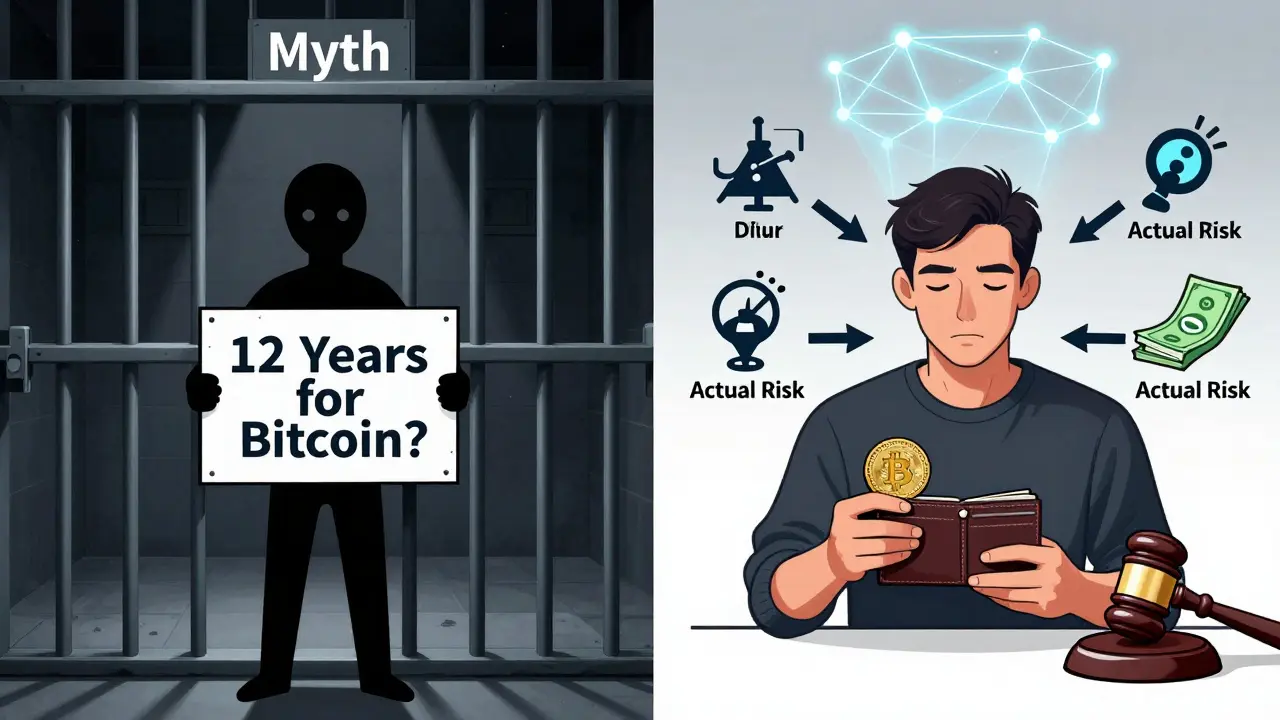
The biggest danger isn’t prison. It’s losing your money.
Because crypto isn’t protected. If you send it to a scammer, there’s no recourse. If your wallet gets hacked, no bank will refund you. If your bank finds out you’re trading, they might shut down your account permanently.
And if you’re ever investigated? Even if you’re innocent, the process alone can cost you months - and thousands in legal fees.
There’s no official safe way to trade crypto in Bangladesh. There’s no licensed exchange. No regulatory oversight. No consumer protection.
So if you choose to trade, you’re doing it in the dark. With no safety net.
What’s Next?
There’s no sign Bangladesh Bank will change its stance soon. The 2024 directive was just a reminder - not a shift.
But pressure is building. The rise in crypto use, the global trend toward regulation, and the economic struggles of ordinary Bangladeshis mean the government can’t ignore the reality forever.
Some legal scholars believe a future law will clarify things - maybe even create a licensing system for crypto exchanges, like India or the UAE.
Until then, the 12-year threat remains a myth - but the legal risk? That’s very real.
Katherine Melgarejo
January 15, 2026 AT 12:05Alexis Dummar
January 15, 2026 AT 21:04kristina tina
January 16, 2026 AT 01:13Anna Gringhuis
January 17, 2026 AT 21:23Michael Jones
January 19, 2026 AT 18:21Stephen Gaskell
January 20, 2026 AT 13:49Jill McCollum
January 21, 2026 AT 07:38Hannah Campbell
January 22, 2026 AT 06:14Bryan Muñoz
January 23, 2026 AT 18:33Sarah Baker
January 24, 2026 AT 23:13Kelly Post
January 26, 2026 AT 17:25Tony Loneman
January 27, 2026 AT 07:48Patricia Chakeres
January 28, 2026 AT 15:34Nishakar Rath
January 30, 2026 AT 11:52Jason Zhang
January 31, 2026 AT 13:20Hailey Bug
February 1, 2026 AT 04:30Alexis Dummar
February 1, 2026 AT 18:31