Turkey Crypto: Regulations, Exchanges, and What You Need to Know
When people talk about Turkey crypto, the growing but chaotic cryptocurrency market in Turkey driven by inflation, currency instability, and young tech-savvy users. Also known as crypto trading in Turkey, it's not just about buying Bitcoin—it's about survival, bypassing controls, and avoiding scams that prey on desperation. Unlike countries with clear crypto laws, Turkey walks a tightrope: no outright ban, but no real protection either. The Central Bank doesn’t recognize crypto as legal tender, yet millions use it daily to protect savings from lira depreciation. This gray zone created a wild west where legitimate platforms struggle to operate, and fake exchanges like Piyasa, a fraudulent crypto platform using a Turkish word for 'market' to trick users into depositing funds. Also known as fake Turkish crypto exchange, it thrives by pretending to be local and trustworthy.
What makes Turkey crypto different isn’t just the rules—it’s the people. Young Turks use decentralized apps and peer-to-peer platforms like LocalBitcoins and Paxful because banks block crypto deposits. They trade USDT to dodge inflation, not for speculation. But this urgency makes them targets. Scammers launch fake airdrops, clone exchange websites, and spread rumors about "Turkish-only" tokens. The Piyasa scam, a well-documented fraud using Turkish language and branding to lure victims into depositing crypto with no chance of withdrawal. Also known as Turkish crypto scam, it is just one example. Even legit platforms like Binance and Kraken face pressure from regulators who demand KYC compliance but offer no legal backing. Meanwhile, local exchanges with no audits or licenses pop up overnight, vanish the next week, and leave users with nothing.
If you're in Turkey or trading with Turks, you need to know this: there’s no safety net. No deposit insurance. No government-backed dispute resolution. The only protection is your own research. Always check if an exchange has public proof of reserves. Never trust a platform that only speaks Turkish. Avoid any "guaranteed returns" or "Turkish government-approved" crypto offers—they’re always fake. The posts below dive into exactly what’s happening: from exposed scams like Piyasa to how traders bypass restrictions, what platforms are actually safe, and why so many Turkish crypto projects turn out to be ghosts. You’ll find real stories, hard facts, and clear warnings—not hype. This isn’t about getting rich quick. It’s about staying alive in a market where trust is the rarest asset.
9
Dec
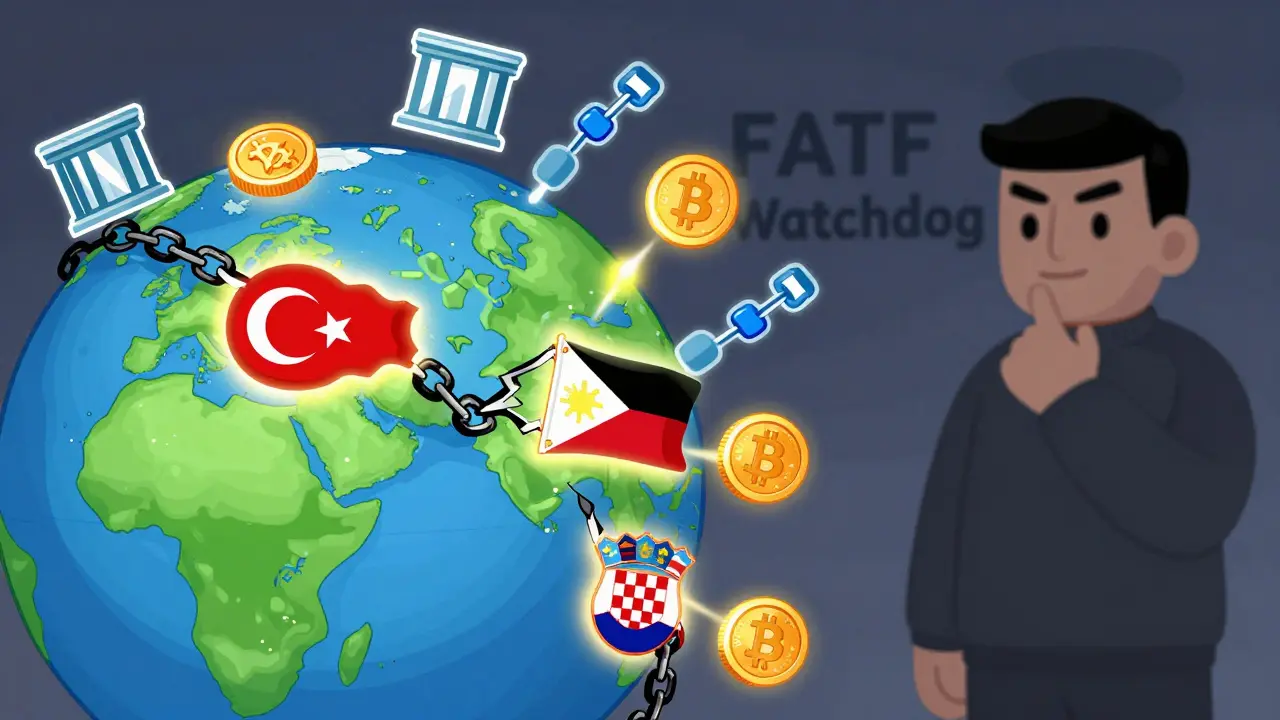
Turkey, UAE, Philippines, and Croatia got off FATF's grey list by fixing crypto regulations. Here's how their reforms unlocked global banking access and boosted crypto adoption-and why Turkey is still stuck.
Read More