Soft Fork: What It Is and Why It Matters in Blockchain Upgrades
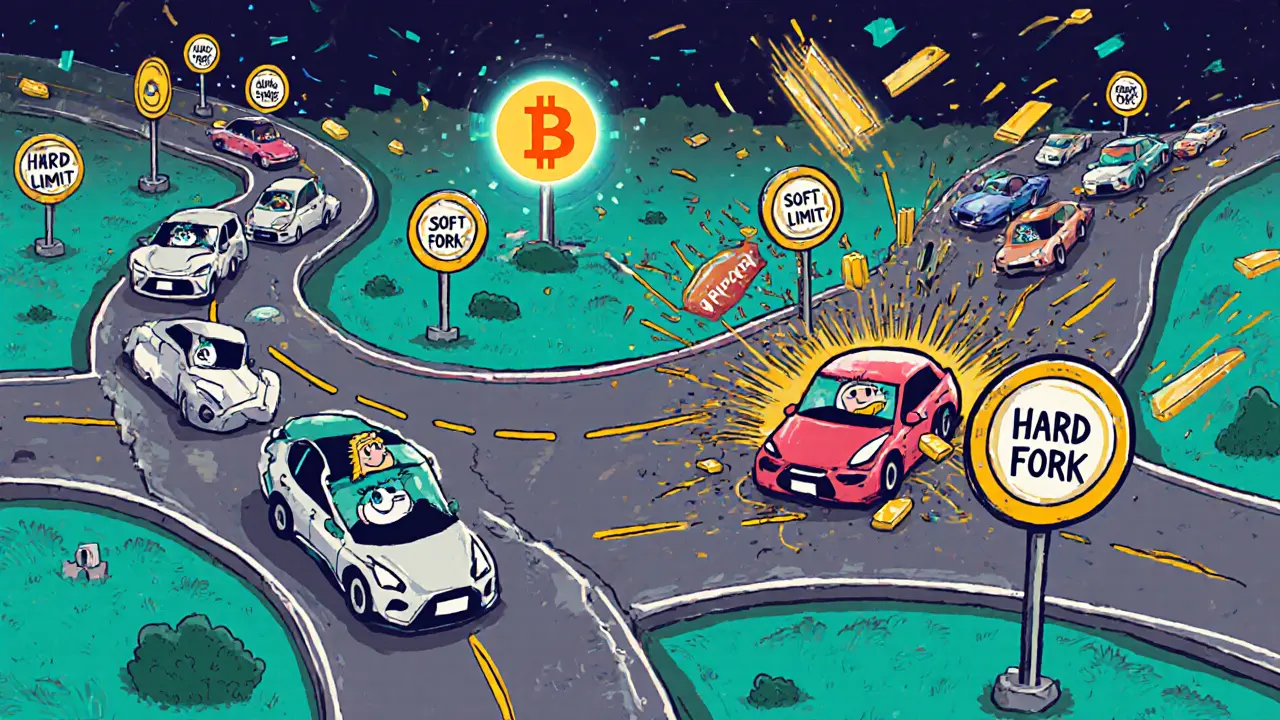
When a blockchain updates, it doesn’t always break everything. A soft fork, a backward-compatible protocol upgrade that keeps old nodes running alongside new ones. Also known as a backward-compatible fork, it lets the network evolve without forcing everyone to upgrade at once. This is different from a hard fork, where old nodes reject new rules and the chain splits into two separate blockchains. Soft forks are quieter, safer, and used when the community wants to improve security or add features without causing chaos.
Most major Bitcoin upgrades — like SegWit in 2017 — were soft forks. They didn’t create a new currency or split the network. Miners and users could keep using old software, but if enough miners upgraded, the new rules became the norm. That’s how Bitcoin added more transactions per block without breaking wallets or exchanges. Soft forks rely on miner consensus, not user adoption. If 51% of mining power supports the change, the old rules slowly fade away. That’s why they’re less risky than hard forks, which need every node to upgrade or risk being left behind.
Soft forks are common in networks where stability matters most. They’re used to fix bugs, tighten security rules, or add new transaction types — like enabling smart contracts on Bitcoin through Taproot. You won’t see users screaming about it on Twitter, but behind the scenes, it’s making the network stronger. That’s the point: upgrades should help, not break. If you’ve ever used Bitcoin without noticing a change, you’ve probably benefited from a soft fork.
Below, you’ll find real-world examples of how soft forks have shaped crypto networks, what happens when they fail, and how they compare to the more dramatic hard forks. You’ll also see how exchanges, miners, and everyday users react when the rules quietly change under their feet.
31
Oct
Understand the difference between hard forks and soft forks in cryptocurrency. Learn how they affect network upgrades, your coins, and why some changes split blockchains while others don't.
Read More