Scalable Blockchain Architecture: How Networks Handle Growth Without Slowing Down
When we talk about scalable blockchain architecture, the design that lets a blockchain grow in users and transactions without becoming slow or expensive. Also known as blockchain scalability, it's the difference between a highway that jams at 100 cars and one that handles 10,000 without a single backup. Most blockchains started small—Bitcoin and early Ethereum could only process a handful of transactions per second. That worked when you were sending crypto to a friend, but not when millions try to mint NFTs or swap tokens at once.
That’s where Layer 2 solutions, systems built on top of a main blockchain to handle transactions faster and cheaper. Also known as scaling layers, they let users move money off-chain and settle in batches come in. Think of them like express lanes on a highway. Projects like Polygon and Arbitrum use this to make Ethereum faster without changing its core. Then there’s sharding, splitting a blockchain into smaller pieces that process data in parallel. Also known as partitioned networks, it’s how Ethereum plans to scale long-term by turning one slow chain into 64 faster ones. And don’t forget consensus mechanisms, the rules that decide who gets to add the next block and how the network agrees on truth. Also known as validation protocols, switching from Proof of Work to Proof of Stake cut Ethereum’s energy use by 99.95% and opened the door for more transactions.
None of these work in isolation. A blockchain with great sharding but weak consensus will still get hacked. A Layer 2 with fast speeds but no real security ties to the main chain? That’s just a fancy database. The best scalable systems combine all three—sharding for capacity, Layer 2 for speed, and strong consensus for trust. You see this in action in networks like Solana and Avalanche, where thousands of transactions clear every second. But even they crash under pressure sometimes. Why? Because scalability isn’t just about tech—it’s about real-world usage. When a meme coin spikes and 500,000 people try to buy at once, even the best architecture can buckle.
That’s why the posts here focus on what actually works—whether it’s a new exchange using zk-rollups to cut fees, a DeFi protocol that avoids congestion by design, or a token that runs on a chain built for scale. You won’t find fluff about "the future of Web3." You’ll find real examples of what’s working today, what’s failing, and how to tell the difference. Whether you’re a trader, developer, or just trying to avoid $50 gas fees, this collection gives you the facts behind the hype.
27
Sep
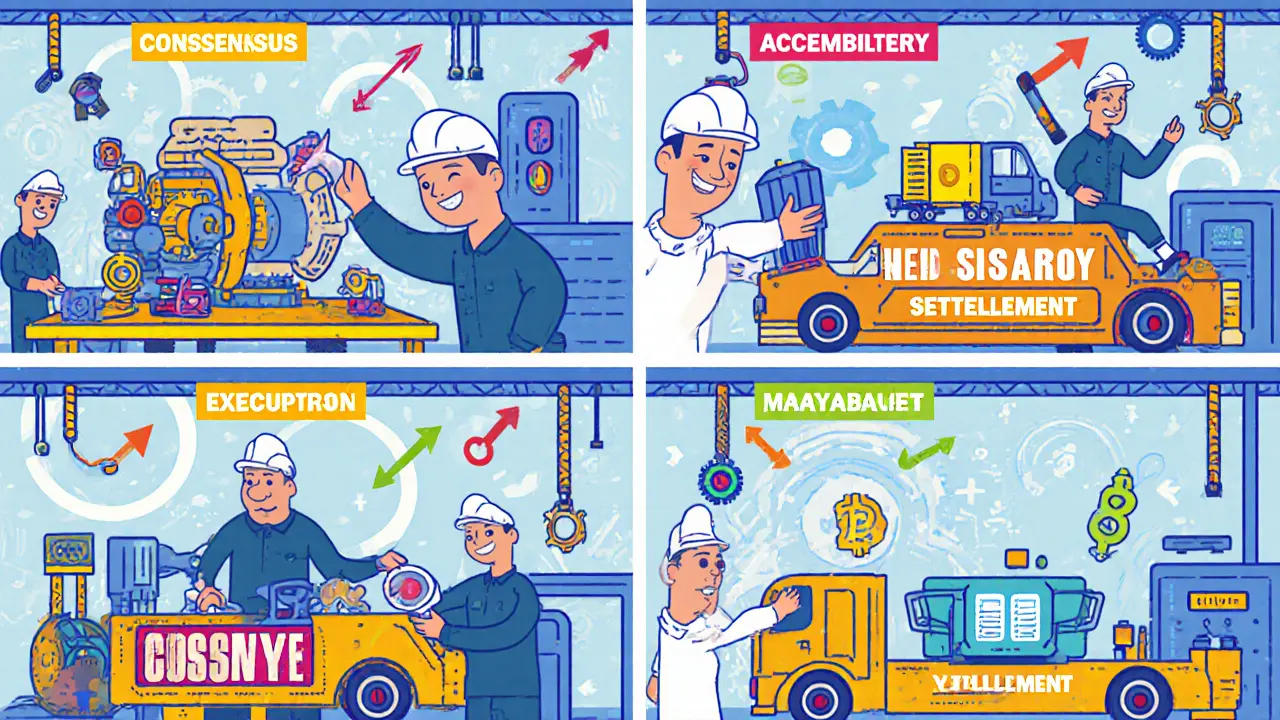
Modular blockchains split functions like consensus, execution, and data storage into independent layers. This lets each scale separately, boosting speed, lowering costs, and preserving security - without rebuilding the entire network.
Read More