Mining Difficulty: What It Is and How It Affects Crypto Mining
When you hear about mining difficulty, the measure of how hard it is to find a new block in a blockchain network like Bitcoin. It’s not just a number—it’s the system’s way of keeping block production steady, no matter how many miners join or leave. If too many people start mining, the network gets harder. If miners drop off, it gets easier. This isn’t magic—it’s code. Every 2,016 blocks (roughly every two weeks on Bitcoin), the protocol automatically adjusts mining difficulty to keep new blocks coming at about 10-minute intervals.
This adjustment directly affects your returns if you’re mining. Higher difficulty means more electricity, more hardware, and more time to earn the same reward. That’s why miners watch it like a stock price. When difficulty spikes overnight, small operations often shut down because they can’t compete with industrial farms using cheap power and custom chips. And when it drops? That’s when new miners jump in, hoping to catch a window of profit.
It’s not just Bitcoin. Other coins like Litecoin and Bitcoin Cash use the same idea, but with different timing and algorithms. The hash rate, the total computing power dedicated to securing a blockchain network is what drives mining difficulty up. More hash rate = higher difficulty. You can track it live on sites like Blockchain.com, but the real story is in the trend. If hash rate keeps climbing while prices stay flat, mining becomes a losing game for most.
And here’s the catch: mining difficulty doesn’t care about your wallet. It doesn’t care if you bought a $500 miner last month. If the network gets harder, your returns shrink. That’s why some miners only run during off-peak electricity hours, or why others switch coins when difficulty spikes too fast. Some even use tools to predict difficulty changes based on past patterns—because guessing wrong can cost thousands.
It also ties into decentralization. If mining difficulty gets too high, only big players with access to cheap power and bulk hardware can compete. That’s why some communities push for algorithm changes—to keep mining open to regular folks. Ethereum moved away from mining entirely because of this. Bitcoin hasn’t, and that’s why mining difficulty keeps climbing, and why the people still mining today are either well-funded or deeply patient.
What you’ll find below are real-world examples of how mining difficulty shapes decisions. From coins that reset difficulty daily to exchanges that hide how much they’re mining, these posts show you what actually happens when the numbers change. You’ll see how miners in places like Kazakhstan or Texas react when difficulty spikes. You’ll learn why some coins crash after a difficulty adjustment. And you’ll find out which coins still let small miners survive in 2025.
19
Oct
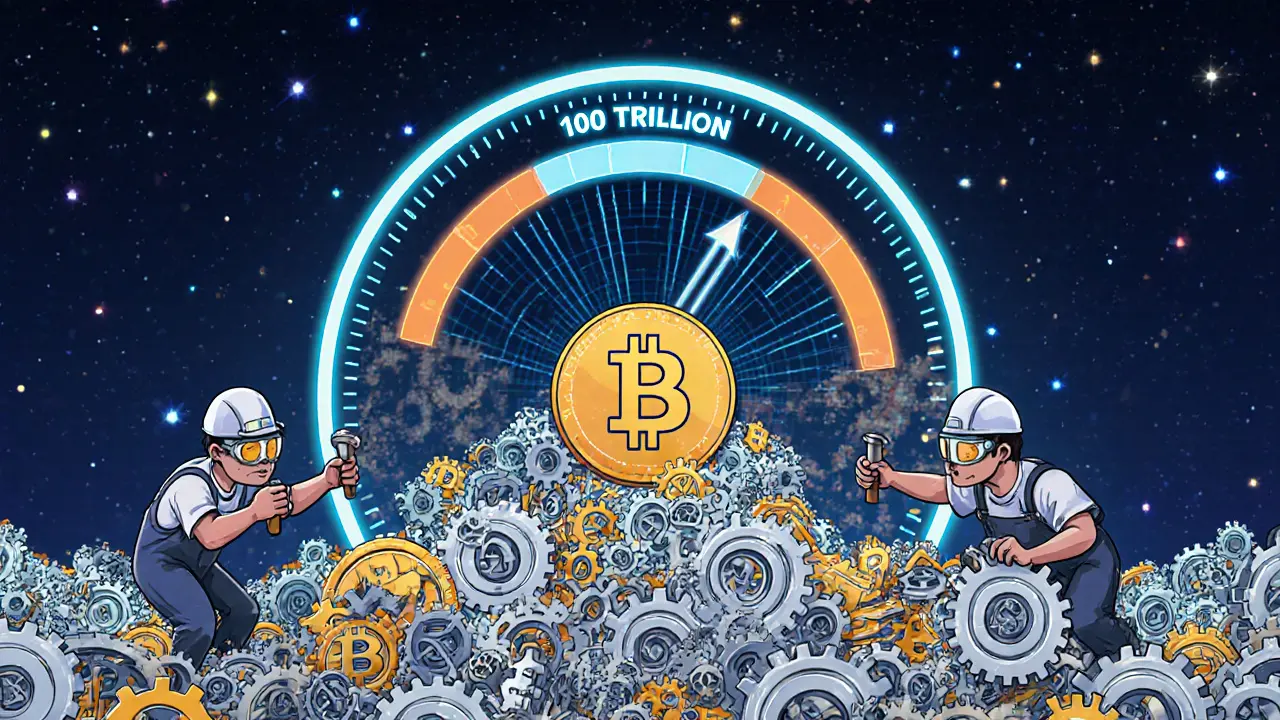
Hash rate and mining difficulty are locked in a self-regulating cycle that keeps Bitcoin's block time at 10 minutes. As more miners join, difficulty rises to maintain stability - ensuring security and predictability for the entire network.
Read More