MiCA Regulation: What It Means for Crypto Users and Exchanges
When it comes to MiCA regulation, the Markets in Crypto-Assets Regulation, a comprehensive EU framework that standardizes how crypto assets are issued, traded, and supervised across member states. Also known as EU Crypto Rulebook, it’s the first major legal system designed specifically for digital assets—and it’s already reshaping the global crypto landscape. Before MiCA, crypto firms in Europe operated in a patchwork of local rules. Some countries welcomed them. Others blocked them. Now, a single set of rules applies from Portugal to Poland, making it easier for honest projects to scale—but harder for shady ones to hide.
This regulation doesn’t just target big exchanges like Binance or Coinbase. It also covers decentralized finance (DeFi), a sector where users lend, borrow, and trade without middlemen, often using smart contracts on blockchains like Ethereum, and even stablecoins, crypto tokens pegged to real-world assets like the US dollar, designed to reduce price swings. If a stablecoin wants to operate in the EU, it must prove it holds enough reserves, disclose its audit process, and get licensed. That’s why projects like Tether and Circle had to restructure their EU operations. It’s not about stopping innovation—it’s about making sure it doesn’t crash your savings.
For everyday users, MiCA means more transparency. Exchanges must now clearly list fees, explain risks, and protect your funds with strict custody rules. If you’re using a crypto exchange, a platform where you buy, sell, or trade digital assets, often requiring identity verification in the EU, you’ll see better disclosures and fewer hidden traps. But it also means some platforms—especially those with weak compliance or no European presence—will vanish from your options. That’s why sites like AfroDex or Betconix, which lack proper oversight, are disappearing from European users’ radars.
Outside the EU, MiCA is becoming a blueprint. Countries like Japan, Singapore, and even the U.S. are watching closely. If a crypto firm wants to serve European customers, it must comply—even if it’s based in Miami or Manila. That’s pushing the whole industry toward higher standards. You’re not just seeing rules change—you’re seeing the foundation of crypto’s legitimacy being built.
What you’ll find in the posts below are real-world examples of how MiCA is already affecting crypto platforms, users, and projects. From how Bxlend stays compliant in Lithuania to why Iranian traders still rely on DEXs, these stories show the regulation’s ripple effects. You’ll see how crypto banking access shifts, how non-custodial wallets become essential in restricted zones, and why some airdrops and exchanges are vanishing under the new rules. This isn’t theory. It’s what’s happening right now.
14
Nov
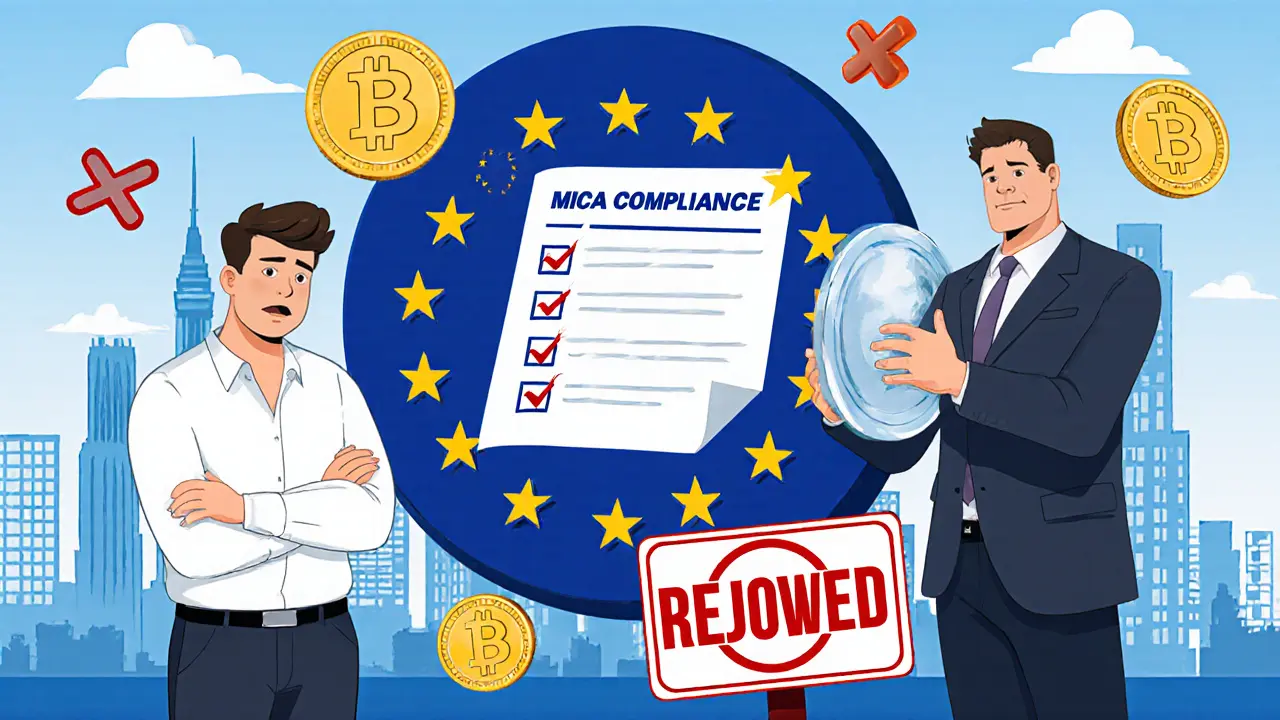
MiCA regulation is now in force for all crypto businesses serving EU customers. This guide covers licensing, stablecoin rules, compliance costs, and what you must do by 2025 to stay legal in Europe.
Read More