FATF and Crypto: How Global Regulations Shape Your Trading Rules
FATF, the Financial Action Task Force, is an intergovernmental body that creates anti-money laundering and counter-terrorism financing standards used by over 200 countries. Also known as the Financial Action Task Force on Money Laundering, it doesn’t issue laws—but when it speaks, governments listen, and crypto exchanges obey. If you’ve ever been blocked from a crypto exchange because of your country, or seen a platform suddenly ban certain tokens, FATF is likely the reason.
FATF’s travel rule is the biggest headache for crypto users. It says exchanges must collect and share sender and receiver info for transactions over $1,000. That’s fine for banks, but for DeFi and DEXs? It’s a contradiction. Platforms like Binance and Kraken now collect KYC data from everyone—even if you’re just swapping tokens on a non-custodial wallet linked to their service. Countries like Germany, Japan, and South Korea enforce this strictly. Others, like Iran and Venezuela, ignore it—and that’s why their users turn to DEXs like Uniswap or Curve. The result? A two-tier crypto world: one for regulated markets, one for the rest.
FATF also pushes for AML crypto, anti-money laundering rules specifically applied to digital assets, which means exchanges now scan wallets for ties to sanctioned entities like North Korean hackers or Iranian entities blocked by OFAC. That’s why some wallets get flagged, why certain tokens disappear from listings, and why you might see a message saying "Your transaction is under review." It’s not random. It’s compliance. And if you’re in a country under sanctions, like Iran or Syria, this isn’t just inconvenient—it’s a barrier to entry.
What’s missing from most discussions is how FATF’s rules affect everyday traders. You don’t need to be a criminal to get caught in the net. Simply using a mixer, trading on an unregulated exchange, or holding a token flagged as high-risk can trigger alerts. That’s why guides on crypto exchange compliance, how platforms meet global regulatory standards matter. They help you spot which exchanges are safe, which are risky, and which are just waiting to shut down when regulators come knocking.
The posts here don’t just list banned exchanges or airdrop scams. They show you how FATF’s shadow reaches every corner of crypto—from Iran’s DEX users to Germany’s licensed platforms, from North Korea’s mixers to China’s outright ban. You’ll find real examples of what happens when compliance clashes with decentralization, and how traders adapt. This isn’t theory. It’s what’s happening right now. And if you trade crypto, you’re already living inside it.
28
Oct
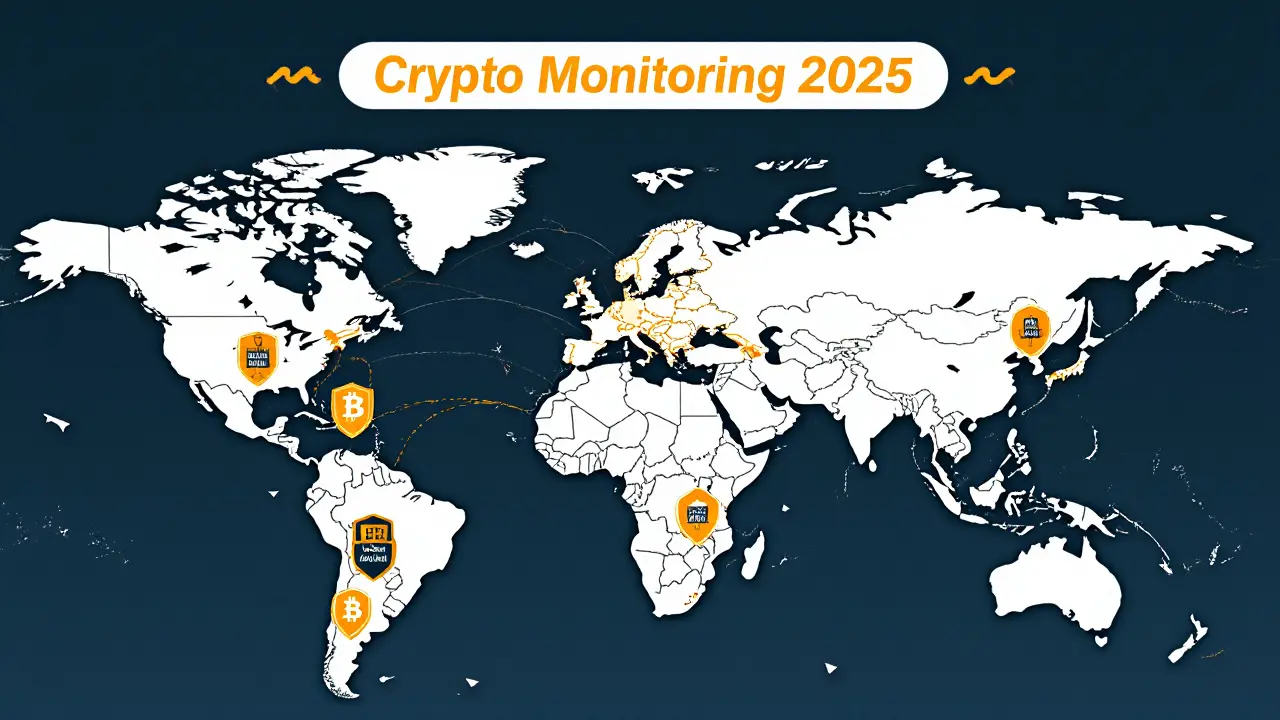
Governments worldwide now require crypto exchanges to track cross-border transactions over $3,000. Learn how the Travel Rule, FinCEN, and MiCA are shaping global crypto compliance-and what you need to do to stay legal.
Read More