Crypto in Restricted Countries: How to Trade When Banks and Governments Block You
When your government bans crypto transactions or your bank freezes your account, crypto in restricted countries, the practice of using digital assets despite legal or financial barriers. Also known as underground crypto, it’s not about rebellion—it’s about survival. Millions in places like Iran, Colombia, Nigeria, and China rely on decentralized tools just to protect their savings from inflation, sanctions, or corruption. This isn’t theoretical. In 2025, over 40 countries either ban crypto exchanges outright or force banks to cut off users who trade digital assets. But the networks keep running—not because they’re legal, but because they’re necessary.
That’s where decentralized exchanges, crypto platforms that don’t require ID or bank links. Also known as DEXs, they let you swap tokens peer-to-peer without asking questions come in. In Iran, where OFAC sanctions block access to most global exchanges, traders use Uniswap and Curve on Polygon with DAI to avoid detection. In Colombia, banks are forbidden from touching crypto—but P2P platforms like Paxful and LocalBitcoins thrive because they connect buyers and sellers directly, no bank needed. And in China, where exchanges were shut down years ago, users still move Bitcoin through private wallets and Telegram groups, using QR codes and offline transfers to bypass surveillance.
OFAC sanctions, U.S. government restrictions that block specific individuals, companies, and countries from using the global financial system. Also known as crypto blacklists, they’re why Iranian and North Korean wallets get frozen on major platforms don’t stop determined users—they just push them underground. You won’t find these traders on Binance or Coinbase. They’re on DEXs, using privacy tools, running nodes, and trading via mobile apps that don’t ask for your passport. Meanwhile, countries like Germany and Liechtenstein offer clear paths for crypto banking, making the contrast starker: it’s not about technology, it’s about power. Who gets to control your money?
The posts below show exactly how this works in real life. You’ll see how Iranian traders use DAI on Polygon to avoid OFAC flags, how Colombian users bypass bank bans with P2P, and why exchanges like GalaxyOne and KickEX lock out users based on location. You’ll also learn which platforms are scams pretending to help, and which tools actually keep you safe. This isn’t a guide for tourists. It’s a survival toolkit for people who need crypto to live—not just to speculate.
18
Sep
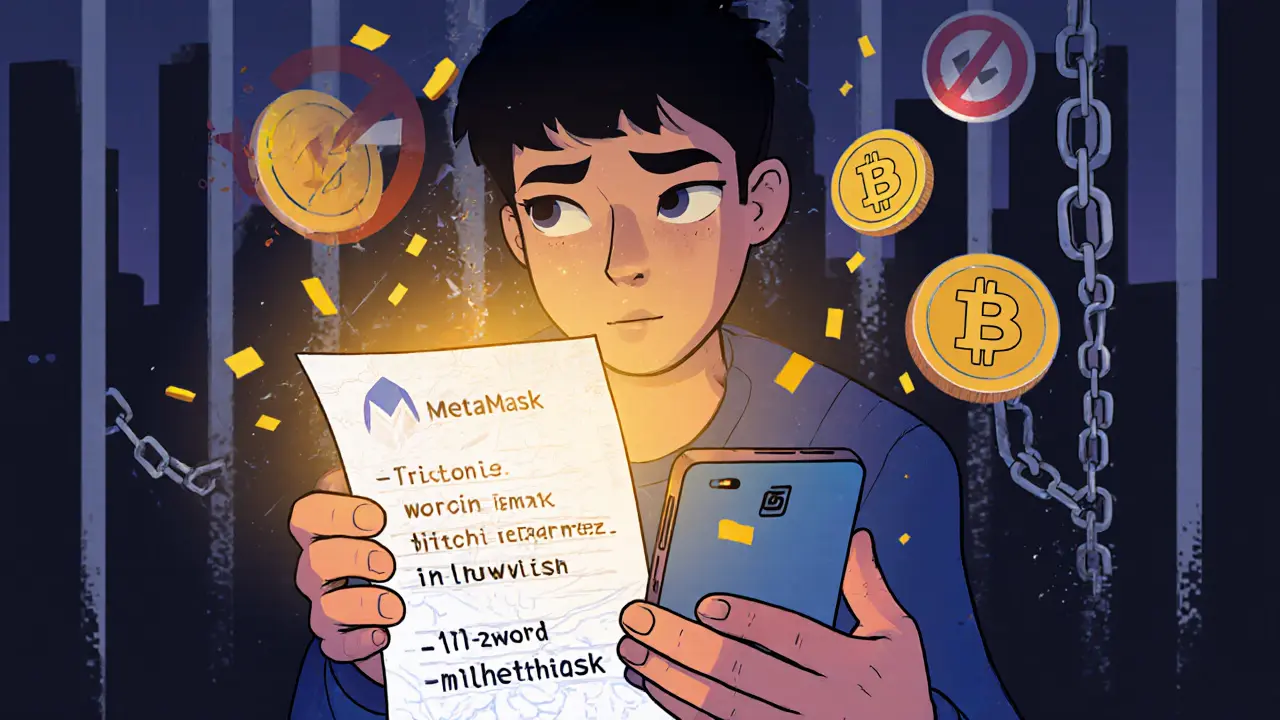
Non-custodial crypto wallets let you own your money without banks or governments in control. In restricted countries, they’re the only way to keep crypto safe from seizures and bans - if you know how to use them.
Read More